
Text by Jeremy Cuff/www.ja-universe.com
Photography by Jeremy & Amanda Cuff/www.ja-universe.com
If you look around at some of the tempting liveaboard options these days, you’ll find that the majority of them only offer week long trips. That’s fine if you’ve got the time and the budget, but if you’re looking for shorter trips, it’s not easy to find something that fits the bill. As the Great Barrier Reef is so popular, Pro Dive in Cairns offer a unique niche in dive liveaboards – a 2 nights, 3 day itinerary…
Australia’s Great Barrier Reef is a global icon of travel, attracting a constant stream of visitors from around the world. I remember as a boy watching TV programmes about the reef back in the ‘70’s, when the area was much less known and diving was perhaps more associated with exploration. More recently it has kept its place in the public consciousness through films such as “Finding Nemo” and successful marketing campaigns such as The Best Job in the World (a vacancy that I admit applying for!).
As the people keep coming, different niches have developed to cater for all tastes and budgets in diving, ranging from day boats to extended liveaboard itineraries to far flung reefs, well away from the beaten track. Somewhere in the middle these of are the short liveaboard trips. They’re so popular that you can choose any departure day except Tuesday, with three essentially identical boats in action at any one time. They’re a great way to experience the world’s biggest underwater playground.
During our initial enquiry about the itinerary several months before our trip, we established that they will also take children and non divers on board, so we decided to take our 7 year old son Zac and Amanda’s mum Joan. During Zac’s formative years, Joan would occasionally travel with us, allowing us to continue our diving odyssey when we required baby-sitting. But this time, it would be different; everybody could be a part of it.
With Zac and Joan signed up, we decided to go to one of the excellent Reef Teach seminars in Cairns the evening before departure. It’s aimed at both adults and children, with the objective of teaching visitors more about the Great Barrier Reef. It’s usually presented by locally based marine biologists and gives visitors fascinating insights into life beyond the esplanade. Zac was especially intrigued by the specimen jars and enjoyed the coral and fish identification aspects, which he carried forward on to the liveaboard itself by taking identification slates when snorkelling. There’s also a selection of interesting books and charts to check out.
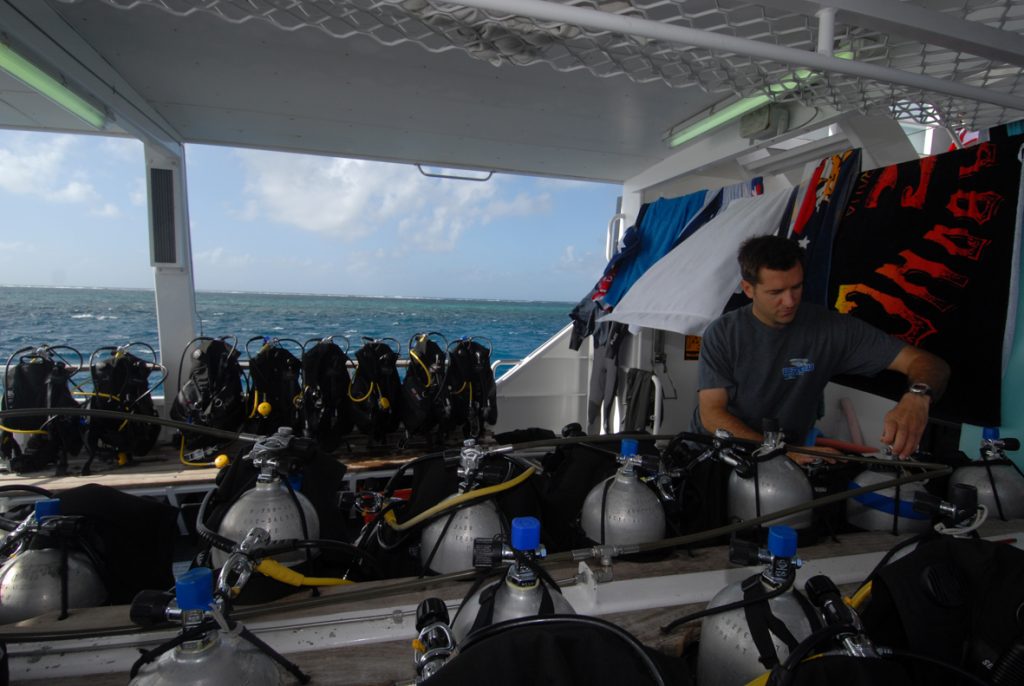
Early the next morning, we were picked up by the courtesy bus, which stops by at the Pro Dive shop for check in before heading down to the marina. Once on Scubapro II we were quickly assigned to our rooms and given a safety briefing about the boat and the expected conditions. Though the Barrier Reef is closer to the coast around Cairns than further south, there’s still a fair amount of open ocean to cross in order to reach the first site. It was windy out at sea and it was going to be pretty rough, so it was suggested that everyone take seasickness medication. To ignore this advice is foolhardy and risks spoiling the trip.
It takes about three woozy hours to get out there, but once the boat gets within striking distance of the first dive site, the swells calm down markedly thanks to the shelter provided the reef. It was certainly nice to get out there and once the crew had secured us to the mooring, we were soon listening to the dive briefing and getting kitted up. The dive briefings were good with decent diagrams and suggestions as how to best navigate each site, even in terms of compass bearings, plus interesting areas to check out.
During the time of our visit, it was the humpback and minke whale season, which doesn’t, of course, guarantee that you’ll get an encounter, but there’s always a chance. The crew described a recent close encounter when a minke whale approached the moored boat, but we weren’t so lucky. We had to content ourselves with a distant sighting en route to the reef.
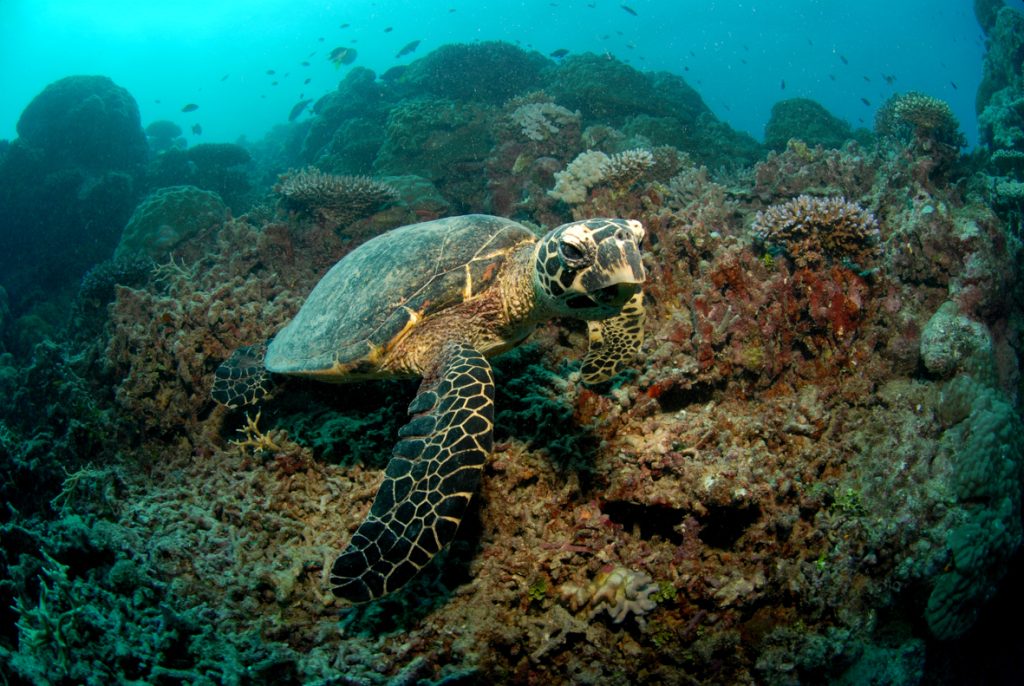
Our first dive was at a site called Petaj on Milln Reef, which was (I thought) rather underwhelming, consisting of fairly nondescript coral and sandy expanses interspersed with the odd small bommie. That said, it’s ideal for a checkout dive and there’s always something to see, with our best encounter being a turtle. Other possibilities include stingrays or white tip reef sharks resting out on the sand.
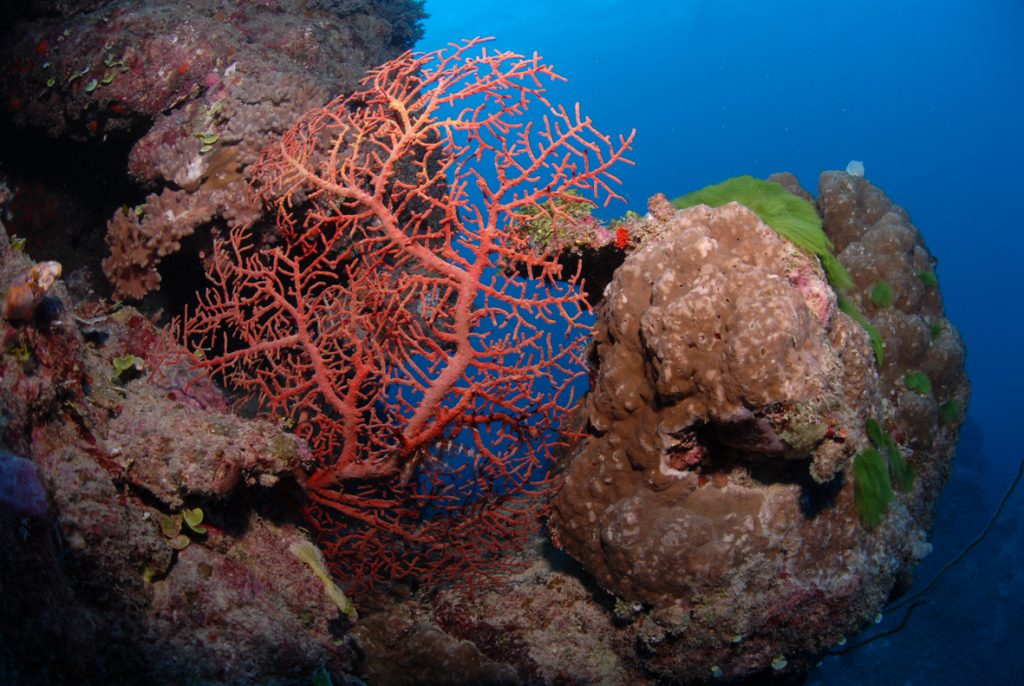
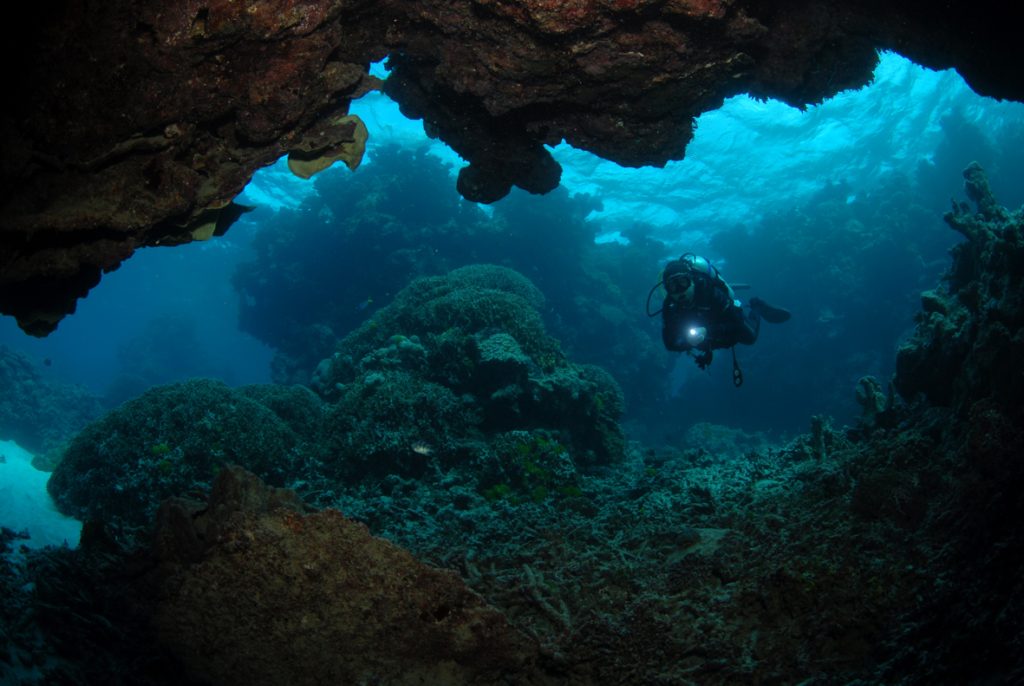
It got better from that point on with a visit to Whale Bommie, named after its resemblance to a whale breaking the surface. Here we explored some of the small coral heads before setting off around the “whale” itself, sometimes looking up to watch the white water as the sea surged over the top. If you find the right areas, you can expect to see some interesting corals adorning the bommie, with an excellent swim through that can be navigated quite easily if care is taken. And there’s always the chance of a shark or two, with a large white tip and a couple of burly groupers being the reward for our efforts.
Next morning, still on Milln Reef, the crew launched the RIB to take us over to Three Sisters. It’s an excellent bommie with good visibility, plenty of schooling fish, and the chance of turtles and other big things that might be in the area such as barracudas and perhaps sharks. We descended to about 25 metres and gradually ascended, circling the bommie several times before spending our safety stop over the impressive coral gardens on the top. A second dive would have been good at this site.
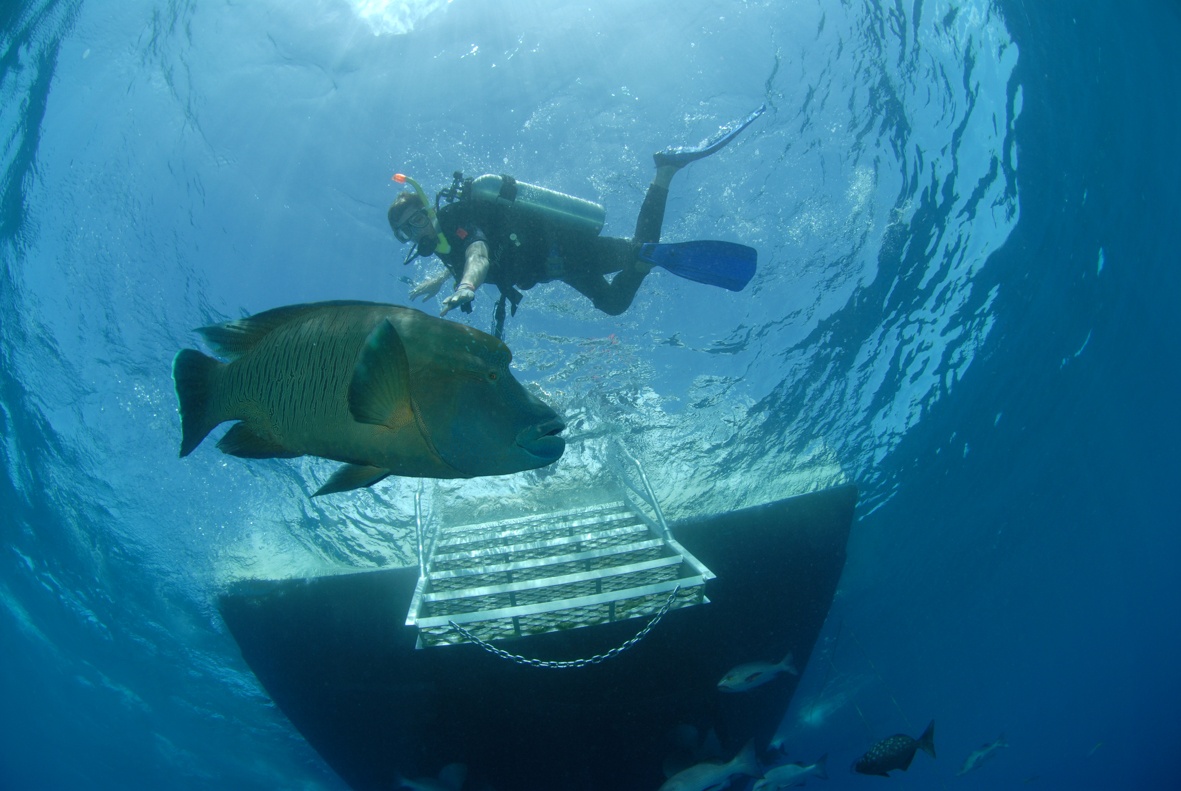
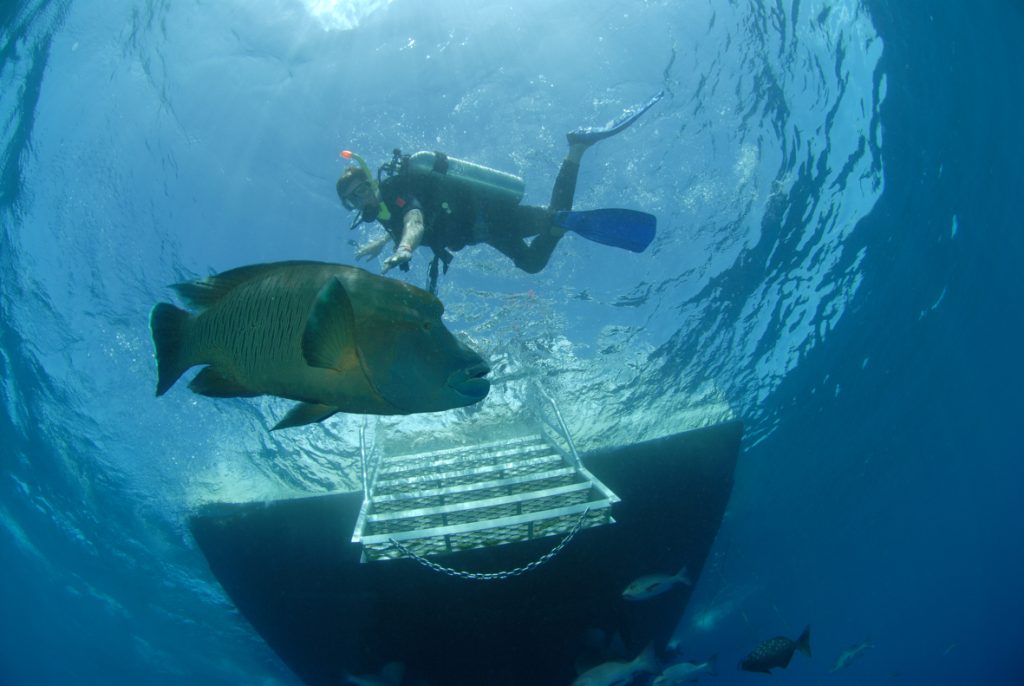
Next, we moved on to Flynn Reef where we remained for the rest of the trip. First port of call was a site called Tennis Courts which proved to be interesting, with more turtles. It’s a sloping reef with some nice coral formations and rubble that may harbour a scorpionfish, or perhaps even a stonefish. There’s also a friendly Napoleon Wrasse that will regularly follow the boat from site to site, often hanging out directly underneath the boat. It’s worth spending a bit of time checking him out at the beginning or end of a dive, and is a good way to spend a safety stop. Sometimes, the crew will throw in the odd sardine to keep him motivated.
Along with Three Sisters, Gordon’s was “joint first” for my personal favourite sites. This site had a bit of everything, offering interesting topography including overhangs, swim-throughs and impressive areas of staghorn and cabbage coral. There’s also a good chance of some nice encounters, especially with unconcerned turtles that were seemingly oblivious of our close proximity.
On the dawn dive on the final morning, we encountered what we could only describe as “a herd” (rather than a school) of Bumphead Parrotfish. Unfortunately, the tightly packed group got scattered by the attentions of several enthusiastic divers checking them out before I was able to really get some good images, but never mind, it was a unique spectacle to witness. Fans of the small stuff will also find these sites productive with clownfish, hawkfish, whip gobies and lizardfish being easy to find.
We also did a night dive here, observing some of the Barrier Reef’s night shift at work, including hermit crabs, pufferfish and a vortex of red bass, trevally and the odd reef shark that were attracted to the light of the boat. I was hoping to get images of the sharks coming in, but they were too skittish, preferring to remain on the edge of the light, rather than “in the light”.
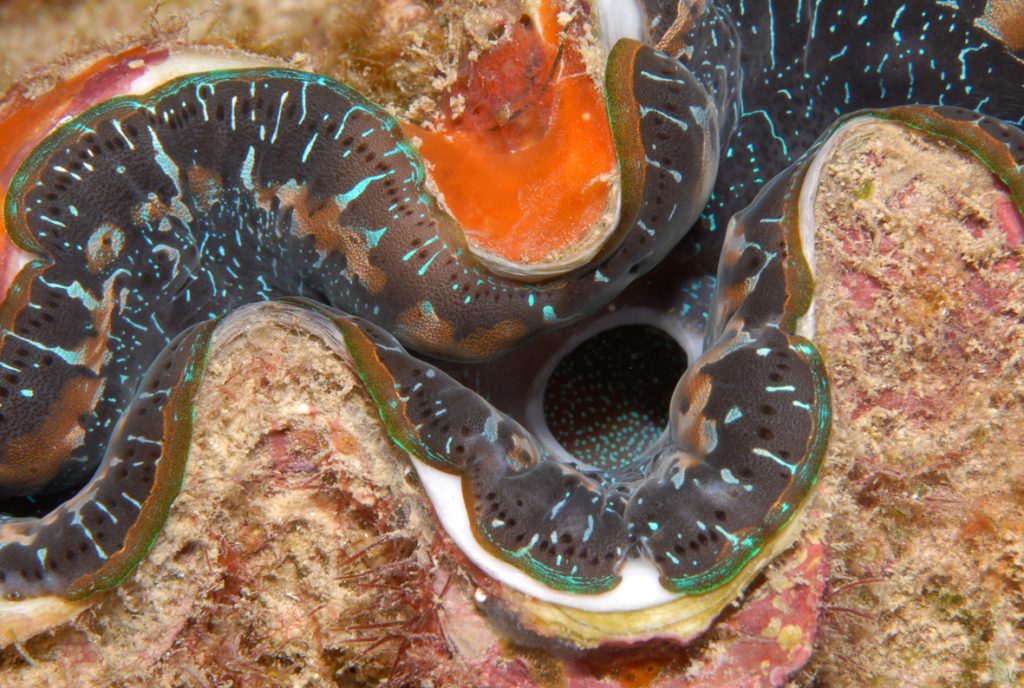
Finally, it was two dives at the unimaginatively named Coral Gardens, though its’ name does at least describe what you’re going to see unlike Tennis Courts! These couple of dives involved dropping over the reef wall and swimming against a moderate current before drifting back to the boat over the coral gardens. There’s some very nice coral formations here (as you’d expect from the name) and also the chance of pelagics out in the blue, especially at the furthest point that you reach before turning back.
So, what’s the verdict? Well, it’s a good all round dive trip in my opinion, and especially good for divers with little time, or a budget that doesn’t stretch to longer liveaboards. Inexperienced divers will certainly find these trips enjoyable and a step forward towards more challenging diving, and you can always choose the option of guided dives with one of the crew if you feel uncomfortable or unsure. These trips are also very popular for divers doing their PADI Open Water and Advanced courses, which are often run onboard. It’s a nice way to get qualified.
For the more experienced divers, the good bit is that buddy pairs can do their own thing (within reason, of course) with a maximum of 11 dives being possible. The majority of dives are limited to an hour, but you can extend certain ones by arrangement with the crew except on the last day, which is run more strictly on a timetable.
Families can also enjoy these trips, as children are accepted onboard (unlike the majority of liveaboards), though it’s unlikely that the crew will be able to organise any special activities due to the number of passengers. This means that they’ll have to fit in with the itinerary. For example, I sat out a couple of dives so that I could take Zac snorkelling, ensuring that he didn’t miss out on some of the action.
During our visit, the weather couldn’t make up its mind about what it wanted to do; quite windy during the whole three days, sometimes sunny, and often overcast. We probably didn’t see the place at its best, and yet there’s certainly enough here to keep most divers interested, especially the “starry eyed” new divers. In summary, it’s ideal for inexperienced divers looking for a bit of an adventure and a first liveaboard, and fine for experienced divers. Basically, it’s a good all round dive trip, getting a thumbs up from us.