
Text by Jeremy Cuff/www.ja-universe.com
Photography by Jeremy & Amanda Cuff/www.ja-universe.com
Diving trips, and especially liveaboards, are normally the preserve of the “grown-ups” but not on the Caribbean based Aggressor Fleet boats. Firstly in the Cayman Islands, then Belize and later in the Turks and Caicos Islands, we took our son Zac on the Aggressor Fleet’s unique Family Week charters, getting us all completely absorbed into the diving lifestyle. They were trips that lived long in our collective memories…
Anyone with a young child (or children) will know that if you want to maintain interests such as diving, it’s not easy. You’ve really got to want to do it, and find a way to incorporate it into an already busy and hectic life. As we’ve always wanted to keep doing it, our way was to enlist the help of grandparents (usually Grandma) so that we can go away for a week or so, or get her to travel with us to longer haul destinations.
This was great up to a point, but didn’t really allow our son Zac to fully be a part of our “other life” other than showing him images from our trips, looking at fish books and watching wildlife documentaries. That is, until we discovered the Family Week liveaboards run by the Aggressor Fleet in the Caribbean.
These itineraries are based on the normal “grown-ups” trips, but with a few subtle tweaks to make it more “child friendly” both onboard and in the water. We started with the Cayman Islands and because we enjoyed it so much, followed it up with Belize and the Turks & Caicos Islands.
Cayman Islands
The liveaboard was a source great thrill for Zac, with the steep staircase leading downstairs to our cabin along the narrow corridor, the dive deck with his own space, and the hot tub on the sun deck. Within seconds he’d laid claim to the top bunk and began making it feel like home as various toys spilled out from his backpack.
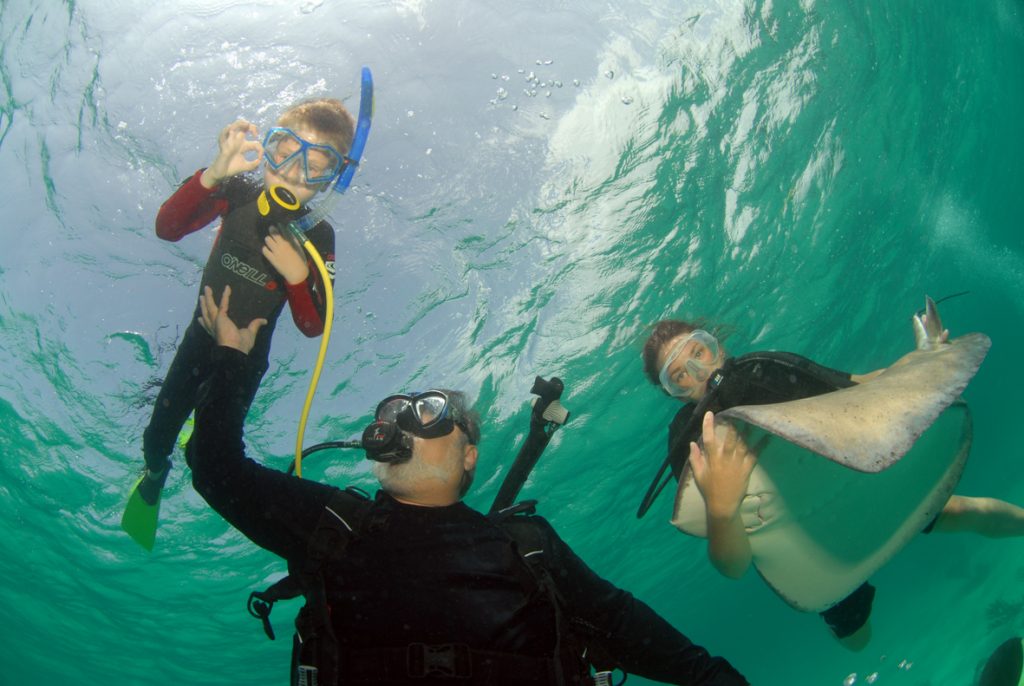
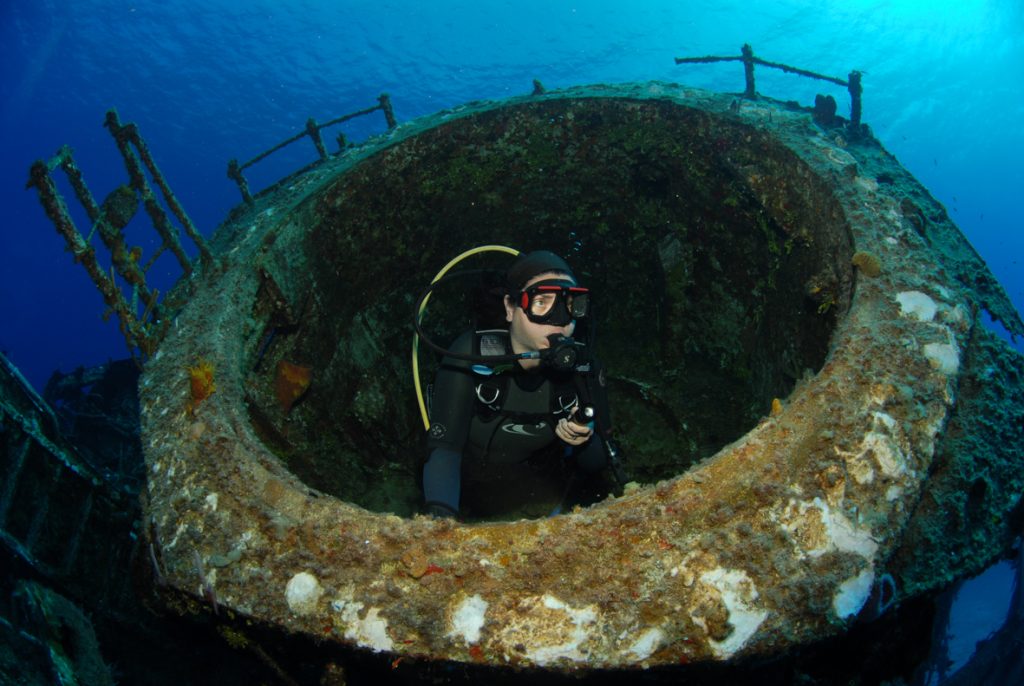
We visited the “world famous” Stingray City where we watched Zac snorkel with one of the crew, legs kicking feverishly towards the melee of divers and rays. Then, a crew member cradled one of the rays and eased it to within reach of Zac. It was a great moment to watch from beneath, and a great photo opportunity. He thought it was fantastic.
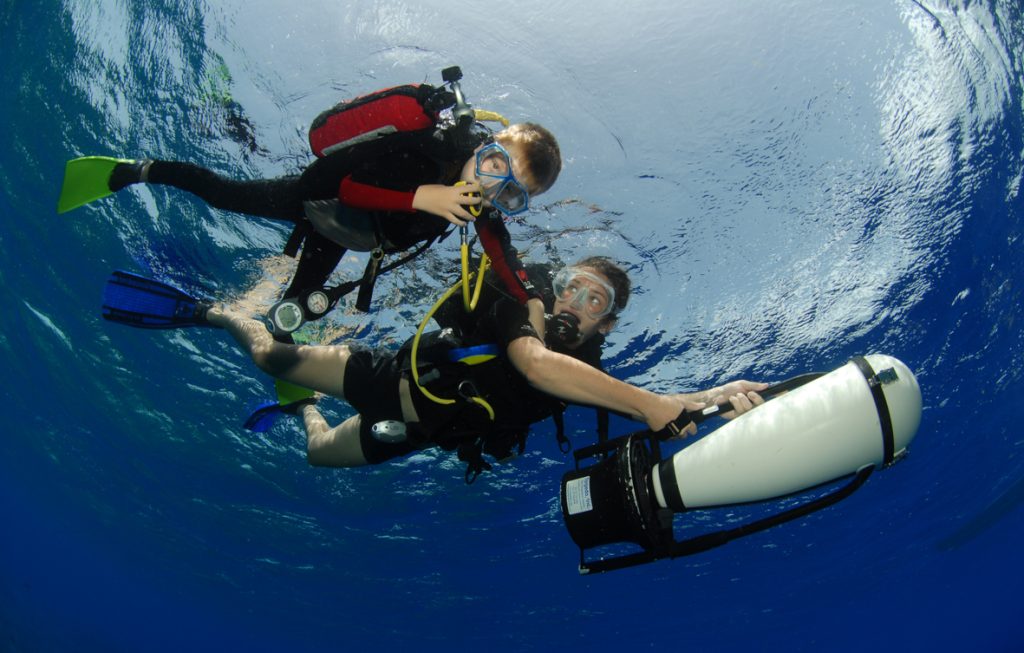
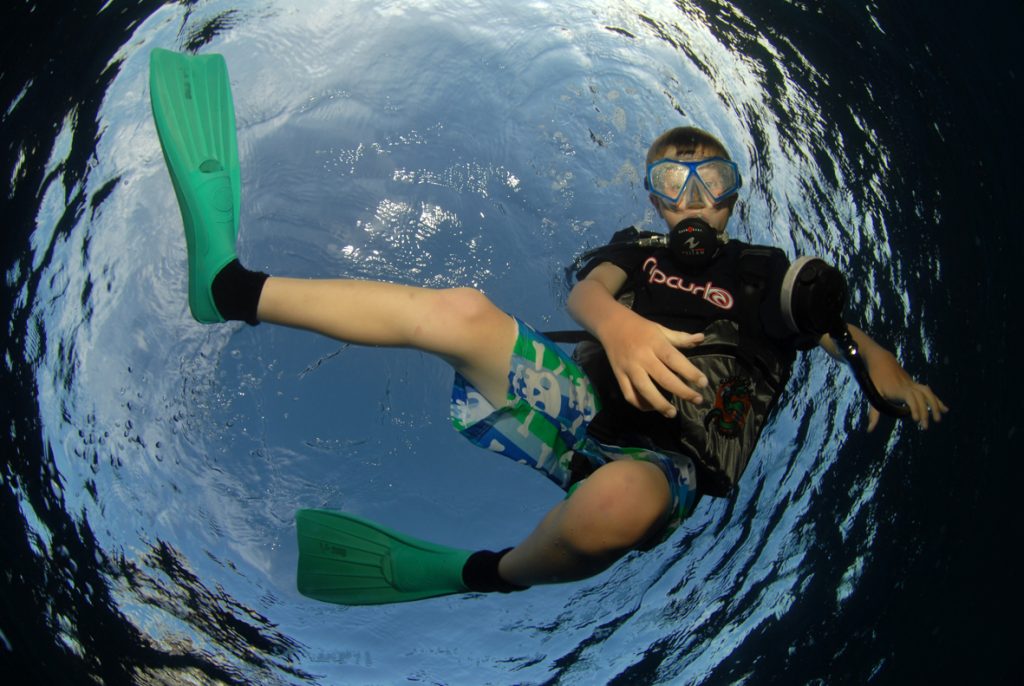
Also in the Caymans, Zac would get his first opportunity to emulate a “real” diver where he would attend the dive briefing and be shown how to kit up, check air and so on. He would then enter the water with a crew member using a SASY (Supplied Air Snorkelling for Youth) setup which is a self-contained regulator and tank, but for surface swimming only. With this equipment, a child can thus breathe through a regulator like a diver, check air and view the reefs from above, but without the snorkel filling with water.
It’s a great step towards becoming a diver. We watched Zac perfect his giant stride entry and laughed as he begged to be given some weights. On one of his SASY “dives”, he went with a crew member on a “scooter” – a motorised torpedo like device that propels you through the water.
On this trip, the usual format is to spend the first night and following day off Grand Cayman before making the crossing to the best diving at Little Cayman, where you spend most of the time, plus a visit to Cayman Brac, before heading back to Grand Cayman.
Belize
In Belize, most dive sites are combinations of spectacular walls, slopes and drop offs cut with swim throughs, fissures and overhangs that are adorned with sponges (including the gigantic barrel variety), plus a multitude of corals, gorgonians and other assorted reef growth.
On the reef tops at some sites, such as Half Moon Caye Wall and Lighthouse Wall there’s a maze of overhangs, gulleys and ledges to explore, plus some interesting sandy expanses and sea grass beds which are home to garden eels, stingrays grubbing for molluscs, the occasional eagle ray, jawfish, pipefish and possibly seahorses, though they’re incredibly hard to spot, try as we might.
The Blue Hole is Belize’s signature dive, known the world over from the spectacular aerial shots that often adorn tourism and dive travel brochures. It was formed by the collapsed ceiling of a large underground cavern, resulting in the circular skylight that we see today.
Around the world, there’s several “blue holes” that can be dived, such as the ones in Dahab (Egypt) and Palau, but Belize’s version is reputedly the largest. It was visited by the intrepid Jacques Cousteau in the 1970’s, who brought this fascinating place to the public’s awareness and ensured its subsequent dive icon status.
The dive itself involves an exciting freefall down the sheer wall into the black, to a depth of around 40-45 metres, so it’s most certainly a dive to be taken seriously, and where the briefing must be strictly adhered to. At around 35-40 metres, the first shelf of the original cavern begins, where large stalactites descend from the ceiling. Divers have just a few short minutes to explore this unique topography before heading back up the wall. The kids had to watch all this from above.
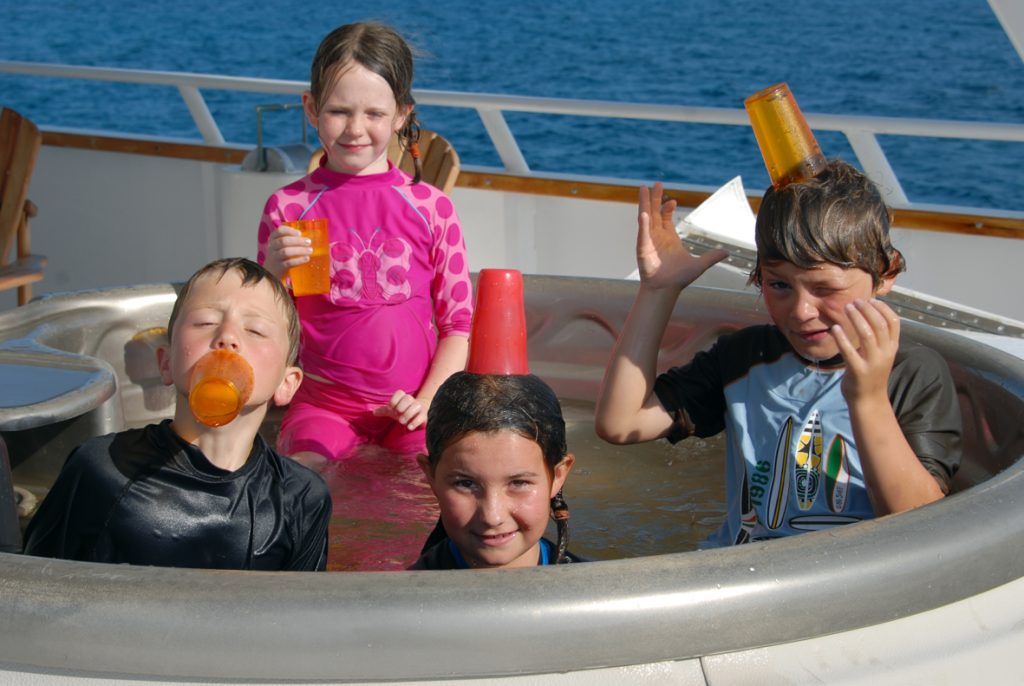
On this trip, Zac was in the company of three other children of the same age, and we can honestly say that we’ve rarely seen children so happy and “in their element” – free of toy shops, shopping malls and TV – just kids being kids, having fun together, always happy and always smiling – it was a joy to behold.
My friend Simon, his wife Tonya and son Thomas found this trip to be brilliant. The crew were great with the kids, often taking them off for dingy rides whilst the grown-ups went diving.
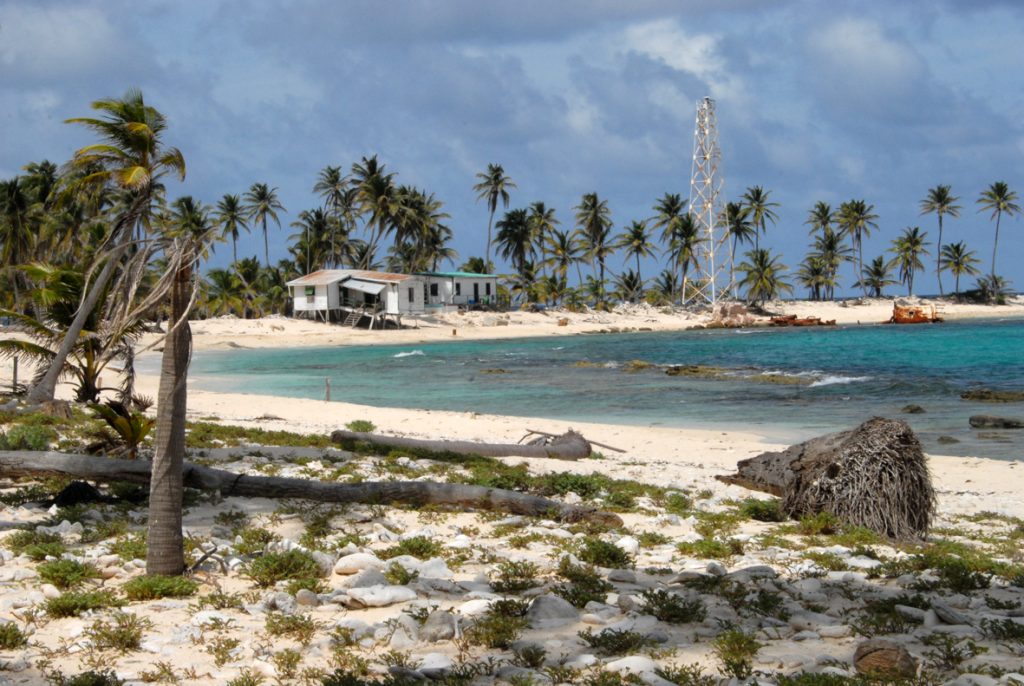
As well as enjoying liveaboard life, we also visited Half Moon Caye for a barbecue and nature walk. The island is home to lizards, iguanas, hermit crabs and colonies of nesting booby birds and frigate birds. The kids loved it.
Turks & Caicos Islands
Having regularly checked out the Aggressor Fleet’s website on the lead up to the trip (the “Meet the Crew” and “Captain’s Log” sections), we were fairly certain that Lowel, one of the crew who looked after us on our Cayman trip and who Zac especially remembered would be onboard.
We arrived at Turtle Cove Marina early to meet the boat and settled into the nearby Tiki Bar for conch fritters and fish sliders whilst we waited for the time to board. The excitement of seeing the Aggressor moored up, getting cleaned, stocked and ready for our week was too much for Zac, so we wandered over to see who was about and to his delight, Lowel was there. After all the divers he must have seen since our Cayman trip (when Zac was only six), it was nice that he remembered us, despite Zac having grown a lot in the five years that had passed. He would say to Zac later in the trip “we’re reunited and it feels good.”
We found the “Turks” boat very similar to the Cayman and Belize Aggressors, so the routines of liveaboard life soon came back to us. And as with all liveaboards, it has its own unique quirks and onboard highlights such as abundant crisps and a “promise fulfilled” of endless Orio biscuits!
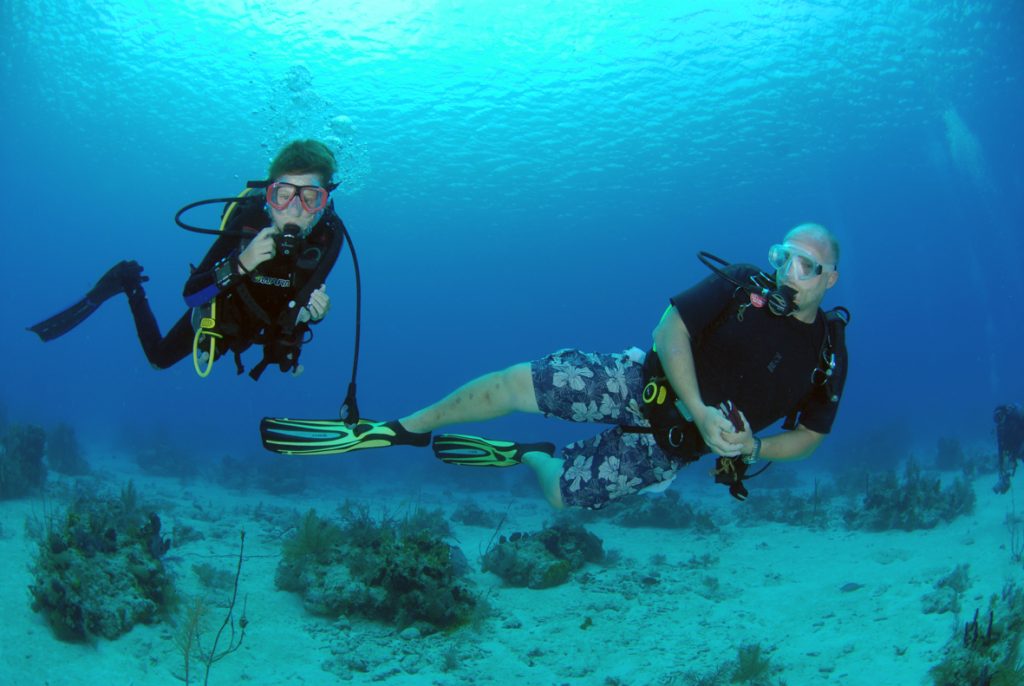
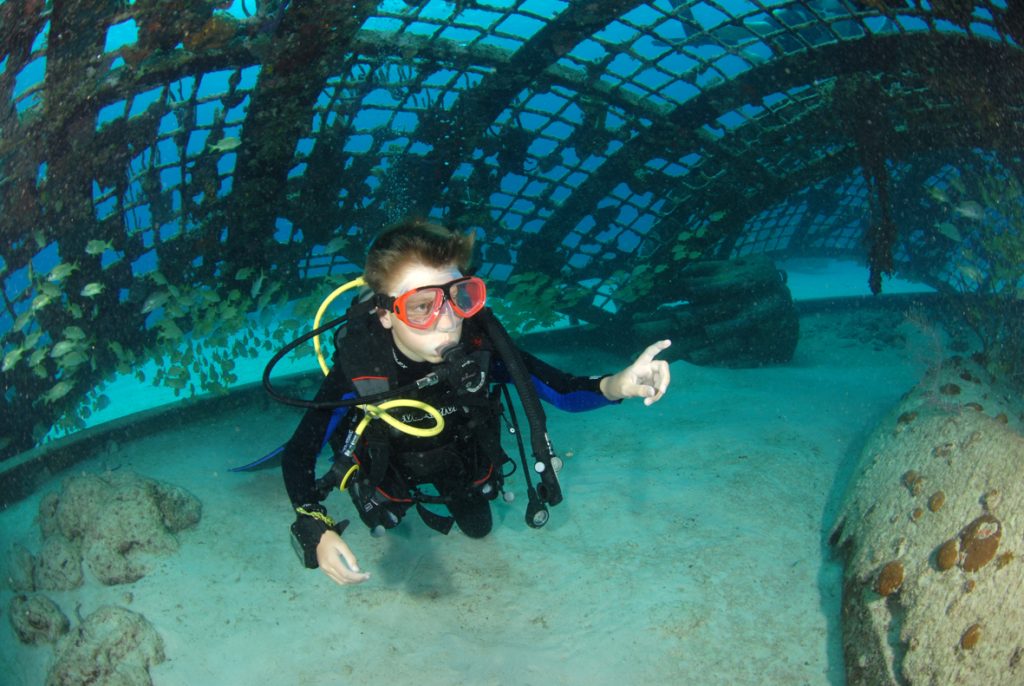
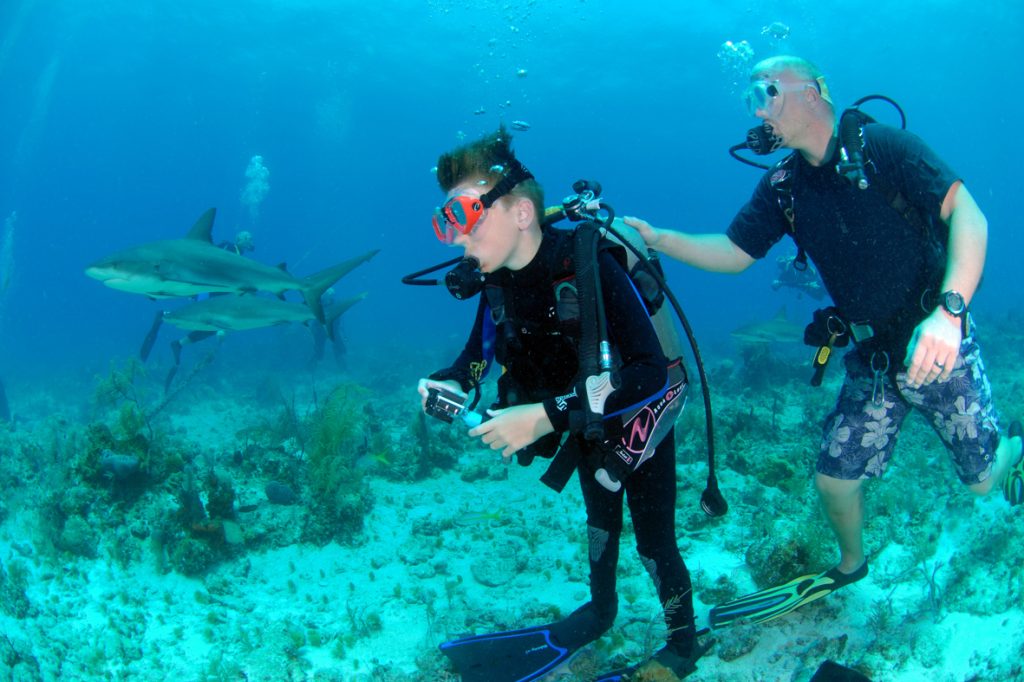
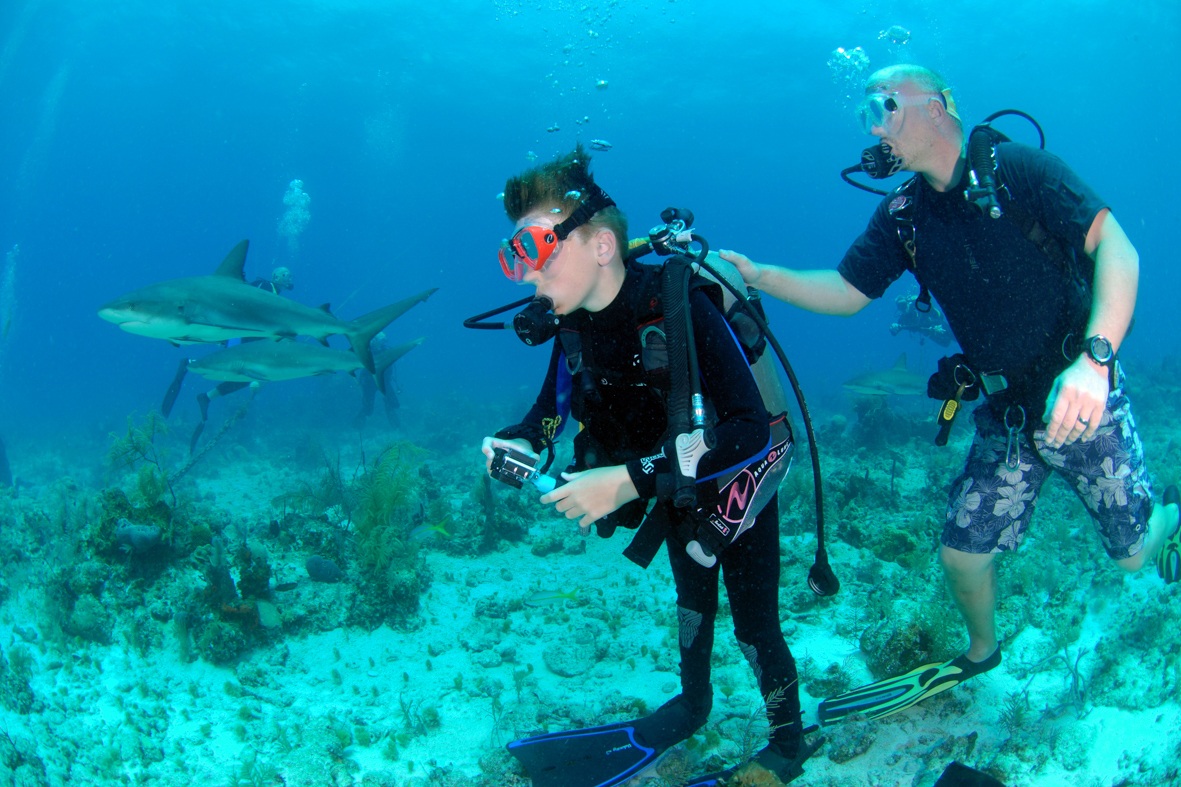
By the time of this trip, Zac was qualified as a PADI Junior Open Water Diver, so could participate in many of the dives as a “real” diver. His new-found underwater competence meant that he could take part in the shark dives, which he really enjoyed, taking his Go Pro to get some footage at the Rock and Roll site, as reef sharks cruised around him and a small nurse shark investigated the reef around the diver’s fins.
On all three of our Aggressor trips, the crew were very friendly, encouraging and patient with the children, and as a parent you felt completely relaxed about them being onboard, knowing that they were well looked after and entertained when you were diving.
The crew film the activities of the week’s activities (underwater and above) and produce trip DVD’s for anyone who’s interested. Our copies have been watched countless times by Zac, and it’s a testimony to how much he learned and benefitted from the trips that were adventure, fun and education all rolled into one.
In fact, these trips are among the most memorable times we’ve ever spent together as a family. Summers to remember indeed!