
Text by Jeremy Cuff/www.ja-universe.com
Photography by Jeremy & Amanda Cuff/www.ja-universe.com
The eastern Caribbean island of Dominica is emerging as a great destination for underwater photographers. Good visibility, easy conditions, photo friendly dive sites, abundant marine life and slow swimming dive guides, need I say more…
Dominica is the new Bonaire! Really? Why do I say that…?
For a long time now, the Caribbean island of Bonaire has been recognised, quite rightly, as an excellent destination for underwater photography with its combination of excellent dive sites and easy conditions. The island of Dominica is another such place.
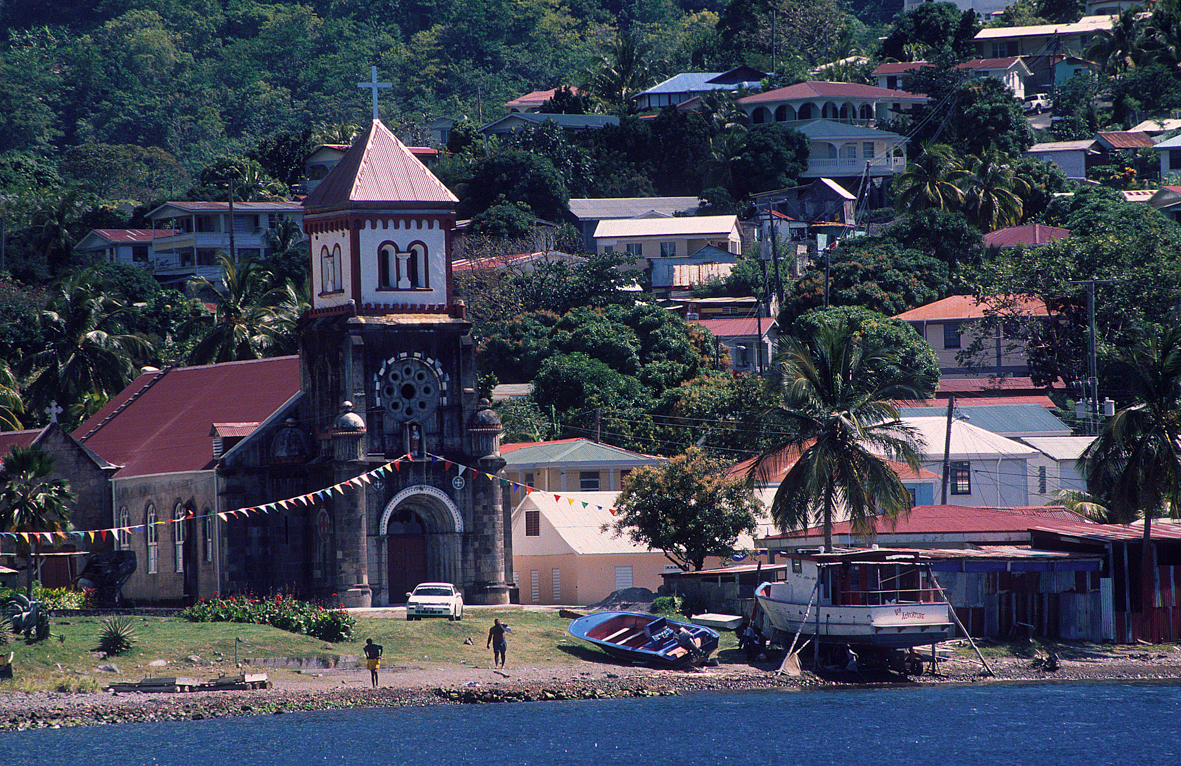
Dominica is a spectacular island, situated in the eastern Caribbean between Guadeloupe and Martinique, and is not to be confused with the Dominican Republic. Unlike its namesake, Dominica is not really a sun and sand destination at all. Instead of sun seekers, the island tends to attract nature enthusiasts, hikers, mountain bikers and of course, divers. And increasingly divers with cameras!
Dominica is less easily reached than some of the more mainstream Caribbean islands. You can’t fly direct from Europe and, unlike Bonaire, you most certainly can’t land a jumbo jet at the modest Melville Hall Airport!
We came in via Antigua from London on British Airways, then transferring to local carrier Liat for the short hop to Dominica. The good news was that we experienced no problems on either flight with the underwater photographers curse of excessive hand luggage.
The drive from Melville Hall to Roseau, Dominica’s capital, and the Castle Comfort Dive Lodge takes about an hour and a half. This small and intimate dive lodge is a place that could be recommended to any visiting diver. The rooms are clean and comfortable, the staff are extremely friendly, the food is good and the dive team are excellent with great knowledge of the area. Decent boats and good facilities round up the positive reasons for staying there. Also, it’s only a twenty-minute walk from central Roseau.
The normal format of the diving is for two boat dives a day, leaving at 08.45 am. After collecting any divers staying at the Fort Young Hotel in Roseau, the boat then heads south towards the dive sites. The boat doesn’t return to shore between dives so it’s important to ensure that you’ve got spare film, o-ring grease and any other equipment that you may need. There’s camera rinses onboard and the crew are well used to handling photographic equipment with care and understanding.
Also, like some resorts in Bonaire, the Castle Comfort Dive Lodge has its own version of “diving freedom” with good shore diving available as little or often as you like. Just grab a tank and go, day or night if the boat diving is not enough. Alternatively, extra boat dives can be organised if there are enough participants.
Dominica is often referred to as the “nature island”, is volcanic in origin and retains around two thirds of its original forest cover, particularly in the mountainous interior. It also boasts excellent reef diving sites, mostly on the sheltered Caribbean side of the island, rather than the more unpredictable Atlantic on the eastern side.
In fact, the main diving area in the south west of the island, around Soufriere is an ancient crater, which is now protected as the Soufriere Scotts Head Marine Reserve. As if to remind us of Dominica’s recent geological past, volcanic bubbles still rise from the seabed close to the shore at the aptly named dive site Champagne.
The good visibility, lack of any real current and the relaxed style of diving practised by the Castle Comfort crew means that underwater photographers can dive with non photographers and still concentrate on the work in hand, rather than setting speed diving records and worrying about keeping up with the rest. It really is laid back diving conducted at the pace of the slowest diver.
Dominica may not be the best place for pelagics but as most underwater photographers know and appreciate, that there’s a lot more than big fish. Wide-angle opportunities abound and the critter infested reefs ensure that macro lenses are never far from the photographers mind. For those needing an injection of pelagic action, Atlantic dive sites such as Village offer the best opportunities with Barracudas being the most frequently sighted of the big predators.
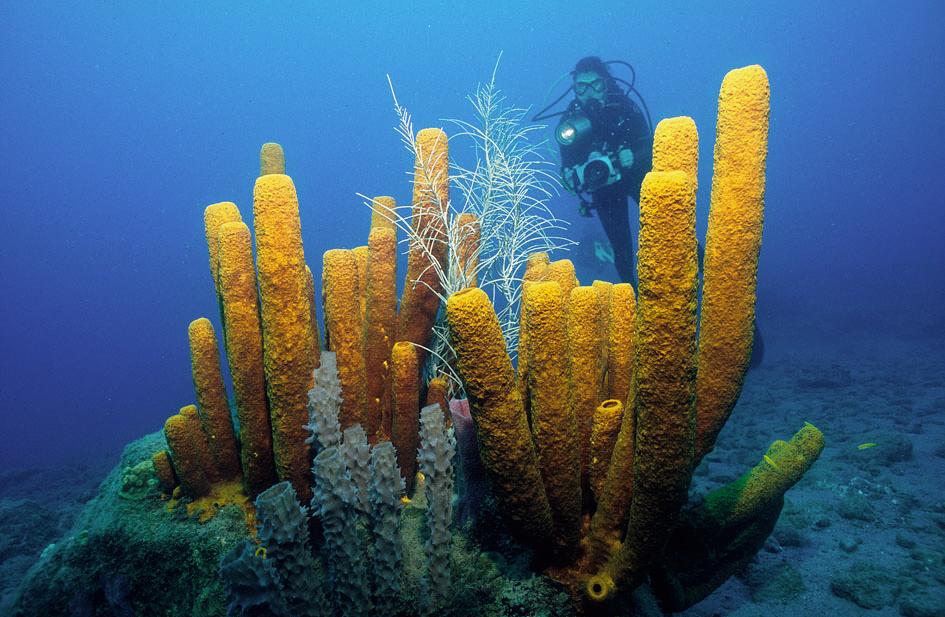
Hugely impressive tube and barrel sponges, crinoids, gorgonians and many other species of coral provide the wide-angle photographer with a tremendous choice of subject matter. The vibrant colours of the reef combined with the clear blue water makes for wide-angle images at their most vivid and striking. Even the dive boat itself can be used as a useful compositional tool, providing an interesting background and context to a group of divers or a tube sponge.
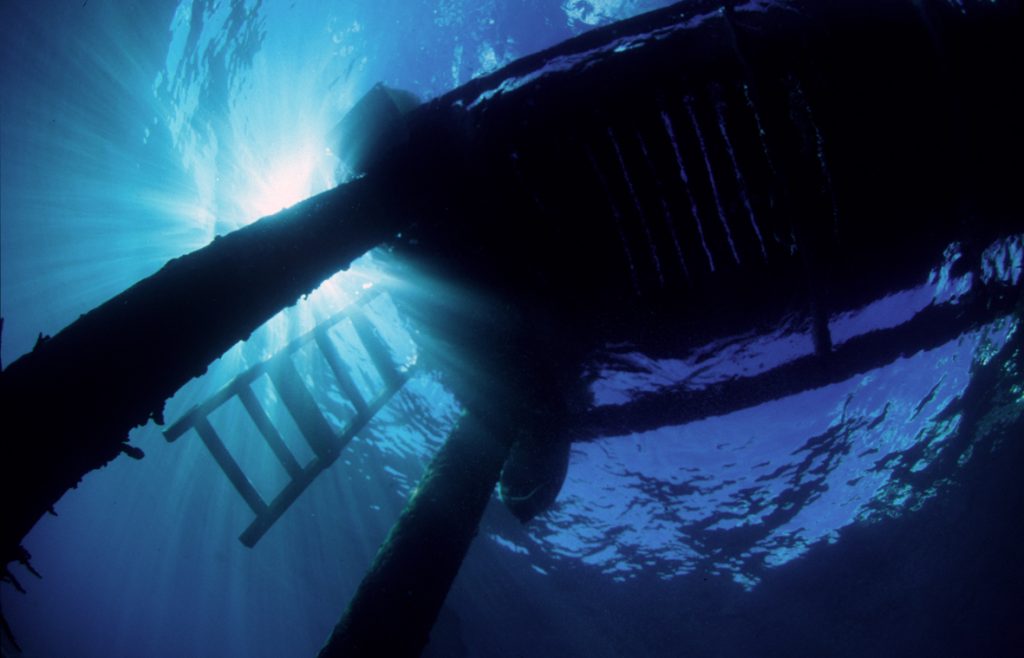
The small jetty at Castle Comfort also offers excellent wide angle and fish eye possibilities. It’s worth spending at least a dive or two hanging out around the legs of the jetty looking for that unique angle, sunburst, passing snorkeller or well positioned boat.
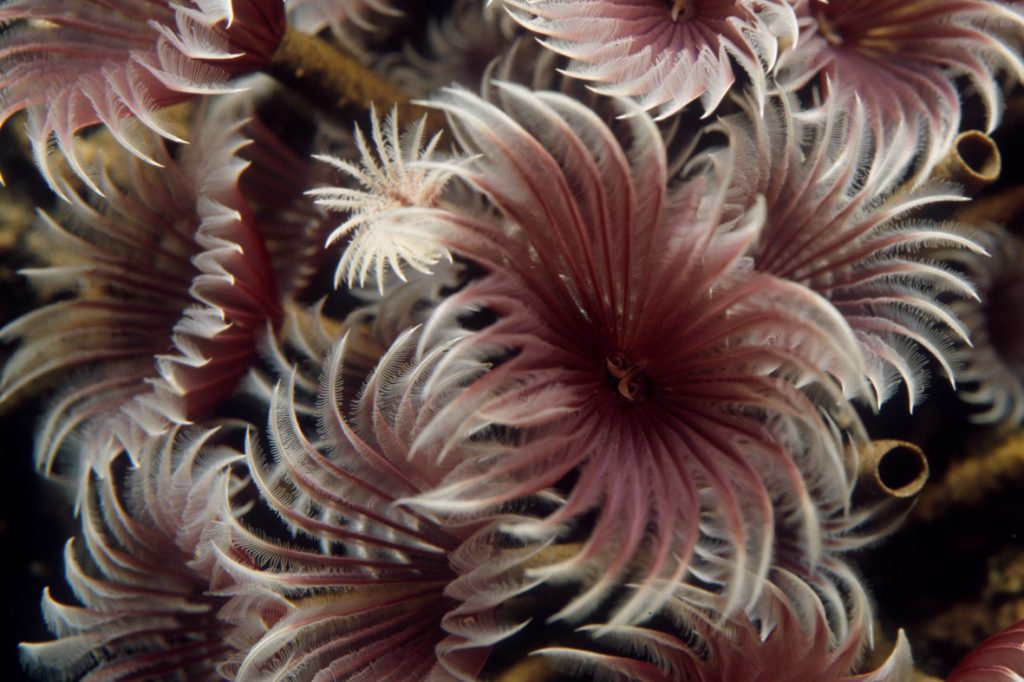
Dominica’s reefs are great for macro and fish photography. Reef critters can be spotted anywhere on the Dominican reefs and range in size from the tiny Pederson’s cleaner shrimp to large spotted lobsters and reef crabs. Anemones, sea urchins, octopus, feather dusters, hermit crabs, arrow crabs, tunicates, fireworms, flamingo tongues and the delightfully named donkey dung sea cucumber were but a few of the reef inhabitants noted during our stay.
Sedentary fish such as scorpionfish and flounders are fairly easy to find at most dive sites but seahorses can present more of a problem. Luckily, the dive guides will usually know the whereabouts of at least two or three. We were also told that a pair of seahorses could be found living close to the shore at Castle Comfort, although we couldn’t find them, try as we might!
The frogfish are another matter. Where have they gone? Barbara, one of the dive guides, said that she knew of one specimen, at a dive site in the north of the island but other than that, she hadn’t seen any for some time. Several theories were doing the rounds amongst the local dive community. One dive guide suggested that several winter storms in quick succession had driven them into deeper water and that due to their slow moving nature, they haven’t been very quick in repopulating the shallows. Others disagreed. Whatever the reason, the frogfish seem to have all but vanished from Dominica. Hopefully they’ll be back.
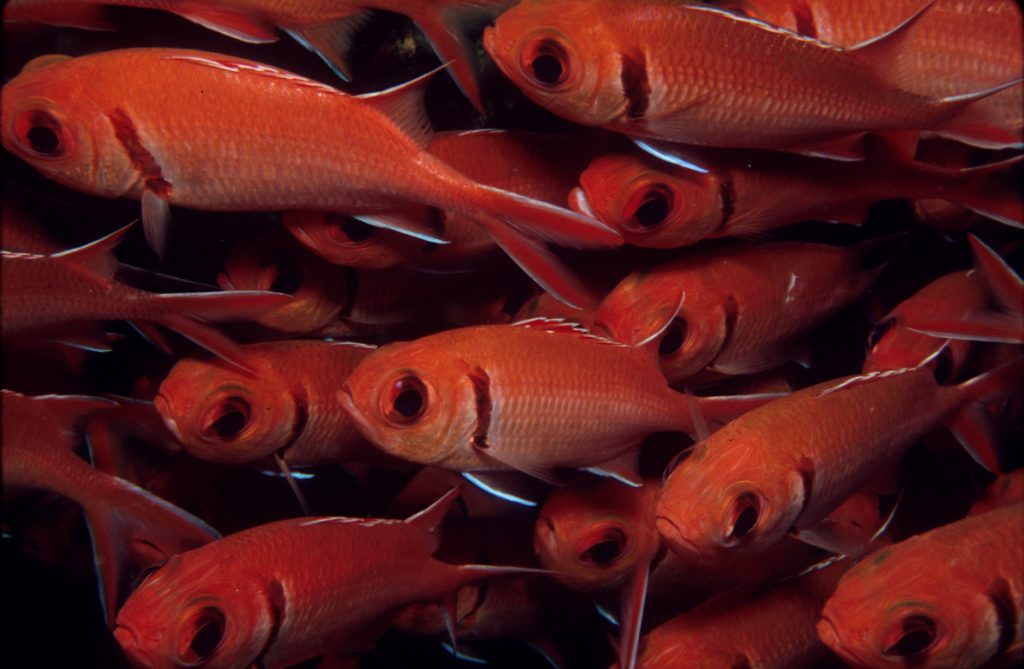
In Dominica, the soldierfish seem unusually tolerant (and abundant!) allowing photographers to get close and photograph them. Dive sites like Swiss Cheese are one of the best sites for soldierfish as they tend to congregate in large numbers in the swim-throughs and therefore find it impossible to back away from the photographer.
Lizardfish, too, can present good potential. So often difficult to approach and usually found on a very light sandy background, these wary fish can sometimes be spotted resting on ledges at sites such as L’Abym, allowing the photographer to approach from beneath to capture a unique view. Like the soldierfish, I found the lizardfish quite approachable in Dominica. Or was it just my imagination…!
The sandy areas are also worth a look and are far from the “underwater deserts” that some divers may perceive them to be. Flounders, jawfish, garden eels, flying gurnards and even stingrays are fairly common here.
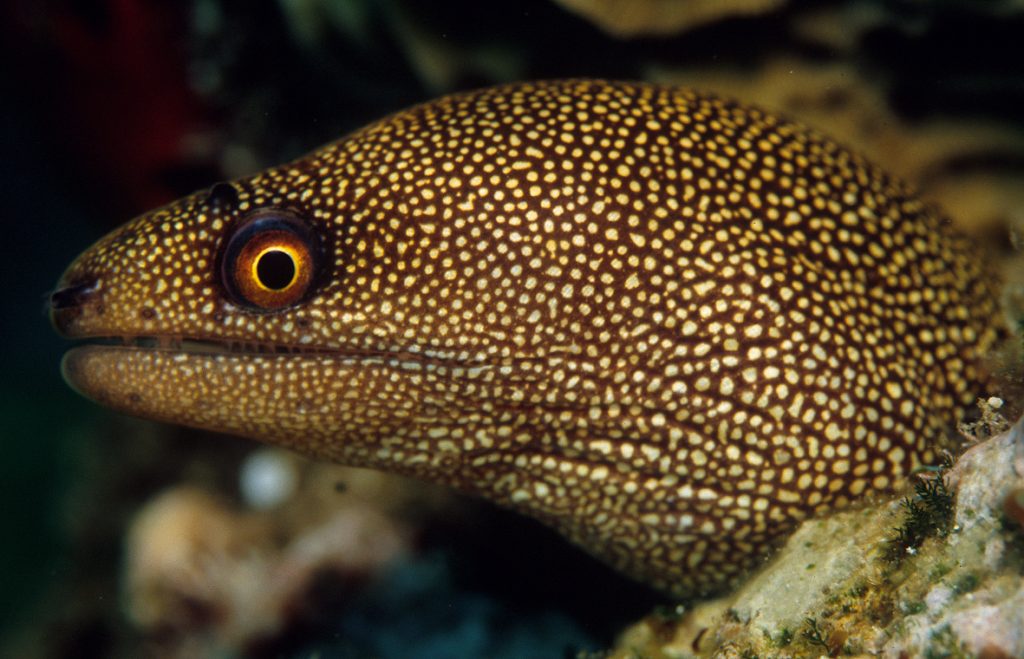
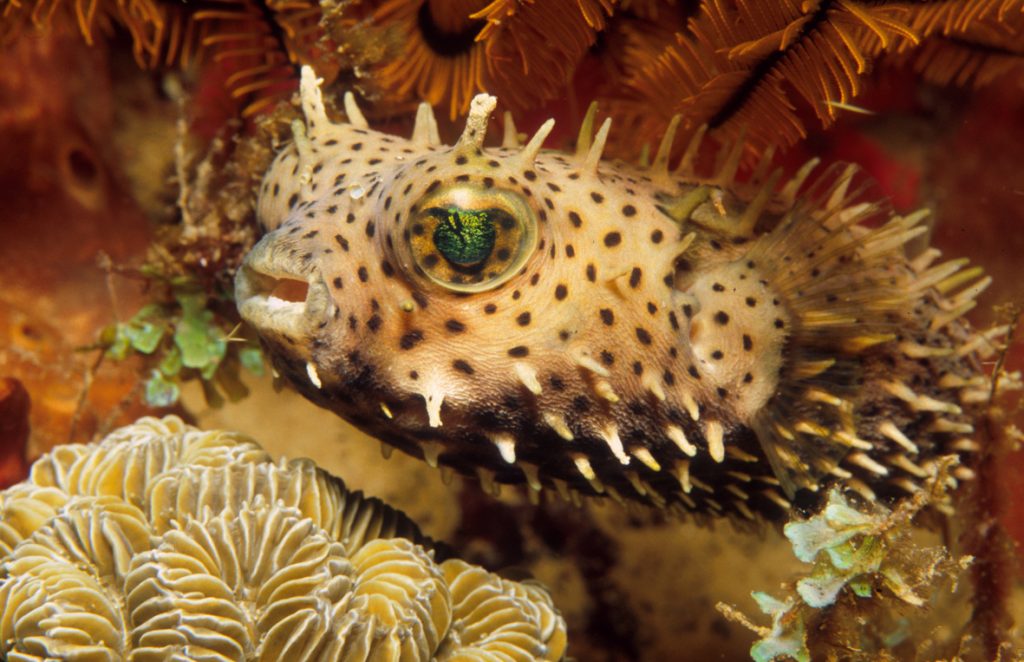
Turtles are encountered frequently inside the Soufriere Scotts Head Marine Reserve and can often be spotted at the surface from the dive boat. Of the types of fish not already mentioned, pufferfish, filefish, cornetfish, moray eels, spotted snake eel, parrotfish, angelfish, damselfish, coney, gobies, and jacks round up some of the species commonly found on the reefs.
Champagne provides opportunities for natural light images; if you’re lucky (I wasn’t!) perhaps a snorkeller may pass overhead. The volcanic bubbles rise from a small area of rocks close to the shore in about 3 metres of water. Divers usually visit the bubbles at the end of the dive, so it’s worth keeping a few images spare to record this unique diving experience.
Night dives can spring all kinds of surprises. We enjoyed an excellent night dive on the reef around Champagne encountering free-swimming morays, lobsters, shrimps and the real highlights – a Caribbean reef squid and an electric ray.
For those interested in the wider photographic potential of Dominica, the topside has plenty to keep a photographer busy. Still with a marine theme, there’s a population of sperm whales and dolphins that can often be sighted. Whale watching trips organised by the Castle Comfort team take visitors out to the action at least once a week and are usually successful. Other species of whales are also encountered regularly around Dominica including False Killer, Pilot and even Humpback Whales. On the island itself, the forested hills, superb scenery, picturesque towns and villages, abundant birdlife and, of course, the friendly Dominicans themselves will keep the camera busy.
So, is there anything negative to say about Dominica? I’d have to say an emphatic “no”. Perhaps a slight inconvenience is that there’s no E6 processing available at the resort, so slide film photographers aren’t able to check their work as they go. There may be E6 processing available somewhere in Roseau but we didn’t have time to search it out, if indeed it’s available at all. Digital users will, of course, have no such concerns.
So, is Dominica really the new Bonaire? Well, Dominica isn’t really like Bonaire, but it does have similarities that are extremely attractive to the underwater photographer – good visibility, easy conditions, photo friendly dive sites, abundant marine life and slow swimming dive guides, need I say more…