
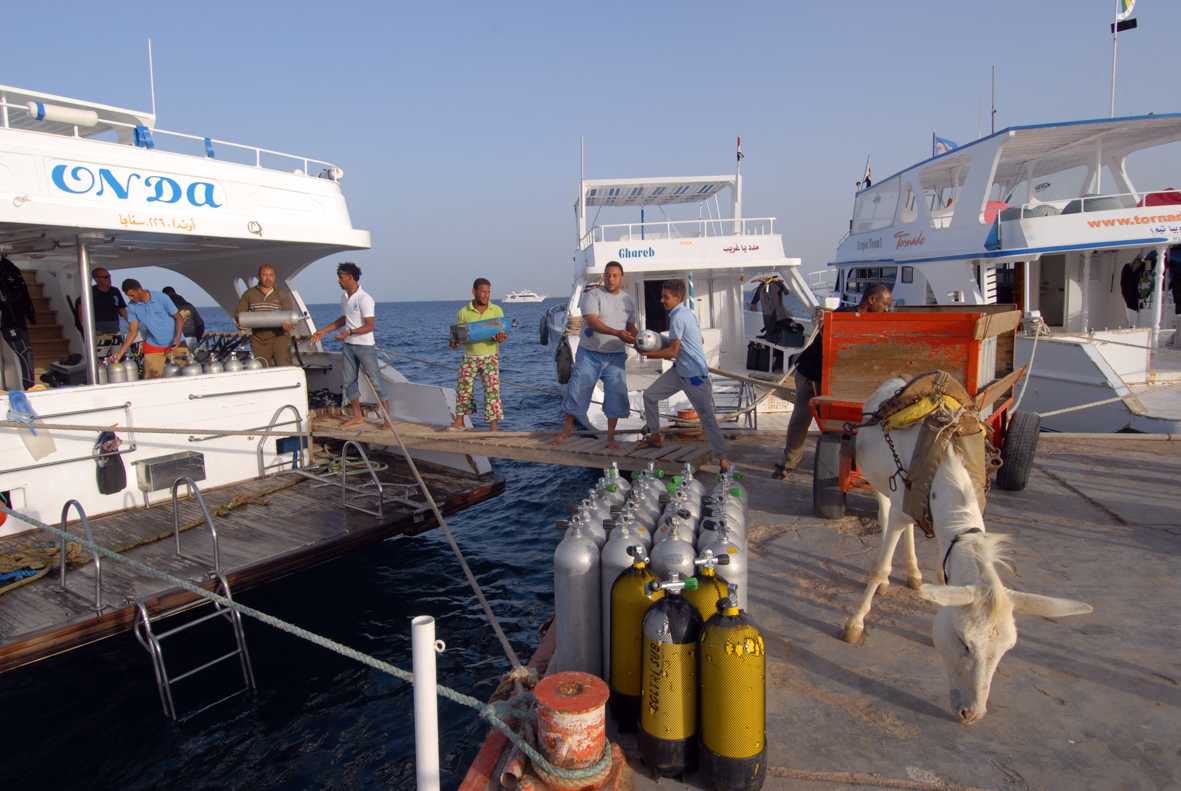
Text by Jeremy Cuff/www.ja-universe.com
Photography by Jeremy & Amanda Cuff/www.ja-universe.com
Over the years, we’d visited Egypt on a number of occasions, taking in land based diving at different locations, a couple of liveaboards and even a Nile cruise. This time, for our Easter break, we were looking for some “back to nature” simplicity, which attracted us to the Roots Dive Camp, just north of El Quseir…
In recent times, we found ourselves with a craving for some simplicity in our lives, as we juggled a myriad of responsibilities of the sort that many of us will be all too familiar with. So, for our Easter holiday, we looked for a place that would give us an interlude from all those complexities and allow us to relax, do what we enjoyed, and to recharge our batteries in a simple and straightforward environment. To tick our boxes, we wanted a place with good weather where we could get up, eat, go diving, eat, watch the sun go down and repeat the following day – that sort of thing.
Our research for that “back to simplicity” place soon led us to the Roots Dive Camp. We’d had a Red Sea dive camp on our “to do list” for some time and in terms of “Roots” specifically, we’d heard good things about it from a couple of diving friends, it had good online reviews and could cater for our 12 year old son Zac, who is now qualified as a PADI Junior Open Water Diver and keen to participate in the dives. We duly made the booking and it was something we really looked forward to as the date approached.
Roots Dive Camp is located on the Egyptian “mainland” (as opposed to the Sinai peninsula), just north of the town of El Quesir. There are two easy ways of getting there, either by flying into Marsa Alam to the south or Hurghada to the north; either way it’s a transfer up or down the desert coast road. Flight schedules meant that we chose Hurghada as our entry and exit points into Egypt from where it’s a 1.5 hour drive south, past Safaga to a remote spot a few kilometres north of El Quseir.
Our evening arrival into Egypt meant that we weren’t able to see the stark and spectacular desert scenery straight away – that would have to wait until the morning. It was nearly midnight when we arrived and it was nice that the Roots team had kept some food back for us so that we could go to bed on a full stomach.
We awoke to the expected (and hoped for) Egyptian weather of bright, warm sunshine and enjoyed taking in the vista that we were initially denied due to our night time arrival. It’s a lovely setting, where the desert meets the sea, with the dark blue waters of the Red Sea beckoning us to go diving just over the road at Abu Sauatir beach, where Roots have an area for kitting up, washing and drying gear and also a beachside cafe where lunch is usually served for the hungry divers.
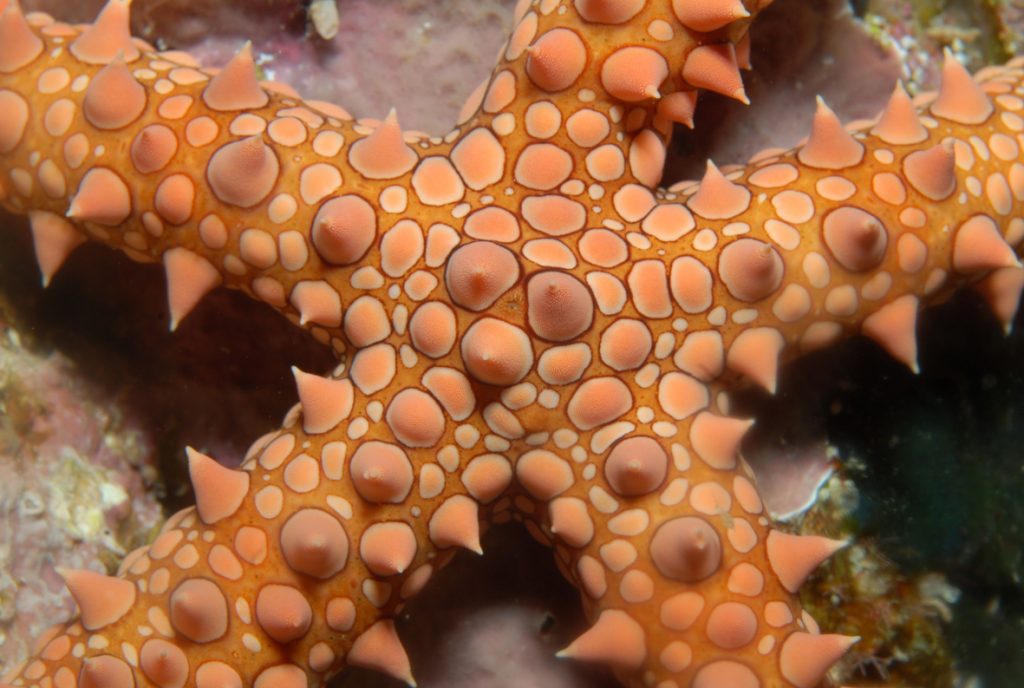
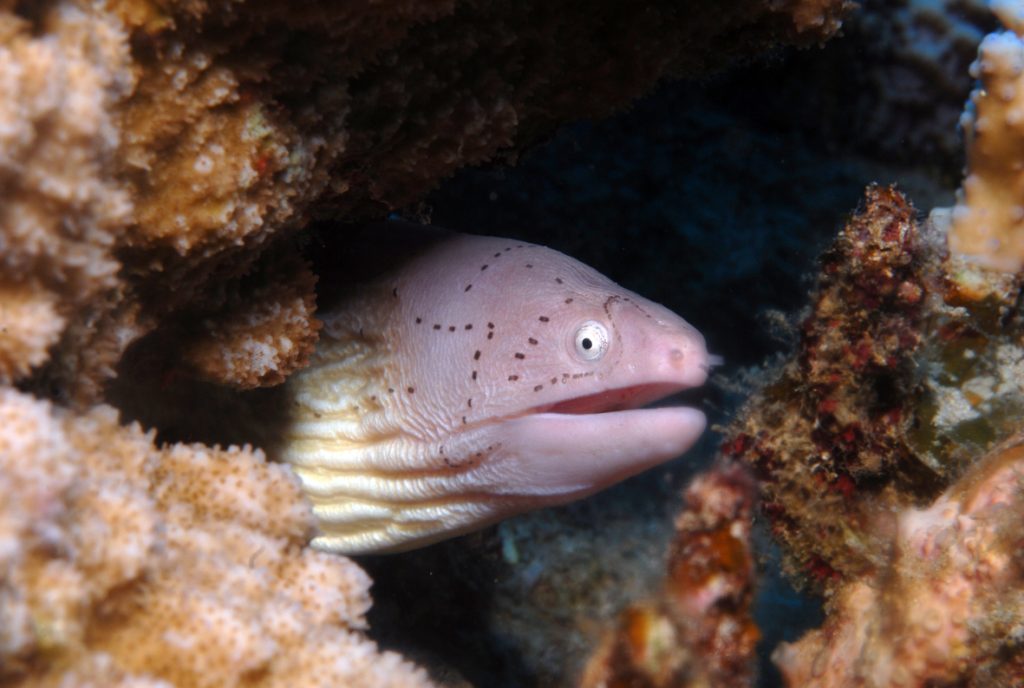
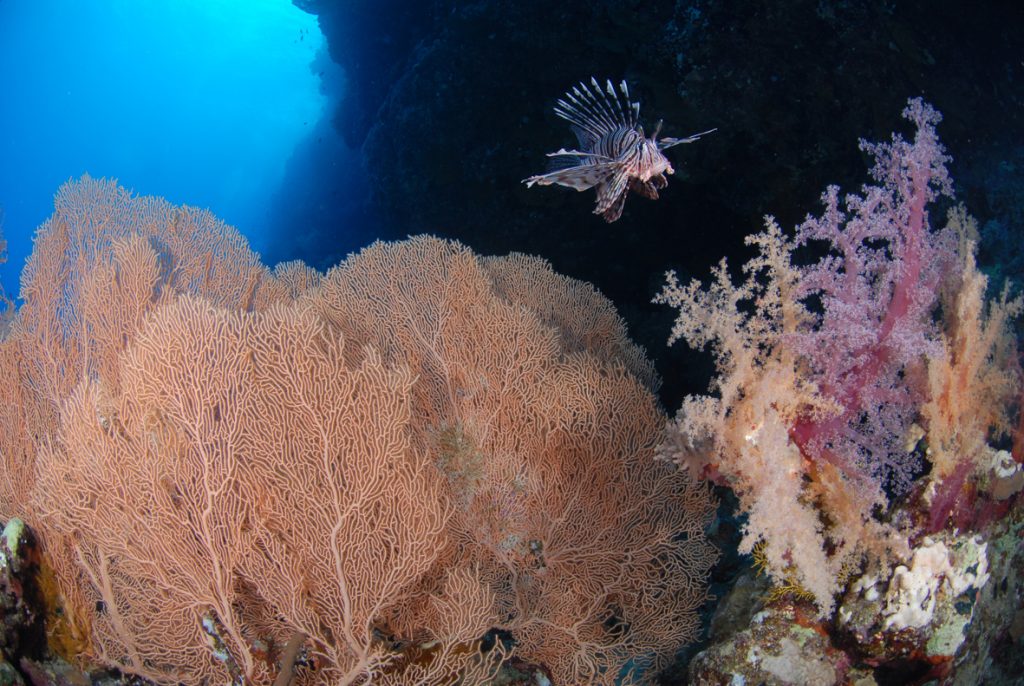
As we were “taking root” for 10 days, there was no great hurry to rush into the water so we used the first morning to unpack, have a leisurely breakfast, meet some of the staff, take our kit to the dive centre, build the underwater camera rigs and talk to the dive team about some of the diving options. Weather permitting (or perhaps wind permitting), the diving choices are quite wide – from shore diving (including night dives) on the house reef, half day shore diving trips to selected sites up and down the coast (usually in minibuses with the kit following along in pick-ups), boat diving on zodiacs and small boats from El Quseir and day trips to further flung sites such as Abu Kufan and the Red Sea favourite of Elphinstone.
As we were diving with Zac, we decided that most of our diving would be at local sites rather than some of the more distant “advanced” sites such as Elphinstone (though I did do a day trip to Abu Kufan – more of which later). As is the norm at Roots, we started with a check out dive at the Abu Sauatir “house reef” to get ourselves into the swing of things.
The “house reef” is really quite good with lots of reef inhabitants and interesting underwater topography to keep divers happy. You can head either north or south along the reef wall, though it’s also worth checking out the sloping sandy expanse in between the north and south walls which can also yield some interesting sightings such as with flounders, pipefish and even sea moths (though we weren’t fortunate enough to see the latter), as well as a statue that has been somehow sunk there for the benefit of divers – Zac was especially intrigued by this unexpected “find”.
We noticed that there were lots of “stinging things” on the house reef with scorpionfish aplenty and a pair of their more cryptic and deadly relatives, the stonefish. Heading down the south wall, we encountered impressive schools of fusiliers and a very active bommie at 18 metres alive with tiny baitfish, crinoids, a myriad of corals and a very photogenic red skirted anemone with attendant clownfish.
Though the evening buffets, stargazing opportunities, the attraction of the camp “chill out zone” (with a choice of sheesha flavours and a woodburner to pull you closer in the evening cool) and the temptation of early nights are somewhat of a deterrent to getting in the water after dark, it’s worth it if you do. By night diving at Abu Sauatir, you can expect some interesting finds, including octopus, squid, and perhaps even Spanish dancers, though like the sea moths in the day, they managed to avoid giving us an encounter.
Going further afield from the house reef is a must. There’s a good choice of diving to be enjoyed, though the prevailing weather can affect the plans some days. During our visit, we had a few windy days that made some sites “off limits”, but there’s always somewhere good to go.
Of the shore dives, we headed to sites both north and south of Roots. Most have reasonably straightforward entry points, with the Roots dive crew being very good at assisting anyone who’s a bit unsteady.
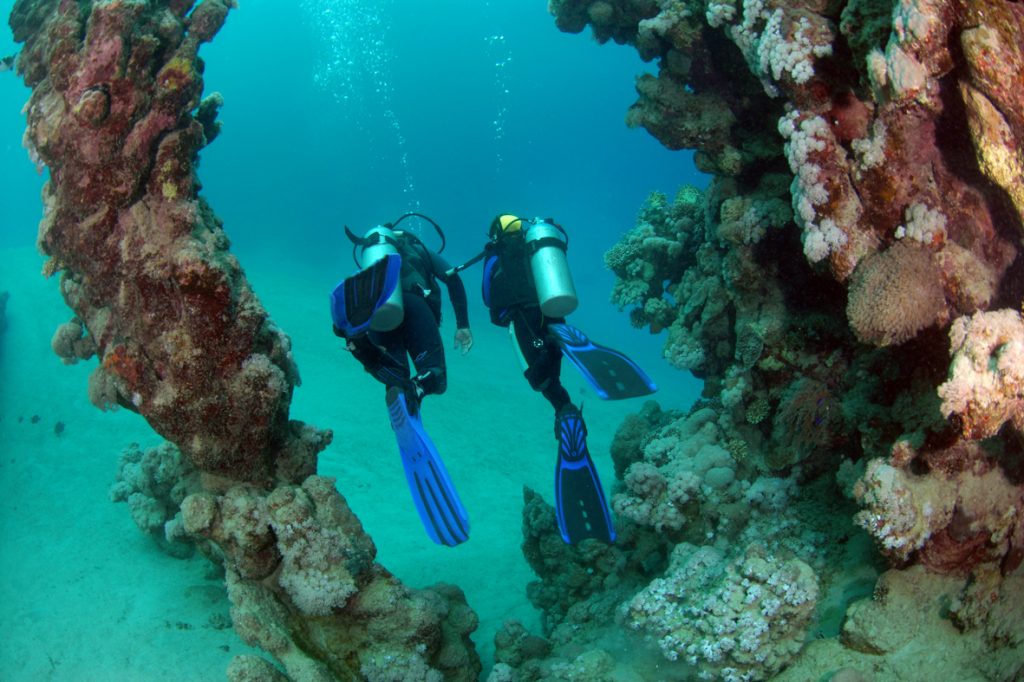
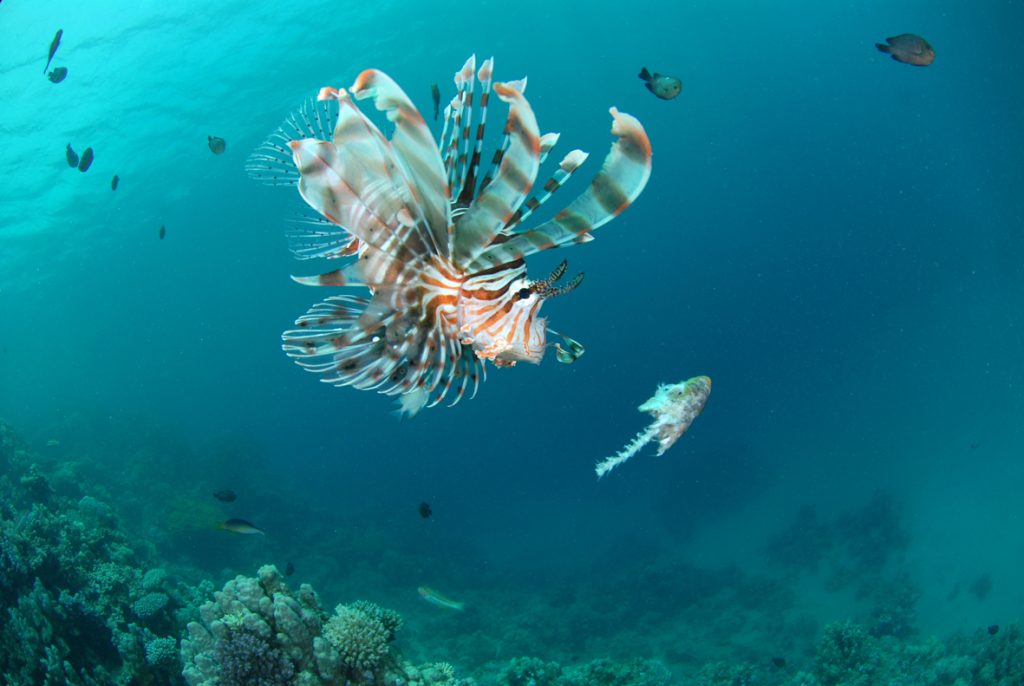
Especially worthy of mention were El Makluf to the north, where we enjoyed splendid Red Sea reef scenery in easy conditions (i.e. little current) which yielded crocodilefish, scorpionfish, nudibranchs, lizardfish and moray eels among the sightings. To the south, we visited the sheltered Serib Kebir on a couple of occasions when other sites were “blown out”. Here, there’s a resident school of barracuda, approachable lionfish, interesting reef scenes including pinnacles, caves, gulleys and swim throughs.
At El Quseir, there’s a dilapidated stone jetty that is used as the departure point for the some of the local sites that can’t be shore dived. From here, locally run boats take divers to a number of sites in the vicinity of the town. “The Rock” is particularly popular, which is El Quseir’s version of “Anemone City”. Here at around 18 metres, divers can marvel at an incredible concentration of anemones, which in turn give home to large numbers of the iconic clownfish. Nearby, is the Fandira Wreckage site, a pleasant reef slope that gave us a nice turtle encounter.
Though very rare, Dugongs are still known to inhabit the area, especially to the south of El Quseir, and are very occasionally sighted. As eternal optimists, we hoped for an encounter with these “sea grass hoovers”, especially at the Oma Sukan site which offered the most promise with a flat expanse of sea grass beds next to a shallow reef. On occasions, I would swim away from the reef to look for pipefish, flounders and stingrays whilst keeping a watchful eye for something more “special”.
Dolphins can often be sighted around El Quseir, and whilst on one of the morning dives from El Quseir we encountered a small pod heading north. The captain set off to intercept them, allowing Zac and a couple of others to jump in and watch them pass underneath. They were able to do this several times, an experienced that Zac really enjoyed.
As well as the “stinging things” on the house reef, we also noticed an abundance of scorpionfish at most sites, including a really unusual specimen that Zac spotted, which had greenish markings and an overall pattern more like that of a frogfish.
At around the mid-point of our trip, Amanda and Zac fancied a “chill out day” at the camp, so I booked a full day boat dive trip to one of the further flung and isolated reef systems. I chose to visit Abu Kufan which is best accessed by larger day boats from Safaga. Abu Kufan is an impressive reef, and very similar to the better known and well renowned Elphinstone to the south.
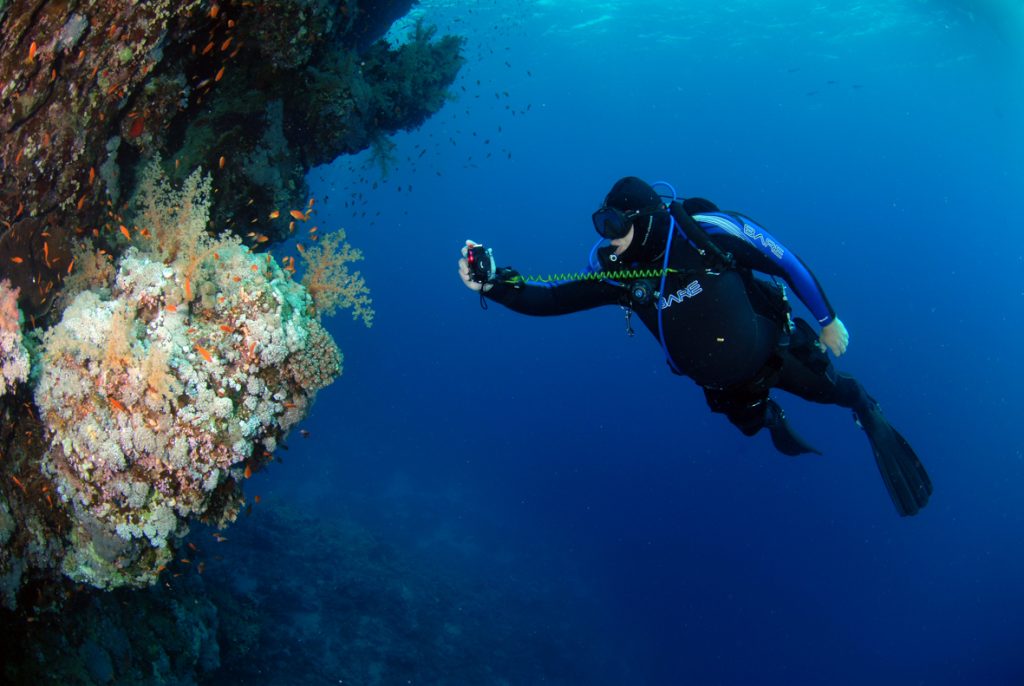
At Abu Kufan, it’s possible to encounter hammerheads which we attempted to see by going deep on the first dive, but they eluded us. Other pelagics are also possible here, but it’s also very enjoyable just cruising along the wall which is festooned with colourful corals, sponges and other reef growth. In this respect, there are some very impressive gorgonians and proliferations of soft coral.
Near the end of the trip, on Easter Sunday, the Roots team organised an “Underwater Easter Egg Hunt” where four small plastic eggs were placed somewhere on the house reef within the first 10 metres of water, with no other clues as to their whereabouts. It was a first for all of us, with Zac “super-determined” to find one of the eggs, the retrieval of which won a small prize.
You could go north or south; it was up to you. I decided to head north for a change and found some new areas to explore including some interesting caves and cuts in the reef, with sightings including a crocodilefish, a large and burly looking scorpionfish, blue spotted rays and a huge moray eel, but no easter eggs. To cover all bases, Amanda and Zac headed south in their quest for a prized easter egg.
After nearly an hour, and with no easter egg in sight, I decided to head back to shore to see how Amanda and Zac had fared, expecting them to be back from the dive. To my surprise, they were still on the dive, so I ditched my kit and waited for their return, expecting them to surface empty handed. When they reappeared, I suspected something, as Zac’s disappointment somehow didn’t seem genuine. I shot a few images as they waded out of the water, where suddenly, Zac held out an easter egg. He’d been successful, and won some chocolate for his efforts!
As we got talking to the staff and some of the visiting divers, we learned that quite a few of the guests were repeat customers and that many of the staff had worked there for some time, which is always a good sign. A father and son buddy team from the UK had visited on a number of occassions and described it in very warm terms “like a comfortable shoe” (or perhaps a comfortable fin might be the most apt description!).
Though I’ve tended to talk about the diving in general, it must be said that the Roots team were very good with Zac. He was very well looked after on the dives and enjoyed life at the camp, with the staff enjoying having kids around where regular pranks such as the strategic placement of a plastic snake caused much amusement during our stay.
Overall, we very much enjoyed the Roots Dive Camp. We could see why they generated many repeat bookings and could imagine returning again ourselves. We had indeed got up, ate, dived, ate, watched the sun go down, slept and repeated the same. It had been good.
Going Beyond The Diving
Though the main reason for visiting Roots will be diving, they also offer other experiences and excursions that are worth considering such as quad biking, camel treks, desert safaris, and trips to the Nile Valley or even Cairo.
We chose to visit the ancient and historic city of Luxor which is located on the Nile. To get there, the Roots team organised a driver to pick us up early for the drive due west across the desert. Though a long day, we were able to take in the Temple of Karnak, a papyrus factory and gallery, a drive past of the Temple of Luxor, the Valley of the Kings, an alabaster factory, Quenn Hatchepsut’s Temple, the Colossi of Memnon and a short boat trip on the Nile itself to a secluded plantation for a fruit and drink stop.