
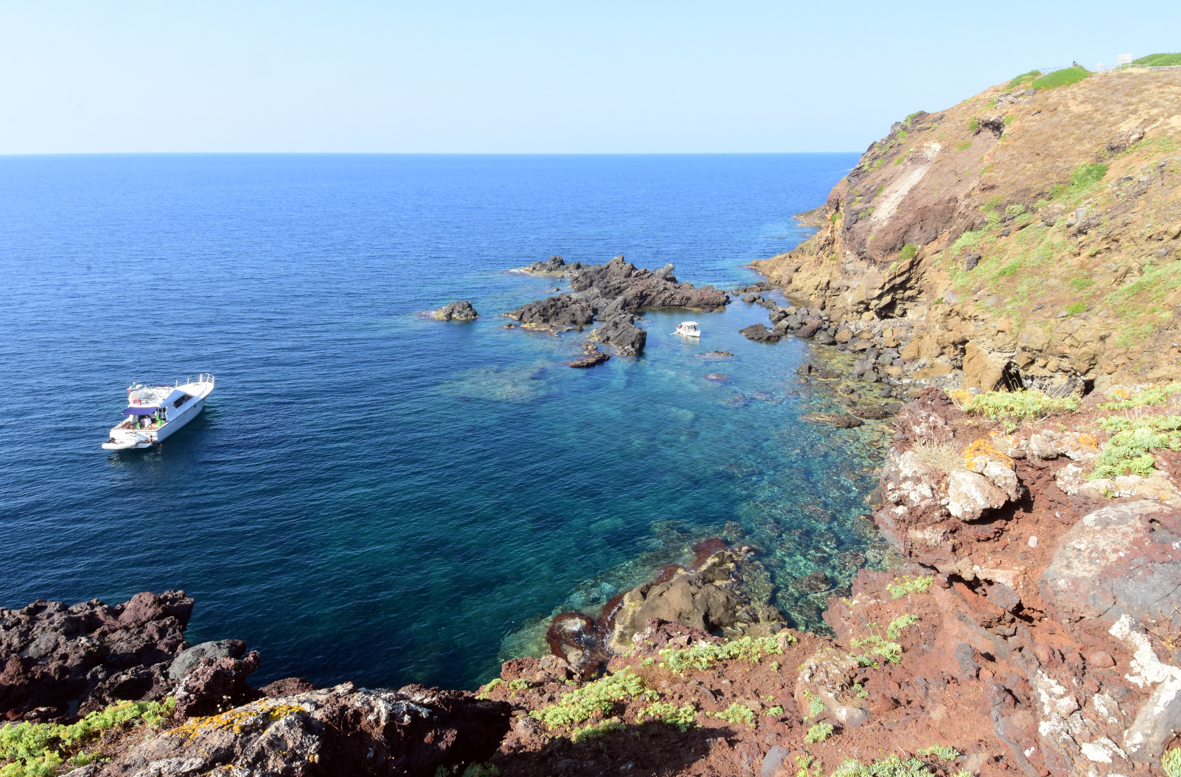
It’s Surely A Contender
Text by Jeremy Cuff/www.ja-universe.com
Photography by Jeremy & Amanda Cuff/www.ja-universe.com
I don’t normally start my features with a “clickbait” style of title, but having enjoyed a long awaited visit to Ustica, I felt compelled to pose the rhetorical question; is this the best diving in the Mediterranean..?
When we told friends that we were going to Ustica for our summer dive holiday, every single one of them looked blank. “Where’s that, never heard of it” was that usual kind of response. We would then invariably resort to a Google map, to pinpoint its exact location to the curious friend. So where exactly is Ustica?
Ustica is a small remote island of volcanic origin located off the North West of Sicily in the Mediterranean, around 40 miles north of Palermo. It has an interesting and somewhat chequered history, from being initially inhabited around 1500 BC by people of Phoenician origin (though opinions differ on this). Later, the seafaring ancient Greeks named the island Osteodes in memory of Carthaginian mutineers who were left there to perish in around 400 BC. The name Ustica came from the Romans meaning burnt, after the black volcanic rocks, and more recently in Italy’s Mussolini years, the island was used as a prison colony for political opponents and others considered to be undesirable or threatening to the regime.
Since then, things have swung in a much more positive direction, and it’s now a lovely, off the beaten track kind of place to visit. I like the fact that you can’t fly there, only being reachable by boat. It’s popular in the summer months, mostly with “mainland” Italian and French visitors (many of them divers).
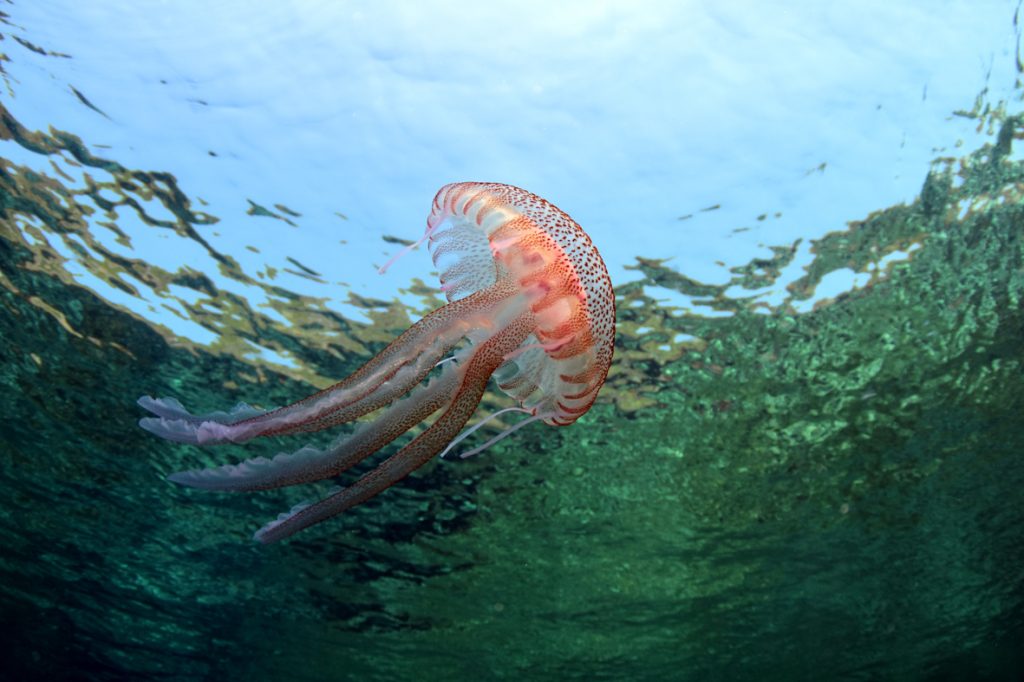
The entire island is now surrounded by a zoned marine reserve designated in 1986 covering 15,000 hectares. It’s officially called the “Isola di Ustica” Marine Protected Area and was the first of its kind in Italy. You therefore get a magic trio of factors; environmental protection, crystal clear water and spectacular underwater topography. To dive there is to see what other areas of the Mediterranean may have once resembled before the pollution, plundering and excessive coastal development of modern times. It’s quite special.
To get there, and to organise accommodation and diving isn’t difficult in today’s connected world. The most straightforward way of doing it is to fly to Palermo in Sicily (there are several options from the UK), stay a night (there’s plenty of hotels to choose from) and then catch the ferry to the island (it’s easy to book online, with daily departures in the summer).
On Ustica itself, there are choices of B & B’s, hotels and self-catering apartments, houses and villas, most of which can be easily booked via popular booking websites or direct with the owners or proprietors. In terms of the diving, there are a number of well established and professional dive operators such as Blue Diving (our choice) and affiliated dive centre Mr. Jump, who can also arrange “dive and stay” packages if you need them to. The diving season is roughly from Easter through until late October.
UK divers heading for “the Med” tend to go for destinations such as Malta, Gibraltar, Cyprus, Croatia, Sardinia or select spots around the Greek Islands, but there are other less known places such as Ustica. My awareness of Ustica came from a visit to the spectacular Aeolian Islands to the East, and a fascination with maps whereby I “joined the dots”, so to speak. Upon reading up about Ustica, and discovering the marine reserve aspect, it was added to my “must visit list”. I took quite a few years to get around to it, but I was very glad when it happened. It was the fulfilment of a long(ish) held ambition. So how about it?
Due to the popularity of diving, there are (we were told) nine dive centres currently operating on Ustica. We made our initial enquiry with Blue Diving, mainly because they had a nice website with good images (attractive to photographers like me). We got a prompt and friendly response from Guiseppe (the owner), so we decided to book our diving with them. They turned out to be a really welcoming, enthusiastic and professional dive operation and we really enjoyed the time we spent with them – it was an excellent choice. They share resources with another dive centre (Mr. Jump) who had the same ethos.
The Blue Diving shop is located in the square of the lovely, well-kept little town, a short walk away from our rented apartment. Nearby are a selection of trattorias, cafes, bars, tiny gift shops, bakeries and grocery stores that we would enjoy visiting and sampling during our stay.
Once you’ve checked in and the dive certification paperwork is complete, dive gear is transported down to the harbour where it is kept for the duration of a visit. If you need gear (such as a heavy camera) brought back up the hill each day, the Blue Diving team can arrange that for you to collect in the shop in the afternoon.
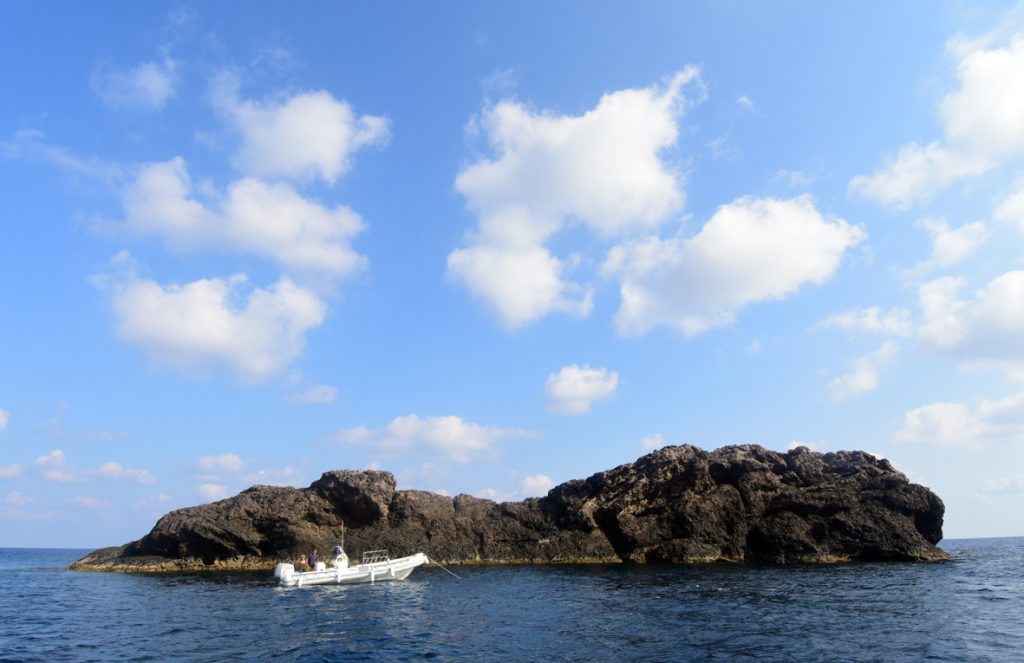
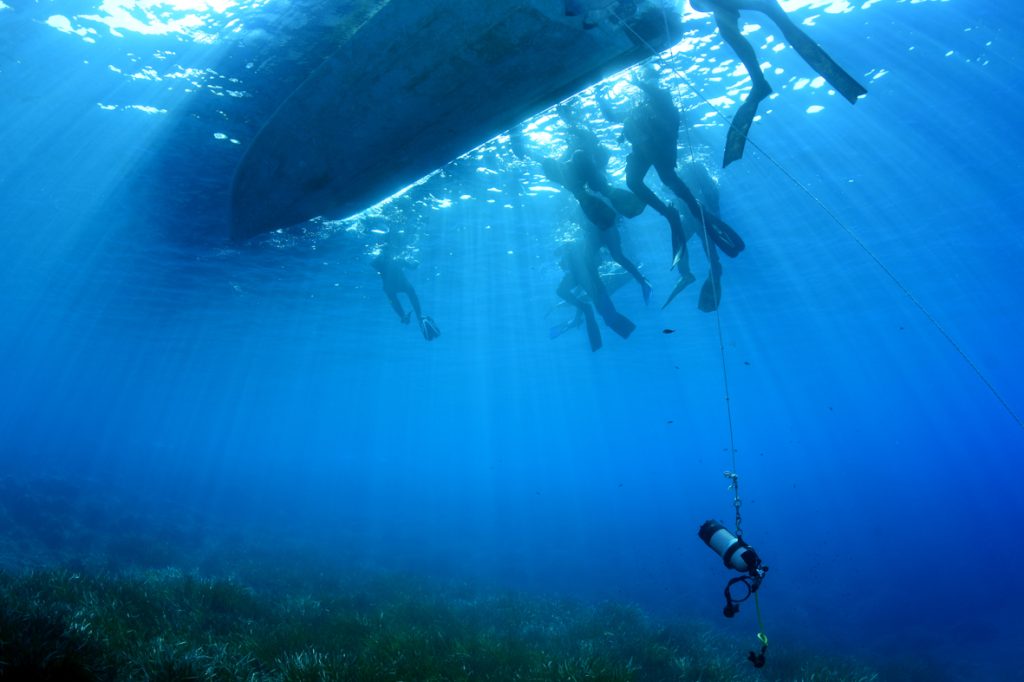
The picturesque little harbour is a hive of dive activity in the mornings, with all dive centres descending on the area at roughly the same time. The format of the dives is an 8.30am meet up for a 9am departure, and (as all dive sites are within a 10 or 15 minute RIB ride) the divers return to the harbour for drinks and snacks in a sun shelter prior to the second dive, which sets off at about 11.30am. Return from the second dive is around 1 – 1.30pm, which gives divers the afternoon and evening to do other things. Night dives are also scheduled once or twice a week and set off at dusk.
We didn’t know what to expect with water temperatures, so we travelled with both tropical and “medium temperature” gear. It was stiflingly hot during our stay (some days were around 38 degrees C), and water temperatures were high. I dived the whole trip in my “tropical gear” as the water temperatures in the shallow water were 26-28 degrees C. Thermoclines at around 20 metres would sometimes cause a bit of shiver, but it was quite bearable at around 20-22 degrees C. The water itself was always crystal clear offering fabulous visibility, and at times was almost purple in hue. The sites were largely current free during our visit, but that isn’t always the case we were told.
All the dive sites are good on Ustica, but some deserve a special mention. Secca Della Colombara is a shoal located slightly away from the island and features a vertiginous drop off and a wreck that spilled a cargo of marble stone across the rocky plateau. You can expect plenty of groupers, colourful wrasse, bream and perhaps an octopus at this site.
Scoglio Del Medico is an excellent site with spectacular underwater topography consisting of swim-throughs, cuts, canyons and drop-offs. There are a number of ways of diving this site, which the Blue Diving team will vary over the course of a visit. Groupers and damselfish abounded at this site.
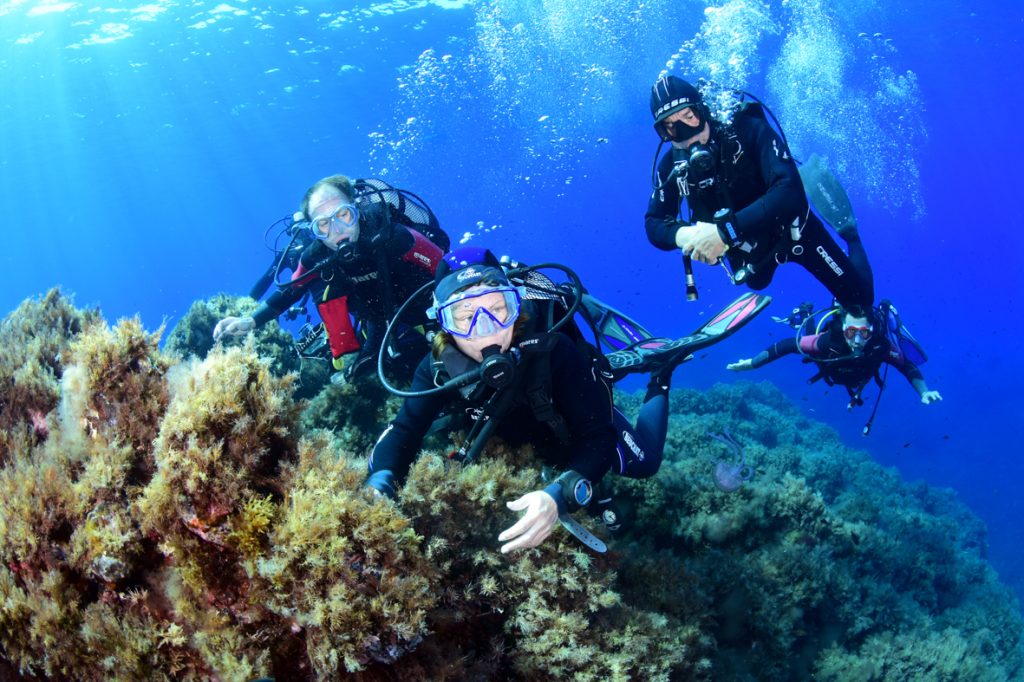
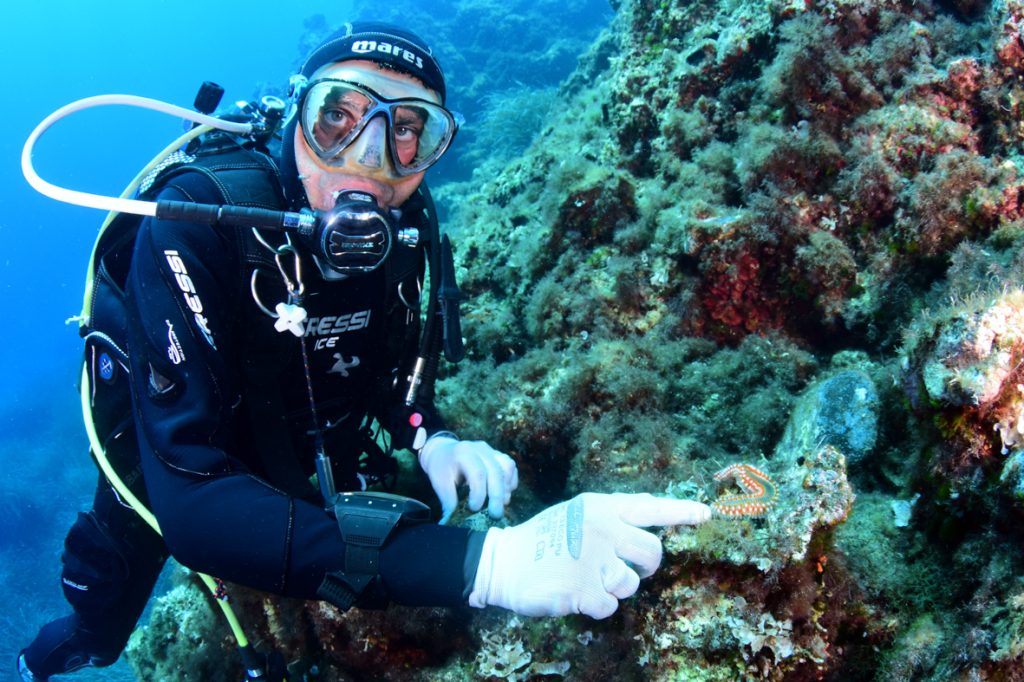
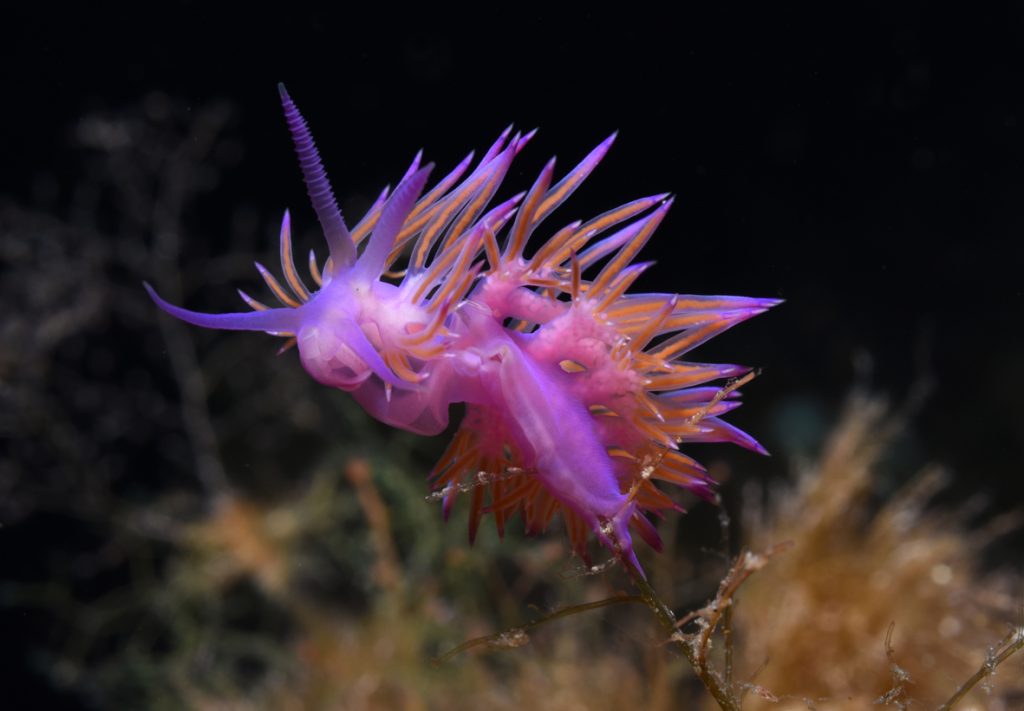
Punta Falconiera is a popular site for both day and night dives. In the day, you can look for moray eels and scorpionfish along the wall and overhangs, or check the luxuriant sea grass beds for pipefish. At night, there’s good opportunities for octopus, lobsters, hermit crabs, nudibranchs, shrimp and fire worms (some alarmingly large!).
Secchitello is a more challenging site, though the conditions were perfect for our dive. Basically, it’s a deep set of rocks and pinnacles starting at around 25 metres that attract large numbers of fish. Where else in the Mediterranean these days can you dive amongst big schools of barracuda being buzzed by amberjacks? There aren’t many places.
Perhaps our favourite site was Grotta Della Pastizza which features a spectacular cave that is accessed underneath the cliffs of the island itself. The caves are at shallow depth and it’s possible to surface once inside (assuming safety stops are complete). Mounted on a rock inside the cave is a statue of the patron saint of the island, Saint Bartolicchio.
The Blue Diving and Mr. Jump teams sometimes host a barbecue for diving guests at a house on the far side of the island. We attended one of these where they provided bread baskets, pasta dishes, swordfish steaks, salad, red wine and prosecco. It was a great evening, chatting with fellow divers under the starry skies of the Mediterranean.
For non-divers and taking time out from the diving, the island itself is a lovely place to be. It’s easy to hire mopeds and scooters to ride to other areas of the island, perhaps to one of the island’s “swimming coves” where you can hire sunbeds and purchase drinks and snacks such as paninis. There are also regular minibuses that circle the island – just hop on and off wherever you like. For the more energetic, there’s good coast path hiking that takes in some fabulous scenic vistas.
So, does Ustica offer the best diving in the Mediterranean? It’s impossible to say, of course, but we met many returning divers who thought so. It was certainly excellent and we couldn’t argue with their sentiment. Currently, very few UK divers go there but I’d say with conviction that they really should. It’s not difficult to reach, and is hugely relaxing, enjoyable and rewarding.