

Text by Jeremy Cuff/www.ja-universe.com
Photography by Jeremy & Amanda Cuff/www.ja-universe.com
Located off the eastern coast of southern Africa, the island of Madagascar is like no other place on earth. It boasts a unique culture, an interesting and varied topography, superb national parks and flora and fauna found nowhere else. It’s also becoming easier to go diving there…
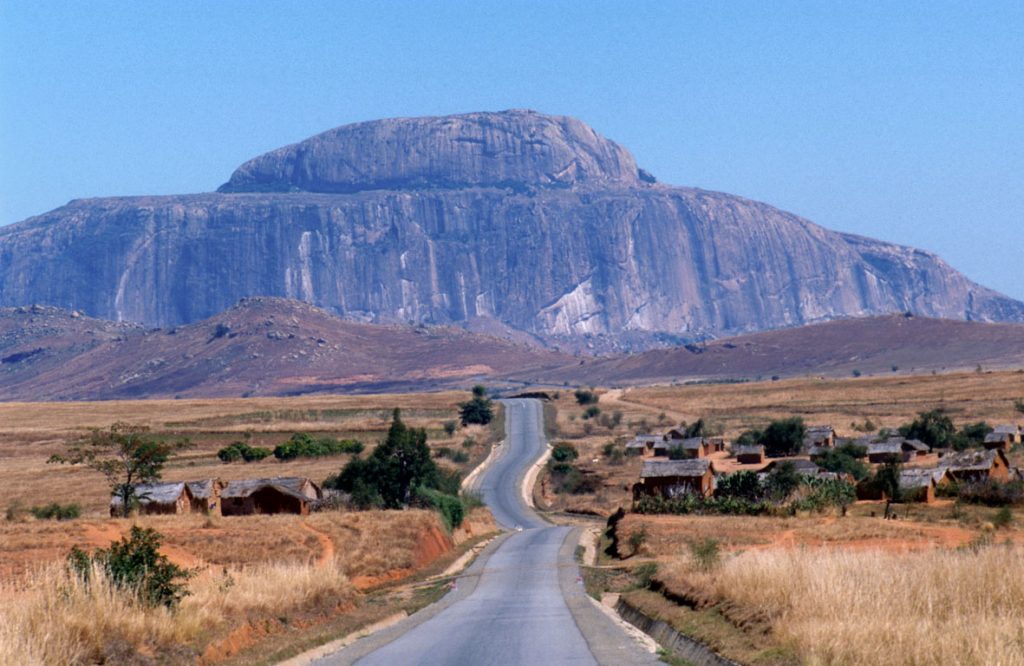
Madagascar is unique – a land that time forgot, a place where the fast world that we inhabit is little known. The country is desperately poor. It boasts a unique culture centred around the ancestors and an interesting and varied topography that includes high plateau, mountains, humid rainforests, deserts, spiny forest, wetlands, tropical islands and coral reefs.
Although often categorised as Africa, Madagascar could just as easily be grouped under Asia. But, in truth, it doesn’t belong in any convenient pigeonhole. As the world’s fourth largest island, Madagascar might best be described as an “island continent.”
A lone traveller of the Indian Ocean for some 165 million years, Madagascar has had plenty of time to solve nature’s challenges. The result is a high incidence of endemism. Even where species may be represented elsewhere, Madagascar will be more than likely to have it’s own subspecies.
The arrival of man around 2000 years ago has wreaked havoc on Madagascar’s ecosystems and this continues to this day. Herculean efforts are being made to preserve what is left by organisations such as the Worldwide Fund for Nature (WWF) and the Durrell Wildlife Conservation Trust as perhaps only 20% of the original forests remain intact or pristine, and these are under immense pressure from agriculture and slash and burn. Similar pressures afflict the marine environment with over fishing, pollution and excessive run off due to deforestation being the major problem areas.
Madagascar is an incredibly rewarding country to travel and whilst it’s quite feasible to visit purely for diving, the country has many other experiences to offer. We planned a wider ranging trip that allowed time for diving in Ifaty and Ile Sainte Marie but also included visits to a number of Malagasy towns, cities and national parks.
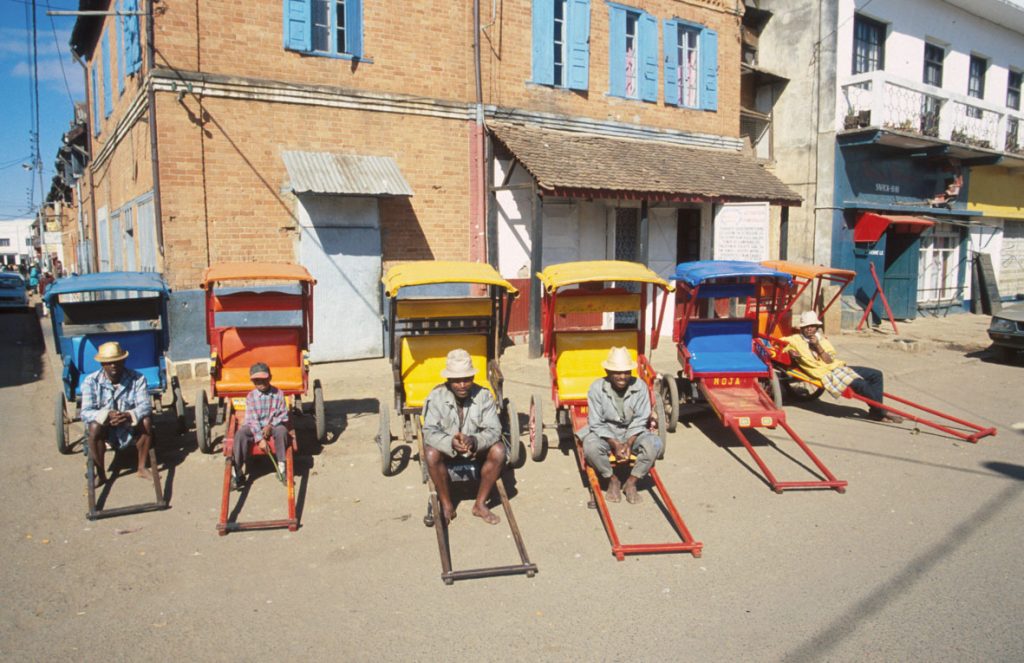
Starting in Antananarivo (Tana), Madagascar’s chaotic but endearing capital, we travelled to the Perinet and Mantady National Parks to the east followed by an overland journey to Tulear and Ifaty in the southwest. En route we visited the city of Antsirabe, the Ranomafana National Park, the cities and towns of Fianarantsoa, Ambalavao and Ihosy and the incredible Isalo National Park. After Ifaty, we headed east to the private Berenty reserve and finally, a visit to the island paradise of Ile Sainte Marie in the northeast.
These days, Madagascar benefits from a few intrepid westerners running dive centres, although the country is yet to appear in the regular itineraries of diving holiday tour operators. They’re doubtless just scratching the surface of the extensive reef systems along the vast undeveloped coastline.
Comparatively little is known of the waters around Madagascar. Divers will see species familiar from the Red Sea and the Maldives such as fusiliers, blue striped snappers, unicorn fish and sweetlips but in addition, unfamiliar species are often encountered. With the absence of a guidebook, identification of some of these is virtually impossible. Species of fish and invertebrates new to science are almost certainly awaiting discovery. These waters are also known to be home to the primitive coelacanth, specimens of which are caught sporadically, one as recently as March this year.
The Lakana Vezo Hotel at Ifaty was a welcome stop-off after more than a week on the road and is situated in a superb spot overlooking a lovely bay. Collections of colourful pirogues adorn the beach and are in constant use by the Malagasy fishermen who rely on the bounty of the sea for much of their sustenance. On the horizon, waves break over the Grand Recife, a barrier reef that protects Ifaty from the worst excesses of the sea. It was here that we would go diving.
The Lakana Vezo has a small Club Nautique offering wind surfing and kayaking, though diving is the main activity. It’s run by Fred Lucas and his Mauritius born wife who acts as his interpreter for those who don’t speak fluent French. The language barrier also means that the dive briefings are “brief” – conducted using gestures, hand signals and a few mutually understood words.
The seas around Ifaty are subject to great tidal variations, particularly around the full moon, which coincided with our visit. As a result, the diving must be timed to benefit from the best conditions. The tranquillity above water belies strong currents and surge, making the area more suited to divers with some degree of experience.
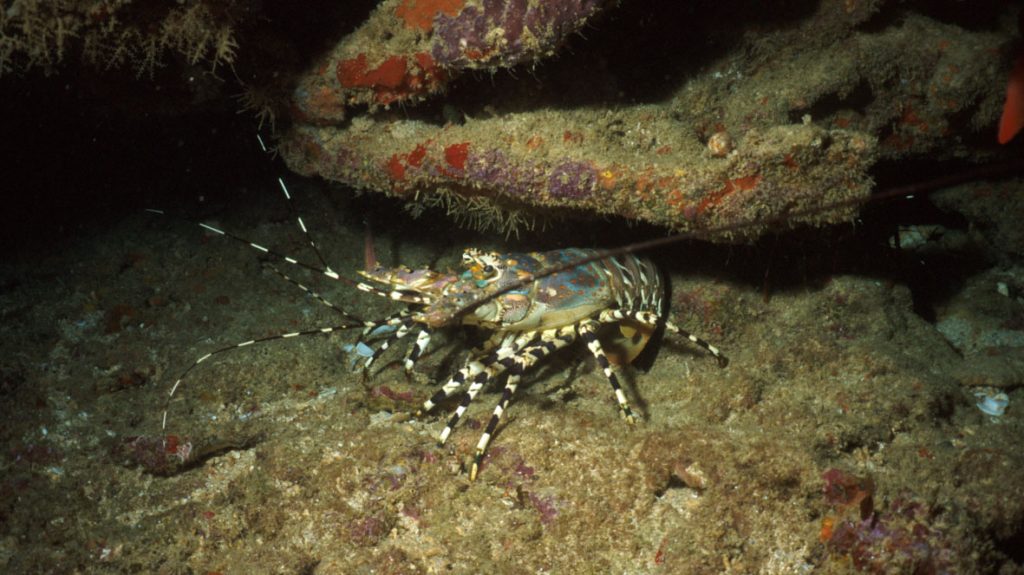
The first dive was on the outside of the Grand Recife, a site that we named “Pink Anemone” after a stunning anemone of the same description – it literally beamed out of the reef like lurid neon. We found lobsters on every dive at Ifaty but at this particular site, we discovered some huge specimens lurking beneath a ledge. Tightly knit schools of fusiliers and unicorn fish circled above the reef whilst closer in, a colourful species of nudibranch and a splendid pufferfish completed the list of highlights.
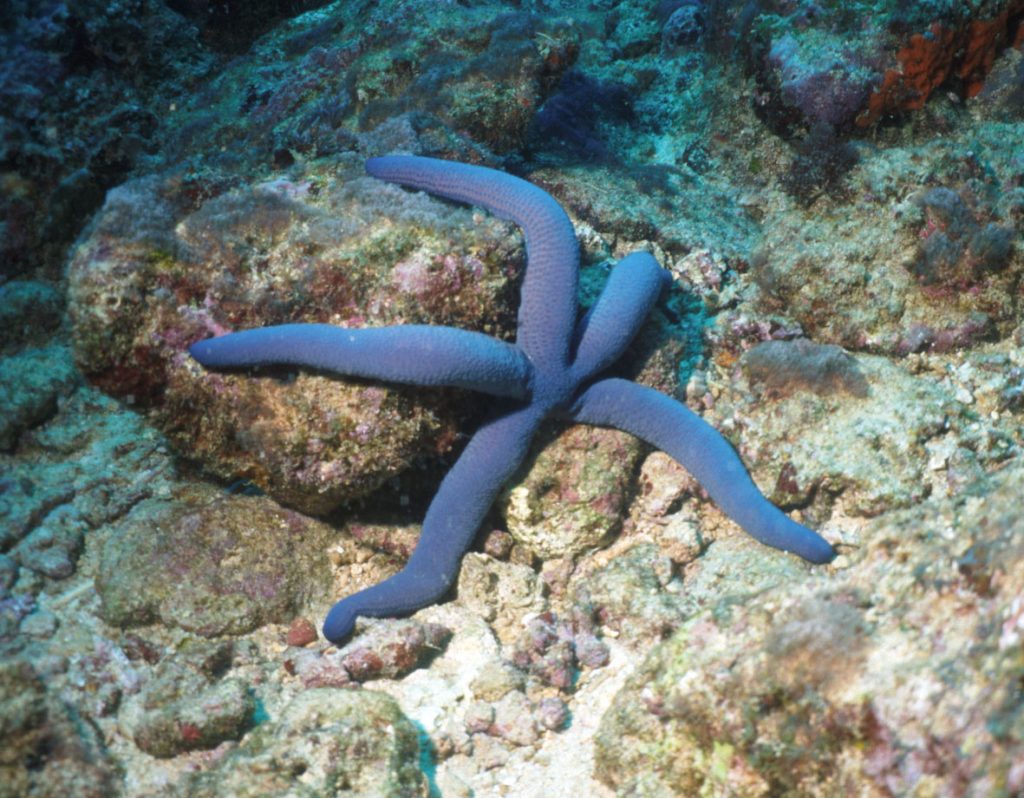
The Passé Sud (South Pass) is a channel that cuts through the Grand Recife and allows for superb diving. Here, the currents are very strong and big fish are abundant. During the first of two dives we encountered four large white tip reef sharks although I’ve heard that on occasions you can see many more. The channel is full of crags, gullys and overhangs that are home to huge groupers, lobsters, sweetlips and blue striped snappers. Under one of the more sheltered ledges we found thousands of sweepers and glassfish. The splendidly cryptic scorpion fish and its close relative, the crocodile fish are also present in the channel, waiting patiently to ambush passing prey. Lizardfish, blennies, hawkfish, anemone fish, wire corals and the much-maligned crown of thorns starfish were among the other reef dwellers.
We dived another “no name” dive site at Ifaty, which we rather unimaginatively called “Outside Reef” because of its location on the outer Grand Recife. We found several small but aggressive moray eels that repeatedly darted out, mouths agape, before hastily retreating to the safety of their lairs. A great many reef fish inhabited this site with countless anthias “goldfish”, cornet fish, bird wrasse, parrotfish, soldier fish and angelfish being particularly common. Invertebrates were well represented by prolific coral, starfish and reef crabs.
Ile Sainte Marie (known also by its Malagasy name of Nosy Boraha) is a long, slender island roughly 50 kilometres long by 7 kilometres at its widest point. It was formerly home to the world’s largest pirate colony and inhabited by the roguish likes of William Kidd and Thomas White. Today, the residents of this lovely island are much more hospitable, serving as a relaxing end to our visit to Madagascar.
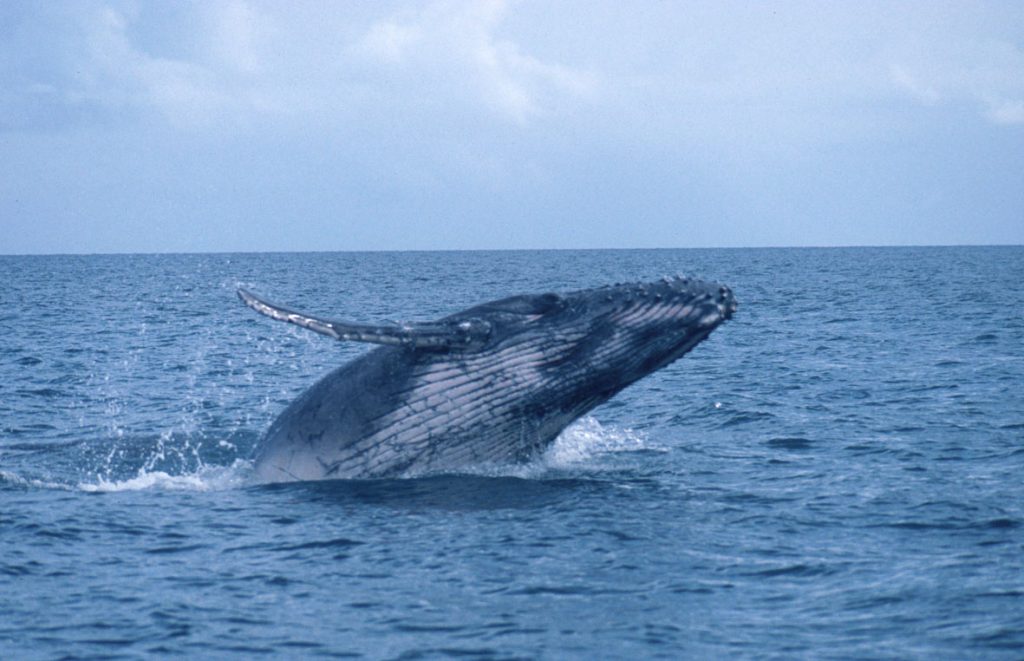
The waters around the island plays host to a population of Humpback Whales from July to October. During August and September they are sighted almost daily and with luck and patience, can be seen breaching and tail slapping. Sometimes the whales will allow the close approach of a boat whereas at other times they can be skittish and wary – diving to escape attention and swimming at tremendous speed only to resurface some distance away.
One morning, on a small boat that can be hired from our secluded hotel at La Crique, we approached a mother and calf that seemed unconcerned by our close proximity. We spent around three hours with them, the calf becoming so relaxed that it began breaching right in front of us.
The Il Balenottero dive centre is run by a friendly English speaking Italian called Max and is located in Ambodifotatra, the island’s only town. In addition to diving they also offer whale watching and excursions to nearby islets. We combined whale watching and diving into a full day.
Max is also participating in a study of the whales, noting the date, time and location of these leviathan travellers. He also asks for photographs of the whales to be sent to him, so that individual animals can be identified and a pattern of their movements established. According to Max, the latest estimate puts the population numbering around 500-600 individuals.
The diving off Ile Sainte Marie is also good, although the visibility was only fair at the time of our visit. Apparently, it improves dramatically in the Austral summer.
On the dive boat, we watched three humpbacks near Ambodifotatra. At a distance, so as not to cause them disturbance, we observed breaching and tail slapping to the chorus of clicking cameras and gasps of admiration.
By the time we’d reached the dive sites at La Crique the sea had got quite choppy. The small boat, which wasn’t designed for diving, was flung into a good-natured chaos of BCD’s, fins, weight belts and divers looking for their masks.
Beneath the surface, life was much more serene as we listened to calling humpbacks somewhere out in the blue. The underwater landscape at La Crique features shallow and sloping reefs where it’s possible to descend to the 30-metre mark. The area should, perhaps, be named “The City of the Sea Urchins” after their huge abundance. These spiny invertebrates also act as a good deterrent to divers tempted to touch the reef.
Here, we noted several unfamiliar species of reef fish – none of which could be matched to anything I could find in a guidebook. Of the identifiable residents were schools of Moorish idols, big groupers skulking under ledges, large clams, nudibranchs, Christmas tree worms, fire coral, hard corals with attendant fish, wire corals, sponges, hawkfish, lizardfish, several species of angelfish, members of the wrasse family and a peculiar, almost comical species of boxfish.
Of the highlights, we discovered a very large crocodile fish resting on an area of sand. Despite allowing us to get close, this superb specimen showed its agitation by raising its dorsal fin – typical behaviour of all crocodile fish and scorpion fish when feeling threatened. The real treat was finding an octopus, which looked like a part of the reef until it “blushed.” Once spotted, it backed into a small crevice, making photography impossible despite our efforts to tempt it out again by trying to pander to its natural curiosity.
Ifaty and Ile Sainte Marie are not the only diving resorts in Madagascar. Morondava in the west and the island of Nosy Be in the northwest are the best known and offer worthy alternatives for visiting divers. Nosy Be is the most developed resort in the whole of Madagascar and the most geared up for dive tourism. From Nosy Be, liveaboards and expeditions to remote areas can be arranged if there are enough participants although obtaining information on the schedules isn’t always easy. Owing to the countries status as a former French colony, it may be worth obtaining some French scuba publications where dive packages may be advertised.
Madagascar is much more than just a dive destination. It’s a haven for enthusiasts of the natural world. Those wishing to escape the clutches of the modern world will revel in the remoteness, too.