
Text by Jeremy Cuff/www.ja-universe.com
Photography by Jeremy & Amanda Cuff/www.ja-universe.com
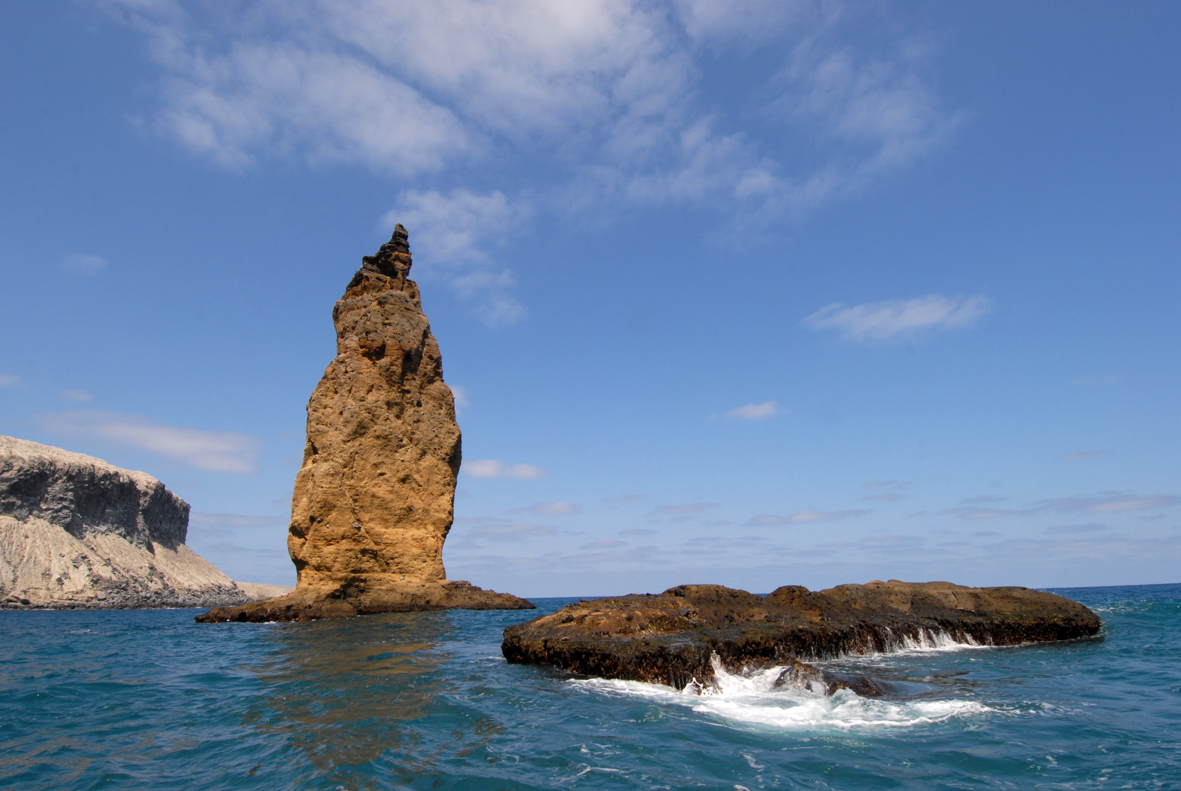
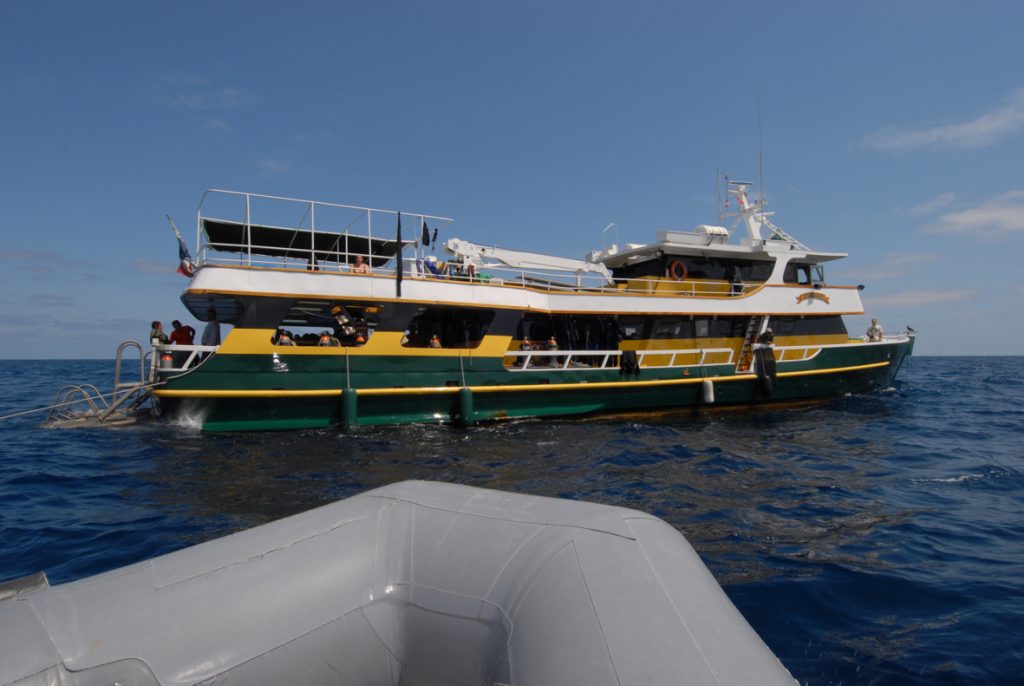
The Socorro Islands are located on Mexico’s Pacific side, some 250 miles due south of the tip of the Baja California peninsula. They’re also known as the Revillagigedo Islands and are sometimes referred to as “Mexico’s Galapagos”. The area offers great opportunities for photographers looking for a different challenge, where you’ll often find yourself out in the blue. To get there, I travelled on the excellent Solmar V liveaboard, which has visited the area for many years…
The remote Socorro Archipelago is a full 24 hour voyage south from the departure point of Cabo San Lucas at the tip of the Baja California peninsula. It consists of four islands; San Benedicto, Socorro, Roca Partida and Clarion, of which the first three are possible to visit. They’re volcanic in origin, with last recorded activity on Socorro Island happening as recently as the early 90’s.
The Socorros are a great destination for pelagic action where it’s possible to see Giant Pacific Mantas, Mobula Ray, Bottlenose Dolphins, Wahoo, schools ofJacks and Tuna, Bonitos and even Marlin. You can also expect some fantastic shark action that includes Hammerheads, White Tips, Silver Tips, Silky Sharks, Galapagos Sharks, Duskies and the possibility of Tiger Sharks and even Whale Sharks.
In addition, the area is also known forHumpback Whales in season, with sporadic encounters possible with other cetaceans, most often in the open ocean crossings between islands or en route to and from Cabo San Lucas.
Ready For Action
The islands are full of photographic opportunities but you soon learn that you have to be ready to capture it. Although individual styles of diving vary, I spent a lot of time hanging in the blue waiting for the “big action”, which certainly paid off.
I found that I took fewer pictures than I would normally do, but I had to be “in the zone” when an opportunity presented itself, as the chances were likely to be unrepeatable. This “ready for action” mode was put to the test on most dives and can be considered in terms of lens choice, ISO settings and so on.
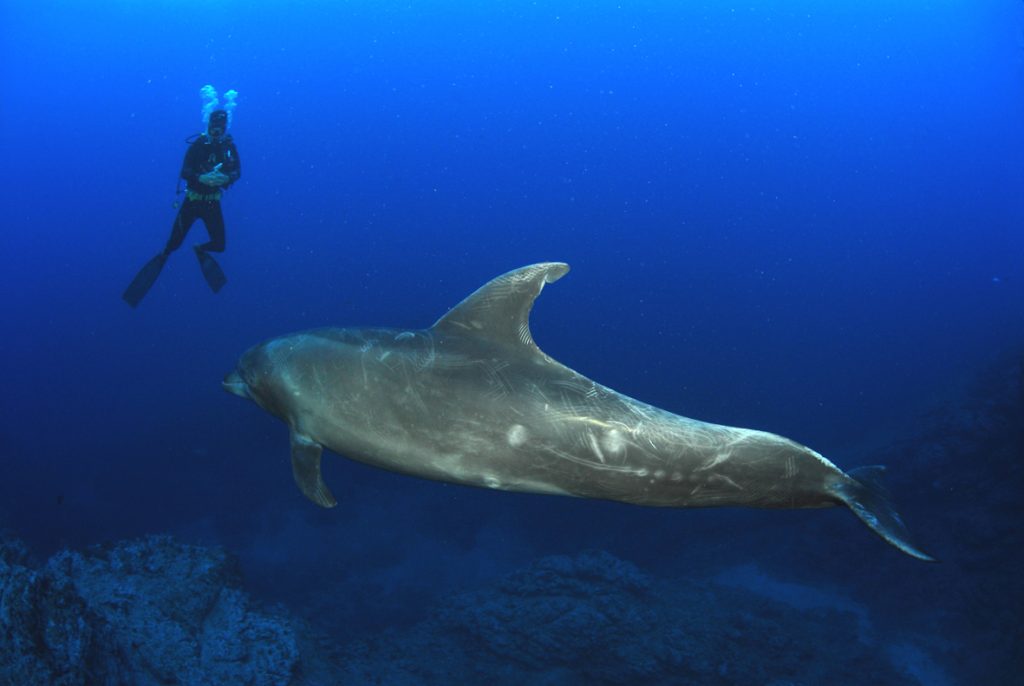
For example, Bottlenose Dolphins are frequent visitors to the islands and sometimes check out divers, but they rarely spend more than a minute or two before they move off. For some reason, they tend to be seen more often in the mornings, and I only had one fleeting opportunity to photograph one.
I didn’t see it approach, so it surprised me when I turned around to find a dolphin very close to me. The dive site was quite dark, as it was early morning and overcast, and I was disappointed that I didn’t “do better” to capture the moment. Although a couple of images were “OK”, they weren’t “killer images”. The main problem was changing settings whilst trying to follow a rapidly moving dolphin.
Shooting Mantas At San Benedicto & Socorro Island
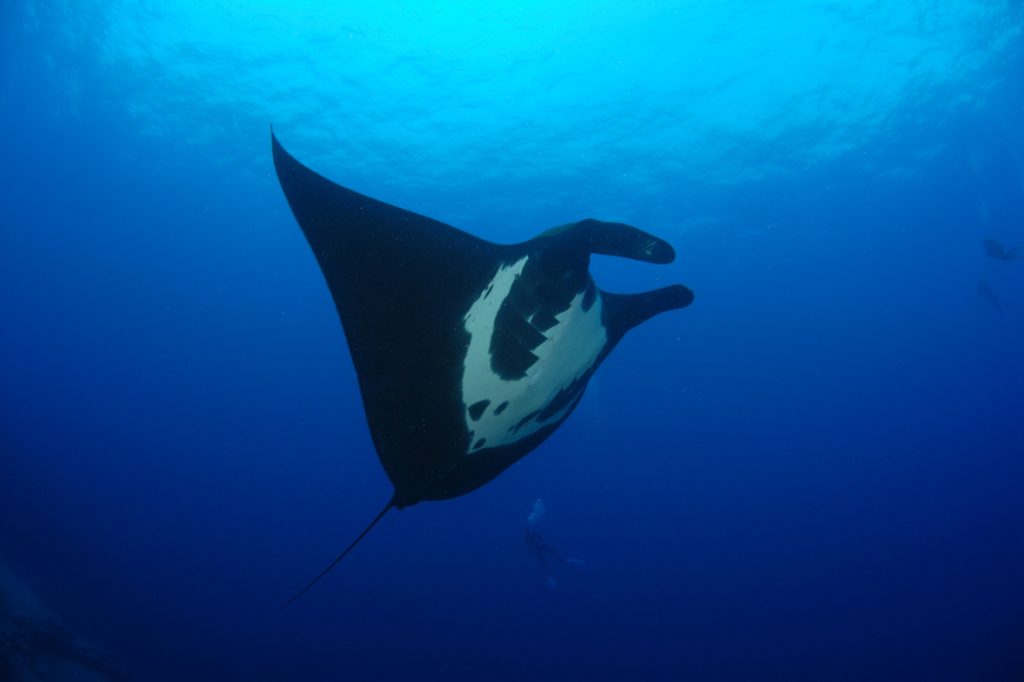
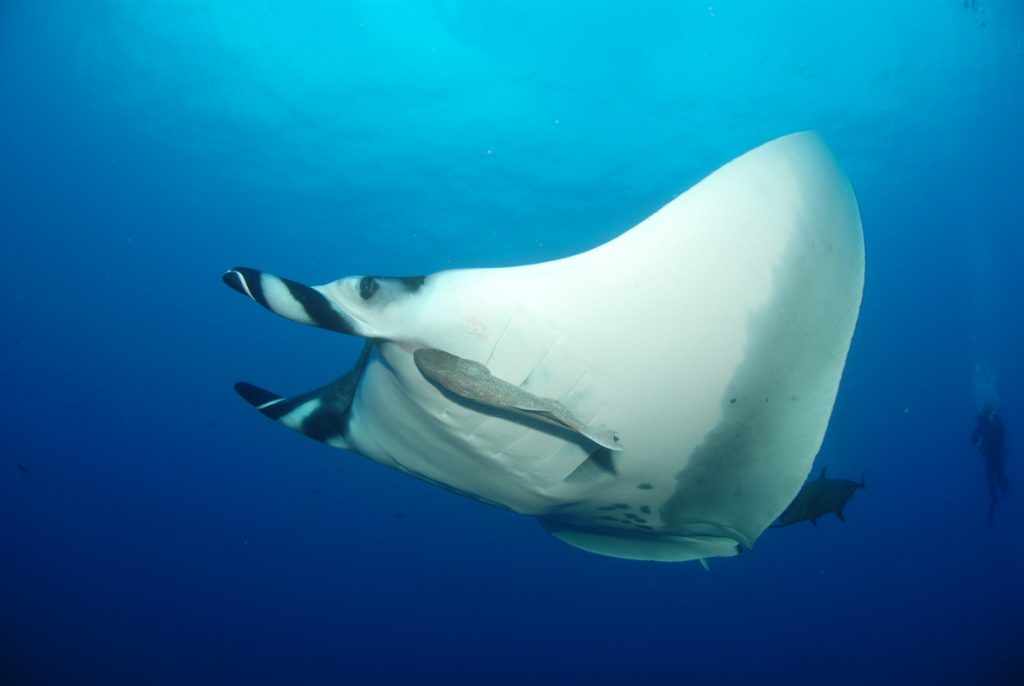
Mantas are a photographer’s favourite for reasons that don’t require explanation, and it’s likely that any photographer visiting the Socorros will get some good encounters. To get the best results, it’s a case of anticipating the trajectory of the mantas by placing yourself in their path. It’s also important not to let your enthusiasm run away with itself by resorting to chasing, which is often counter productive and may result in the manta vanishing back into the blue.
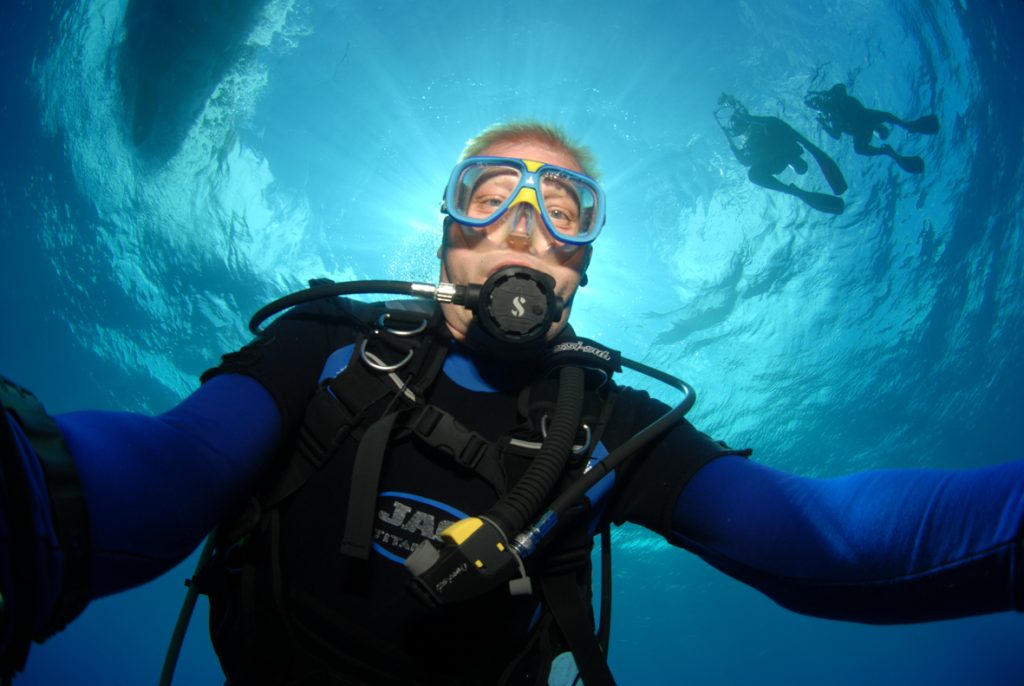
During my trip, there were good opportunities to photograph the mantas from different angles. I even tried some self portraits with a manta cruising the surface in the background at San Benedicto, which was an interesting experience to combine composition and exposure whilst looking into my own dome port.
As the majority of mantas are predominantly white on the underside (with appearances of the unusual black mantas from time to time), there’s always a concern about “overdoing it” with the strobe – the dreaded “whiteout”. As a result, I’m still working on my over cautious tendency with strobe power – it’s a trait that I call “strobe conservatism”. It’s a fine line to tread.
Shark Wallpaper At Roca Partida
The excellent Roca Partida seamount is a place of surprises.On the first dive at “the rock”, we were dropped into the path of huge school of Silky Sharks, possibly numbering a thousand individuals. It was the classic “shark wallpaper” and an image I really wanted to get.
This early morning dive offered little light underwater, so it was vitally important to be ready – in this case I’d set my ISO to 400 prior to going in. It was overcast with the morning sun occasionally peeking through the gaps.
To capture the action, it was crucial to think quickly and intuitively about the settings, taking into consideration the brightness at the surface and the darkness below. It was a case of trying to make photographic sense of what I was seeing, as the fast moving sharks formed and reformed in different arrangements and perspectives where in essence, you’re looking for order amongst chaos, shapes amid randomness, and being prepared to kick hard for it in the current. In reviewing my images of the schooling sharks, I sometimes found that there were “pictures within pictures” by selective cropping.
Photographing The White Tips At Roca Partida
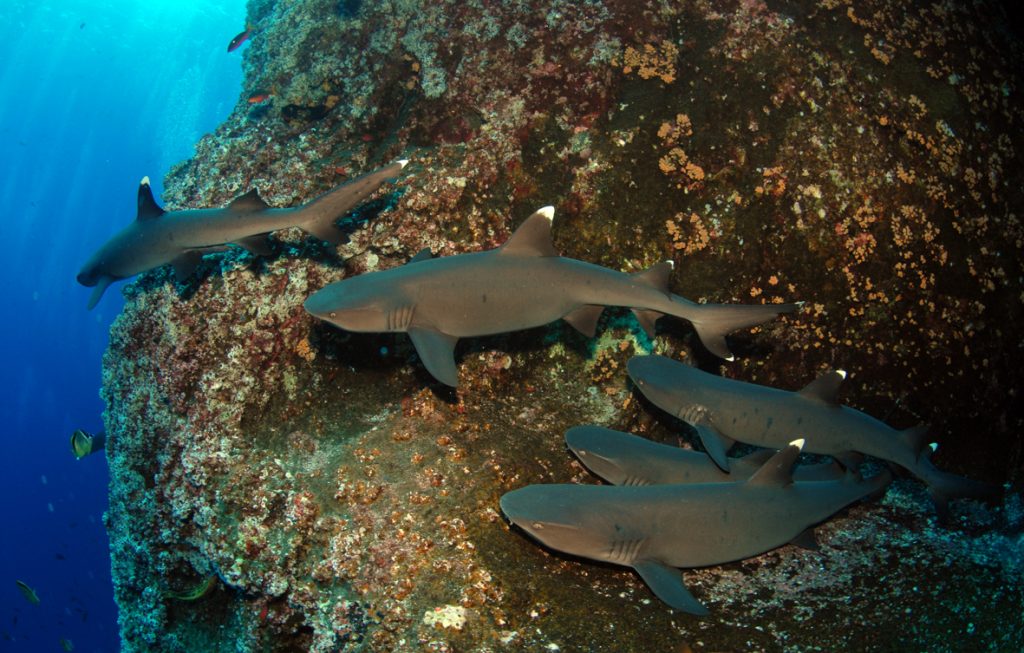
In my past experience, White Tip Reef Sharks are infuriating subjects to photograph, usually fleeing just as you edge to within striking distance of the lens (which in my case is normally a 10.5mm fish eye). In fact, I’d never taken a good photograph of a white tip until visiting Roca Partida in the Socorro’s.
Roca Partida changed all of that. It’s a fantastic place to observe and photograph these sharks, which can often be found nestling together on the numerous ledges at around 15 metres. There’s quite a lot of surge at this depth which can sometimes be used to your advantage, as you can be swept into range of the sharks. I found that if I edged towards them slowly, they would sometimes tolerate a close approach which was a real opportunity for me.
If you happened to scatter the sharks, they would often return to the ledges within minutes of being disturbed, so you could spend whole dives working these subjects.
A Word About Macro
Macro photographers will also find good subjects in the Socorro’s, although it’s unlikely to be the reason for visiting. I opted to stick with the fish eye for most of the week but tried a dive with my 60mm lens at one site, which I enjoyed. The quandary facing any photographer is to miss the “chance” of a pelagic encounter or go for the smaller stuff.
Mexican Hogfish, Flag Cabrilla (a kind of grouper), Red Tailed Triggerfish and the endemic Clarion Angelfish are good macro subjects, and common throughout the Socorros. Other good subjects include lobsters, octopus, pufferfish, flounders and a
phenomenal amount of moray eels, especially at Roca Partida.
In Summary
For me, the style of diving was different on this trip and made a refreshing change. Instead of staying close to the reef or wall like I often do, I spent a lot of time hanging out in the blue, watching and waiting for pelagic action. None of the dive sites are what you would call “pretty” in a Red Sea kind of way as it’s mostly rubble strewn and rocky with scattered hard corals, and similar in some respects to Hawaii. It’s what swims past that makes it so worthwhile.
The Socorros are an excellent if challenging photographic destination that rewards photographers who work at understanding the subjects and conditions. The visibility was generally good although it can vary considerably, often from dive to dive, with strong currents likely to be encountered on some dives. It’s one of those rare places that’s perhaps reminiscent of the golden age of diving, before the over exploitation of the world’s oceans had really taken effect. There aren’t many places where you can see and photograph hundreds of sharks in one dive. It’s a good place, very good.
Jeremy Cuff is an underwater photographer and diving/travel photojournalist based in Warminster, Wiltshire. Latest work includes features on Kauai & Niihau, the Egyptian Red Sea and destinations in eastern Australia including Lady Elliot Island. To see examples of his work, and that of his wife Amanda, please visit www.ja-universe.com