
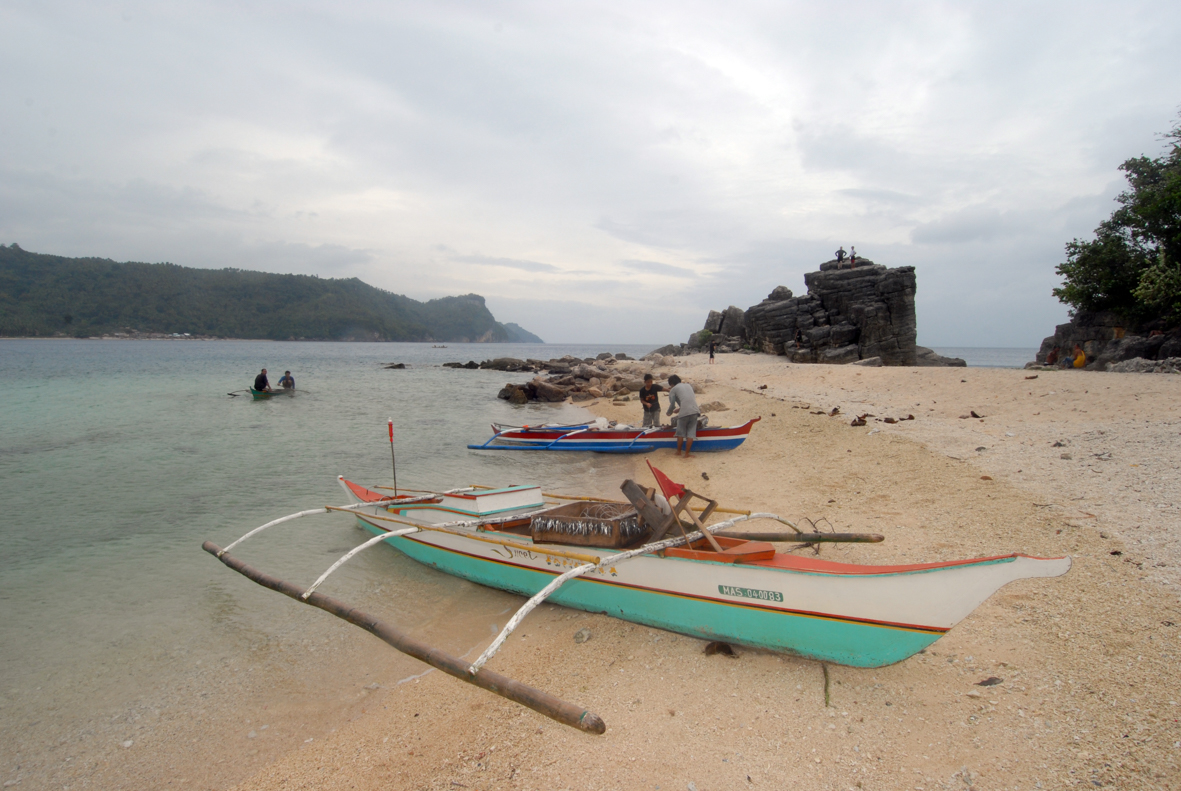
Text by Jeremy Cuff/www.ja-universe.com
Photography by Jeremy & Amanda Cuff/www.ja-universe.com
Over the years, the majority of my underwater photography trips have run reasonably smoothly and without significant hitches, but this trip turned out to be rather different. Here’s an account of how it went, what I saw, and how I was still able to salvage enough from it in order to publish a magazine feature in the UK…
As a regular dive traveller, I’ve always been very aware that spending hours confined on planes with lots of people, along with the sleep deprivation and jetlag makes you more susceptible to picking up some unwanted affliction.
On the outward journey from the UK to the Philippines I found myself in the “nightmare scenario” of sitting next to a man who spent most of the flight wheezing and coughing. But anyway, let’s get back to the diving…
Over recent years, a new “whale shark mecca” has emerged in the Philippines, which has started to make its presence known on the global diving map. It’s centred around the town of Donsol in the Sorsogon region, eastern Luzon.
It was here, and nearby Ticao Island, which is located across the Ticao Pass between Luzon and Masbate, that I would base myself for a week of diving and underwater photography with a view to publishing a feature in the UK. My itinerary consisted of two whale shark interaction trips at Donsol (snorkelling only) either side of a dive trip to the Ticao Island Resort.
Donsol
Sorsogon’s regional hub of Legaspi lies beneath the smouldering menace of Mt. Mayon, a classic volcano if ever there was one, but I couldn’t see much of it as I stepped off the plane from Manila. Unlike Manila, which basked in hazy sunshine, the Sorsogon area was experiencing poor weather and I wouldn’t get to see any sunshine for the entire visit. It was windy, cool by Filipino standards, overcast and often raining.
The only feature I’d read about the area prior to my visit was a remarkable story from March 2009 that I read here on Dive Photo Guide about a baby whale shark that was caught near Donsol, providing evidence that this area was not just a place for feeding, but a place for giving birth and perhaps even mating. The baby shark was a mere 15 inches long and looked like a tiny version of the giant fish that it might one day become.
The local tourism posters show whale sharks swimming in clear sunlit waters, which are doubtless the conditions that many visitors would experience, but when I arrived in Donsol, the water was anything but clear and inviting. In fact, the visibility had been destroyed due to the excessive water run off. Instead of the classic turquoise, the water was green and turbid.
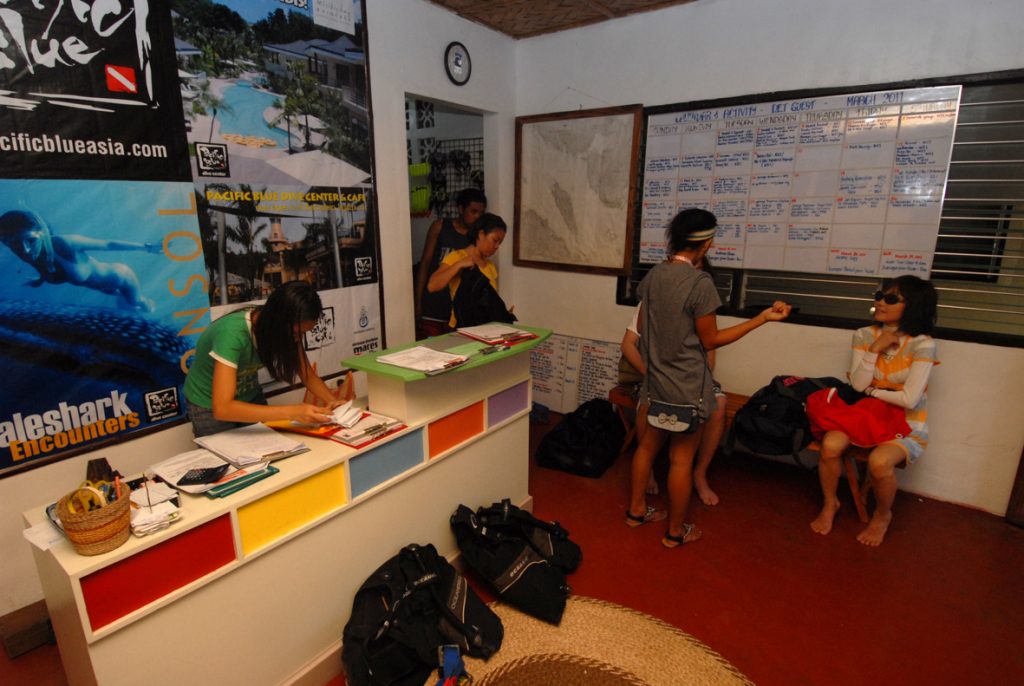
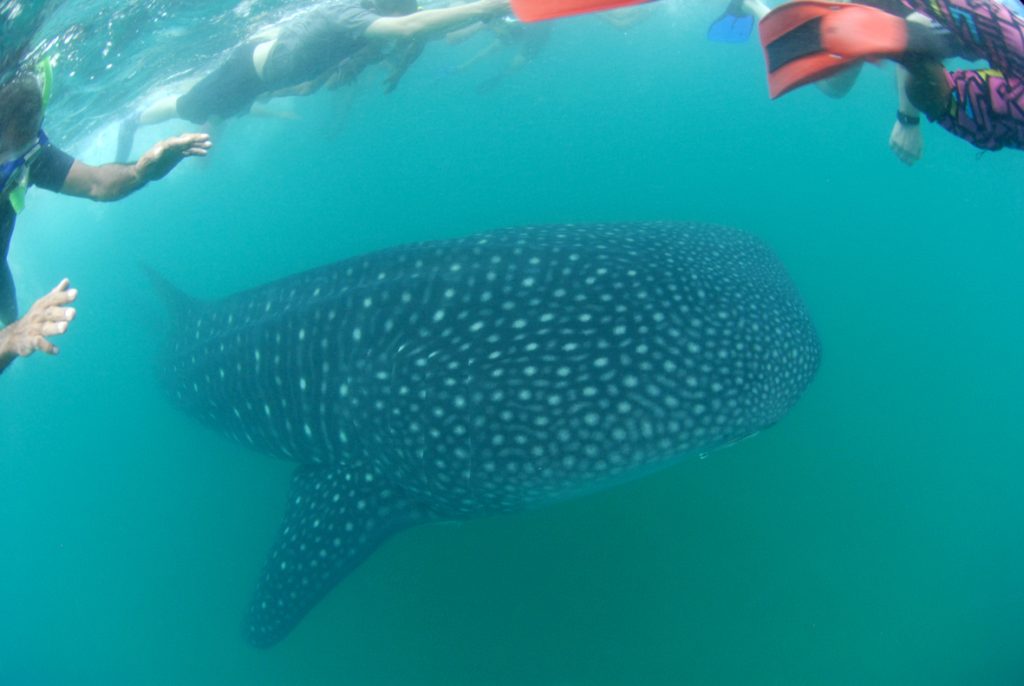
Shortly after arriving, I was setting up my camera in the tiny dive shop and kitting up to head out into the bay. The whale sharks sightings are indeed reliable, and quite an industry has grown up around their appearances, with many boats patrolling the bay looking out for these leviathans.
Within minutes we were onto a shark close to the shore, but if your boat finds one, the chances are you won’t have it to yourself for long, as other boats magically descend on the area. It can be a bit of a scrum, so be prepared for getting more than the occasional fin in your face!
On the first interaction, the visibility was at its worst, probably less than three metres. This made it impossible to see the shark approach, and I wasn’t able to see anything until it was passing underneath me.
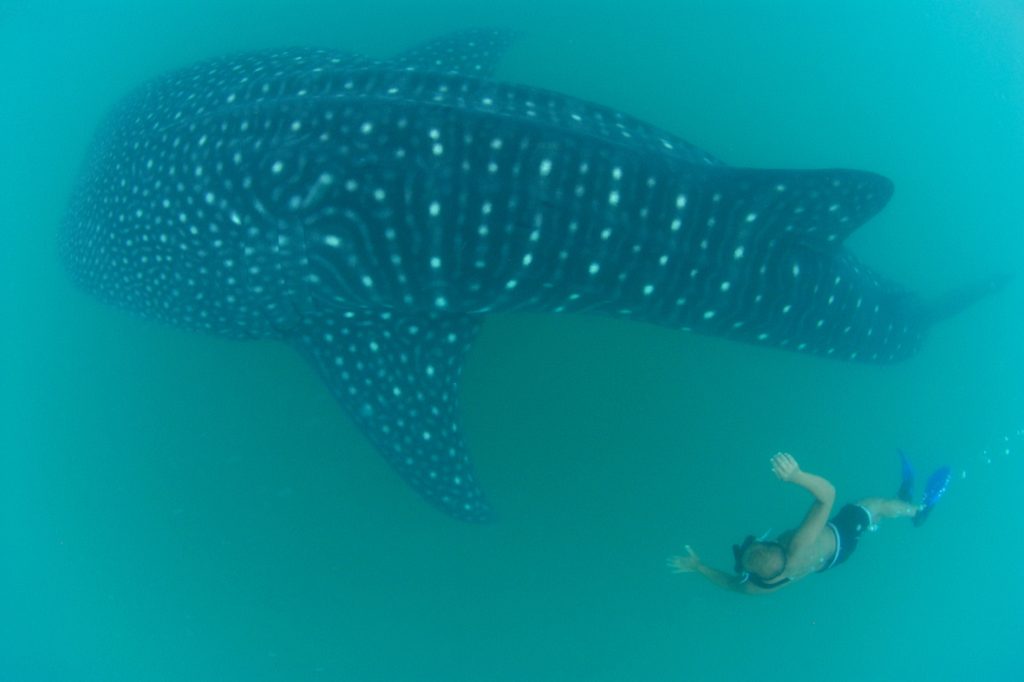
Nonetheless, on my first interaction we got four whale sharks and on the second visit (after my Ticao Island visit), we got two sharks. For the second interaction, the visibility was improved, allowing snorkellers to just about see the whole animal.
Photographically, the lens of choice was a fish-eye, but it was very difficult and I was unable to get anything on the first interaction that I could possibly be pleased with, so I’d have to hope for better a few days later. I selected higher ISO’s of 400 and 640 due to the dark water, and set the camera to shutter priority.
Six days later, on the second interaction after my Ticao Island interlude, I was able to benefit from the slightly improved conditions to capture I couple of images that “best” represented the conditions I experienced.
Ticao Island
The weather at Ticao Island continued in the same vein as I arrived amid heavy rain to a welcome of umbrellas. Again, it wasn’t the conditions I’d hoped for as I inspected the near zero visibility in front of the resort, and more worryingly, I noticed that I felt “woolly headed”.
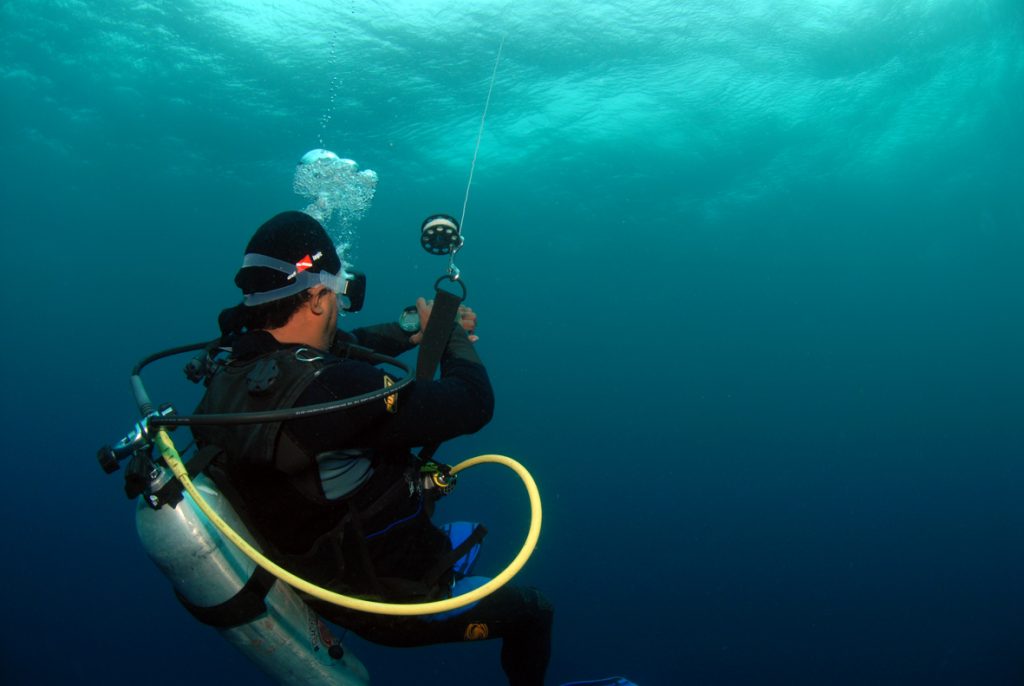
The Manta Bowl was my first Ticao Island diving experience and it turned out to be not for the faint hearted thanks to the strong currents that can commonly be found there. It’s a sizeable area that’s commonly visited by pelagics, consisting of a raised reef in the middle of the Ticao Pass that’s around 13 metres at the shallowest point.
It was raining heavily when we arrived there, and you could see immediately that the current was strong. We’d been issued with reef hooks in anticipation of this, with currents on our three dives ranging from moderate to very strong. This required vigilance among the divers in order to avoid getting separated from each other. We used reef hooks at intervals for respite and to look for mantas. I was also having trouble with my ears on the descents as the head cold I’d first noticed the previous day had worsened.
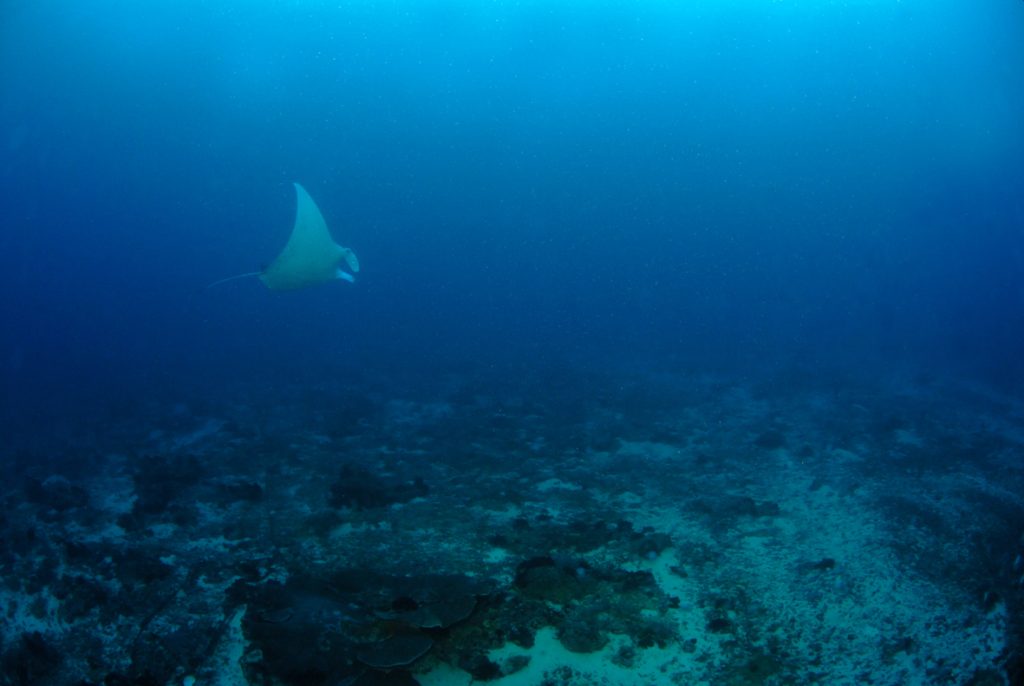
On the first dive, we encountered a single manta, which was encouraging, but not on the following two dives. Other sightings included a school of jacks, a cuttlefish and a couple of white tip reef sharks. I was told that whale sharks are occasionally seen here (best time is April/May) and that other sharks such as hammerheads and threshers are not unknown. It wasn’t easy diving, and certainly not one for the novices.
From a photographer’s standpoint, the Manta Bowl had subjects that you would wish to photograph, if only you could get close enough to do so. The lone manta looked as though it might grant us a close pass but it frustratingly veered away not to return, so I was only able to get one image of it in the middle distance. I took very few photographs on these dives as it wasn’t the conditions for “photo-diving”.
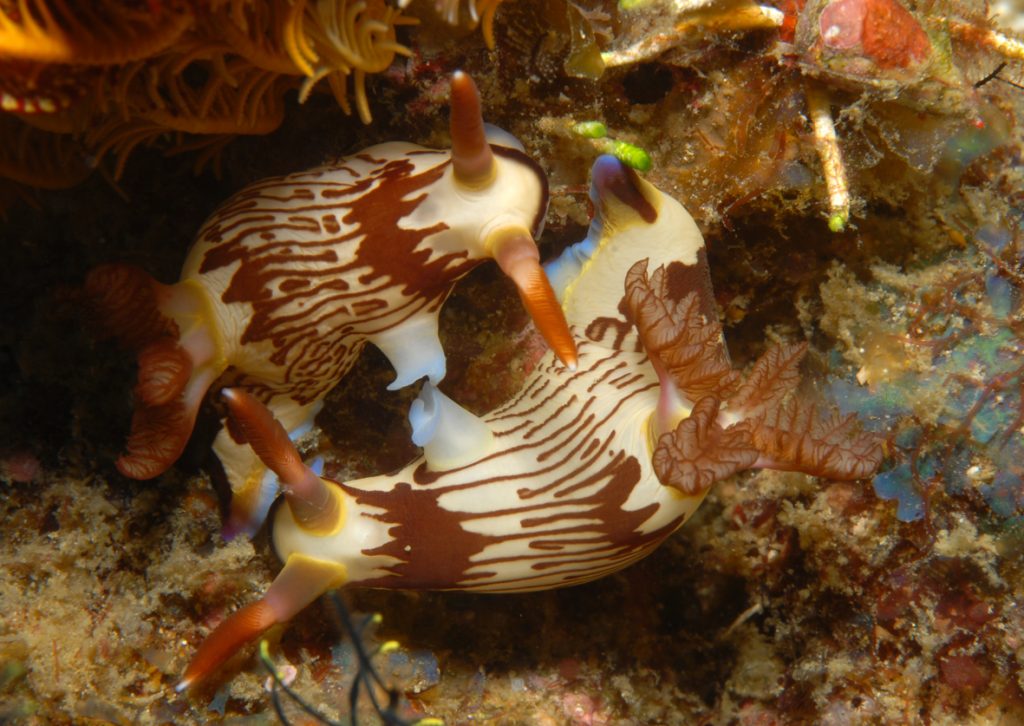
On the second day, we visited an area known as San Miguel located at the northern tip of Ticao Island, more than an hour by boat from the resort, characterised by rocky islands typical of the Philippines. There are several dive sites in this area, mostly offering slopes and walls adorned with soft corals. The area is reputedly good for nudibranchs and other “macro” reef life, but I wasn’t able to complete the day.
My cold had mutated quickly into sinus a infection, so after attempting two dives where I couldn’t descend more than a few metres, I decided not to punish my ears any more. I ensured that I shot a few macro images on the first dive but that was all I could manage. My diving plans had come to premature end.
As a photojournalist, the trip was of course not what I’d hoped for. But despite that, I still returned with some images and experiences that I could report on and pull together into a coherent feature, including pictures taken on the days that I had to sit out the diving.
In summary, you might think that I’d recommend fellow dive travellers to stay away based on my experience, but that definitely isn’t the case. This is an interesting area to explore, no doubt about it. You’d be very unlucky if so many things conspired against you as they did with me.
Finally, I want to stress that my experiences in no way reflect the people at Donsol and Ticao Island who could do little more than do their best in the conditions that prevailed. Perhaps this feature shows that you can still get something rewarding and worthwhile from even the most difficult of trips.
The author would be keen to see any posts from other divers and photographers who have visited this area.