
Text by Jeremy Cuff/www.ja-universe.com
Photography by Jeremy & Amanda Cuff/www.ja-universe.com
With Far East dive destinations such as Bunaken and the Lembeh Straits lodged firmly in the global consciousness and hovering near the top of many peoples “to do” lists, there’s also an appetite among some divers for discovering less known areas. One such place is Malapascua Island in the Philippines, which although by no means an entirely “new” destination in diving, is certainly a major contender for divers looking for something exciting and different…
Malapascua is a laid back and pleasant island located just off the northern tip of Cebu in the Philippines. To date, its presence on the global diving map can largely be attributed to the local Thresher Shark encounters which can be reliably seen on dives at Monad Shoal, making the area unique for that reason alone. But there’s actually quite a lot more to the area than the sharks, with a wide variety of dive sites to explore.
Unlike some of diving’s distant hotspots in the Far East, Malapascua is actually relatively straightforward to reach when compared to some other destinations such as Raja Ampat or parts of Papua New Guinea. It requires just two flights (if travelling via Singapore direct to Cebu City), followed by a three hour road trip and short boat ride.
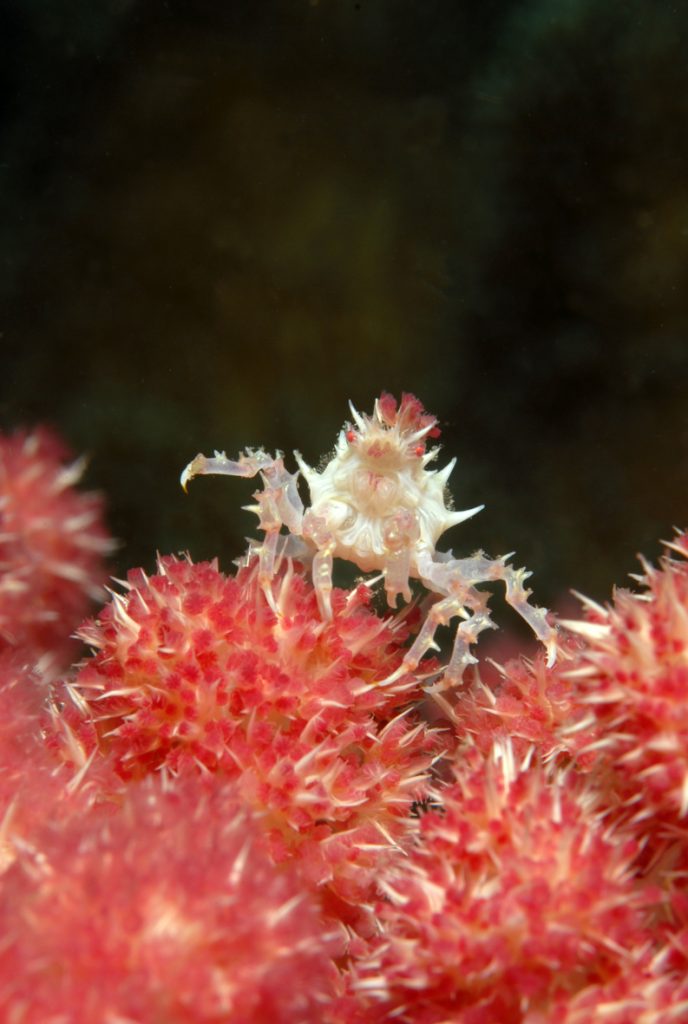
Many divers visit Malapascua for the chance to see Thresher Sharks, which although found globally, are rarely seen on dives. The Thresher Shark sightings are most reliable at first light, which means a very early start, often requiring a 04.45am meeting at the dive centre for a prompt 05.00am departure out to Monad Shoal, about 20-30 minutes from the island.
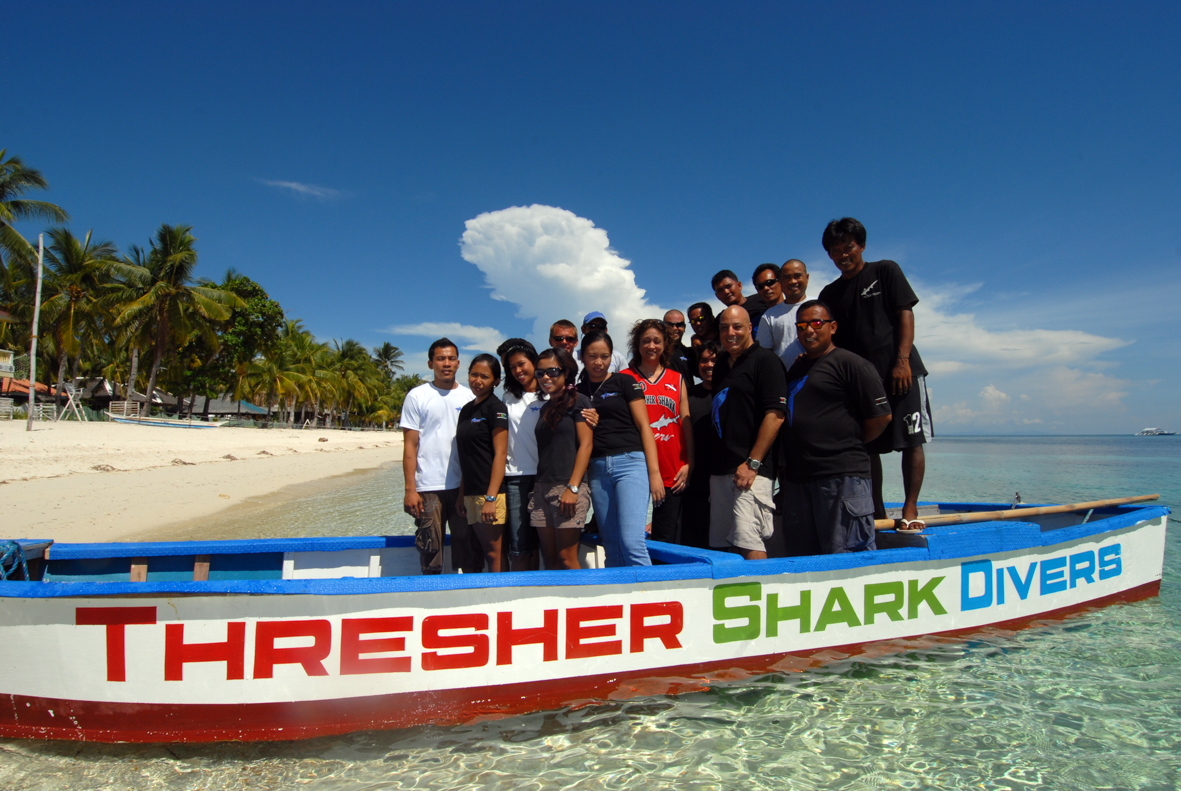
Monad Shoal is often described as a submerged island, rising from the deep to within about 20 metres of the surface. It was once subjected to the perils of dynamite fishing, but thankfully this has now been stopped, with new coral growth returning to the flattish plain of the shoal. The local dive operators such as British owned Thresher Shark Divers have dedicated moorings and operate daily visits (numbers permitting) to see the Threshers.
During my visit, I dived there three times in the early morning, resulting in Thresher Shark sightings on each occasion, including one dive where we saw three sharks in one field of vision. Whether or not you get an encounter is purely about being in the right place at the right time, but the chances are always good. Behaviour-wise, they can be quite skittish and tend to lurk on the edge of the visibility but on occasions, they’ll reward divers with closer approaches if you remain still and unflustered. Also of particular interest to some divers might be the PADI Thresher Shark Specialty course, unique to Thresher Shark Divers.
Photographers should take note that local marine conservation rules don’t allow the use of strobes (flash units) on the Thresher dives, as there are concerns that excessive “flashing” will frighten the sharks and alter their natural behaviour. It therefore means that all photographers can only work with ambient (natural) light, of which there is very little first thing in the morning.
Monad Shoal and another similar “submerged island” called Kimud also offer the chances of regular Manta Ray encounters, with a known cleaning station at Monad being the best place to see them. On the single afternoon dive I did there, a Manta came to the edge of the visibility before turning back into the blue, though they sometimes will circle around in front of the divers. Schools of Mobula Rays (similar to mantas) are seen sporadically and Hammerheads are regularly encountered, especially at Kimud in the December to May period, with April being historically the best month (though nothing is “guaranteed” in diving).
But that’s not all; around the island, there’s some very interesting “muck” diving at sites such as Ka Ostling and Bantigues (or Bantigi as it’s sometimes spelt) where all manner of weird and interesting critters can be found, though you sometimes have to look hard to find them. At these sites, there’s an inherent satisfaction in spotting and observing these creatures which have evolved through eons to avoid detection.
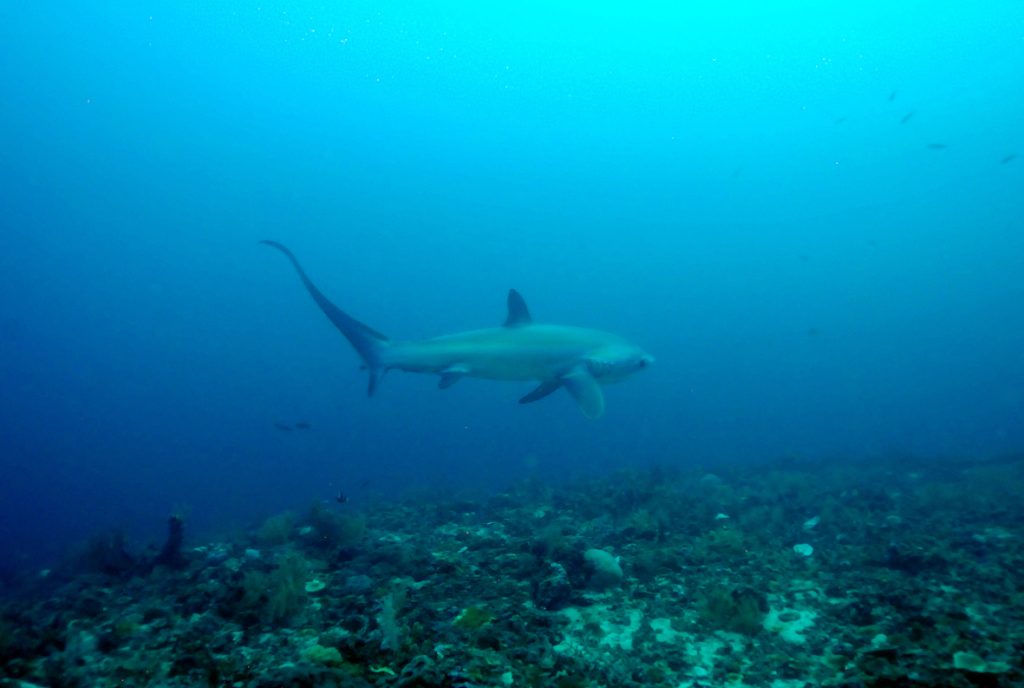
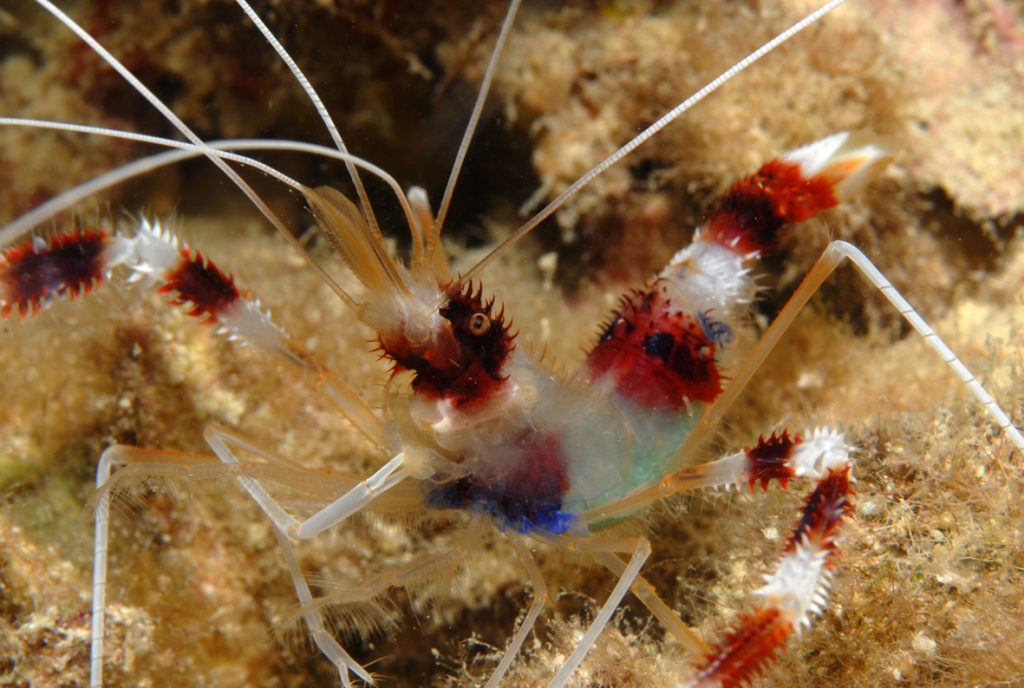
I was told that November has been historically good for Octopus mating though sightings of Ghost Pipefish and other critters vary, with no particular timings that can be “set in stone”. Marine life enthusiasts and macro photographers will certainly find a great variety of species around Malapascua, whether visiting the “muck” sites or the reef sites. For example, there’s plenty of seahorses, particularly at Lighthouse, as well as Pygmy Seahorses at the Deep Rock site. Other popular critters such as frogfish, pipefish, scorpionfish, crabs, shrimps, nudibranchs, sea moths and cuttlefish are fairly common.
For fans of spectacular underwater scenery there’s nearby Gato and Calanggaman Islands which are regularly visited by the island’s dive operations, such as Thresher Shark Divers. Gato Island, for example, has something of everything, including caves, overhangs, drop offs, rubble slopes, abundant marine life, coral gardens and walls festooned with soft corals. Calanggaman Island offers more fantastic underwater scenery with exciting drop offs that are sometimes patrolled by pelagics, though I wasn’t able to get out there during my visit. Those who did make it out there raved about it upon their return.
At Gato, there’s a spectacular cave that cuts directly through the island, linking one side with the other. I felt as though I only started to scratch the surface of this area, as I spent part of a single dive there. In an ideal world, several visits would be preferable.

There’s always a chance of some great encounters around Gato, with a population of white tip reef sharks, cuttlefish and other surprises making regular appearances. During my visit most of the white tips weren’t “at home” but we did find a pair nestling in a very small cave. We also discovered a couple of large cuttlefish on the slopes at about 20 metres, but they weren’t keen on close approaches. For the lucky and observant diver, you might glimpse rarely seen species such as Bamboo and Cat Sharks, or perhaps even a Manta or Whale Shark out in the blue.
At several dive sites in the Malapascua area, there’s some spectacular areas of soft coral. These proliferations tend to happen where the current runs, so it’s often difficult to remain there for any length of time. These current prone areas are also tricky as the water tends to carry a lot of particles, reducing the visibility dramatically. If you get ideal conditions in these areas, make the most of it!
There’s also a choice of more “conventional” reef sites, some in sheltered areas such as Lighthouse and others that are more prone to current such as North Point and Bugtong Bato, which offer nice varied dives with plenty of life. And there’s even a couple of wrecks for “wreckies” to enjoy, though I didn’t get a chance to dive them during my visit.
Lighthouse is the prime spot at Malapascua for Mandarin fish, with visits there usually being around dusk to coincide with their short window of activity out in the open. If you’re lucky and patient, it’s possible to witness a mating pair rising up out of the coral for a few brief seconds before they dart back down to the safety of the reef. I visited the site twice, working closely with my guide, who knew exactly where to look. In half an hour a photographer might get perhaps five or six chances to get the shot.
To help maximise the sightings on each dive site, a good local dive guide is always a big help, so it’s worth seeking out the most knowledgeable individuals when visiting. My dive guide “JN”, who works for the Thresher Shark Divers team knew the sites extremely well and was very adept at finding things on the dives such as frogfish, seahorses, tiny shrimps and crabs. Without his help I would’ve missed many of the fascinating and cryptic critters that Malapascua has to offer.
Malapascua offers year round diving and is what I would describe as a “combination destination” in that there’s a lot of different experiences possible within the immediate area. It was mostly calm during my stay in September, but many sites are still diveable if it gets windy. May to December is the Typhoon season, though chances of being affected are statistically slim at any given time, with the majority of disruption tending to be further to the north.
Overall, I really enjoyed the Malapascua experience – a mixture of laid back living, friendly people and varied diving that should impress even to the most jaded global dive traveller. I’m sure it’ll feature on many a diver’s “must do” list in the future.