
Text by Jeremy Cuff/www.ja-universe.com
Photography by Jeremy & Amanda Cuff/www.ja-universe.com
Babbacombe Bay had been on my “dive radar” for quite a while. My previously planned visits didn’t happen for reasons of adverse weather, but this time I chose a weekend (the 11th & 12th May), booked some accommodation and hoped that the weather would turn out fine. As the weekend approached, the unfavourable easterlies subsided, and the weather itself was forecast to be good, but most importantly there was a light westerly. Easterlies can kill the viz.
Winding the clock back to early March, I made a point of visiting Babbacombe whilst on a motorcycling weekend in Devon; the reason for this was to check out the “logistics” of what is involved with diving there (access, parking, availability of tanks/fills, food/drinks & so on). I was glad I did that, as it gave me the knowledge of how best to plan the trip.
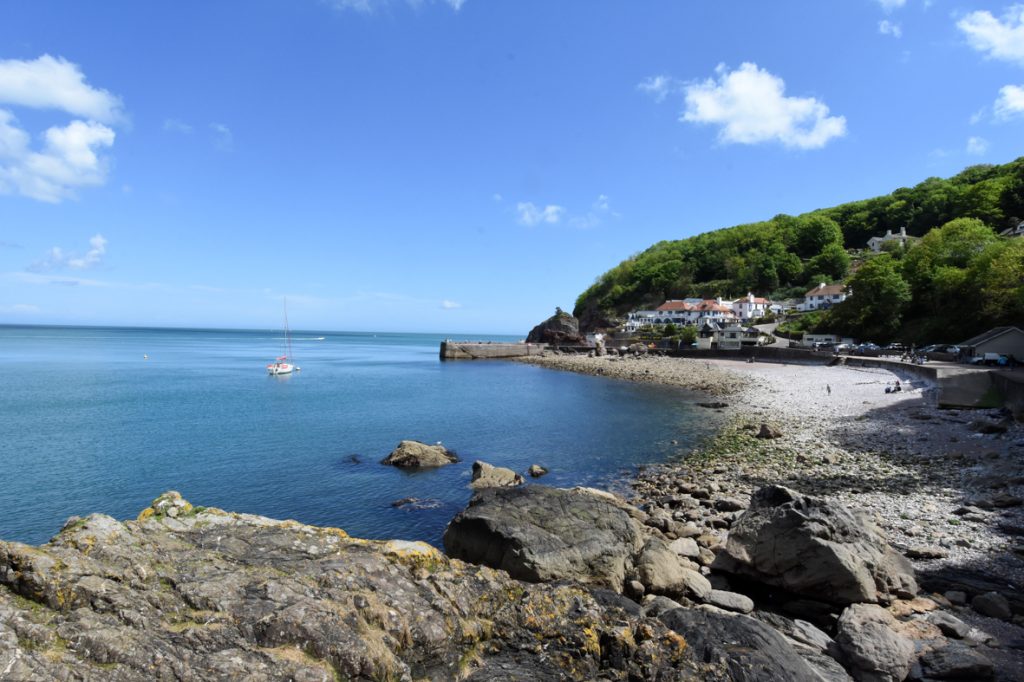
Babbacombe itself is a pleasant clifftop town located within the “English Riviera” of the Torbay area, on the north-eastern side of Torquay, sheltered behind a series of headlands including Hope’s Nose. It boasts hotels and apartments, pubs, restaurants and cafes, a funicular railway, a famous model village, a theatre and (most usefully for our reason of visiting), a dive centre. In terms of the setting, the clifftop gardens offer fine vistas over the bay itself, and if the weather is very clear it’s possible to see all the way to Lyme Regis, West Bay and even Portland, many miles to the east.
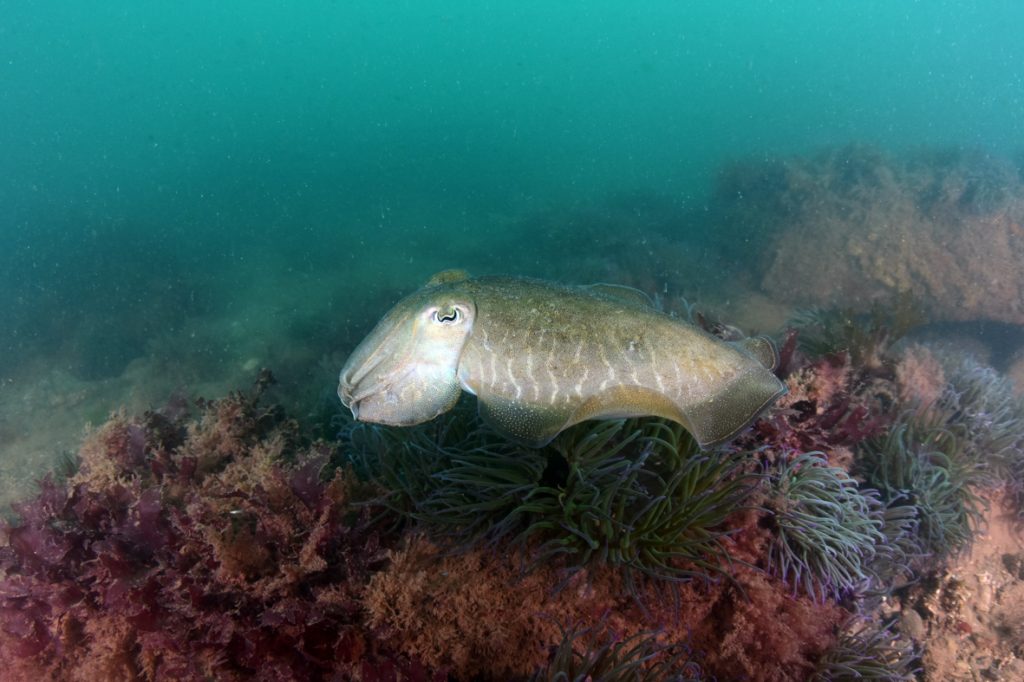
In the diving community, this sheltered bay (unless there’s an easterly wind) is known primarily as a springtime hotspot for cuttlefish, that gather there to court, mate and lay eggs, though there are plenty of opportunities for other encounters and sightings. At this time of the year, it could be renamed as “Cephalopod Central”.
My friend Simon, who hadn’t dived in the UK for many years would be my buddy for the weekend; it would be a chance for him to re-acquaint himself with the type of conditions in which he learned to dive as a teenager. On the Friday evening, en-route south and west along the A303 from Wiltshire, I collected him from his home near Honiton, and we sped determinedly down to Babbacombe, highly motivated by the thought of a pub meal!
ARRIVAL AT THE SITE
Babbacombe Bay is accessed by a very steep single-track road next to the theatre, with a tiny car park at the bottom. It’s the sort of road that freaks out panicky drivers, and during the weekend we witnessed an amusing “high revving burning clutch incident” after a driver stalled on the hill and rolled backwards into a wall.
The Divers Down Dive Centre, which is based up in the town on the main road, is run by a couple called Mike and Michele. They also run the café next to the car park and can provide tanks, fills and rental equipment from there by arrangement, as well as copious amounts of tea, coffee and snacks. It’s a convenient arrangement, and we found them to be very friendly and helpful. It made everything a lot easier.
On both days, we were up quite early to drive my pickup down to the car park, to ensure that we got a space. If the car park is full, it’ll turn your pleasant day of diving into a frustrating palaver. Though we were early, a number of divers were already there, including some that had travelled all the way down from Cardiff. Nabbing a parking space is the key to the day.
DIVE BRIEFING
As Babbacombe Bay is a shore dive, you have three basic choices. You can climb down the steps onto the tiny pebble beach in front of the cafe and choose your entry point from there, or head past the café to the boat slip and try that. Alternatively, it’s also possible to walk out onto the stone jetty and climb down the steps to enter from there. If choosing the boat slip or the jetty from which to enter and exit the water, great care should be taken with any slippery seaweed that could cause a nasty fall.
You can decide to dive at any time regardless of the tide, as there’s very little in the way of current, but it’s much easier to get in and out of the water during the higher tide periods. At low tide, it can be tricky keeping your footing whilst navigating slimy and unhelpfully located boulders with heavy dive kit.
Wherever you choose to enter the water, there’s a wide area that you can cover once you’re on a dive. You can choose to stay in the immediate shallows among the boulders, or head out into deeper areas to explore underwater “rockeries”, weed beds and sandy expanses.
As the diving, even at the deeper points, is relatively shallow (expect not to exceed 10 metres), it’s a very good idea to use an SMB due to the presence of boats. In most areas, there’s also a lack of distinctive “landmarks”, so it’s easy to get disorientated and end up swimming out to sea rather than back to shore. Dusting off your underwater navigation skills are very helpful here. Visibility, can also vary tremendously, so buddy pairs must keep close to one another to avoid getting separated.
One “landmark” that is distinctive and worth looking out for is Mushroom Rock; it’s resemblance to a toadstool is immediately apparent if you find it whilst heading into the bay from the pebble beach or slipway.
THE DIVES
Essentially, the dives in Babbacombe Bay are “naturalist” dives, rather than “scenery or “wreck” dives. It’s the kind of place where an observant diver who’s not in a hurry can be rewarded with some interesting sightings. For this reason, the dive is quite popular with photographers.
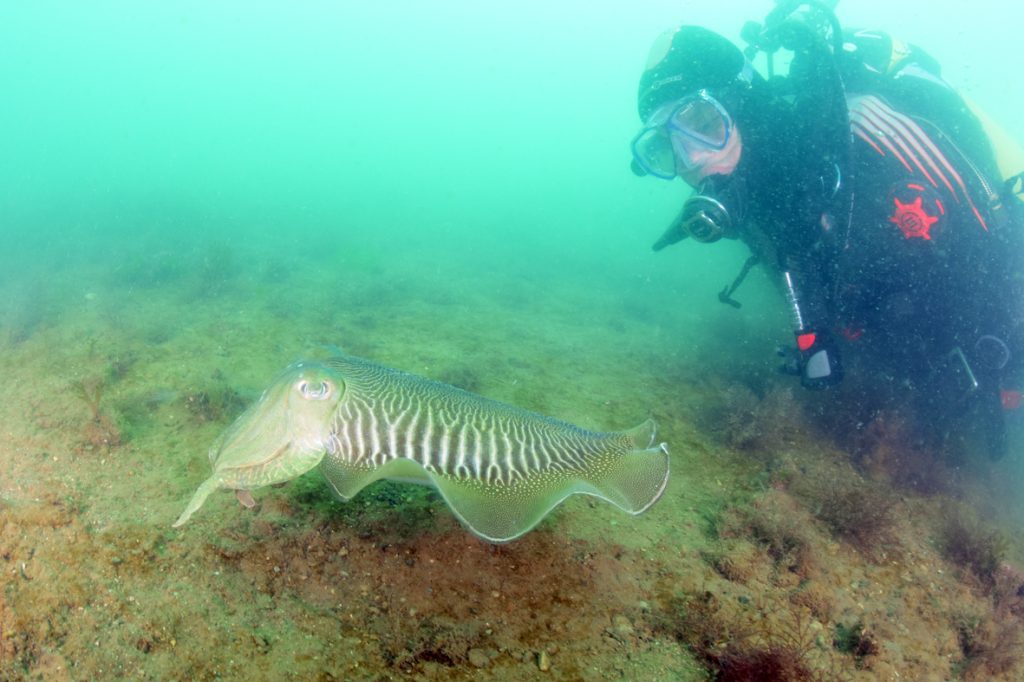
As I’ve alluded to already, the bay is best known for its cuttlefish gatherings which can sometimes be spectacular if you get the timing right combined with perfect conditions. We didn’t quite manage that, as the peak of the action had passed; perhaps 2-3 weeks earlier (in late April) might have been the optimum this year, but it’s not an exact science.
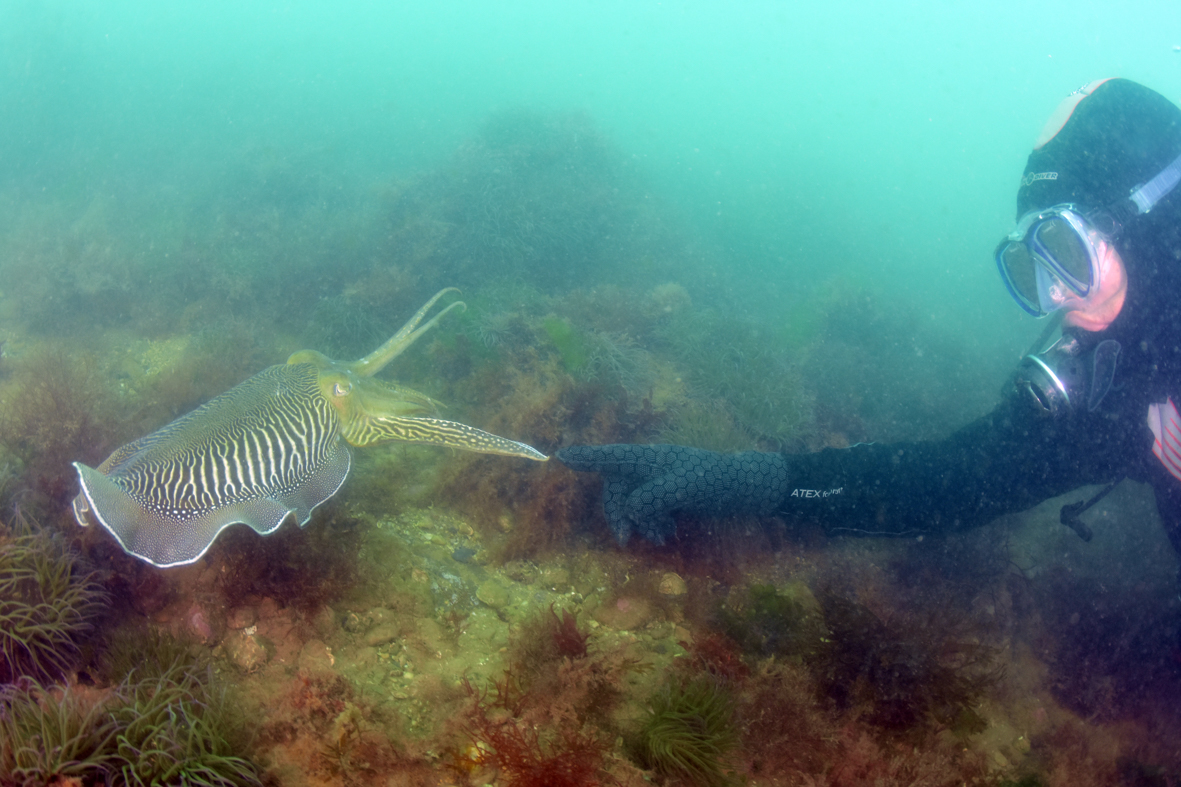
We did, however, still get a few cuttlefish sightings, with Simon and I spending a lot of time with one individual in particular (a male). At one point, there was even an “ET moment” where Simon reached out and the “cuttle” returned the gesture by appearing to reach back whilst I shot images. He’d never seen a cuttlefish on a dive before and found the encounter very rewarding. Coincidentally, he was reading a book about cephalopod intelligence at the time of our visit, which added to the fascination.
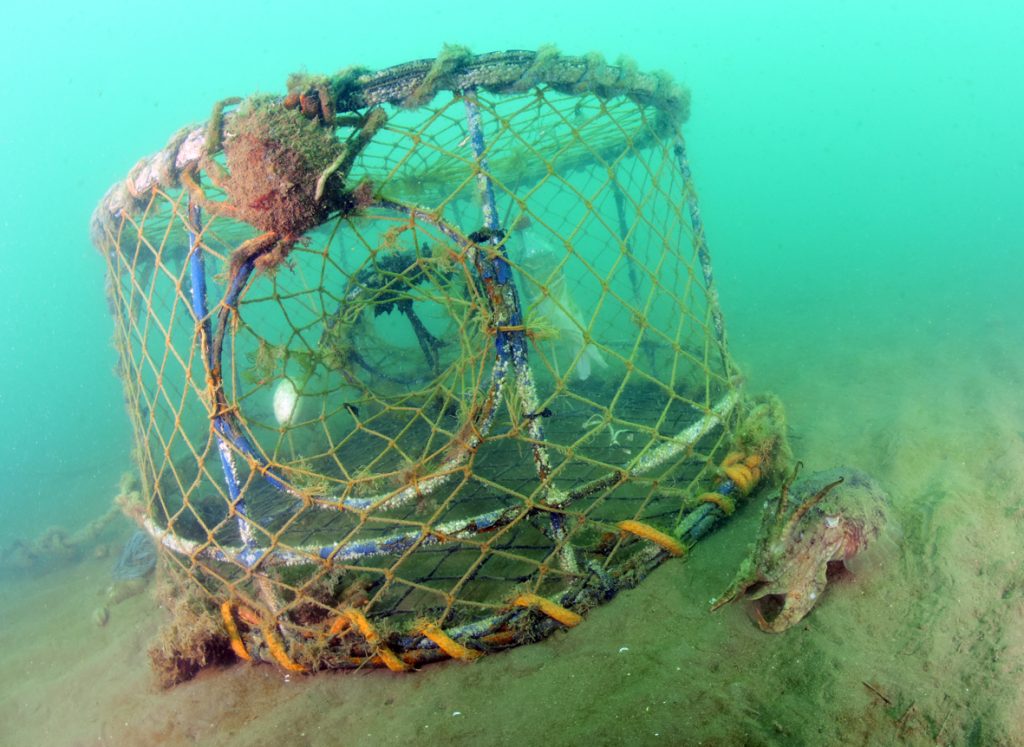
Still on the underwater naturalist theme, divers can expect various species of crab including hermits and edible crabs, and there was no shortage of pugnacious spider crabs that can rear up at the perceived threat of an underwater photographer invading its personal space with a camera.
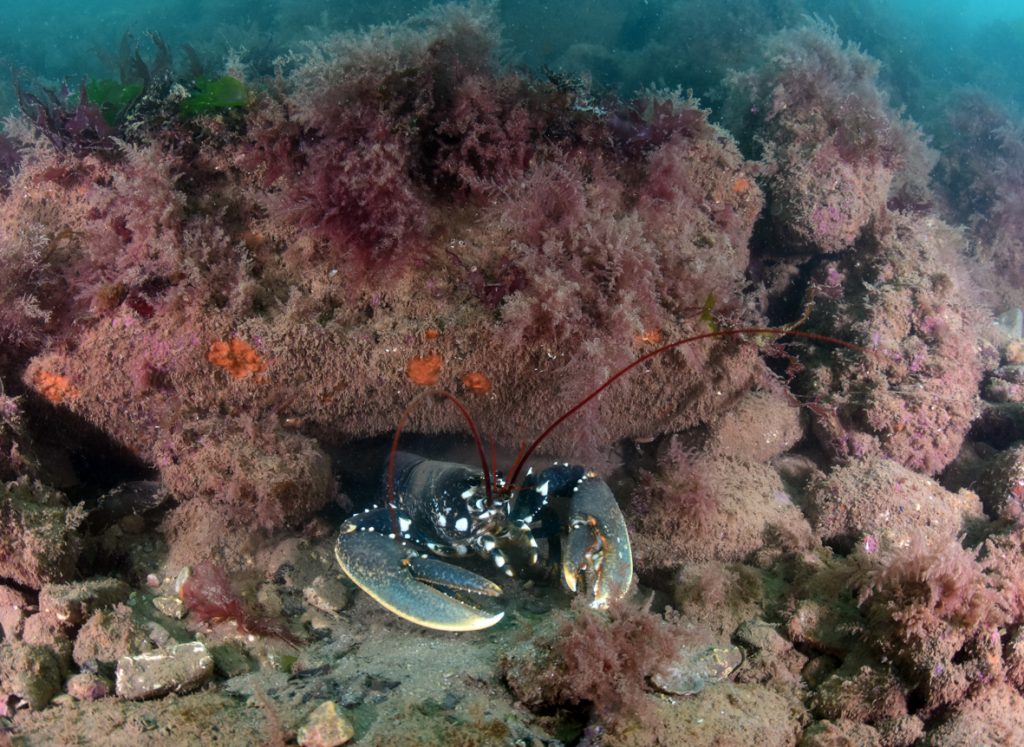
Other sightings included a flounder, a common lobster, anemones, dead men’s fingers, several wrasse and blennies, and if you look closely, you can see an abundance of fish fry; the bay is obviously an important fish nursery due to its sheltered aspect. Also, you can often find pipefish skulking in the weed beds.
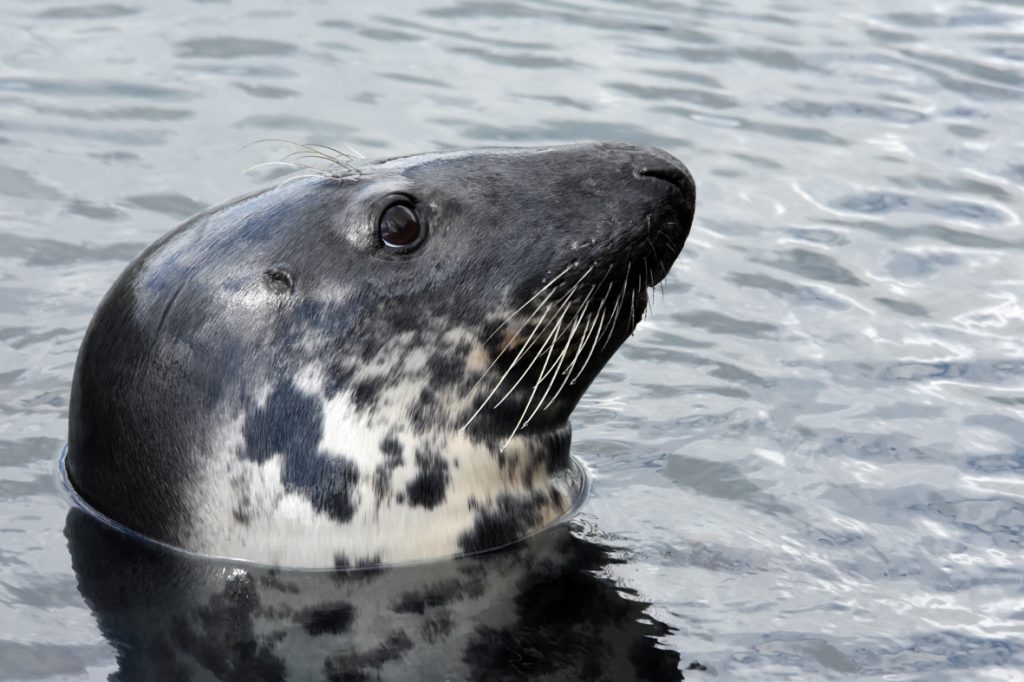
On the stone jetty between dives, we talked to some fishermen who had caught dogfish and mackerel, and there’s also a seal that regularly hangs out in the bay which is very tolerant of people (and perhaps lucky divers?). Depending on the time of your visit, you can be assured of other interesting species. Historically, even Seahorses are known from the bay, though I’m not sure when they were last seen in the area. Perhaps they’re still there somewhere.
Divers Down Dive Centre
We found the Divers Down Dive Centre, run by Mike and Michele, to be helpful and enthusiastic, with their “double life” of running of the café being a great combination. In addition to assisting divers with their shore dives in Babbacombe Bay, they also offer PADI Training Courses and boat charters to other dive spots in the area.
The dive shop itself is located on the Torquay end of Babbacombe, on the main through road. Though relatively small, it’s stocked with a variety of equipment, including a range of rental equipment available for hire, including tanks, weights, drysuits, semi-drys and most regular items of kit.
For further information, visit www.diversdown.co.uk or contact;
Divers Down
139 Babbacombe Road
Torquay
TQ1 3SR
Tel: 01803 327111
Type of Dive
Shore dive (much easier at high tide).
Depth
Usually within the 2 metres to 10 metres bracket.
Marine Life/What To Look Out For
Cuttlefish (especially in the spring), several species of crab, lobster, pipefish, flounder, blennies, anemones, dogfish, blennies, wrasse, seals, and much more.
Visibility
Variable depending on wind direction, run off & other factors, but can be six to eight metres if you’re lucky. We experienced 3 or 4 metres at best during our visit.
Seabed
Boulders and rocks, rubble, weed beds, sandy expanses & gentle slopes.
Hazards
Boat traffic, disorientation, low visibility and boulders upon entry/exit.