
Text by Jeremy Cuff/www.ja-universe.com
Photography by Jeremy & Amanda Cuff/www.ja-universe.com
As the Sea Cat ferry set out from Poole Harbour, winding out past Brownsea Island, Sandbanks and Studland, it felt like properly going away, getting “off the island”, so to speak. I looked forward to the pleasant continental vibe of the Channel Islands and the diving I had planned, though the weather wouldn’t be as good as my previous visit…
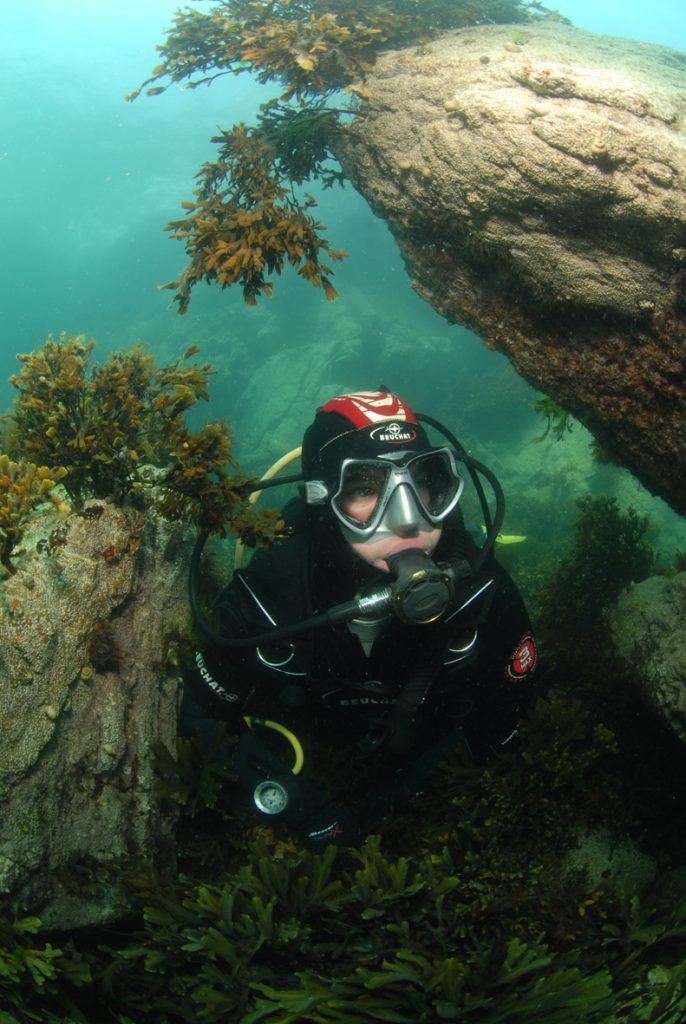
Back in 2010, I enjoyed an excellent weekend of diving at Jersey’s Bouley Bay. It was somewhere I vowed to visit again one day, but it took until late August 2018 to make that a reality again.
It’s is a lovely scenic bay located on the island’s North East coast with a sheltered position that allows for year-round diving. On a clear day, you can sit and eat crab sandwiches or an omelette and chips from Mad Mary’s Café and see over to the coast of Normandy in mainland France. The gentle arc of the bay is “interrupted” by a rocky outcrop to the East known as L’Islet, and bounded to the North West by a stone jetty.
ARRIVAL AT THE SITE
Bouley Bay accessed by a steep winding road, characterised by switchbacks and sea views. There’s limited parking for those bringing their own vehicle or hire car, so it’s a good idea to get there early – really no later than 9am to be safe. The “A Roads” on Jersey are more like “B Roads” or even country lanes, so don’t expect to get anywhere quickly!
DIVE BRIEFING
It’s best to dive Bouley Bay with a guide, so that you can get the most out of a visit. That said, the sheltered and safe conditions mean that most competent buddy pairs could “go it alone”, find plenty to see and not get hopelessly lost.
The main decisions to be made are when to go in (which might be determined by the tide times, as there’s quite a big tidal range here), where to get in, which is normally from either the boat slipway or from the beach (accessed by some steep steps or further along the walkway past the cafe), and where in the bay you want to explore.
It’s a very good idea to take an SMB to indicate your location at all times, as there’s some sporadic boat activity, especially on weekends. It pays to be vigilant, especially if surfacing, where it’s essential to look around and listen for any oblivious boat craft.
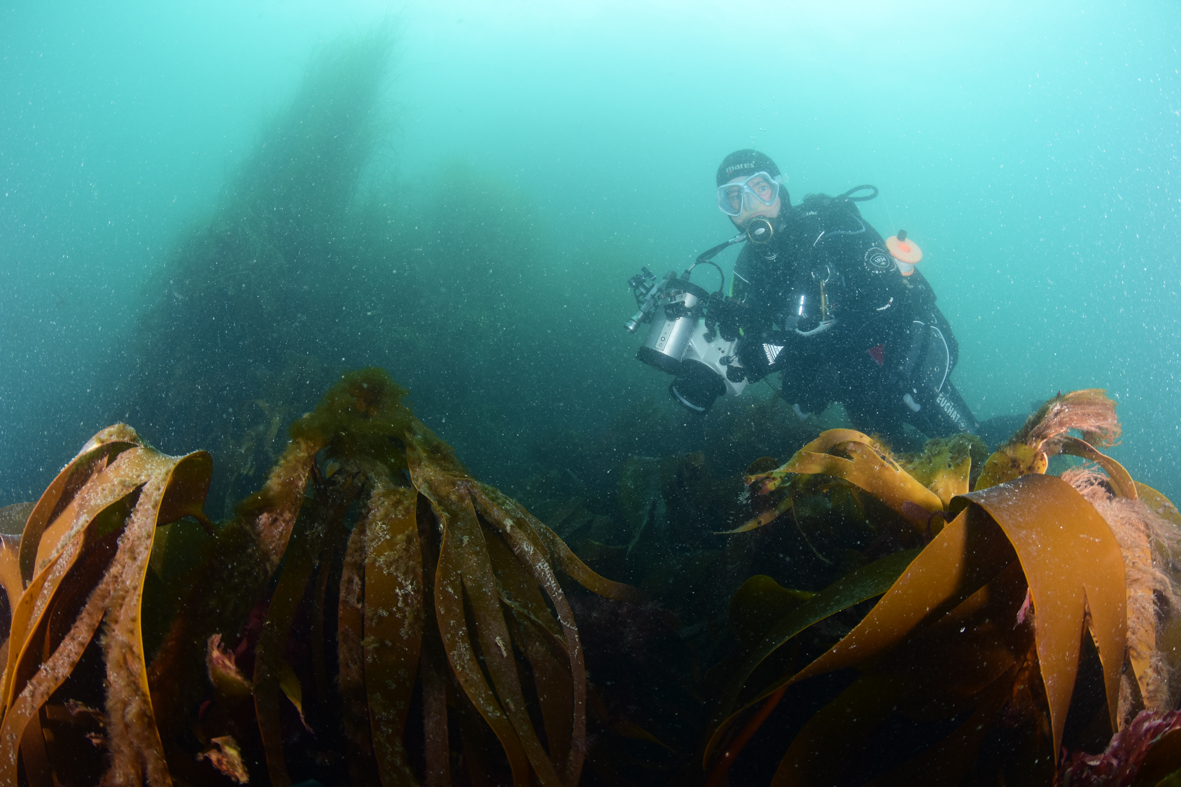
Our main plan was to cover the different areas of the bay, ranging from rocky ledges and walls, luxuriant weed and kelp beds, the rock and pebble strewn shallows and the flat sandy expanses (the UK’s best “muck diving” perhaps?). You could thus divide the bay into three main areas and dive it in sections, although in reality, you could easily cover more than a single area on each dive if you so desired, or if time is short.
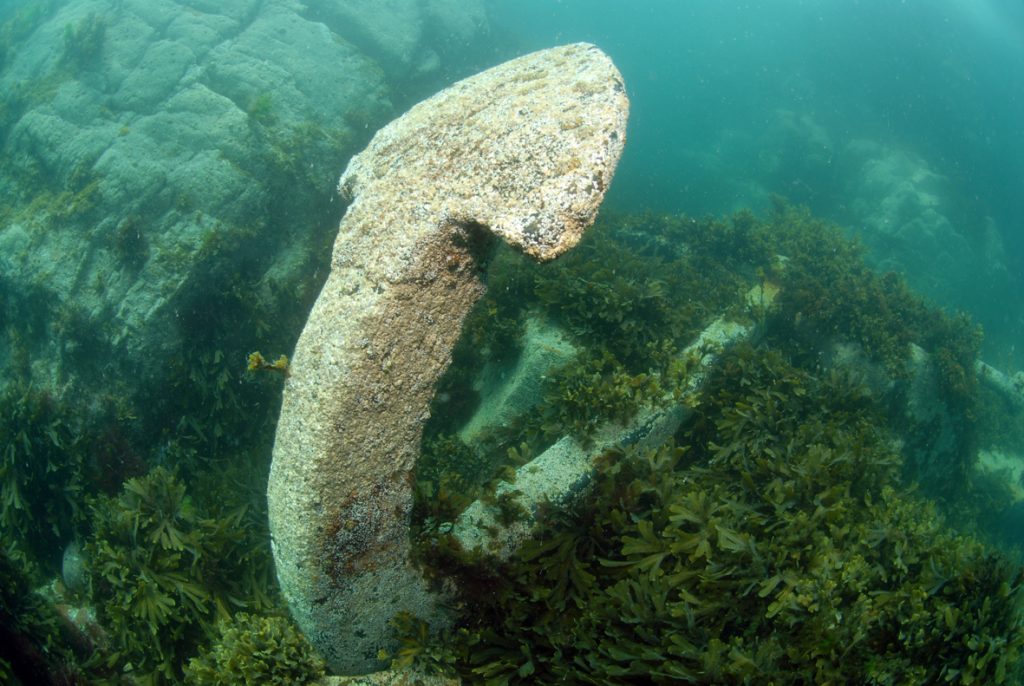
To the east, L’Islet offers rocky ledges and walls, and is surrounded by kelp and weed beds in season. Towards the middle of the bay are the rock and pebble strewn shallows, the weed beds and the vast sandy expanses further out. To the North West is a rocky and weed covered slope, weed beds and the sheer wall of the stone jetty. If diving in this area, look out for the large discarded anchor.
As the bay is fairly shallow and largely current free (though you can pick it up if you go further out), it’s possible to enjoy long dives in Bouley Bay, with the only enemy being the cold after you’ve been in the water for well over an hour. On my 2010 visit, we enjoyed a fabulous 10 metres of visibility, but this time it was much reduced following the less stable weather after the 2018 heatwave, perhaps a minimum of 2 metres and a maximum of 5 metres.
THE DIVES
Bouley Bay offers a variety of underwater topography and fascinating marine life encounters for the underwater naturalist. The timing of a visit is key to the types of flora and fauna that will most likely be encountered; for example the winter sees more flatfish, the spring can yield lumpsuckers, whereas late summer offers the chance of John Dory. My recent visit was in August and it was again very productive, though different in terms of the sightings from my previous visit in mid-June back in 2010.
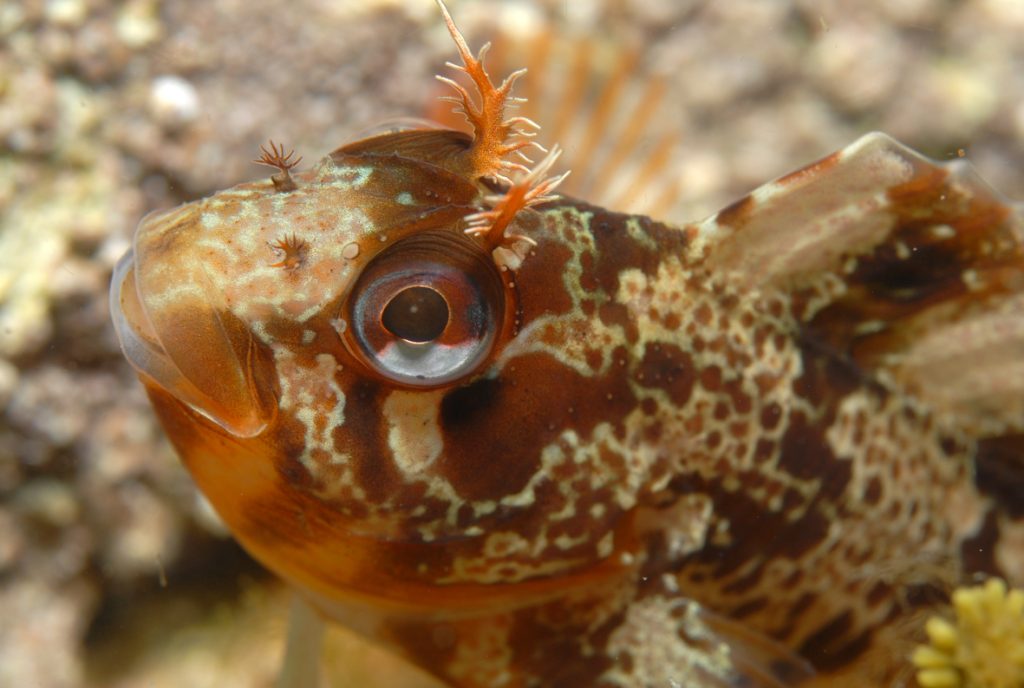
Fish fans can expect some interesting and unusual finds in Bouley Bay. There’s plenty of wrasse, including some quite hefty specimens. I also noticed a fair number of the parasitic crustacean Anilocra hitching a ride on some of the wrasse, like something out of Alien. I also observed pollack, bass, bream, grey mullet, sand eels, greater pipefish, gobies and my highlights for the trip, thornback rays and undulate rays (a new species for me).
Try as we might, we couldn’t complete the hat-trick by finding a torpedo (or electric) ray which are also regularly encountered in the bay. Other possibilities are flatfish such as sole and flounder, and also scorpionfish. There’s even an outside chance of spotting an elusive seahorse, as they’ve been sighted in the bay a few years ago, though not recently. Due to their cryptic nature, the fact they haven’t been seen doesn’t mean they’re not still present.
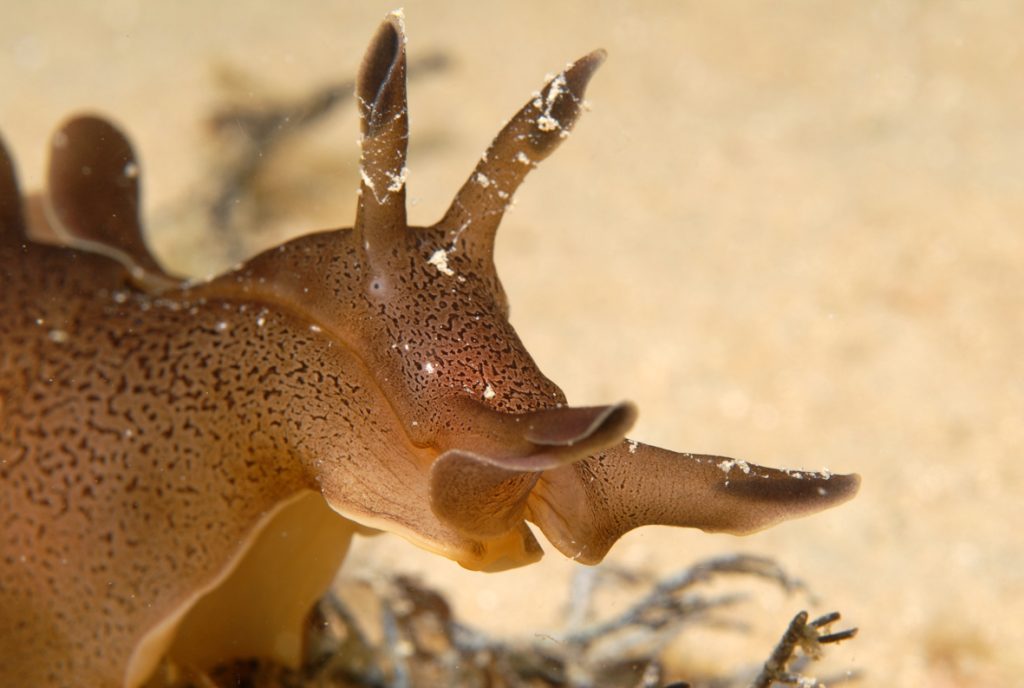
Around the ledges of L’Islet, it’s worth looking out for impressive tube worms, and in amongst the weed and kelp beds. There’s several species of anemone to check out around the bay, including the tube anemone and the common snakelock anemones that sometimes gives refuge to a tiny translucent shrimp. Other invertebrates included tiny nudibranchs, scallops, spider crabs (some of them quite pugnacious when confronted with a camera!), hermit crabs, cuttlefish, whelks and seahares, a large kind of sea slug.
Although the conditions didn’t allow, night dives are also possible by arrangement, and are reputed to be very good, with a local marine night shift that includes conger eels, gurnards, cuttlefish and even squid.
A special thanks to my Jersey based friend, diver and underwater photographer Kirk Truscott who kindly guided the dives.
BOULEY BAY – WHAT YOU NEED TO KNOW
Type of dive: Shore.
Experience: Great for inexperienced divers, but very interesting for experienced divers.
Depth: Up to 12 – 15 metres depending on tides and where you go, but likely to be somewhat shallower.
Marine life: The bay is home to a multitude of marine life.
Visibility: Expect between 2-10 metres.
Seabed: A sloping seabed with varied topography including rocky areas, sandy expanses, ledges, crevices and a stone jetty wall.
Hazards: The occasional boat, steep steps leading down to beach, discarded fishing line, uphill walks back to the dive centre.
How To Get There
To reach Jersey, I travelled with Condor Ferries on the fast “sea cat” from Poole, which takes about 3.5 hours including a stop in Guernsey en route. You can travel with a vehicle or as a foot passenger. For the full timetable and prices, visit www.condorferries.co.uk
Bouley Bay is located on Jersey’s North East coast. It’s accessed by a steep winding road, with limited parking for those bringing their own vehicle or hire car. For those without their own transport, there’s a bus service from St. Helier, or you can arrange a taxi.
Alternatively, it’s possible to fly in from regional UK airports, though most frequently from the south. Divers bringing their own gear may find the baggage allowances insufficient, so check this before making a booking.
There’s a big choice of accommodation in Jersey including bed & breakfast, hotels and self-catering apartments.
Previously in 2010, we chose the Merton Hotel in St. Helier, which is great if you’ve got children, as there’s good swimming pool and an evening kids club (in the summer months) to give the grown ups a break. On the most recent trip I stayed at Gorey.
When To Go
It’s possible to dive Bouley Bay all year round, though the marine life varies depending on the time of year. If you want a chance of seeing something specific, make sure you do your research and go at the right time of year.
The winding road to Bouley Bay also hosts a long standing annual “hill climb” event, so make sure your visit doesn’t coincide with this event.
Check out www.jerseymotorsport.com to make sure.
PADI Courses/Diver Training
Bouley Bay is an excellent place for inexperienced divers to hone their skills in a largely current free environment, with the Bouley Bay Dive Centre always busy with Open Water certifications, especially on weekends during the summer months. It’s also a good location for practicing the use of a compass and an SMB.
Dive Centre
There’s only one dive centre at Bouley Bay, the friendly and helpful Bouley Bay Dive Centre. It’s located on a walkway just below the (now closed) Water’s Edge Hotel.
Bouley Bay Dive Centre
The Water’s Edge Hotel
Bouley Bay
Trinity
Jersey JE3 5AS
Channel Islands
Tel: 01534 866990
Where To Eat & Drink
Most divers warm up with some snacks and beverages from Mad Mary’s café just down from the dive centre, overlooking the bay.
Wider Interest
A visit to Jersey seems more like a foreign trip than a weekend excursion to some part of the coast on the “mainland”. If you’ve got the time, it’s definitely worth spending several days.
Choices include Jersey Zoo (now known as simply “Durrell”). It was founded by the pioneering conservationist and author Gerald Durrell whose main objective was to be able to close it! Durrell’s idea of a zoo was not to show animals as “exhibits” but to captive breed rare and threatened species with a view to maintaining viable breeding populations and to facilitate re-introductions to the wild. Sadly, continued environmental decline around the world has ensured that the work of the zoo is never finished, and is perhaps more important now than it ever was.
Fans of laid back living will notice a more continental lifestyle and “café culture” alive and well on Jersey. We liked Gorey for a great selection of bars, cafes and restaurants, and also enjoyed the panoramic views over St. Brelade’s Bay from the popular Crab Shack restaurant.
There’s also some lovely secluded bays such as Greve le Lecq, Bonne Nuit, Plemont Bay and Rozel Bay for days of “getting away from it all”. On a different tack, fans of military history can go back in time at the excellent Mount Orgueil Castle at Gorey, or visit the interesting Jersey War Tunnels which chronicles the tumultuous events on the island during World War II.