
Text by Jeremy Cuff/www.ja-universe.com
Photography by Jeremy & Amanda Cuff/www.ja-universe.com
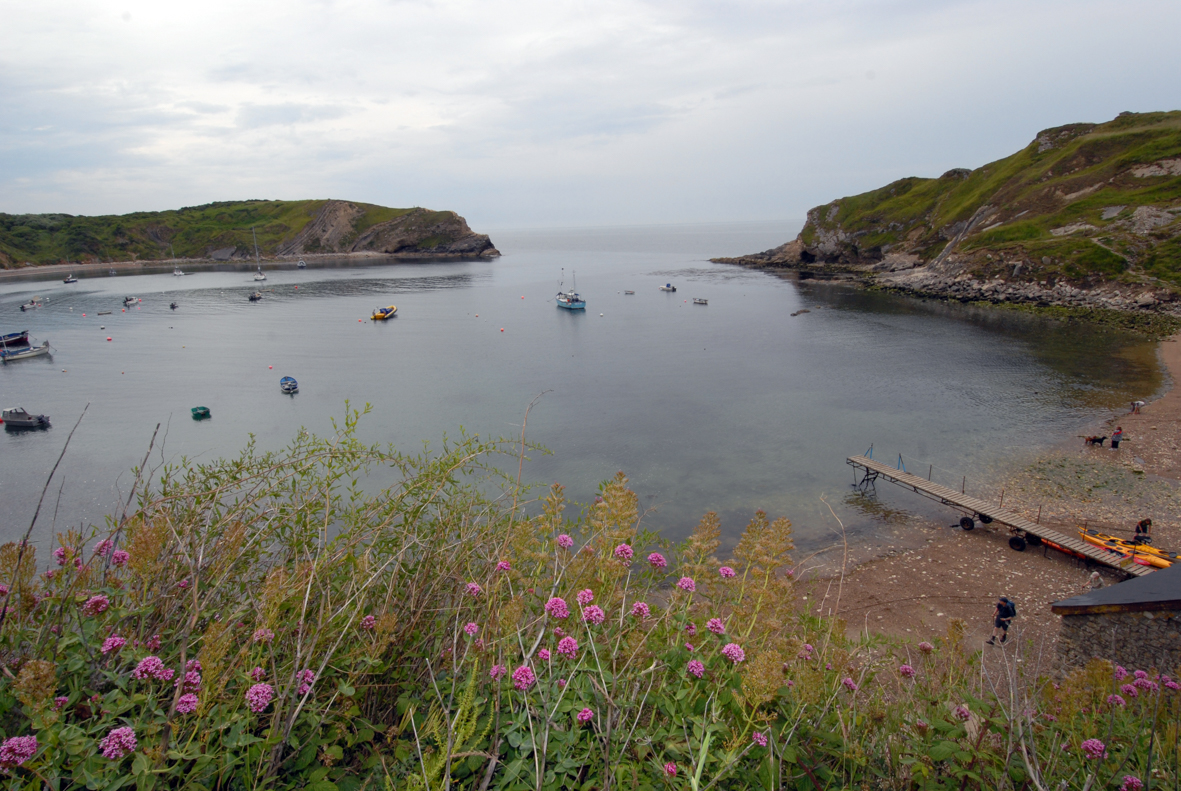
Lulworth Cove is an attractive and sheltered bay, popular with tourists, daytrippers and anyone who likes the water. It’s located on the Jurassic Coast in Dorset between Swanage and Weymouth and offers a great dive day out…
Over the past ten years or so, I’ve visited Lulworth Cove on numerous occasions, most often to get some fresh sea air on a weekend, or to trek the excellent coastal paths, but I’d never got around to diving there. I always thought it would make a good dive day out, so after several years of vowing to do it, I finally got it sorted with a couple of dive buddies and made it happen.
Lulworth Cove, with its unique horseshoe shape, is an iconic image of Dorset along with nearby Durdle Door, just along the coast. It was formed around 10,000 years ago and is part of the Jurassic Coast which stretches from Studland all the way to Exmouth in East Devon. As an affirmation of its global importance, the entire Jurassic Coast has been designated a UNESCO World Heritage Site, with a plaque to commemorate its high-ranking status being located at Lulworth, unveiled by Prince Charles in 2002. The area thus enjoys the same status as areas such as the Great Barrier Reef, the Taj Mahal and the Great Wall of China.
Unless you live in the area, or decide to stay overnight, it’s likely to be an early start, even from my home in Wiltshire, which is about an hour’s drive away. There’s a small road that leads down to the beach where gear can be unloaded, but you can’t park there and it’s shut to traffic after 10 am, reopening again at 6pm. There may also be boats, jet skis and kayaks being unloaded, so there could be queue if you don’t get there promptly. All vehicles must then be taken to main car park, back up the hill.
Visiting divers can then lug their gear onto the beach, ideally to the left as you look out to sea, as it gives a reasonable entry point. The beach is quite narrow (especially at high tide) and consists mainly of shingle and rubble with patches of sand.
There’s no dive centre at Lulworth, so divers will have to bring everything they need and consider things like air consumption. Most divers can safely do two dives on one fill in the conditions we experienced, but if someone is notorious for “sucking air” then it might be worth taking a spare tank just in case.
Lulworth is great place to combine a family day out with diving. In the summer, there are several cafes, restaurants, kiosks and shops within close proximity of the beach, and there’s enough to keep children entertained. We took our son Zac, who enjoyed his day out paddling, swimming, exploring and helping divers in and out of the water. Ideally, it’s also a good idea to take a person who doesn’t dive, or who’s prepared sit out the diving to look after belongings.
The diving is shallow, with maximum depths being no more than 7 or 8 metres depending on tides and where in the cove you happen to end up. I managed to break into the “6 metre zone” on both dives, which I ribbed my buddies about back on the beach, who only managed a meagre 5 metres something! But depth isn’t everything, of course; it’s not what diving is all about.
At “the cove”, we enjoyed a couple of pleasant dives, swimming out from the beach and heading towards the “middle left” of the cove where the water is deeper. The underwater topography is fairly flat with scattered rocks and is luxuriant in seaweed growth, which is home to many species of fish and invertebrates. There are also areas of sandy expanses where flatfish such as plaice and flounders can sometimes be spotted.
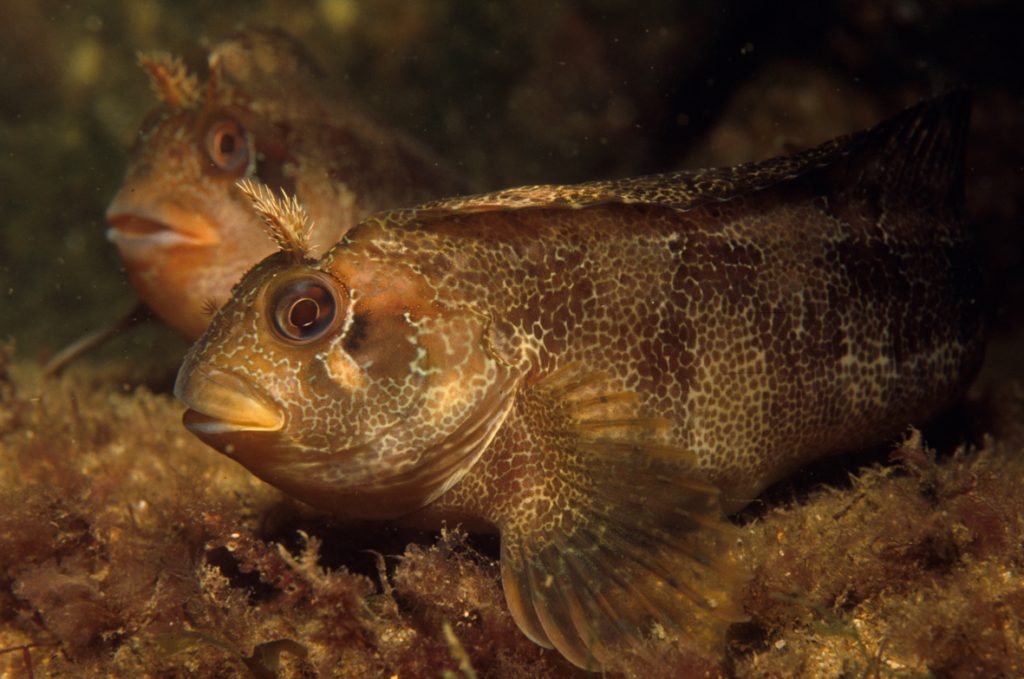
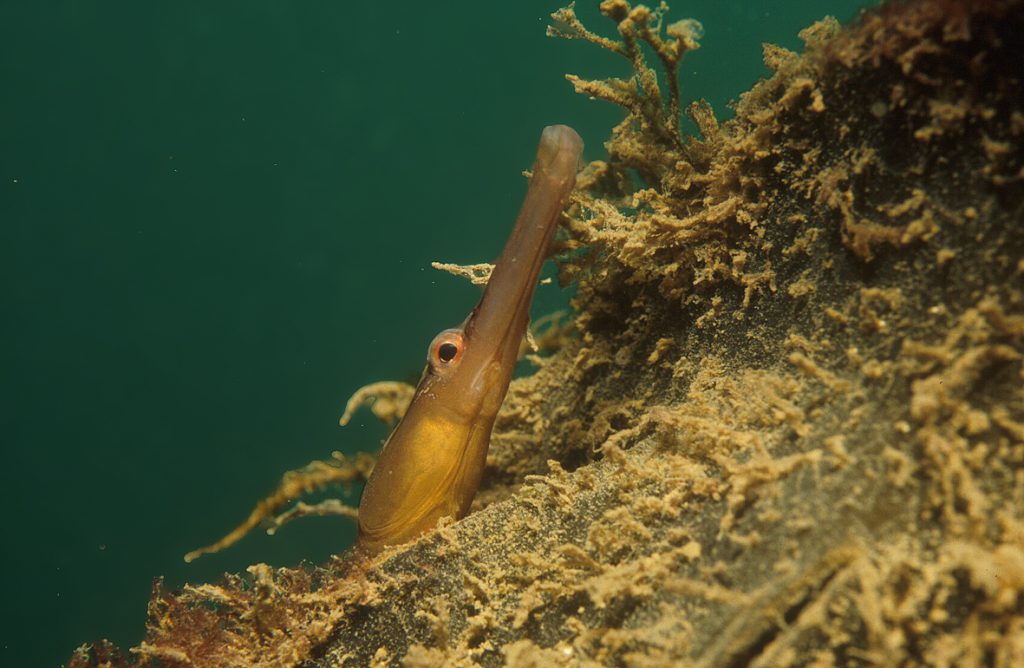
On both dives we were able to observe numerous wrasse skulking in the weeds and we enjoyed brief visitations of some decent sized bass specimens that had escaped the slab of the fishmonger just up from the beach. It’s also worth stopping occasionally to look for some of the more “hidden” inhabitants of the cove; expect pipefish, blennies, lobsters, crabs, shellfish and other cryptic critters. Such was the possibility of finding interesting “small stuff”, I’m hoping to go back to Lulworth again, to concentrate on photographing “macro” subjects.
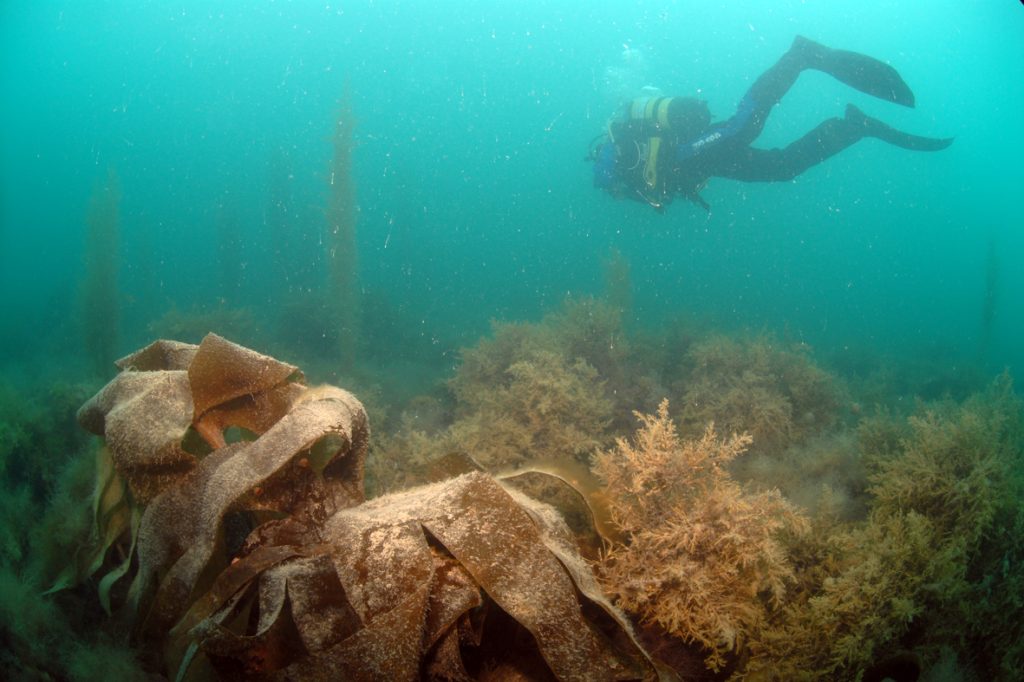
During our visit, we enjoyed reasonable visibility, but it’s easy for divers to lose their sense of direction, as there’s little in the way of “landmarks”. One of our group was designated as the “compass reader” and it prevented us from straying too far off course.
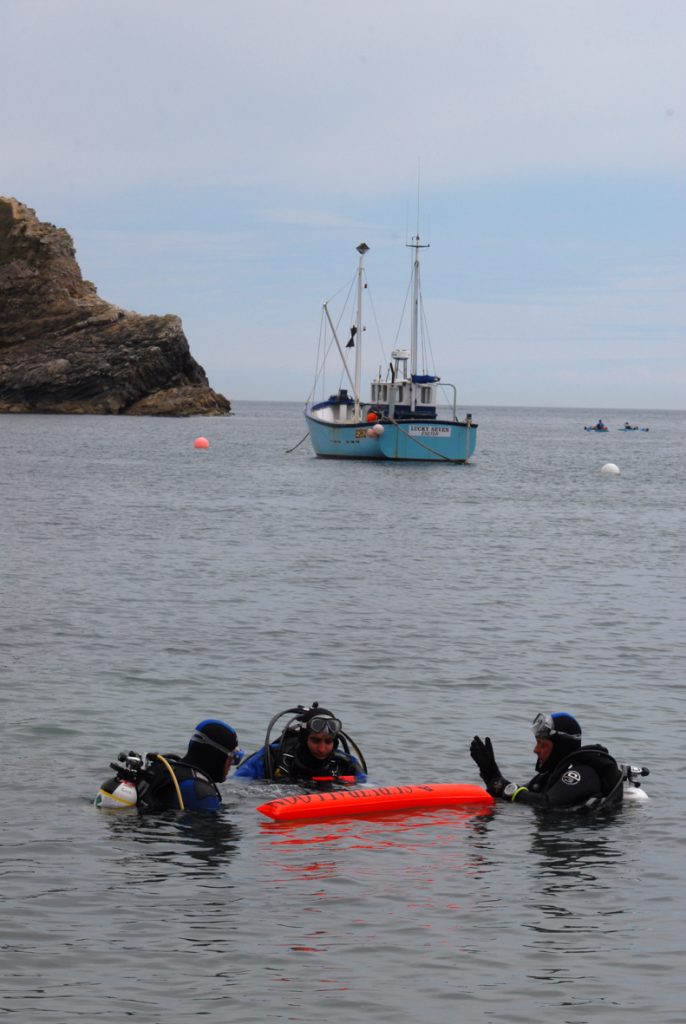
It’s also a very good idea for any dive group to use an SMB in Lulworth Cove as there’s quite a lot of boat and jet ski activity, and divers are never far beneath the surface. It pays to be vigilant, especially if surfacing, where it’s essential to look around and listen for any oblivious boat craft.
Novice divers will find Lulworth a good place for to hone their skills in a largely current free environment before graduating to deeper, and perhaps more challenging dive sites. Here, the use of a compass and an SMB can be practised in ideal conditions.
Back at the beach, expect to be the centre of attention as you get in and out of the water. There’s always plenty of families and interested bystanders who seem fascinated by the activity of diving, with children delighting at the prospect of being in the water with divers. The novelty soon wears off however, and we couldn’t claim that our superhero status lasted more than a minute or two!
Overall, Lulworth Cove makes a great dive day out. It has easy diving conditions and offers the chance of spotting interesting sea life. Oh, and it’s a nice place to hang out between dives, too. Really, what more could ask for in a day?