
Text by Jeremy Cuff/www.ja-universe.com
Photography by Jeremy Cuff
Learning underwater photography isn’t easy, so why make it harder than it already is. Bournemouth based Martin Edge is the UK’s foremost teacher of underwater photography. He’s been teaching groups for many years, but now he’s offering individually tailored “one to one” tuition. It’s the extra dimension that some photographers will be looking for…
Anyone who has been interested in underwater photography over recent years will have heard of Martin Edge. A great many underwater photographers will have been taught by him, either as part of his group sessions in Bournemouth or by jetting off to photo-friendly destinations such as Bonaire or the Lembeh Straits in Sulawesi.
You will almost certainly have seen his columns in this magazine or perhaps you’ve heard him speak at underwater photography events such as the annual Visions of the Sea conference in London, or at the regular BSOUP (British Society of Underwater Photographers) meetings. His book, “The Underwater Photographer” adorns many bookshelves and provides students with a sound basis from which to develop their photography.
Developing the skills required for good underwater photography isn’t easy and involves many factors. Most photographers, myself included, will describe a road peppered with breakthroughs and disappointments in the quest for good images. Generally, the busy lives most of us lead isn’t conducive to improving underwater photography and our careers are unlikely to involve diving as part of the daily routine, so it’s a difficult subject to learn, especially in isolation.
By offering a “flying start” into the subject, Martin has been able to carve out a unique position for himself, as the UK’s foremost teacher of underwater photography. For years he’s been teaching groups, but now he’s offering a new innovation – individually tailored “one to one” courses.
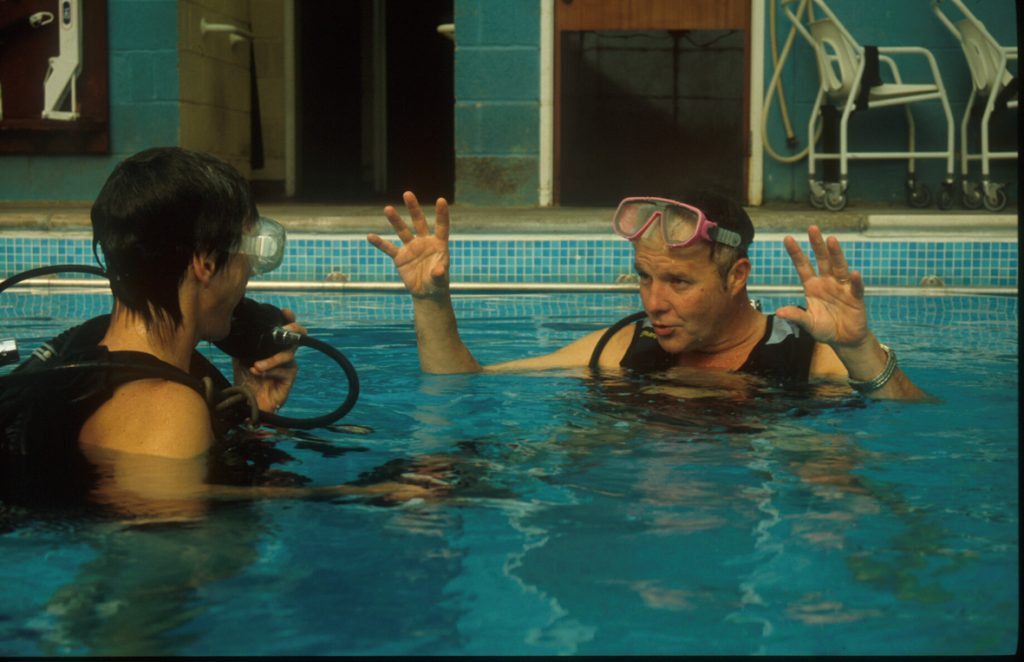
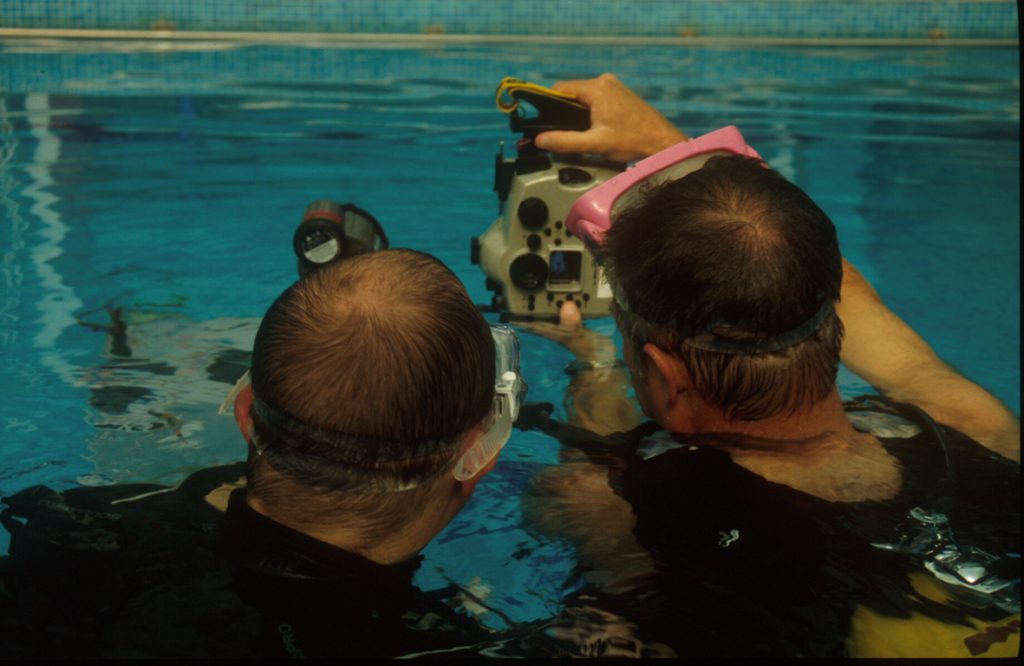
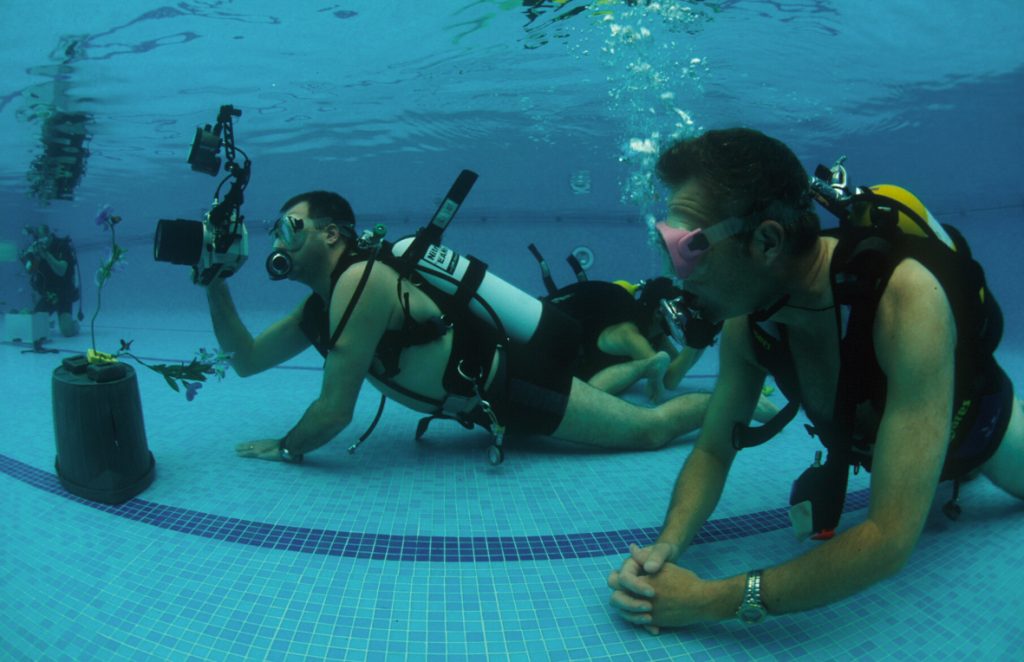
Whereas a group session must have a theme in order to attract participants, perhaps covering topics such as composition, wide angle or understanding the functionality of a modern SLR, a “one to one” course can be designed specifically to one person’s interests, tastes and camera equipment.
The list is virtually endless as to what can be designed into a course. Martin’s website gives pointers and poses questions for potential “one to one” students’ as to some of the more requested topics – such as which equipment is best for you, the mindset for planning an underwater photo-dive, close up and macro with flash, wide angle and flash, composition, lighting and basic digital editing with Adobe Photoshop CS. However, other subjects that he’s been asked to cover have included extreme macro, photographing wrecks, using twin strobe setups and breaking ruts and patterns.
In order to attend, it doesn’t matter what level you feel your work has reached, or how ambitious you are with your photography, the courses are entirely based around the student. Some photographers may have long-term goals to emulate the incredible works of underwater photographers such as David Doubilet or Christopher Newbert, whereas others may be more modest in their aspirations, simply wishing to improve their technique for a forthcoming diving trip. It’s entirely your agenda, a chance to shape your own photographic vision and to acquire the skills for that to happen, without the distraction and compromise of the group.
As well as classroom and pool sessions, other more novel exercises can be included in course activities. More recently, particularly for students interested in composition, Martin has devised programmes that include visits to the local park and aquarium where the objective is to capture different kinds of compositional elements and then discuss them back in the classroom. On the face of it, it may seem a long way removed from underwater photography, but it soon becomes obvious how these ideas can be included in an underwater context. It isn’t hard to imagine that photographing a fern against a blue-sky background is similar to capturing a gorgonian on a reef wall.
My particular purpose of attending a “one to one” course was to deal with some “specifics” that I had identified for improvement and also to fill some gaps in my knowledge that I had forgotten from previous courses. It was mainly a wide angle agenda – I wanted to make the jump from using a single strobe to a twin strobe setup and needed to be certain that I was working correctly with a single strobe, before introducing the second. I knew that if I had “issues” with a single strobe, I would double the problem with two!
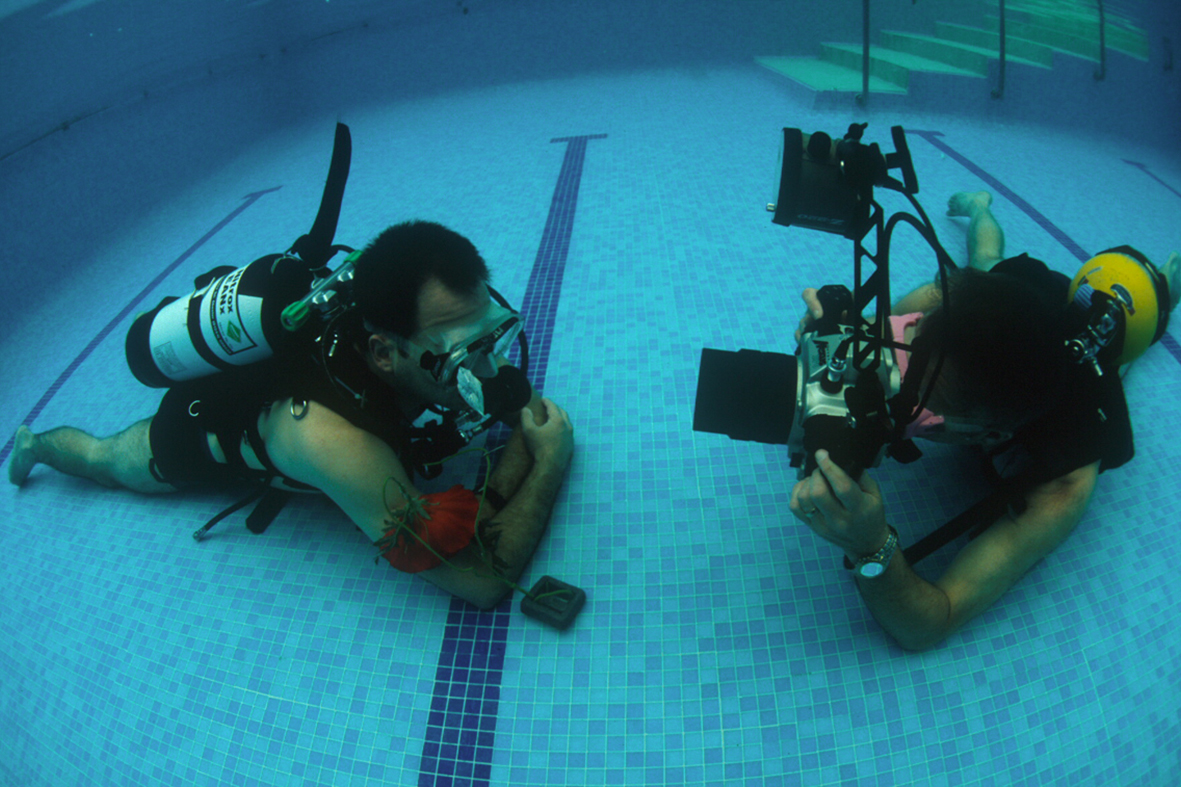
Directly related to twin strobe use, I also felt ready to tackle more “close-up wide angle” situations where strobe lighting and positioning was even more critical. On the course I was able to discuss the subject in great detail with Martin and then try out some of the techniques in the swimming pool during the afternoon. Martin’s digital camera rig was also very useful for the instant feedback and allowed me to make adjustments to optimise the results.
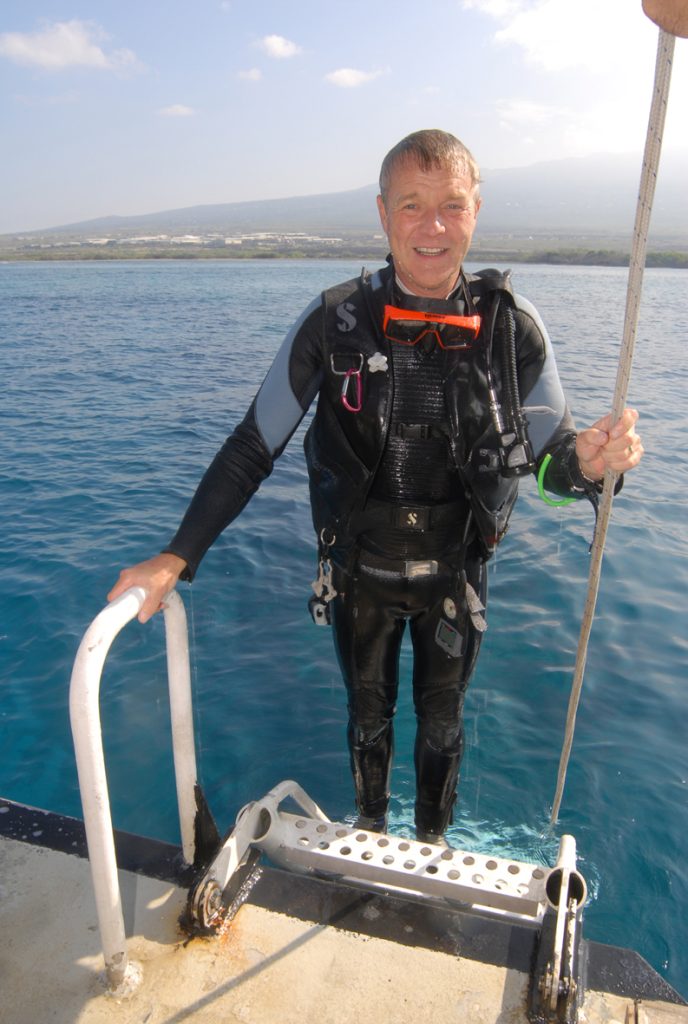
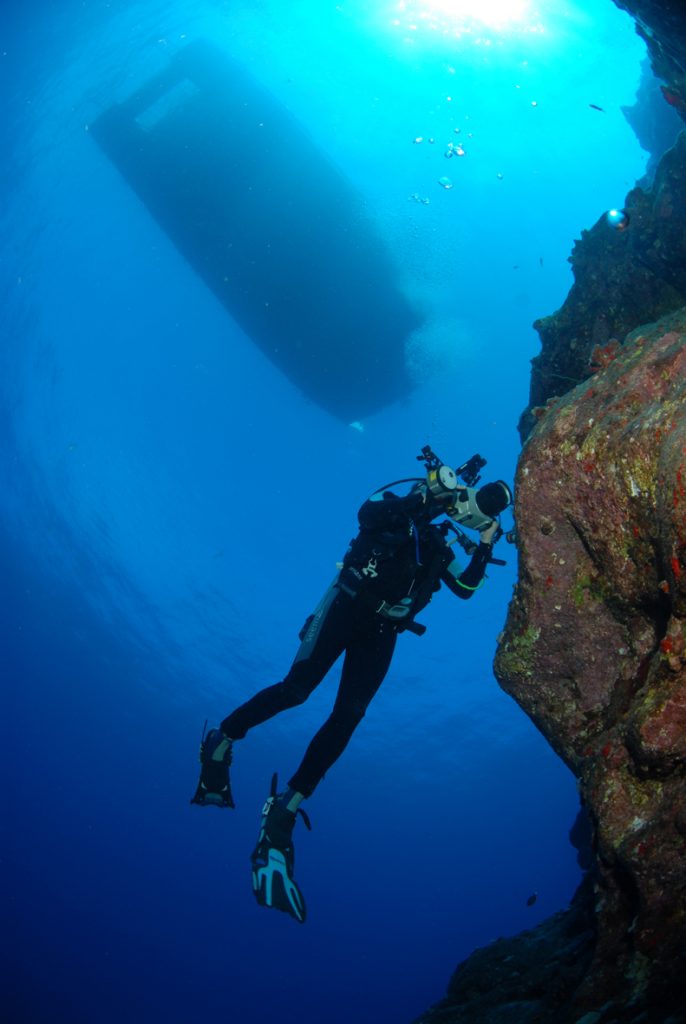
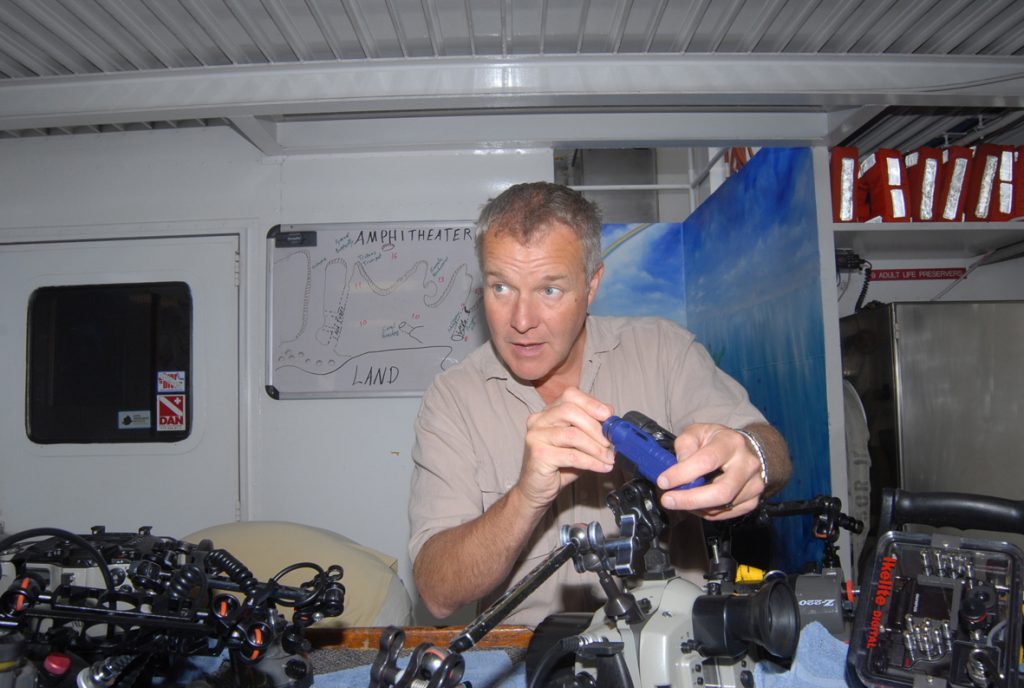
Prior to each course, Martin will ask each student to contact him with their specific agenda, so that he can arrange for the necessary equipment and information to be prepared. One of his requests is that students bring books and magazines containing the types of images that they wish to capture or are attracted to.
I took a number of books and found this process very useful, helping me to identify “why” I liked certain images. This helped me to recognise my preferences and actively seek them out whilst diving with my camera. It turned out that dappled and textured surface water was a common theme to my preferred pictures. It therefore follows that much of the “best” underwater photography, certainly for my own tastes, is taken in relatively shallow water. For me, deeper diving would only be necessary if the subject cannot be found in the shallows, such as a wreck or a species of coral that only lives in deep water.
I also think that a student can learn much more from these sessions than what is designed into course “agenda” itself. During the day, other related topics crop up in conversation and can add further tips and suggestions to a students’ “toolkit”.
When asked about the pros and cons of “one to one” sessions versus the group sessions, Martin explained, “I think both approaches are valid. The group sessions are useful in that students can meet other photographers and share their ideas and experiences, and also be exposed to photographic equipment other than their own. What I’ve generally found is that students who’ve attended the group sessions then wanted tuition on specific areas, and on particular cameras or strobes.”
Martin’s style of teaching is to engage the student by encouraging discussion and debate, challenging them to reach their own conclusions and to find their own photographic “voice” using basic technical knowledge as a platform. That said, he discourages students from the pitfalls of being obsessed with technical information and obscure camera functions, which can often prevent or divert a photographer from achieving good images.
For me, Martin’s success as a teacher of underwater photography lies in his ability to demystify the subject and explain the basics in simple, layman’s terms.Rather than guarding his “trade secrets,” one of his greatest pleasures is passing on his knowledge. He says, “There’s enough room for everybody.”
I clearly remember the first time I called Martin several years ago when, as a bemused new owner of an underwater camera, he promised me he’d move my photography forward three years in one weekend. It seemed like a bold statement, but in retrospect I realised that it was true. I had indeed eliminated years of fruitless effort and expense, and was put on the right track to succeed, with a sound basic knowledge of successful underwater photography. The rest, of course, was up to me.
Since beginning the “one to one” tuition, an extra dimension has been added to the teaching of underwater photography. They are, I think, an excellent way of continuing the original objective – to move the photography forward! In the way you want to.