
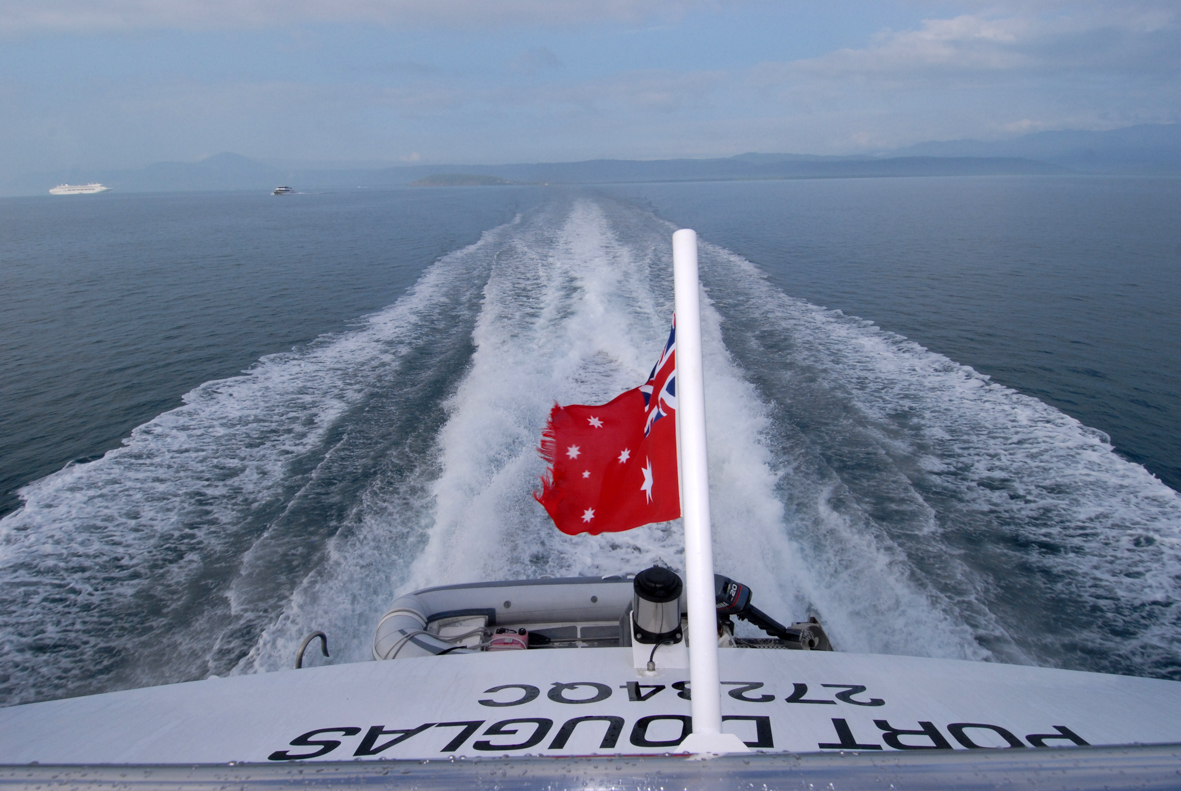
Text by Jeremy Cuff/www.ja-universe.com
Photography by Jeremy & Amanda Cuff/www.ja-universe.com
If you’re a diver, you’re likely to be asked whether you’ve dived on the Great Barrier Reef in Australia, such is its’ status as a global icon of the underwater world. In the north of Queensland, the reef is closer to the coast, so it’s much easier to reach for day trips from the tropical hub city of Cairns and the pleasant town of Port Douglas further to the north…
In Queensland, dive and snorkel trips to the Great Barrier Reef are big business, and a major reason why travellers visit the area. After all, it’s the “world’s most famous reef” and features on many peoples “must do in my lifetime” list.
In fact, the Great Barrier Reef isn’t one single reef, but a series of nearly 3,000 individual reefs – the exact number depends on which book or website you read but I was quoted 2,904 by one crew member. It stretches from Lady Elliot Island in the south to the northern tip of the remote Cape York Peninsula close to Papua New Guinea, a huge distance of more than 1,600 miles. In recognition of its global importance, UNESCO designated the Great Barrier Reef as a World Heritage Site in 1981, and the entire reef is managed as a conservation area.
There’s quite a few options for diving on the Great Barrier Reef, ranging from the day boat trips described in this feature, to island resort visits with local diving options, short liveaboards, and longer liveaboards that reach further flung parts of the reef and remote areas further out in the Coral Sea. It’s a case of picking the right kind of trip to match available time, budgets, diving experience, interest levels and expectations.
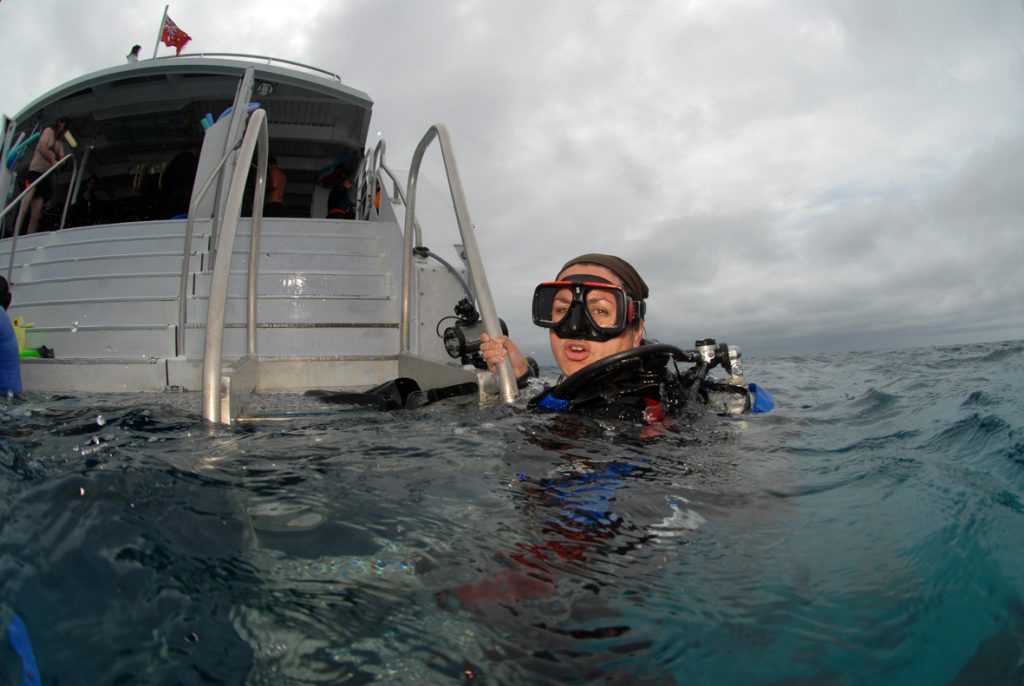
The Great Barrier Reef day boats operate every day (weather permitting) and are slickly run, executed with an almost military precision based on strict departure times to allow enough time out on the reef, where it’s usually possible to do three dives.
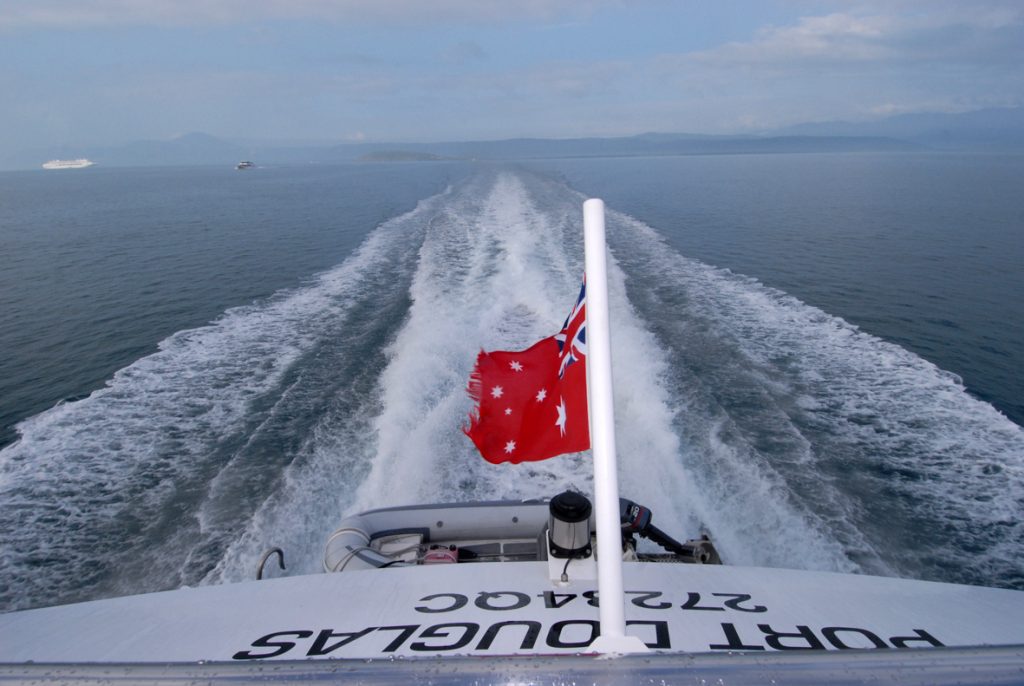
We did a typical such trip from our base in Cairns, but departing from Port Douglas further to the north on the Silversonic, and also dived sites that the Cairns day boats visit, but on a short liveaboard trip instead.
The day trip began bright and early as our pick up bus scurried around the streets of Cairns stopping off at various hotels, apartments and backpacker hostels collecting a variety of divers and snorkellers. Once everyone’s accounted for on the various buses, they all make a beeline for the boats, descending on the marinas to offload passengers in time for check-in and prompt departure. If you’re alarm clock doesn’t work, the buses won’t wait for more than few minutes.
Once checked in and onboard, everyone is divided into groups depending on what they’ve booked – the normal categories are certified divers, divers doing courses such as PADI Open Water, those doing an “experience scuba diving” try out and also snorkellers. Each group is then assigned a member of the crew who undertakes the relevant briefings, leads the dives and so on.
The day boat vessels such as Silversonic are quite large and stable in the water but to get out to the reef, whether from Port Douglas or Cairns, there’s a fair expanse of open water to navigate and it can get pretty rough. The recommendation is that everybody takes seasickness medication prior to departure and you’ve got everything to gain and nothing to lose by following that advice. As these kind of trips are frequented by newly qualified divers, occasional divers and snorkellers who sometimes struggle to get their sea legs, there’s always a fair number of seasickness “casualties” onboard. Why spend the day filling sick bags and ruining your trip for the sake of a couple of Aussie dollars!
There’s also catering onboard with drinks, snacks and a buffet style meal served at lunchtime, carefully timed to be ready at intervals between the dives but not when the boat is in motion, thus avoiding dropped plates and spilt drinks.
Our day trip was calm on the outbound journey, but increasing winds (which were forecast) made the return leg a different matter, especially for those who suffer with seasickness, or who didn’t take their medication. Unfortunately it remained overcast for most of the day, giving the sites a more gloomy character than you would get in the classic bright sunshine, turquoise water kind of day, but you can’t order the weather!
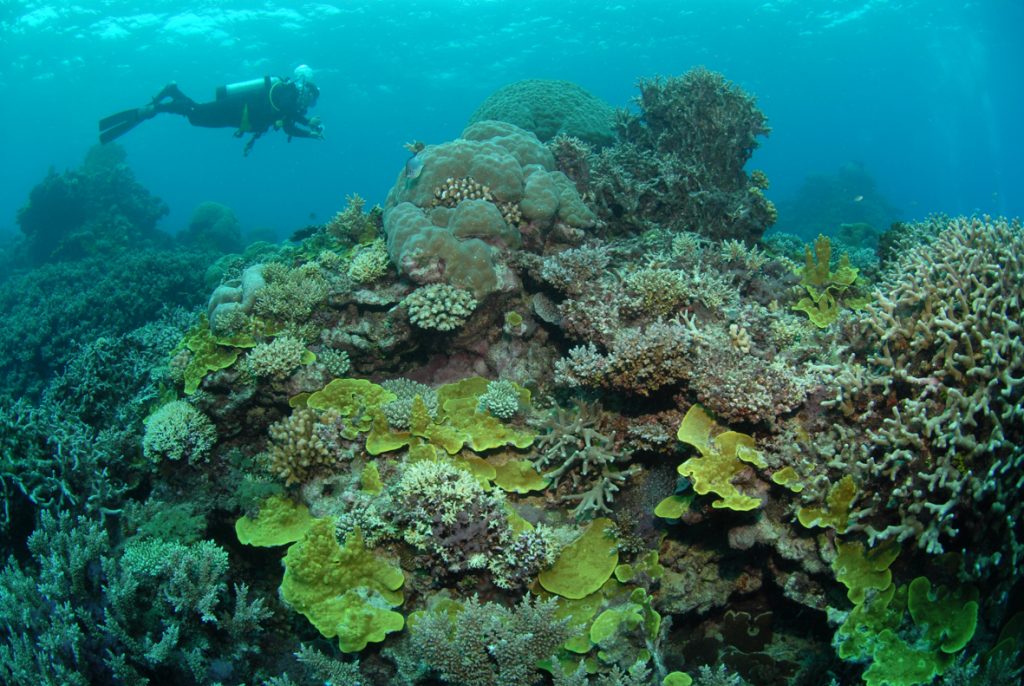
The Port Douglas boats visit sites on the Agincourt Reef system, with our first dive being Phil’s Reef. The site was pleasant enough, with some nice coral gardens sloping away into deeper water, though perhaps a bit unspectacular for a diver of my travelling experience, but there’s always stuff to see. The highlight of the dive was several reef squid in the surface waters, though they were frustratingly wary of our attempted close approaches.
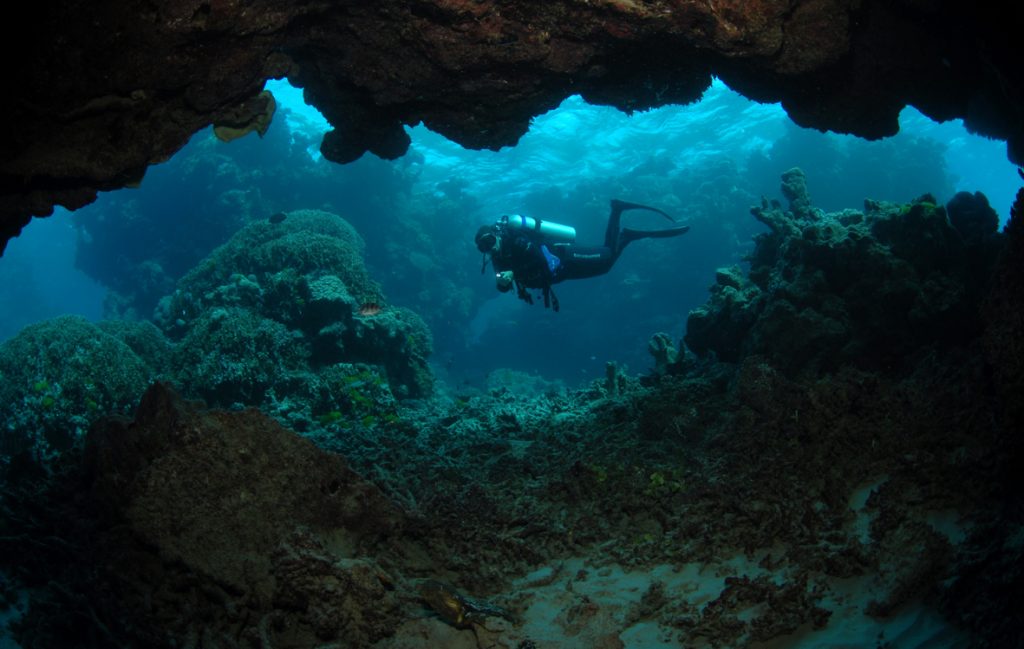
Next was the Three Sisters site, which I enjoyed most out of the trio that we visited. It features an interesting cut through one of the bommies, wide enough for divers to swim through if they’re careful and if there’s not too much surge. There’s plenty of anthias and some nice gorgonians here, and some resident batfish to check out that are sometimes quite curious. Around the area of the mooring there’s usually a reef shark or two that the crew often feed with a few sardines to keep them in the area. For the new divers and snorkellers, it’s often the first shark that they’ve seen and it’s quite a thrill.
The final dive of the day was at The Point. This was a drift dive (though the current turned out to be slight) with the divers being dropped off by the boat up current, allowing for a leisurely dive back along a sloping reef to the mooring where the snorkelling is conducted. Close to the mooring, where snorkellers finned around above us, a large napoleon wrasse cruised through the shallows, nonchalantly going about its daily life despite the attention it was getting.
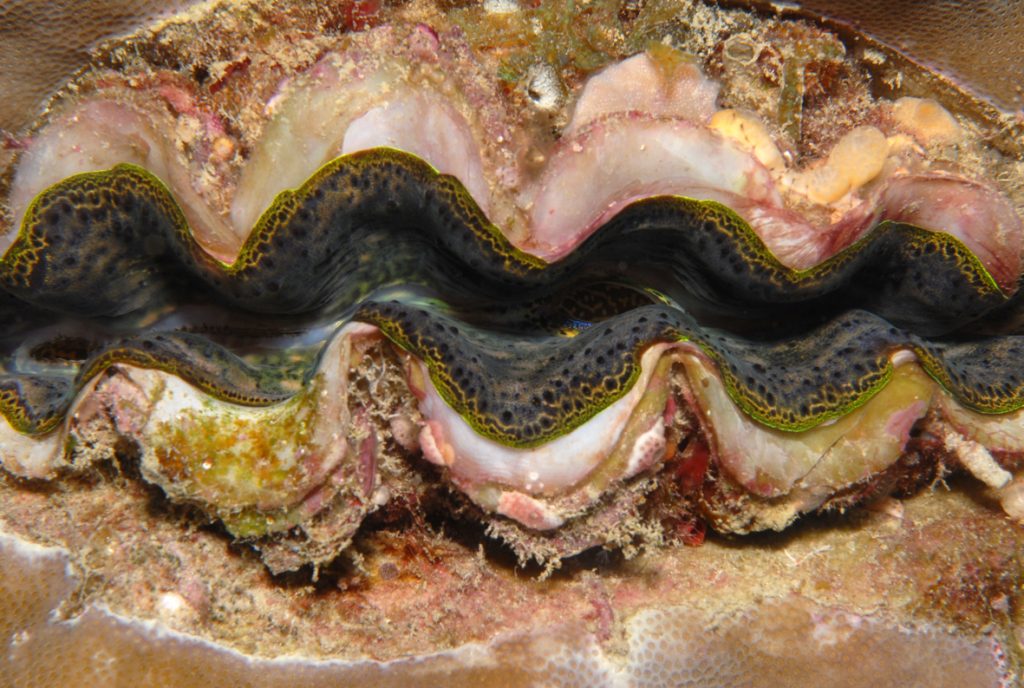
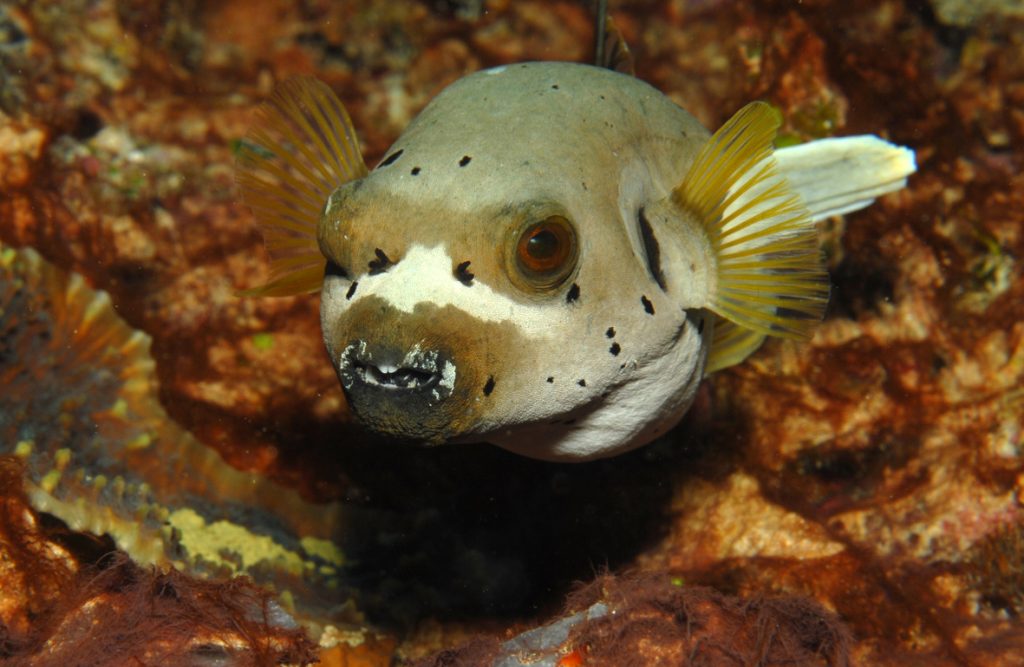
Over the course of the day, you can expect to see plenty of interesting reef inhabitants such as clownfish, sweetlips, red bass, trevally, pufferfish, groupers, numerous species of parrotfish, unicornfish, clams, sea cucumbers and nudibranchs with the added possibility of cuttlefish, twin spot gobies, white tip reef sharks, grey reef sharks, napoleon wrasse, turtles, barracuda and perhaps the odd surprise.
The Great Barrier Reef, like many places around the world, offers seasonal spectacles as well as the year round residents. During the time of our visit, it was the humpback and minke whale season, which doesn’t mean that you’ll see these incredible leviathans (we didn’t, except for a single distant spout), but there is a chance, with lucky dive boats occasionally being approached whilst at moorings for that rare and special encounter.
Day boat trippers from Cairns also get some decent places to dive. Sites such as Three Sisters on Milln Reef (a different site, of course, from the one mentioned above) is an excellent bommie with good visibility, plenty of schooling fish, and the chance of turtles and other big things that might be in the area.
I also particularly enjoyed Whale Bommie (Milln Reef) and Gordon’s (Flynn Reef) which offered interesting topography and some nice encounters, especially with unconcerned turtles that were seemingly oblivious of our close proximity and tightly knit schools of Bumphead Parrotfish. There’s also a friendly Napoleon Wrasse that will regularly follow the boat from site to site on Flynn Reef, often hanging out directly underneath the boat.
For divers and snorkellers with little time or a budget that doesn’t stretch to liveaboards, or who perhaps find liveaboards too intensive, these trips are ideal. Inexperienced divers will certainly find these trips enjoyable, reassuring and within “comfort zones” as all the dives are guided, combined with the opportunity to see plenty.
Families can also enjoy a nice trip to the reef on these day trips, as young children and non-diving “grown ups” can join the snorkel groups for what in some cases will be a life changing experience, and the start of a diving obsession that can last a lifetime. For diving parents, you can mix and match by doing one or two dives and then joining the kids for the snorkelling.
Experienced and fanatical divers like myself, who prefer to dive at a snail’s pace (or perhaps a whelk’s pace!), because of the photography aspect of what I do, may find these trips not quite what they’re looking for, but that’s a personal thing, and not a criticism of the way the day boat trips are run. It’s a case of horses for courses, and it’s up to the prospective visitor to choose the type of diving experience that best suits them.
If you want a day out on the Great Barrier Reef, there’s no better place than Port Douglas or Cairns for that dream to come true.
…and Nights Out, too!
It’s also possible to do night dive trips to the reef from Cairns, departing late afternoons on Thursdays on the Silver Swift. We jokingly referred to it as the “Night Day Boat” and the “Day Night Boat” and it’s a different twist on the regular day trips.
We liked the idea of doing this and booked up for our last available Thursday whilst in Australia, but unfortunately for us the trip was cancelled thanks to high winds that blew in for a few days.
For the night dive trip, there’s two dives at Norman Reef.