
Text by Jeremy Cuff/www.ja-universe.com
Photography by Jeremy & Amanda Cuff/www.ja-universe.com
The wreck of the SS Yongala is one of Australia’s best known and iconic dives. To visit the wreck, it’s no longer necessary to book a liveaboard or a long single day boat ride from Townsville. Now, from the tiny settlement of Alva Beach it’s possible to get out there, do two dives and be back by mid-afternoon for a “barbie”…
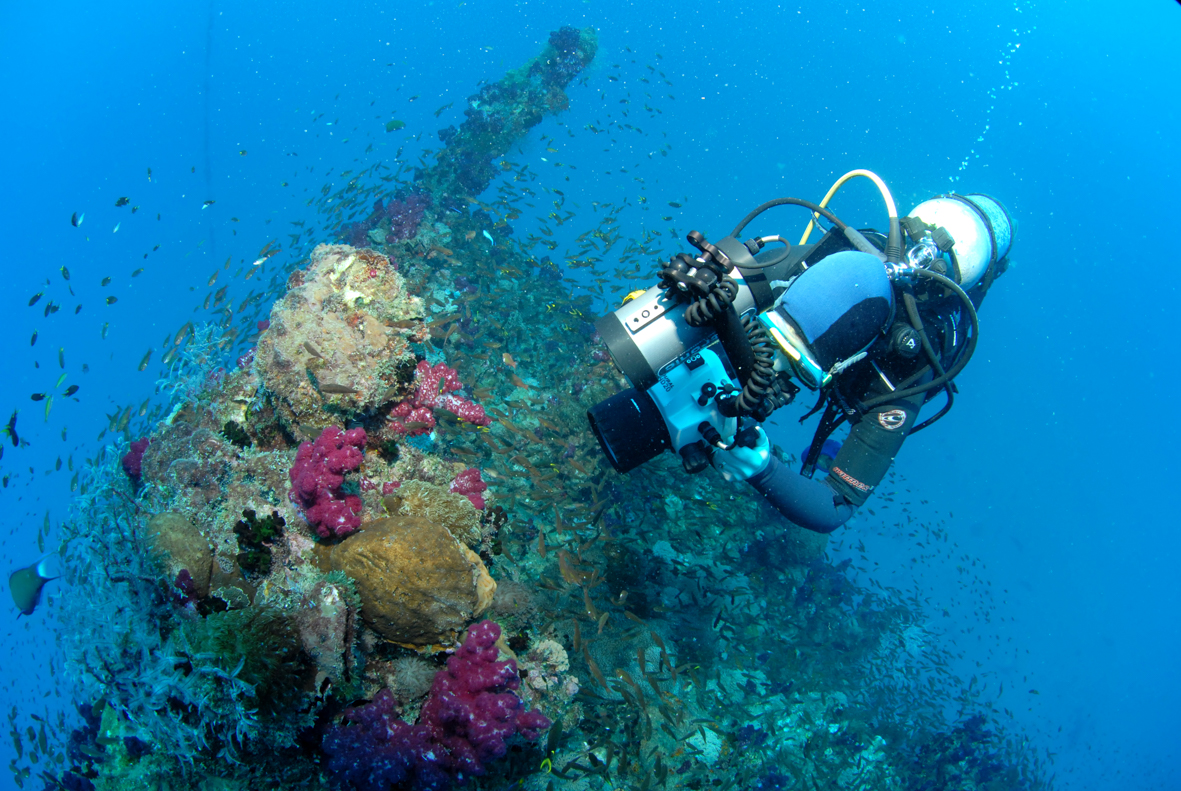
As we kitted up under clear blue skies atop a light swell, it was difficult to imagine the ferocity of the cyclone that sealed the fate of the SS Yongala almost a century ago. On the drop line, the imposing hulk of the ship made an impressive sight as it loomed into view, but it’s the extraordinary abundance of marine life that makes diving this wreck really special. Here, anything can turn up and often does.
Townsville’s Titanic
The SS Yongala is a British built steamship that spent several successful years plying lucrative trade routes in Australia. The ship is sometimes referred to as “Townsville’s Titanic” and is Australia’s best known maritime disaster.
One of the last sightings of the Yongala, on the evening of the 23rd March was when she passed the Dent Island lighthouse, bound for Townsville. The conditions were apparently already difficult but there was no indication that it would get much worse. The lighthouse had no radio and therefore no knowledge of the cyclonic conditions further north.
What is surmised is that the ship ploughed on through increasingly dire conditions and into the path of a cyclone. The huge seas would have battered and inundated the ship until she succumbed to the waves about eleven miles from Cape Bowling Green, probably in the early hours of the 24th March 1911. One hundred and twenty one lives were lost.
The final resting place of the Yongala remained a mystery for many years until a “wreck shaped object” was discovered in the 1940’s, with positive identification being made in the 1950’s. It has since become one of Australia’s best known dives.
Getting Out There
We’d dived the Yongala seven years previously, on a liveaboard from Townsville, so when planning our recent trip to Australia, we made sure it was part of the itinerary.
We soon discovered that the liveaboard that we’d used previously was no longer running, so we looked at other options and came up with a dive operation specialising in the wreck based at the remote settlement of Alva Beach, about 15km’s from the nearest “big” town of Ayr.
They offer day trips to the wreck aboard a high speed inflatable boat that reduces the journey time to around 30 or 40 minutes. It would be a chance to re-acquaint ourselves with a wreck that we’d dived as fairly inexperienced divers, and to do it in a completely different way. We booked two consecutive days.
A Little Adventure
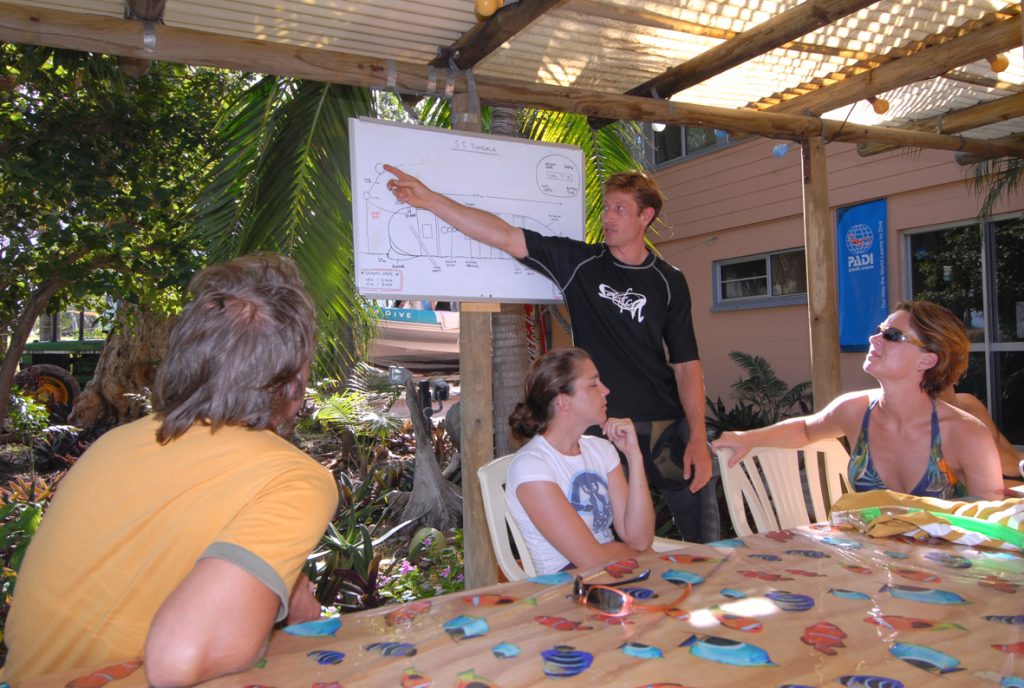
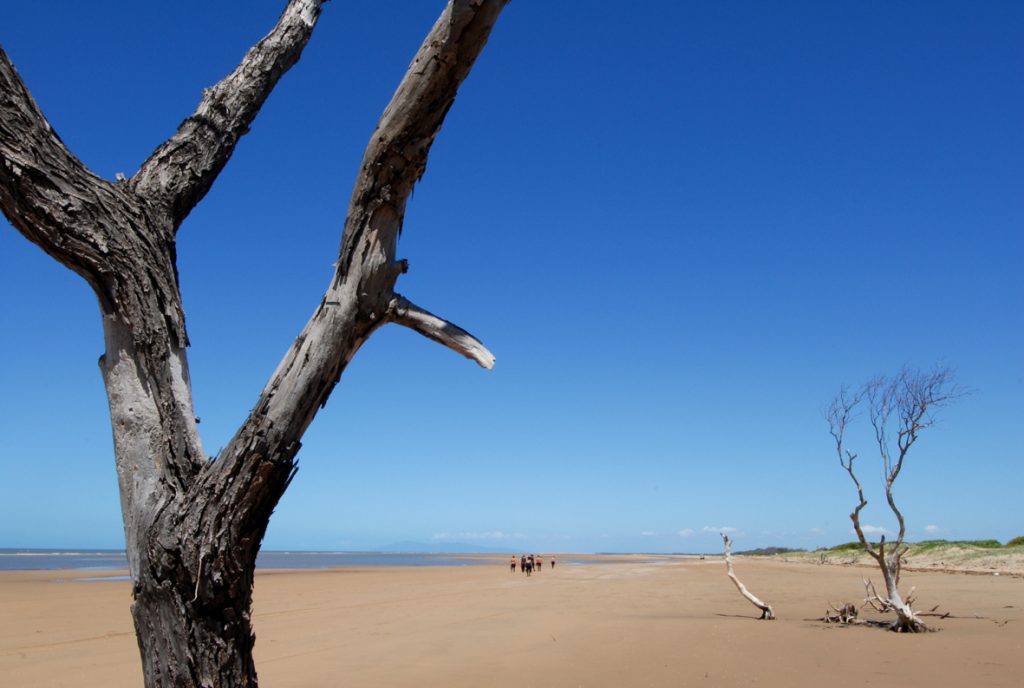
A day’s diving to the wreck in this way is a little adventure. It begins with an early meet and briefing at the dive centre, followed by a bumpy 4 x 4 ride onto the deserted Alva Beach from where the boat, called the Yongala Express, is launched. A tractor is used to tow the boat onto the beach, backing it into the sea to get it afloat.
The crew look for the best spots, which is a skill in itself. The water is shallow and murky until a fair distance from shore and is complicated by tides, surf, rips and moving sandbars. It’s then a full speed “blast and bump” out to the wreck.
We were also offered hoods and decided to wear them, although they aren’t insisted upon. The reason is the extra protection they afford against “stingers” or box jellyfish. It was still the season for these deadly assassins of the coastal creeks, and although they’re rarely seen as far out to sea as the Yongala, it is possible.
Everything In Profusion
The wreck rests on a sandy expanse 28 metres down with shallowest part of the wreck at 14 metres. There’s no reef shelter nearby and the area can be subject to heavy swells if the wind is up. Currents can also be strong and can affect the way you dive the wreck. The crew assess the conditions before attaching the boat to one of the permanent moorings, making things much easier at the surface and for reaching the wreck.
The visibility around the wreck is rarely crystal clear, but can vary tremendously. Even from dive to dive, you can expect significantly changed visibility. We experienced visibility of 10-15 metres which is considered good. Anything greater than that is certainly possible, but exceptional.
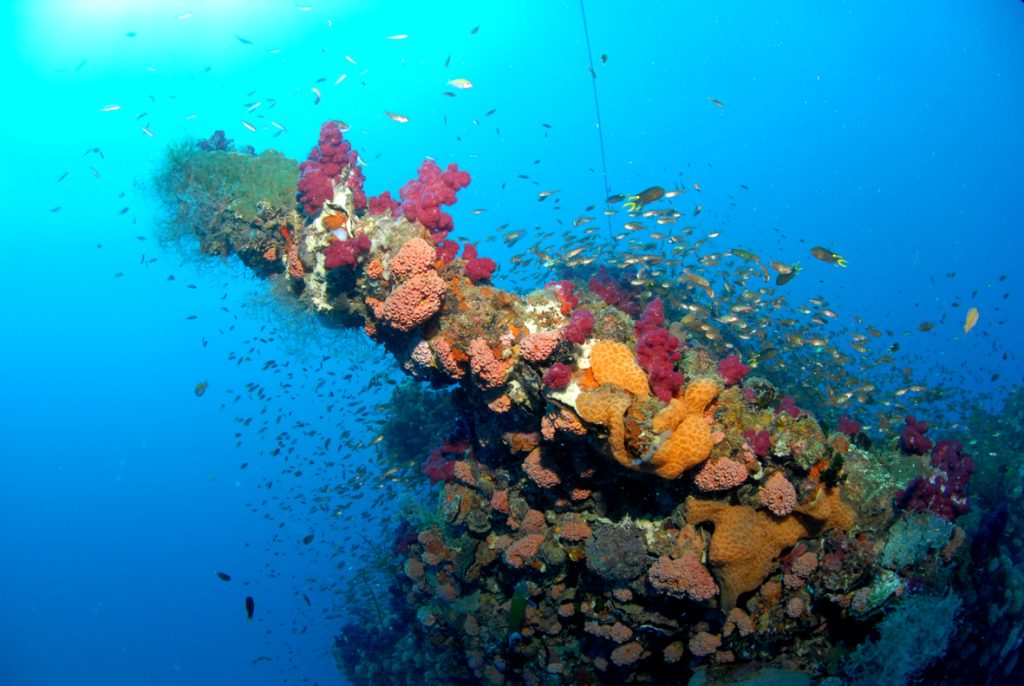
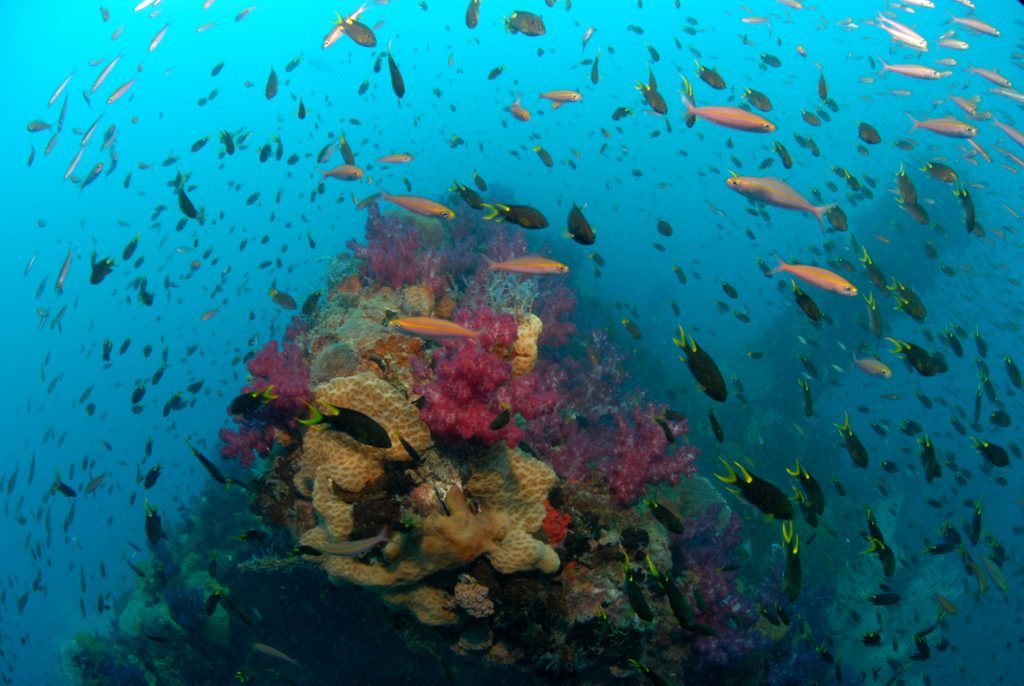
Expect to be blown away by the amount of life that has colonised this wreck. You’ll see more species of coral and fish than on most reefs. Everything is in profusion, abundance, or even superabundance. And big, too!
In fact, it’s quite easy to be completely distracted by the encounters and pay little attention to the wreck itself. When back on board, the divers tend to talk about turtles, rays and groupers rather than the wreck’s features.
The Yongala is festooned with an incredible array of hard and soft corals, and anemones, and is home to huge populations of baitfish which often carpet whole areas of the wreck to the point that it “moves” and “ripples” as you swim over it. These countless hordes provide food for huge numbers of fish such as snappers and batfish, which attracts even bigger predators.
Raiding schools of jacks, gigantic Maori wrasse and groupers rampage over the wreck on feeding sprees, gorging on the almost endless supply of food. Turtles are seen on most dives, and are quite tolerant of divers. In the darker recesses of the wreck, giant Queensland Groupers skulk in the gloom.
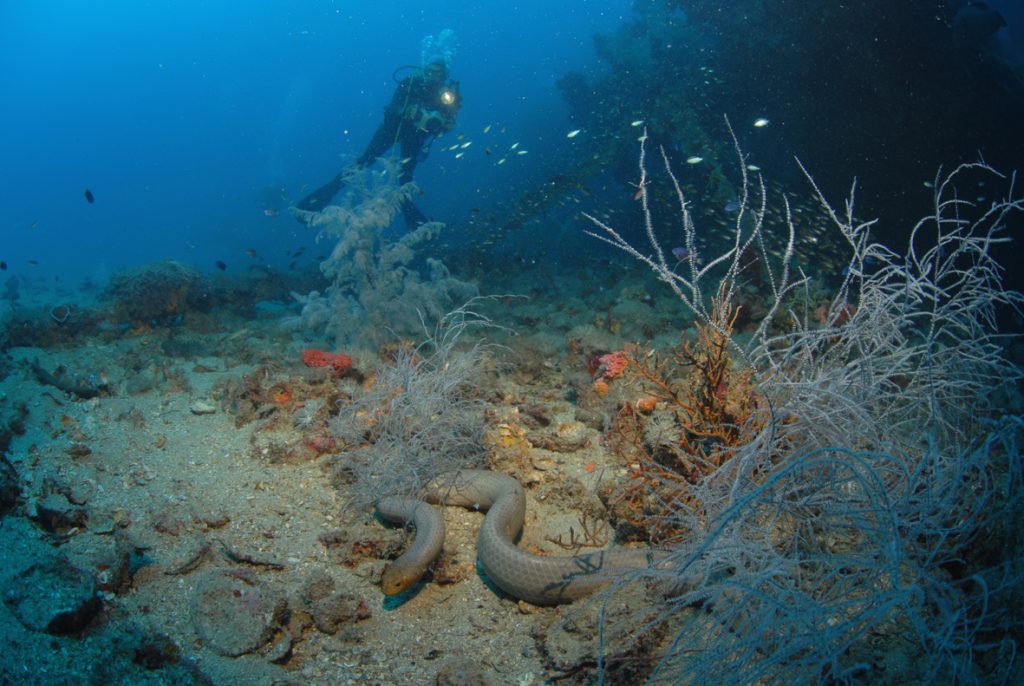
Olive sea snakes are common and can be quite inquisitive. It’s been known for these highly venomous, but thankfully passive natured snakes to approach divers and wrap themselves around arms and legs before realising there’s nothing of interest and swimming away.
It’s also worth taking regular looks out into the blue; sharks, barracudas and eagle rays sweep past regularly and mantas are sighted on occasions. Even more spectacular sightings can occur; there’s a record from 2006 of a humpback whale which cruised past the wreck whilst divers were in the water. Our encounters were more within the realms of “normal”, but we did see a group of Pilot Whales whilst heading out to the wreck on the Yongala Express.
Some noticeably absent residents were the large stingrays that usually inhabit the sandy bottom around wreck. One possible explanation for their temporary disappearance might be the presence of a pair of bull sharks that lurked on the edge of visibility on the sandy bottom. One crew member said “They’re big ones. About as big as they get.”
In the early days of diving on the Yongala it was possible to penetrate the wreck, but in more recent years out of respect for the dead and for safety reasons due to the wreck’s gradual deterioration, it’s no longer possible to do this. You can, of course, peer into some of these areas, so it’s a good idea to carry a lamp.
The wreck is remarkably well preserved considering its age with many features still intact such the engine room, funnel opening and the anchor winch. The letters of the Yongala are barely visible now, and if you want to see them, it’s probably a good idea to ask one of the guides to show you.
Back To The Beach
On returning to shore, the crew have to bring the boat as close to the beach as possible, so that it can be recovered by the tractor while the divers wade to shore in the murky shallows where stingrays, bull sharks and stingers are known to inhabit. The 4 x 4 then transports everyone back to the dive centre, where in true Aussie style, the crew organise an excellent after dive “barbie”. It’s a nice touch for ravenous divers after their mornings “work”.
We hadn’t considered the possibility that the dives could be cancelled at the time of booking, but we realised that we were lucky to get two consecutive days of excellent weather. The day before our arrival, the dive was blown out, and the week before was partially blown out. It’s a good idea to plan more than one day and if possible, plan to be around for a few days just in case.
The wreck of the SS Yongala is one of those iconic dives, often listed as one of the top ten dives in Australia and featuring in most guidebooks and literature for divers visiting Queensland on the East coast. Where it should appear in any “top ten” league table depends on your point of view, but one thing cannot be disputed, the SS Yongala is a truly great dive.
If you want to dive the SS Yongala, what better way to do it than to visit Alva Beach, and go fast forward to one of Australia’s best dives.
The Wreck Of The SS Yongala – A Short History
The SS Yongala has an interesting and varied history. She was commissioned by the Adelaide Steamship Company and built in Newcastle-on-Tyne, along with her sister ship, the Grantala. She was launched during April 1903 and commenced her delivery voyage from Southampton that same autumn. On the 23rd November, the Yongala arrived at Fremantle in Western Australia.
In line with the Adelaide Steamship Company’s policy of using traditional Australian names, the ship was named after the town of Yongala, an aboriginal word meaning “the broadwater” or “wide, broad watering place” in the language of a tribe that once lived in the area now occupied by modern day Perth.
The Yongala’s arrival in Australia coincided with growing prosperity in the south west of the country. Settlers were attempting to make new lives for themselves and gold had been discovered in the area. The spin offs of all this activity meant that the Yongala was never short of work, with regular runs between Fremantle, Adelaide, Melbourne, and Sydney.
When the gold rush and associated trade began to decline, the company moved the Yongala to the east, adding Brisbane, Cairns and selected intermediate ports to the ship’s schedule. Eventually, the Yongala would be confined to Eastern Australia, spending her last three years plying the popular Melbourne to Cairns route.
As there were no survivors, the precise details of the Yongala’s demise are not known. It has, however, attracted historians to research the background and circumstances leading up to and during the ship’s final voyage. It has become one of Australia’s best known maritime disasters.
The final voyage of the Yongala began normally under the command of Captain William Knight, departing Melbourne for the two day journey to Sydney on the 14th March 1911 and bound ultimately for Cairns. From Sydney, the Yongala steamed north, reaching Brisbane on the 20th March.
Next stop, on the morning of the 23rd of March, was at Flat Top Island, an anchorage off the town of Mackay. Departing passengers disembarked and cargo was unloaded, making room for more cargo and new passengers for the next leg of the journey to Townsville, some two hundred miles to the north. The Yongala would not arrive.
In the early 1900’s, communications were rudimentary at best, hence there were few clues that the Yongala was heading into the path of a cyclone. One of the last sightings of the Yongala, on the evening of the 23rd March was when she passed the Dent Island lighthouse. The conditions were apparently already difficult but there was no indication that it would get much worse. The lighthouse had no radio and therefore no knowledge of the cyclonic conditions further north.
What is surmised is that the ship ploughed on through increasingly dire conditions and into the path of the cyclone. The huge seas would have battered and inundated the ship until she succumbed to the waves about eleven miles from Cape Bowling Green, probably in the early hours of the 24th March. One hundred and twenty one lives were lost.
The Yongala was scheduled to arrive at Townsville early on the morning of the 24th March where initially, there was little concern. It was assumed that Captain Knight had ridden out the cyclone in a sheltered anchorage and that the ship would arrive “safe but late”.
As time passed, concern mounted as to the Yongala’s whereabouts, especially after the Grantala, the Yongala’s sister ship and another vessel, the Cooma, reported no sightings of her despite passing areas south of Townsville.
As a result, much effort was made to scour the coastline whilst there was still hope that the ship and its passengers had survived. Perhaps the Yongala was disabled but still afloat, or had run aground in a remote bay whilst seeking shelter. As the fruitless and increasingly desperate search continued, a few items of flotsam were recovered which were identified as belonging to the Yongala. Relatives of the Yongala’s crew and passengers were told to “fear the worst”. It was now certain that the Yongala had been lost to the cyclone.
The final resting place of the Yongala remained a mystery for many years. In 1943, it’s thought that the wreck was located by a mine sweeping vessel. The mystery object was entered on the chart as a shoal. After the war, in 1947 HMAS Lachlan surveyed the area and reached a different conclusion; that the mystery object could be a wreck. Subsequent measurements suggested that it could indeed be the long lost Yongala. Interest in the ships whereabouts was reignited resulting in the ship being positively identified in the 1950’s. The precise date and to whom the credit is due depends upon whose version you believe.
The wreck was occasionally visited by intrepid groups of divers in the 1960’s and 1970’s during which time attempts were made to salvage items of value. Eventually the ship was placed under the Historic Shipwreck Act and offered full protection from further plundering. It has since become an iconic dive of Australia.