
Osprey Reef & The Coral Sea
Text by Jeremy Cuff/www.ja-universe.com
Photography by Jeremy & Amanda Cuff/www.ja-universe.com
In eastern Australia, it’s possible to marry flying and diving on unique liveaboard trips to the northern Great Barrier Reef and the Coral Sea using the remote and exclusive resort of Lizard Island as the departure or arrival point. It’s ideal for divers who are unable to spend the whole week onboard…
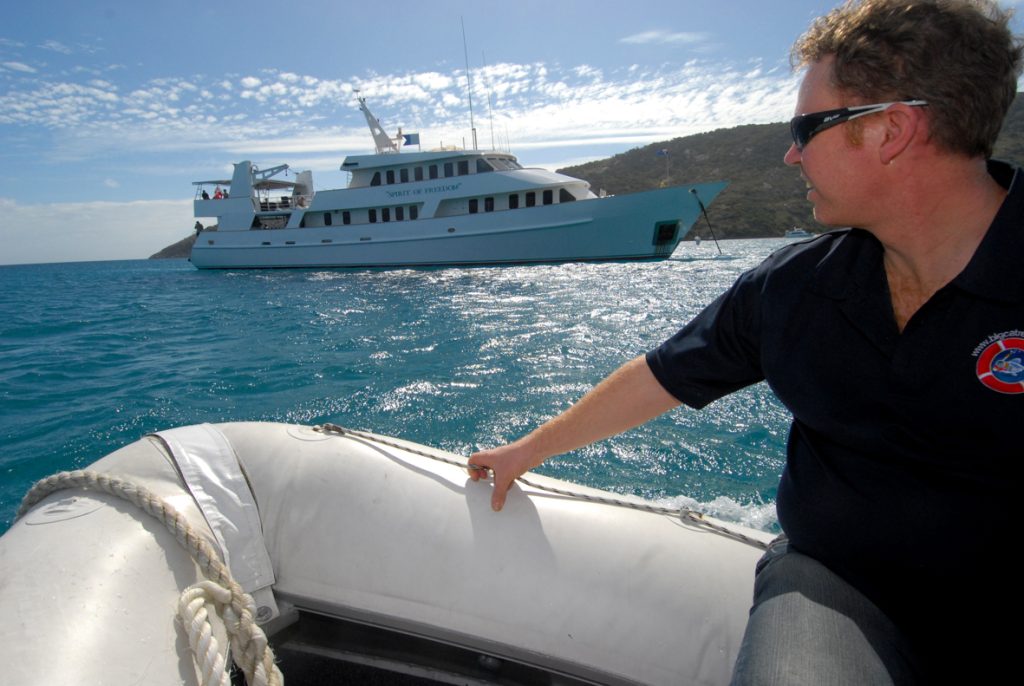
Long time readers of Sport Diver may recall my “Fly Diving in Australia” feature from way back in the July 2008 edition, where I described our 2007 visit to some of the more remote areas of the Great Barrier Reef on the Spirit of Freedom liveaboard. Back then, we set out from Cairns for the voyage north to Lizard Island and flew back from there at low level.
Fast forward to summer 2010, and we’re back in Australia, and again based in Cairns, where part of the plan for our trip was to finish what we started. This time, we would do the second leg of the itinerary, flying up to Lizard Island to join the Spirit of Freedom for a visit to the remote Osprey Reef in the Coral Sea, and other locations on the Great Barrier Reef before heading back down to Cairns.
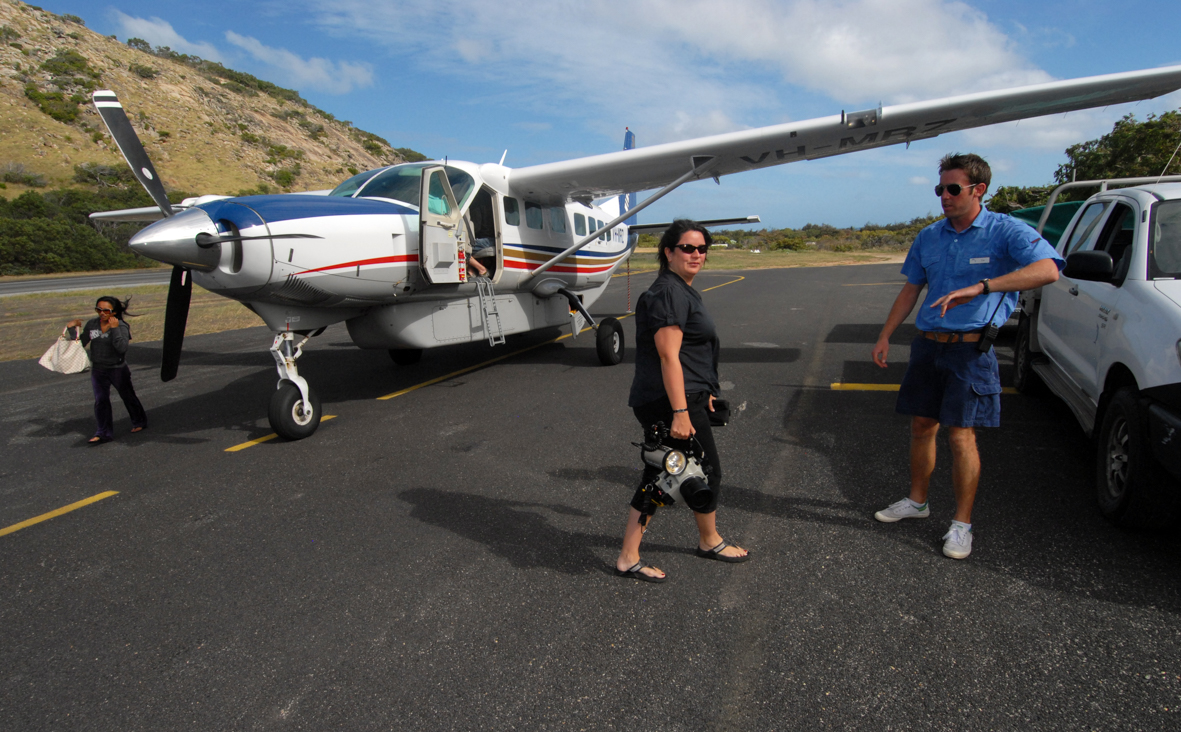
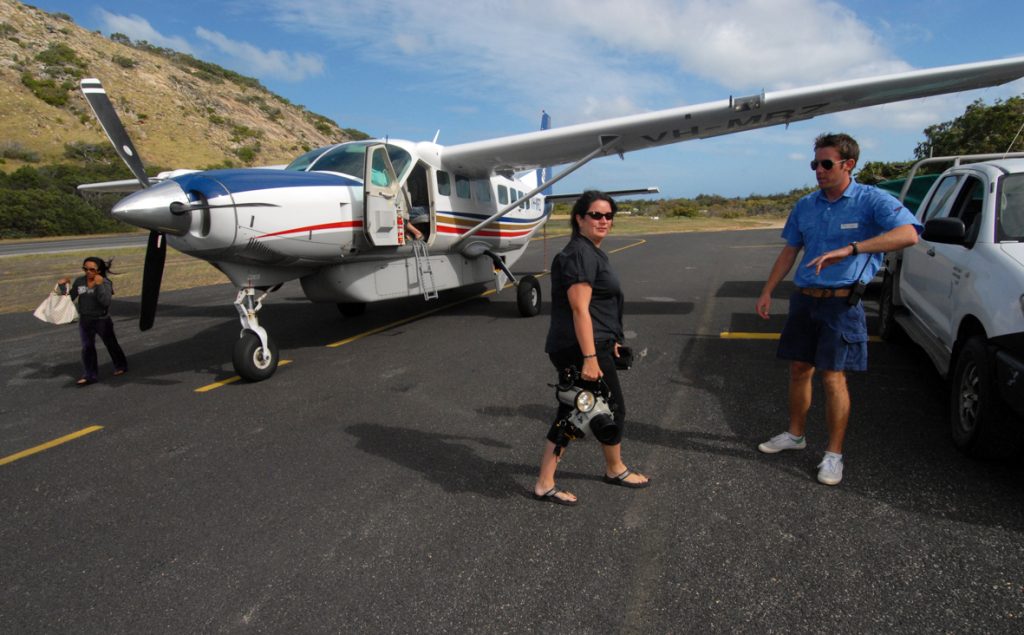
The hour long flight from Cairns affords some great views of this remote and relatively pristine coastline with Port Douglas, the rain forests of Daintree, Cape Tribulation and Cooktown all clearly visible on the left side of the plane, and the Great Barrier Reef out on the right. It provides a different experience with which to begin a liveaboard trip, and within an hour and a half boarding an aeroplane, we were climbing off a RIB and being welcomed on board by the crew.
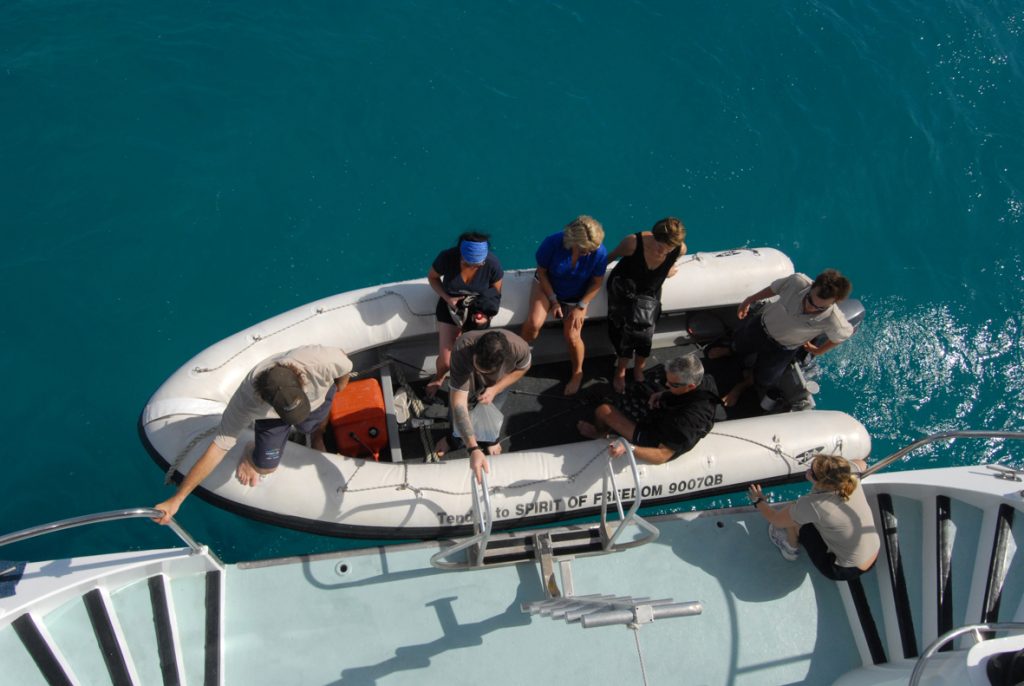
Very quickly, everything looked so familiar, and I even “recognised” one of the crew who later confirmed he was indeed working onboard during our trip three years previously. We’d also booked the same room as before, which was primarily for reasons of spaciousness and the excellent walk in shower, but it would also prove to be a good decision for the open sea crossing to and from Osprey Reef, more of which later.
With everybody onboard and the safety briefings done, the boat moved from Lizard Island to a site at the northern end of the Ribbon Reefs (part of the Great Barrier Reef) for a couple of afternoon familiarisation dives. It gives all the newly arrived divers a chance to get sorted with their gear and weights, before the planned overnight voyage out to Osprey Reef.
The Spirit of Freedom has good procedures for diver safety and provided detailed dive briefings, including diagrams of the sites and a pre-dive current check – rated on a scale of 0 – 5. Before and after each dive, the crew were meticulous at logging divers in and out of the water. They also insisted on two safety stops, at 10 metres and the usual 5 metres. And during our few days onboard you couldn’t ignore the presence of Mossy, who would prove to be an excellent trip director, with humour, tireless enthusiasm and serious side if required.
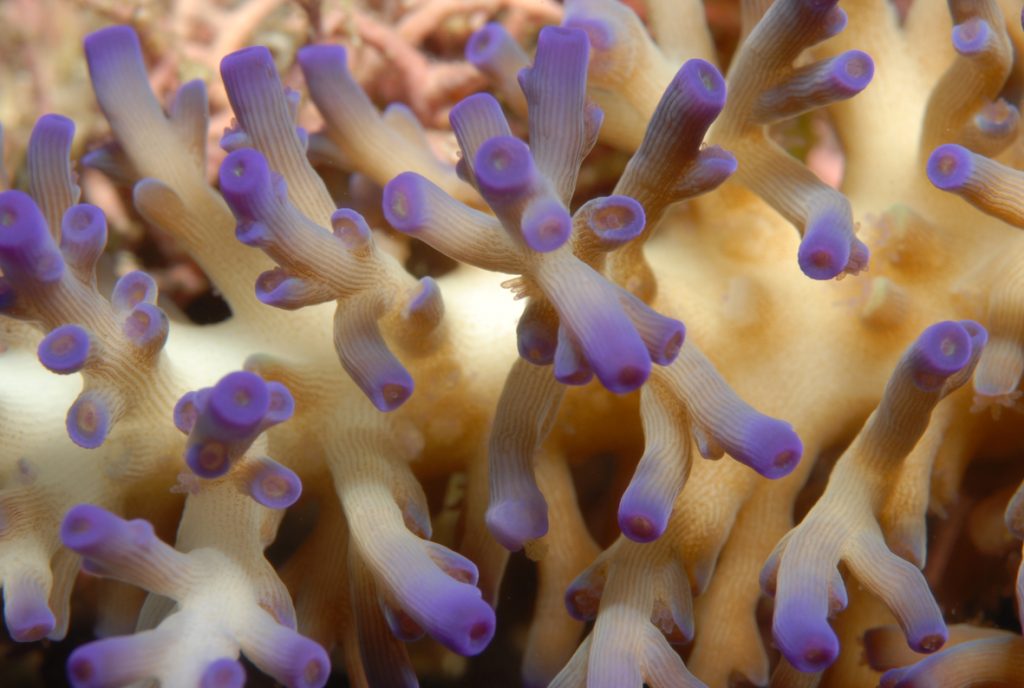
The chosen site for the afternoon was called the Monolith, a decent sloping reef and wall dive that has an incredible area of fist coral after which (I presume) the place was named.
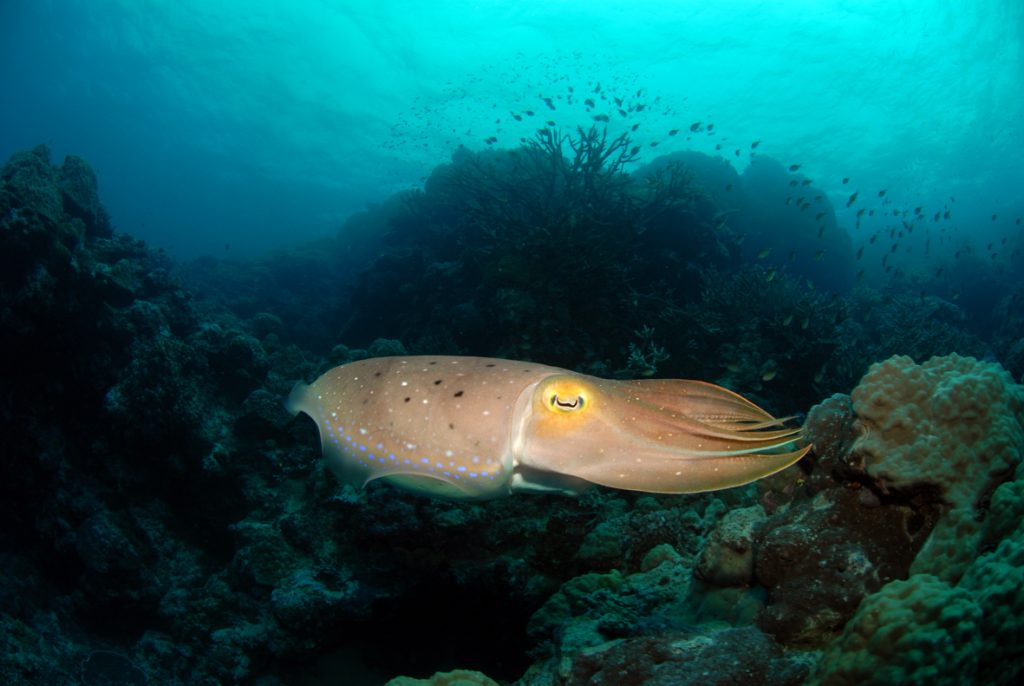
During the flight up to “Lizard”, the weather had been slightly overcast with occasional sun peeking through, but it worsened during the afternoon giving the dive site a more dark and gloomy feel about it, rather than the classic turquoise water that we’d hoped for. But no matter, we enjoyed a couple of good dives with the highlights being large groupers, cuttlefish, lionfish and the excellent topography including the “monolith” of fist coral itself.
As we got on with the diving, the Captain, a friendly, straight talking and experienced Aussie called Cameron, who has worked the boat for several years (in rotation with another long standing captain) had been keeping an eye on the weather for the overnight journey out to Osprey Reef – and it wasn’t looking particularly good. During the evening meal he delivered the bad news that we wouldn’t be going out to Osprey overnight. We had a minor technical problem with the boat that needed fixing and it also looked like being quite rough, so we’d have to leave it a day and re-consider the following afternoon when it was forecast for the winds to ease.
This news, of course, was a great shame but you can’t take risks in what is an extremely remote area, and at least there was the chance a day later. It would, of course, mean that we’d only get a single day out there rather than the scheduled two. Instead we would continue diving for a day around the “top end” of the Ribbon Reefs, which includes the “world famous” Cod Hole.
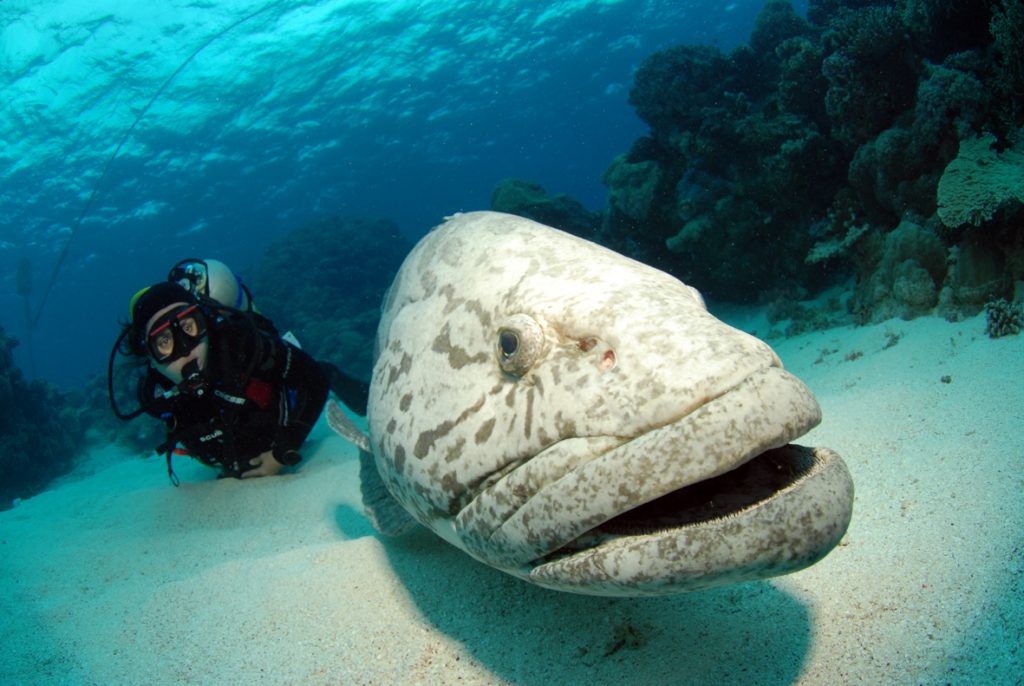
Although we’d dived Cod Hole on the trip from three years previous, it wasn’t exactly a chore to do it again. The first dive there was a “normal” dive on the reef, exploring the series of terraces that characterises the site, plus some large bommies and a large sandy “arena” in the shallower part of the site. Out in the blue, a reef shark checked us out from a distance and later in the dive, a couple of potato cod had turned up, knowing that a visiting dive boat means food.
The second dive was the “cod feed” itself, which involves the crew luring these huge fish to the sandy “arena” with a holed container of “bait” filled with a concoction of dead fish and chum. Once in the water, the divers all assemble in a large circle on the sand and wait for Mossy to appear and administer the food, acting as a kind of “master of ceremonies”. Several large potato cod and other fish such as red bass remain glued to the container, transfixed by its contents, as Mossy led the obsessed fish past each of the divers. To add to the show, he would also hand feed the cod. The dive is chaotic and fun.
In the afternoon, we moved on to Pixie Pinnacle which is as the name suggests. It’s a good dive and there’s usually something interesting to check out including turtles, schools of jacks, barracuda and the possibility of pelagics. Up close you can find plenty, including pipefish, scorpionfish, anthias, nudibranchs and perhaps that deadly master of camouflage, the stonefish.
Pixie Gardens is a nice site with sandy expanses, coral slopes, bommies and some cuts in the reef up in the shallows that are interesting to check out. On the night dive, we didn’t stray far from the boat and spent the entire dive on a couple of the larger bommies and out on the sand. Hunting jacks continually hang out with you, looking for any hapless fish that your lamp may illuminate. It’s also worth spending a bit of time underneath the boat before getting back onboard, as even more jacks, red bass and the odd reef shark swirl around in hopeful circles, waiting for a chance to feed.
Throughout the day, the weather had remained unsettled and windy, but despite this, Cameron had some good news for us – we would be heading out to Osprey Reef overnight as the wind was due to calm down “a bit”.There’s a scale of 1 – 10 that the crew use to “measure” the open water crossings, with10 being the worst seas that they’ll attempt the journey.
The crew make no bones about what divers have signed up to with regard to the open sea crossings, especially to Osprey Reef, with Mossy indulging in his onboard sideline of “drug dealer”, administering seasickness tablets to anyone in need before setting out into the ocean (when its too late). You’ve got nothing to lose and everything to gain by taking them.
To get to the Coral Sea, you basically pass through a gap in the Great Barrier Reef and keep going out. There’s some really remote reef systems out there such as Bougainville Reef (which the Spirit of Freedom will visit if the weather allows) and Holmes Reef, both to the south of Osprey Reef itself. After a largely sleepless night at the mercy of the open sea we arrived at our target destination. Cameron reckoned that the voyage had scored a 5 out of 10 on his scale which surprised some people. And it was still windy and rainy, so no sunlit blue waters for us.
The reef systems out in the Coral Sea enjoy excellent visibility with an incredible 50 or 60 metres being possible in perfect conditions. As the conditions weren’t “perfect” for our visit, the visibility was reduced, but still a very good 30 or so metres.
The first two “Osprey” dives were at North Horn, one of the best known on the reef. It’s a vertigo inducing wall dive with a chance of pelagic encounters including mantas and especially sharks. Even a whale shark (not commonly seen in this area) was sighted on a trip not long before our visit, so you never know your luck.
North Horn is also the site for the Spirit of Freedom shark feed (or “shak” feed accordingly to Mossy) and is conducted in a natural amphitheatre in the wall of the reef. After an extensive briefing that majors on diver behaviour around the sharks, everybody heads to the dive deck to kit up. It’s one of the big reasons for visiting.
Once the divers are settled in their spots, the signal goes up for shark’s food to be lowered into the water. It’s done by an ingenious system of floats which I won’t even try to explain (but suffice to say it works), with Mossy again being the “master of ceremonies” and managing the dive.
Around thirty or forty sharks turned up for the food, and it’s a real spectacle to witness, made up of mainly grey reef sharks and silvertips, though other species show up from time to time. Other hungry fish also get involved, including a large potato cod that showed the sharks no respect, barging its way into the melee to get its share! There were plenty of smiles on the dive deck after this dive.
Next was Castles, which we thought was a superb site. Cameron kindly took Amanda and myself around, showing us some of the areas that we may not have found had we done it on our own. Especially memorable was a swim-through festooned with gorgonians that emerges spectacularly on to the vertical reef wall that drops away to 1000 metres. He also took us to a sandy area known for garden eels, and in particular a rare species called the splendid garden eel with distinctive orange brown bands. Unfortunately they’re very skittish and thwarted our attempts at photography despite a tortuously slow approach. White tip reef sharks were also common on this site, sometimes tolerating a close approach from patient divers, unlike the garden eels.
Lastly, it was a visit to the Gap, another nice site, though perhaps lacking the “wow factor” of the first two. Nonetheless, there’s a good wall, some interesting overhangs to investigate and a flat sand and coral expanse at the top of the reef.
After our day at Osprey Reef, it was another overnight voyage back to the Great Barrier Reef for the final day of diving. It was another sleepless night, this time rating as a 7 out of 10 on the scale. Despite our bleary eyes, we were pleased with the “rear central” location of our room, which gave a lot less movement than the rooms higher up, especially those on the top deck.
Back on the Great Barrier Reef, the weather had improved, so we could enjoy the excellent Steve’s Bommie in sunlit waters. It’s named after a diver who especially enjoyed this site and there’s a plaque at around 20 metres to commemorate his life. You can understand his enthusiasm about this site, as it’s covered in life. Divers can revel in turtle encounters, schooling jacks, schooling snappers and real treats such as tasselled wobbegongs. There’s also stonefish, leafy scorpionfish for the sharp eyed to find.
The final two dives were from the Flare Point mooring, including the Flare Point site itself and a less dived site called Red and White Bommie. We would do the “bommie” slightly differently. Instead of jumping off the dive deck, one of the tenders dropped us up-current of the Spirit of Freedom, so that we could enjoy a drift dive back along the reef edge to Flare Point. It’s a nice site with impressive coral gardens and the possibility of bigger stuff out in the blue such as turtles (we saw an impressive specimen here). The sandy expanses are also worth a look for resting white tip reef sharks, rays and even leopard sharks.
The Great Barrier Reef and Coral Sea offers seasonal spectacles as well as the year round residents. During the time of our visit, it was the humpback and minke whale season, which doesn’t mean that you’ll see these incredible leviathans but there is a chance, with lucky dive boats occasionally being approached whilst at moorings for that rare and special encounter. Cameron said that for some reason the minke whales had been skittish and wary this season.
After a much calmer final night on board, we arrived back in Cairns to reflect on our trip. We’d finished what we started three years previously. Yes, we were tired but we were also very happy. The Spirit of Freedom had delivered another excellent trip.