
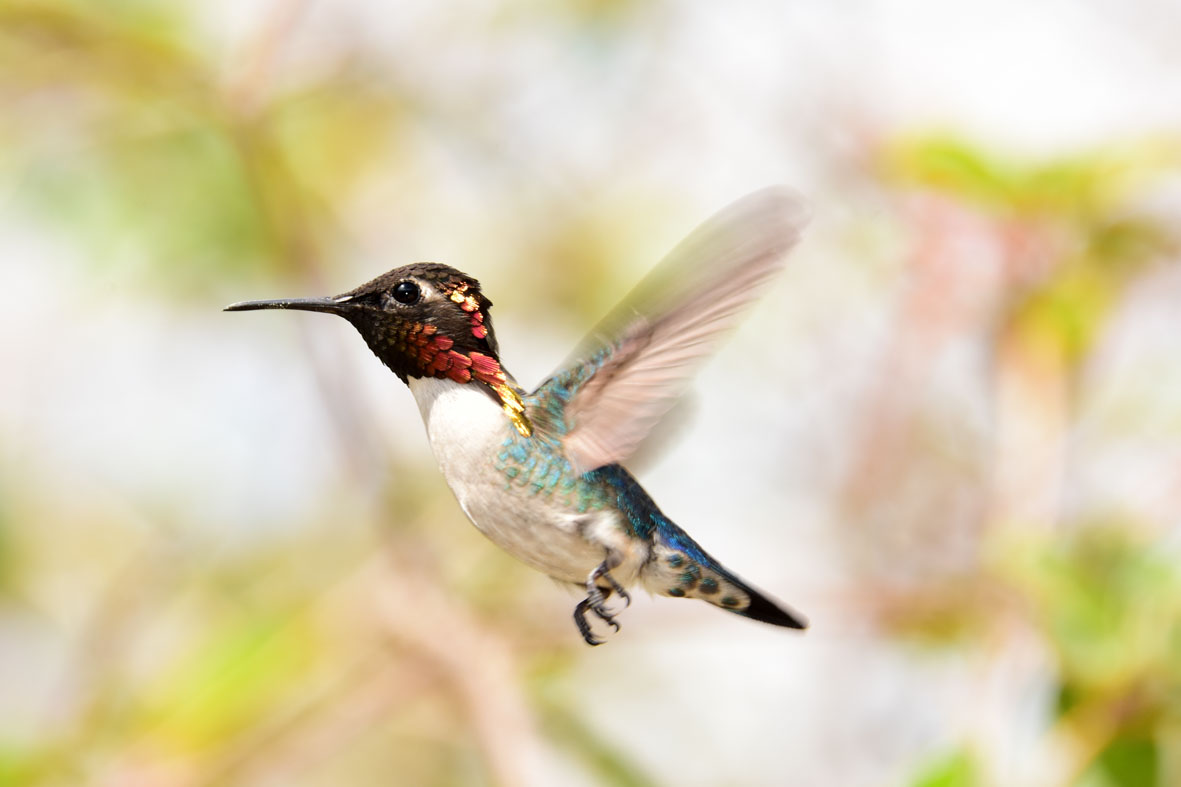
Close Encounters with Cuba’s Bee Hummingbird
Text by Jeremy Cuff/www.ja-universe.com
Photography by Jeremy Cuff/www.ja-universe.com
I’d wanted to see the Bee Hummingbird for a very long time; it’s the world’s smallest bird and also a Cuban endemic. My interest in this species probably goes back to when my girlfriend Amanda (now my wife) and I went to Cuba way back in 1994, not long after it “opened up” for tourism.
On that trip, I remember us visiting a wooded orchard somewhere within the incredibly scenic Vinales Valley, where we watched Cuban Todies and Cuban Emerald hummingbirds flitting amongst the verdant foliage, though we didn’t spot any Bee Hummingbirds, if any were actually there.
That said, the real roots of my fascination with hummingbirds dates back quite a lot further, to when I was a wildlife obsessed young boy. To encourage my interest, my family would occasionally take us to Peter Scott’s Slimbridge (now the Wildfowl & Wetlands Trust) where I can remember being transfixed by the hummingbirds they kept in the hothouse at the time. On any subsequent visits, I’d have to be dragged away from watching them.
Jumping forwards again to 1994, our visit to Cuba that year was also the catalyst for another interest that we’ve pursued with vigour ever since; that of scuba diving. We’d booked on a snorkel trip a couple of days before we returned home, and having been blown away by what we’d seen and experienced, we became inspired to take that giant stride to learn to dive, and immerse ourselves in the underwater realm. We completed our dive certification in 1996, and went with the tides.
Since that pivotal time, we’ve embarked on a lot of “dive travel” to many interesting and sometimes remote parts of the world. We also learned underwater photography along the way, and began publishing our work in various dive magazines and websites. But if you’re wondering why I’m talking about scuba diving rather than birding, there is a connection which brings us circling back to Cuba…
We’d never dived Cuba in the time that had elapsed, so it was very much on our “must dive” places to visit. And so it transpired; Cuba bubbled to the top of our list in 2019, ahead of us travelling out there in March 2020, just as the Covid-19 pandemic was gathering momentum. We narrowly escaped being cancelled, and managed to get our full trip completed without disruption, returning to the UK into a new world of lockdowns and restrictions, but that’s another story.
As part of our Cuban itinerary outside of the diving, and mindful of (really) wanting to see the Bee Hummingbird, we booked a three-day birding trip to the Bay of Pigs region, close to the extensive (and excellent) Zapata National Park. The area is known stronghold of this species, which like most wildlife is declining in range and abundance. Going there would give us the best chance of seeing it.
Though it’s possible to see it anywhere in this part of Cuba where suitable nectar sources are available, it would turn out (of all things) that visiting a garden was the way to go. There’s a town called Playa Larga located at the end of the wide inlet that forms the Bay of Pigs, where an enterprising, welcoming and conservation minded local family has been accepting visitors to see the hummingbirds that visit the nectar feeders that they’ve deployed and the blooms they’ve cultivated there. It was here, in this garden, that I got my sighting. It’s called Casa Ana.
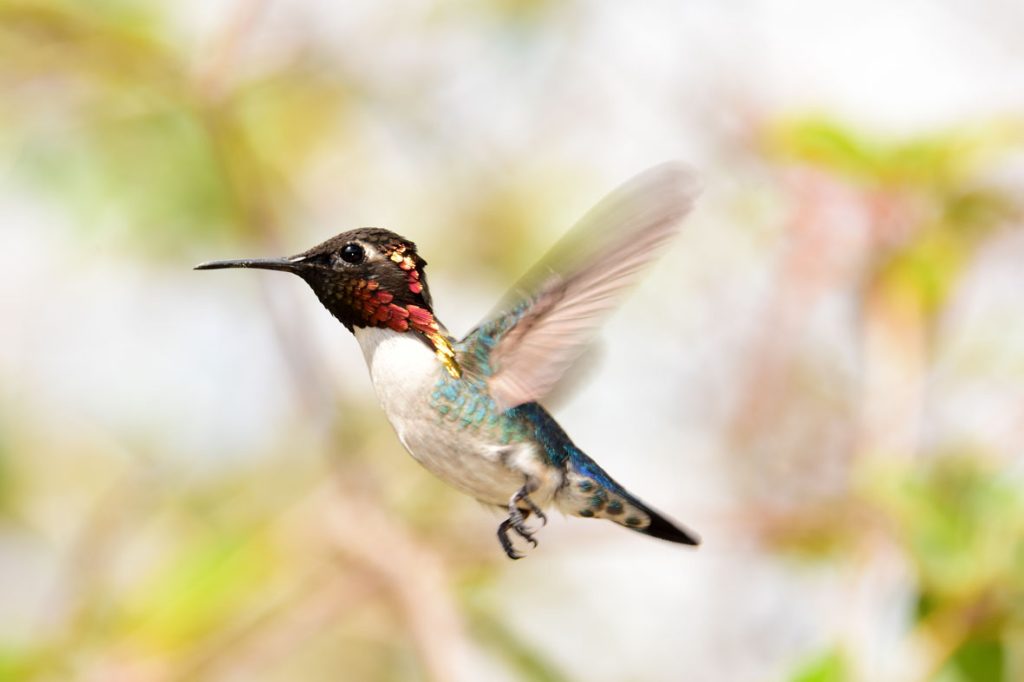
It’s busy place on both an avian and human level, with Bee Hummingbirds and Cuban Emeralds coming and going at a frenetic pace, along with a steady ebb and flow of captivated visitors; it’s a place where it’s easy to get very close views of these most special of birds. As well as being able to watch them up close for decent periods of time (rather than brief and fleeting encounters), Casa Ana also offers really good photo opportunities. I was thus able to capture some decent images, one such example is published here as an accompaniment to this short feature.
And so it was, an ambition was very much fulfilled.
Amazing, and fascinating…
Jeremy Cuff is a member of WOS, joining the society back in December 2023. Images, features and more items of interest centred around travel, scuba diving and the natural world can be found on Jeremy & Amanda’s website at www.ja-universe.com