
Text by Jeremy Cuff/www.ja-universe.com
Photography by Jeremy & Amanda Cuff/www.ja-universe.com
Lankayan Island is a tiny speck of land in the Sulu Sea, off the coast of Sabah in the Malaysian part of Borneo. It’s a lovely place, with a friendly and welcoming staff, superb beachside accommodation, excellent food and a great climate. But what about the overall experience…
Borneo is an evocative destination, a gigantic island of traveller’s tales and adventure, of abundant wildlife and pristine tracts of rainforest. I remember as a boy leafing through a book that inhabited the family bookshelf, marvelling at the images of steaming jungles and exotic species such as orang-utans, proboscis monkeys and hornbills. But we wouldn’t get to see much of that, as we were heading out to Lankayan Island in the Sulu Sea to sample Borneo’s underwater world.
Our first experience of Borneo was our entry point of Sandakan, with its modern buildings and new roads. It was a good place to recuperate from our jet lag, before boarding the boat for the journey out to the island the following day. Normally, the crossing takes about an hour to an hour and a half, but the weather was stormy and squalling, doubling the journey time to an uncomfortable, wet and seasick (in the case of several fellow divers) three hours. It was certainly nice to get there.
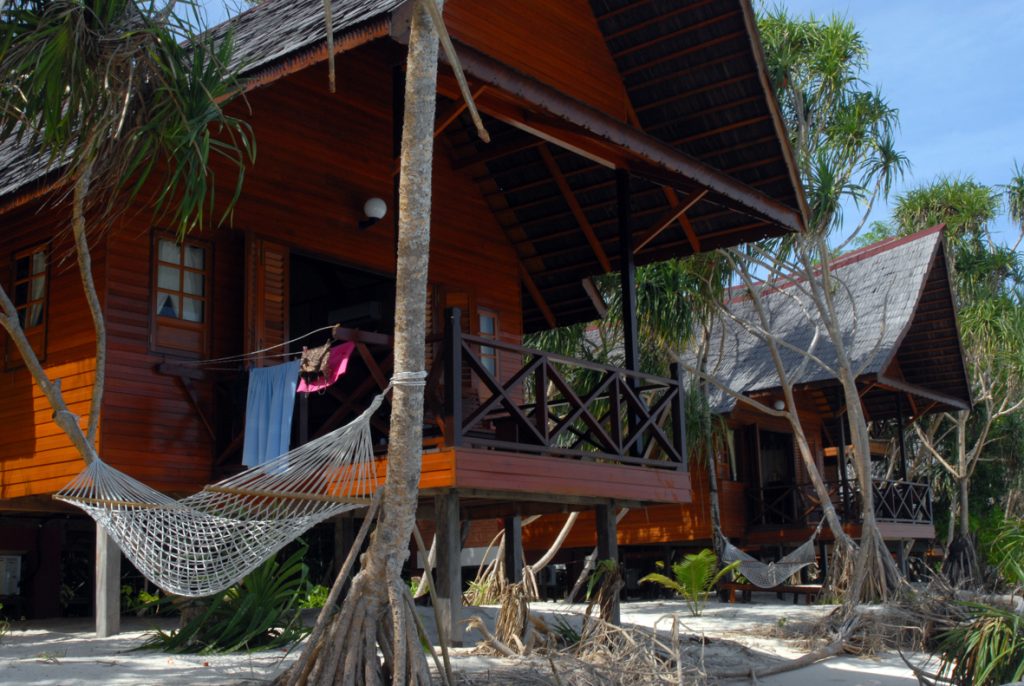
It’s always a pleasure to find a nice room at the end of a long journey, and the rooms here surpassed our expectations – spacious, stylish and beachside, each with its own veranda and hammock. We unpacked our cases and dive gear to the sound of the sea whilst herons fished in the shallows on the white sand beach below us. It was exactly what we’d hoped for.
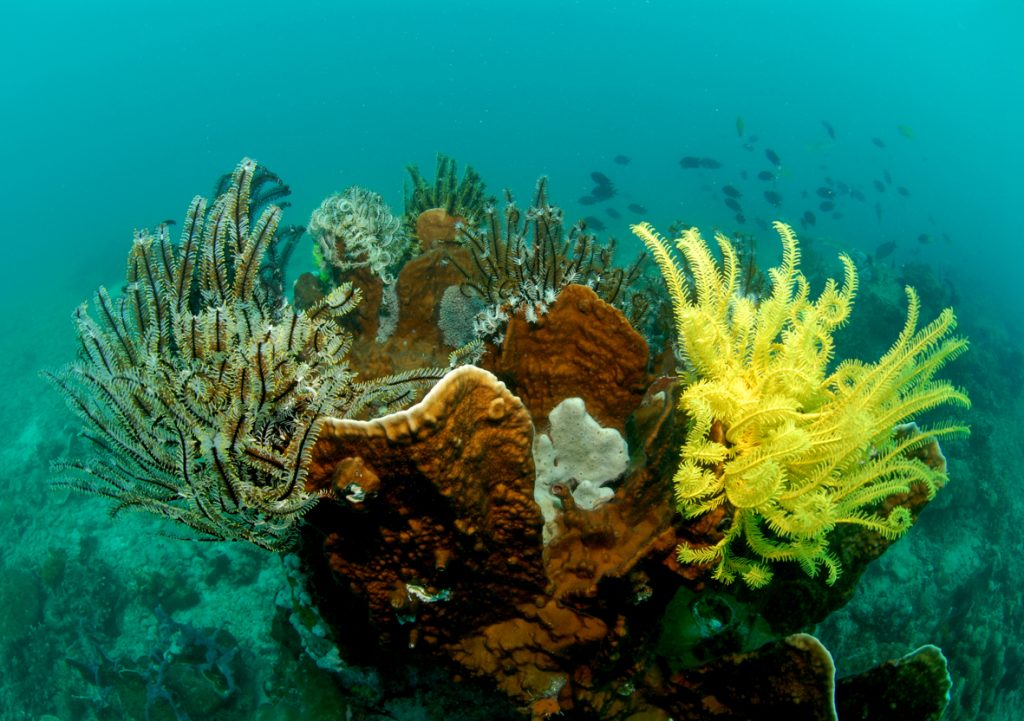
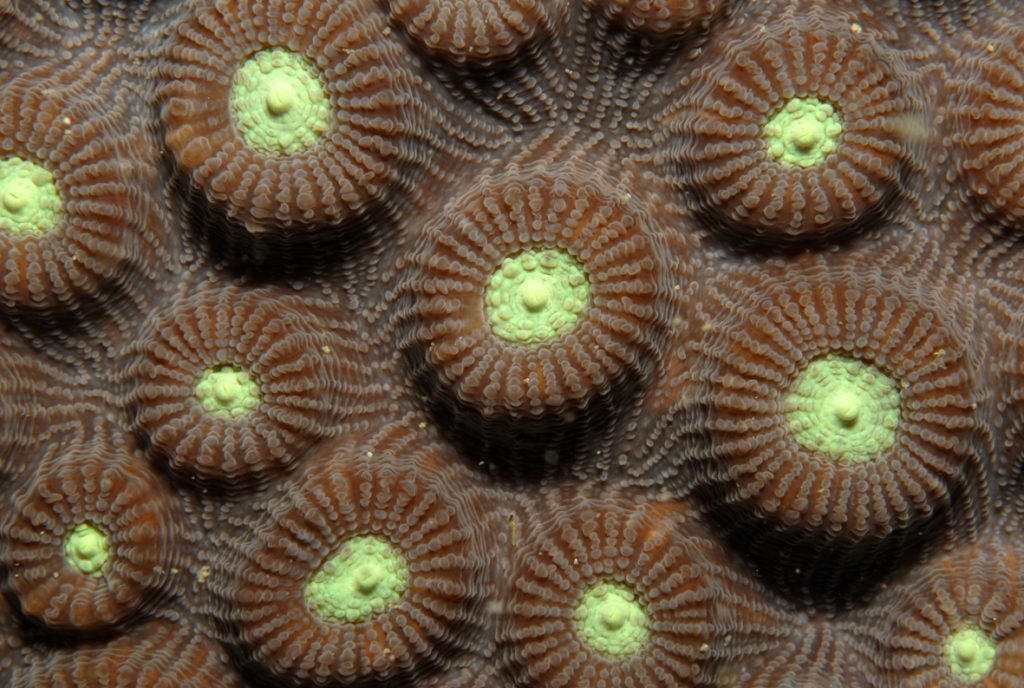
Lankayan is part of the Sugud Islands Marine Conservation Area (SIMCA), with research and conservation staff living and working on the island. Prior to protection, the area was plundered by unsustainable and environmentally unsound fishing practices.
Much emphasis is given to turtle conservation on Lankayan, with nests being excavated and eggs placed in secure hatching enclosures, ensuring a greater number of hatchlings survive to be released. In fact, nesting turtles can haul up anywhere on the island (usually at night), even laying underneath the bungalows as happened to our neighbours during our stay.
Upon release (always an emotive moment for those who witness it) these tiny turtles, driven by an overwhelming urge to reach the sea, head out into an uncertain future where only a tiny percentage will reach adulthood. Guests can participate in these releasings, which are usually conducted under the cover of darkness or at first light. Anyone wishing to attend can hang a sign on their bungalow so that the conservation staff know who to wake up, and who to leave sleeping.
But what about the diving? Well, it’s widely known among the diving community that the Far East offers some of the world’s best diving experiences, rich in marine biodiversity and alive with fantastic encounters, and we expected that of Lankayan too. But it just didn’t happen for us; dives were often underwhelming and uninspiring, sometimes disappointing and occasionally magical. I had a philosophical view about this, whereas others in our group were distinctly unimpressed (with the diving, not the island) and that’s certainly very true when compared to other far east diving meccas such as the Lembeh Strait (which I have been to) and Raja Ampat (which I haven’t).
Unfortunately, our visit coincided with a period of very poor visibility, perhaps caused by stormy and turbulent weather, or perhaps it was river run off from the “mainland”. Whatever the reason, it had the effect of reducing the visibility to “UK levels” at times. It looked as though the conditions had been like this for some time, judging by the sand that had accumulated on the corals, sponges and wrecks.
It begged the question; “why would anyone go to the trouble and expense of building such a lovely dive resort on an island where the diving is disappointing?” The answer must be that the diving is usually much better than what we experienced. I’ve since tracked down a few articles on the internet that tended to corroborate my thinking, as they were generally complimentary about the place. You know when you don’t see a place at its best.
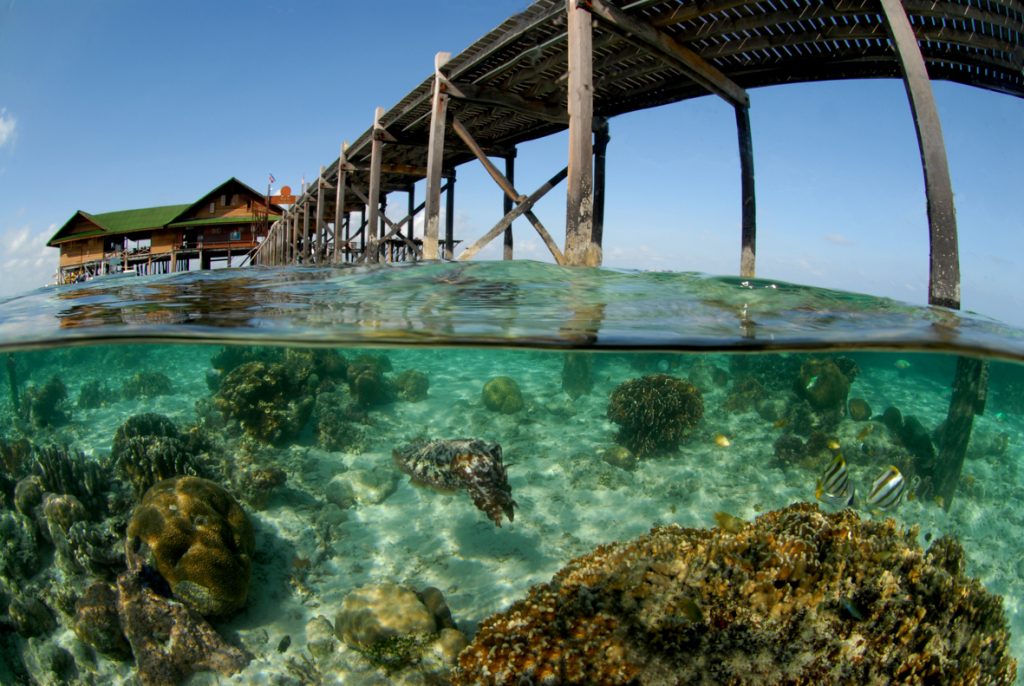
The dive centre is spacious and well equipped, and is located at the “sea end” of the jetty, looked after by a friendly and helpful dive team. Jetties are always good places to dive and many of our group (myself included) spent hours underneath it taking photographs. There’s also an “artificial” house reef made up of small wrecks and other man made features to encourage the local marine life to settle. It’s linked by a series of ropes to aid diver navigation. During our visit, lionfish, batfish, moray eels, blennies and several species of puffer fish were plentiful.
At times, I quite enjoyed straying away from the jetty and the artificial reefs to check out the sandy and open expanses where scorpion fish, gobies and nudibranchs could often be found. Out in the shallows around the jetty, a massive bumphead parrotfish would sometimes cruise through (though wary of divers), and resident schools of fish moved and swirled in unison, as if they were a single organism.
At the dive centre, a couple of large maps displayed the large number of dive sites around Lankayan. Normally, over the course of nine days of diving, you’d expect to visit a decent number of them, but the conditions just didn’t allow – many were off limits or not worthwhile during our visit. It was a real shame.
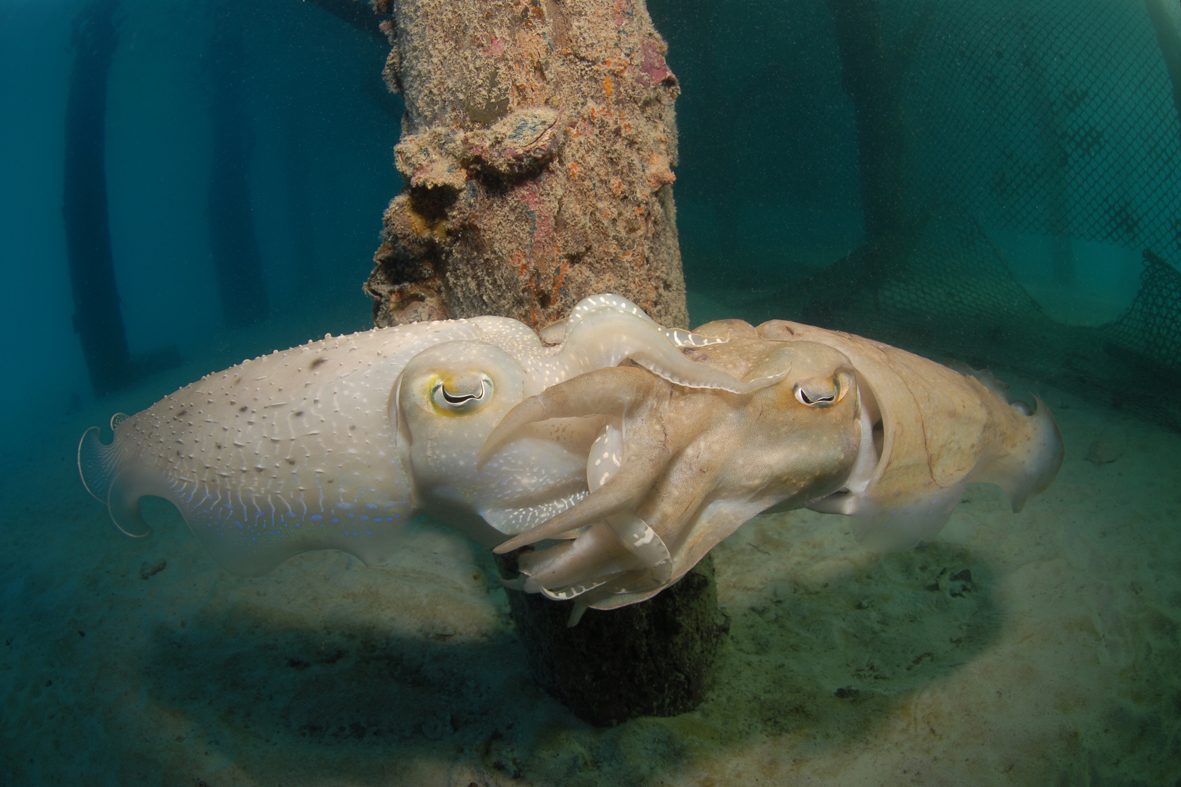
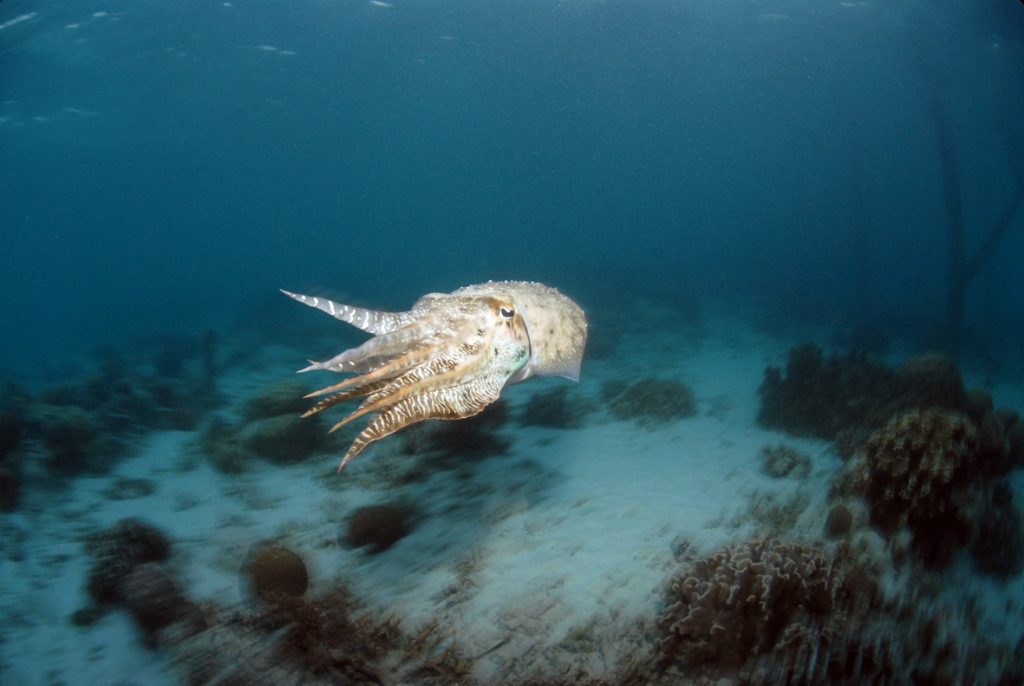
But, as the saying goes, every cloud has a silver lining, and in our case the “silver lining” was mating and egg-laying cuttlefish. This was the highlight of our trip and a great photographic opportunity.
At the beginning of our stay, one of our group had an encounter lasting an hour or so with a cuttlefish underneath the jetty. We all assumed that it was a “one-off, not to be repeated” kind of event, but we soon discovered that there were several cuttlefish in the area, and that they were mating and laying eggs. We could all witness at close quarters the reproductive stage in the lifecycle of cuttlefish.
By spending time with the cuttlefish, which were tolerant of close approaches, I was able to photograph the mating, the egg laying and the colourful and contorted displays of these fascinating animals.
Away from the jetty and house reef, we visited a few of the wrecks or reefs that the conditions allowed. Most dive sites were a few minutes by boat from the jetty and benefitted from permanent moorings and marker buoys.
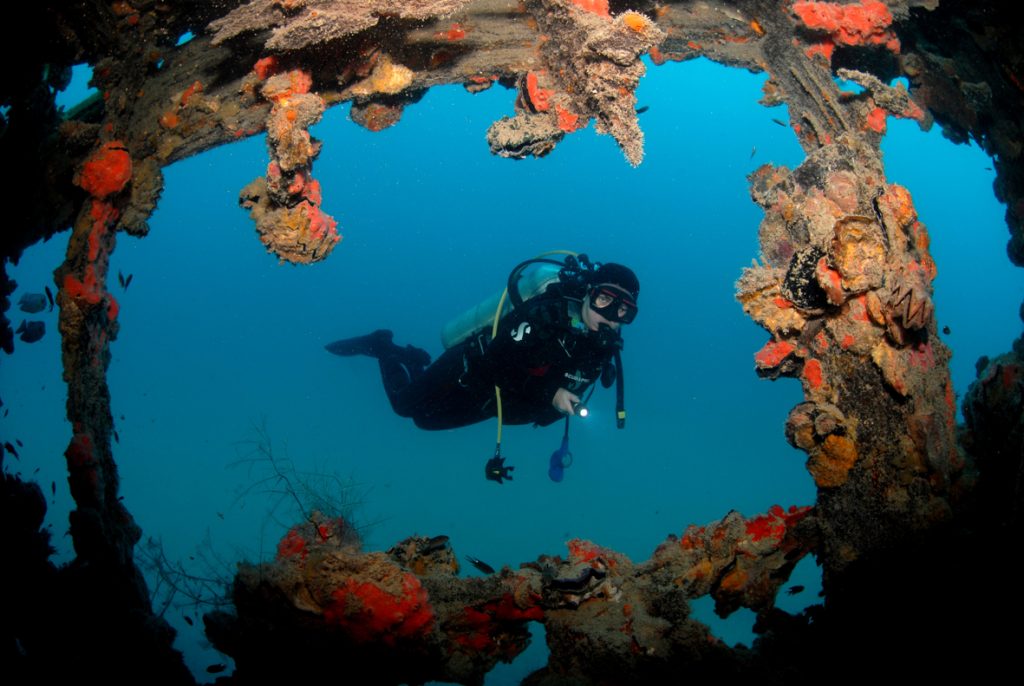
The Lankayan Wreck site (which is actually two wrecks linked by an “orientating line”) is worth several dives, although it’s possible to do both wrecks in a single dive if time is short. Both boats are a decent size and there’s some interesting inhabitants to check out. Large potato cod, groupers and oversize batfish skulk in the darker recesses, and there was also a bamboo shark (a new species for me) that could be spied deep in a crevice and out of reach of the lens. On the macro side, we discovered a fantastically cryptic ghost pipefish and plenty of comical looking blennies in accessible positions.
As already touched upon, Lankayan is an important area for turtles and they’re fairly common, and can be encountered at most of the island’s dive sites. Frustratingly, we didn’t actually see as many as we should have done thanks to the conditions, but sites such as Mel’s Rock yielded some impressively large specimens.
Of the reef sites we visited, Mel’s Rock, Laura’s Point and Goby Rock were the most productive with impressively large jawfish, more large cuttlefish in “mating mode”, spectacular ribbon eels (especially the blue and yellow specimens), a lone leaf scorpion fish and a plentiful but skittish species of stingray being regular rewards for our efforts. Of the “bigger things”, schools of barracuda and jacks can cruise past at any time, and leopard sharks are also regularly sighted resting out on the sandy expanses. One of our group even witnessed a pair of leopard sharks mating. Unfortunately, I wasn’t lucky with the leopard sharks and missed them on each occasion they were encountered.
So, you might be asking, would I recommend visiting Lankayan? Well, actually I would for the overall experience but I would suggest visiting at a different time of year when the conditions are (or must be) better for diving. These days, there are many well appointed dive resorts throughout the Far East, so I’m hoping that our diving experience in Lankayan was not typical.
I’m totally aware that many other places could give a similar “topside” experience but with much better diving. That said, for Amanda and myself, it was the right place at the right time and the perfect antidote to our busy and hectic lives back in the UK. Whether that’s enough for everyone is a personal decision.