
Text by Jeremy Cuff/www.ja-universe.com
Photography by Jeremy & Amanda Cuff/www.ja-universe.com
In 2007, we embarked on our first Red Sea liveaboard in Egypt, based out of Marsa Alam in the south. We enjoyed it so much that we came back for more in 2008, this time in the north from Sharm el Sheikh. Now we’re thinking that it might be an annual pilgrimage, but how did the experiences compare…
Egypt has a huge amount of diving options these days, with new resorts constantly opening to compete with the established ones, and new liveaboards tempting divers away from the old favourites. In fact, the Red Sea is a massive money-spinner for the Egyptians, attracting aeroplanes full of divers, mostly from around Europe.
All this choice is good in some respects and bad in others, with dive operators ranging from excellent to poor. This puts the onus on the dive traveller to “do their homework” and choose the right kind of dive package to suit their budget and expectations.
We hadn’t dived in Egypt since 1998 and 1999, when we visited sites around Sharm el Sheikh and Hurghada on day boats as inexperienced divers. In the intervening years our “diving odyssey” had taken us elsewhere on the global diving map, but we’d always heard good things about Red Sea liveaboards.
So, in 2007 we decided to give one a try, from Marsa Alam in the south aboard the Sea Serpent. It was such a good week that we went back to do another one a year later, this time on the Typhoon from Sharm el Sheikh in the north. Here’s an overview of how the experiences compared…
THE AREAS
South 2007
From Marsa Alam, the Sea Serpent headed further south for an itinerary that included the reef systems of St. Johns and Fury Shoals, before heading back north to Elphinstone, and finishing with selected sites close to the shore, including Abu Dabab which has a large area of sea grass and resident dugongs.
Our itinerary spent the balance of the week around St. Johns and Fury Shoals, although other permutations are certainly possible.
North 2008
Liveaboards leaving from Sharm el Sheikh tend not to venture as far as in the areas to the south, as they don’t really need to – there’s plenty not too far from “Sharm”. Our liveaboard, the Typhoon, offered an itinerary that combined “Reefs and Wrecks” and concentrated on areas around the tip of the Sinai Peninsula and beyond.
Our week included Ras Mohammed, Anemone City, Shark and Yolanda Reefs, Jackfish Alley, the Alternatives and three days at Abu Nuhas diving the “famous” Red Sea wrecks of the Chrisoula K, the Ghiannis D and the Carnatic.
THE JOURNEY
South 2007
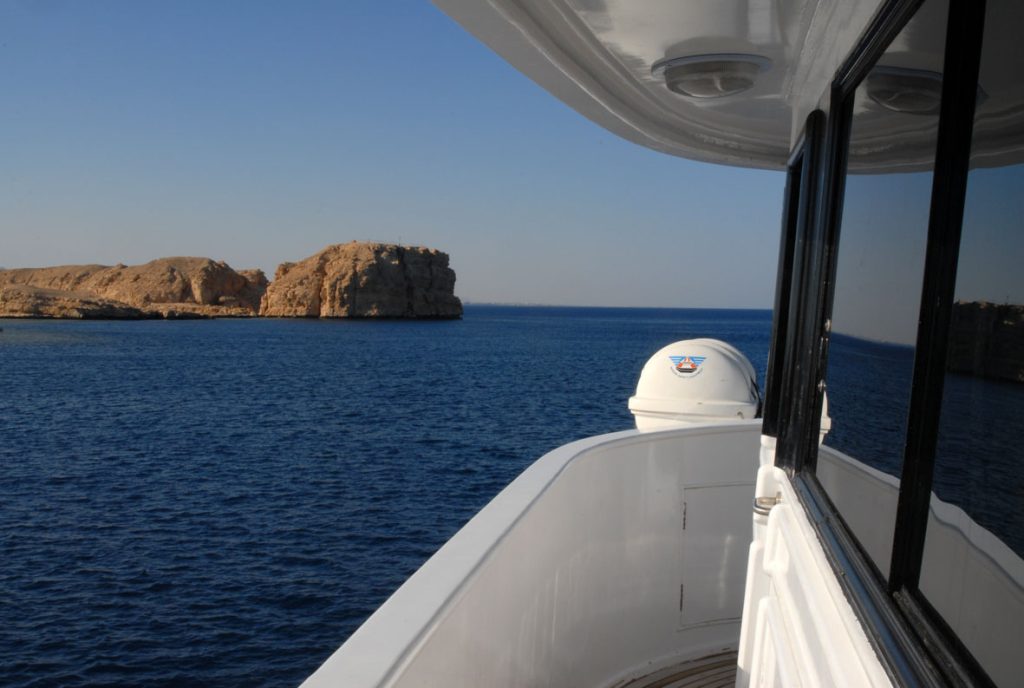
To reach St. Johns and Fury Shoals from Marsa Alam, it’s quite a long journey south. We were blessed with fantastic weather during our voyage. The surface was like glass, with the sea and the sky merging into one, forming a surreal blue backdrop, with not even a breeze to alleviate the stiflingly hot temperatures. The good weather stayed with us for the entire week, making the travelling between the reefs easy and pleasant. If it gets windy, and it often can in the Red Sea, expect a few queasy hours, and perhaps even a re-vamp of the itinerary.
North 2008
The journey from Sharm el Sheikh to areas around Ras Mohammed and Abu Nuhas is relatively short, and also within the reach of day boats. This makes it easier, especially for divers prone to seasickness on long voyages. Again, we were lucky with the weather, with nothing more than a moderate breeze all week, making the diving conditions good to ideal. Any appearance of the famous Red Sea winds can limit the number of sites that are diveable, but at least the voyages are short.
THE DIVING
South 2007
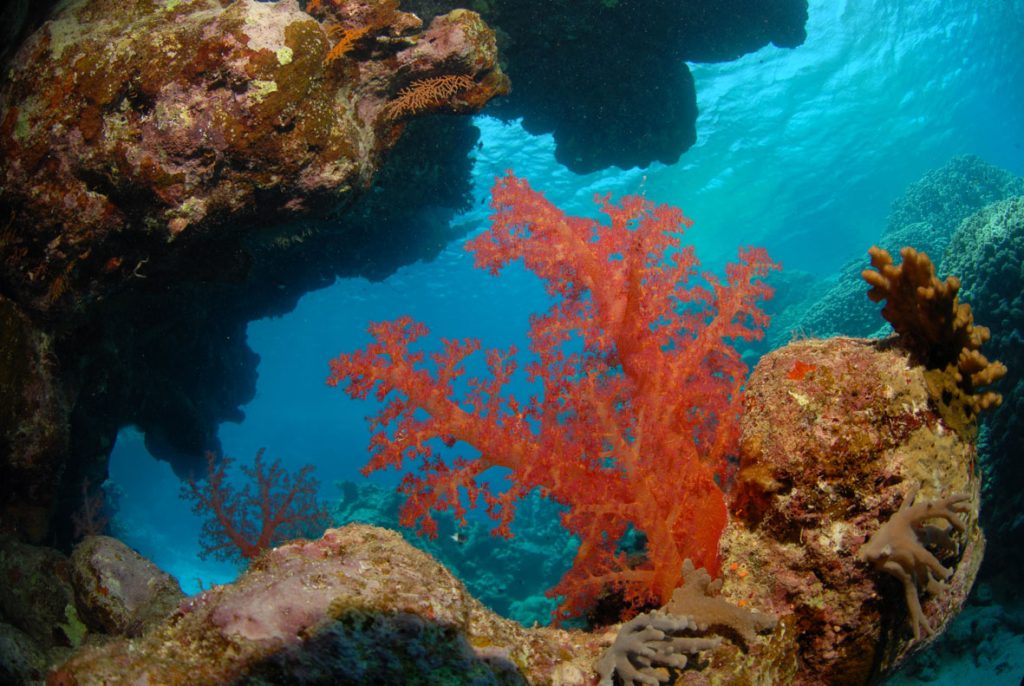
We thought the diving was generally excellent on this trip, particularly around St. Johns, Fury Shoals and Elphinstone where the reefs seemed very unspoilt and pristine. It’s no surprise that these areas are considered some of the best reef diving in the Egyptian Red Sea.
At Habili Ali, some divers in the group were checked out by a thresher shark as they cruised along this impressive wall. Other “big things” are certainly possible at many of the sites in this area, including encounters with dolphins.
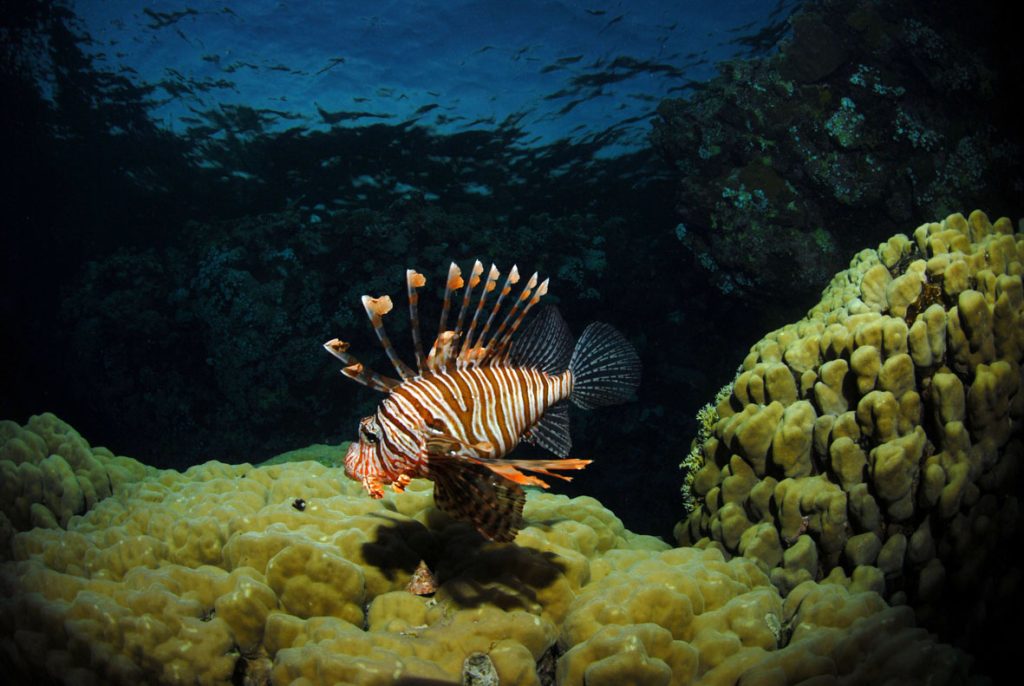
Dangros Reef and St. Johns Caves were hugely enjoyable sites with an impressive network of gulleys, caves and swim throughs to explore. They’re adorned with splendid hard and soft corals, anemones and sponges and are great subject matter for underwater photographers.
“Wreckies” were not completely left out of the action on our itinerary either, with a yacht and tugboat providing interesting dives at Abu Galana, set amid some areas of particularly impressive hard coral.
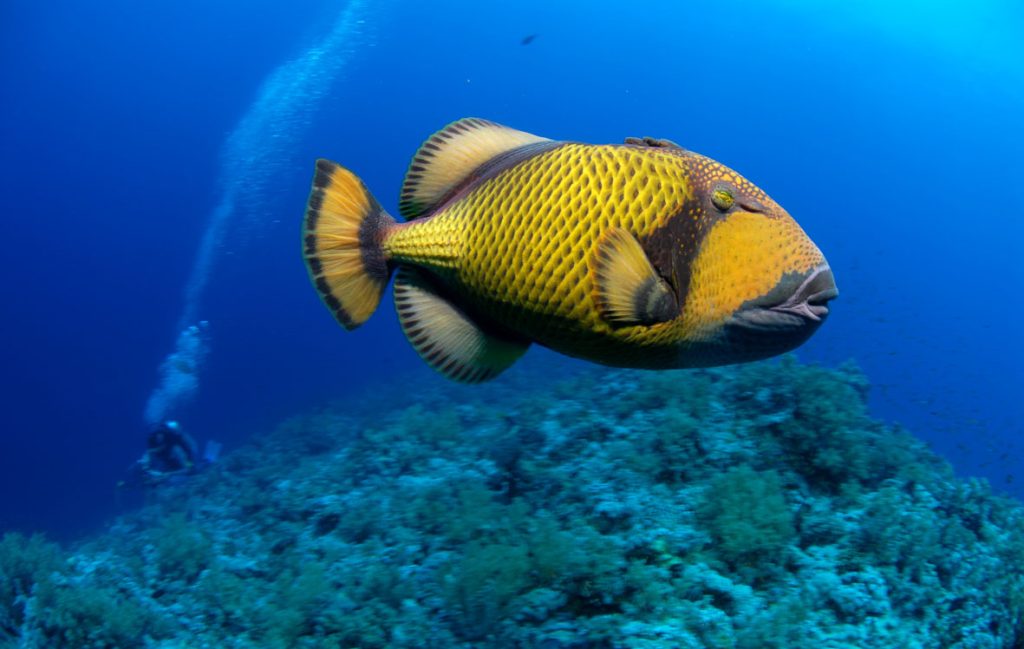
At Elphinstone, we spied dolphins and sharks out in the blue, and were visited by two oceanic white tips that circled menacingly underneath the Sea Serpent, although they frustratingly vanished when we entered the water to photograph them. I also braved the wrath of a nesting Titan Triggerfish to get some very pleasing images of myself being attacked!
After a week of mostly reef diving, it was quite nice to explore the sea grass beds at Abu Dabab where it’s possible to find pipefish and seahorses, and for the very lucky, an encounter with the extremely rare dugong, which we saw breaking the surface whilst onboard, but not whilst diving.
North 2008
In some ways, it’s difficult say anything new or different about the reefs and wrecks around Ras Mohammed, which must surely be one of the most popular and intensively dived areas anywhere on the planet. That said, it doesn’t mean that the area isn’t worth visiting, as it most certainly is. And there’s always the chance of surprises.
We spent our first day diving the Alternatives, a series of reefs that can usually be dived, even if the famed desert winds are howling. They got their name from being an “alternative” to the sites around Ras Mohammed, which can be too dangerous to dive when the seas are too rough.
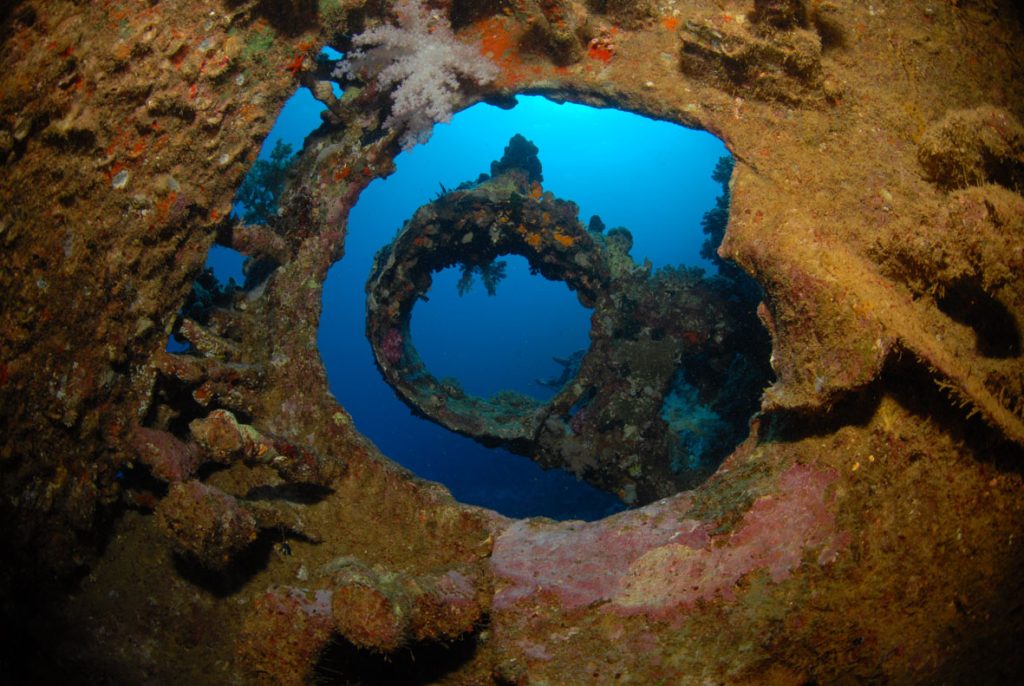
Next, we headed off to the “famous” Red Sea wrecks of the Chrisoula K, the Ghiannis D and the Carnatic, all resting within a very short distance from each other at the treacherous reef of Abu Nuhas. Our itinerary allowed for three days here, with multiple dives on each wreck. This is excellent for divers wishing to thoroughly explore the wrecks, and to enter some of the more confined and less visited areas, such as the engine room of the Ghiannis D.
We also visited the Ras Mohammed sites of Shark and Yolanda Reefs. They’re still good dives, even despite the incredible amounts of diving that happen there on a daily basis. The dives generally begin on the wall of Shark Reef with divers following the prevailing current to finish the dive on Yolanda Reef, often in the area of the wreck of the Yolanda itself, with its much photographed cargo of toilets. We encountered big schools of fish including batfish, unicorn fish and jacks plus a large barracuda and the more solitary napoleon wrasse. For the very lucky, it’s possible to get eagle rays, mantas or even whale sharks, although their appearances are sporadic and unpredictable.
Closeby, there’s also Anemone City and Jackfish Alley, which are also incredibly popular sites. Anemone City speaks for itself, as it’s one of the best places to see anemones and attendant clownfish, whereas Jackfish Alley is a more “general” site with a bit of everything including a nice swim through.
THE LIVEABOARDS
South 2007
Sea Serpent
The quality of the service onboard is critical to the overall liveaboard experience, as you can’t go anywhere else! In our opinion, the Sea Serpent crew were a friendly and competent bunch, providing good food, well organised dive briefs, a selection of good dive sites and creating a generally good atmosphere onboard.
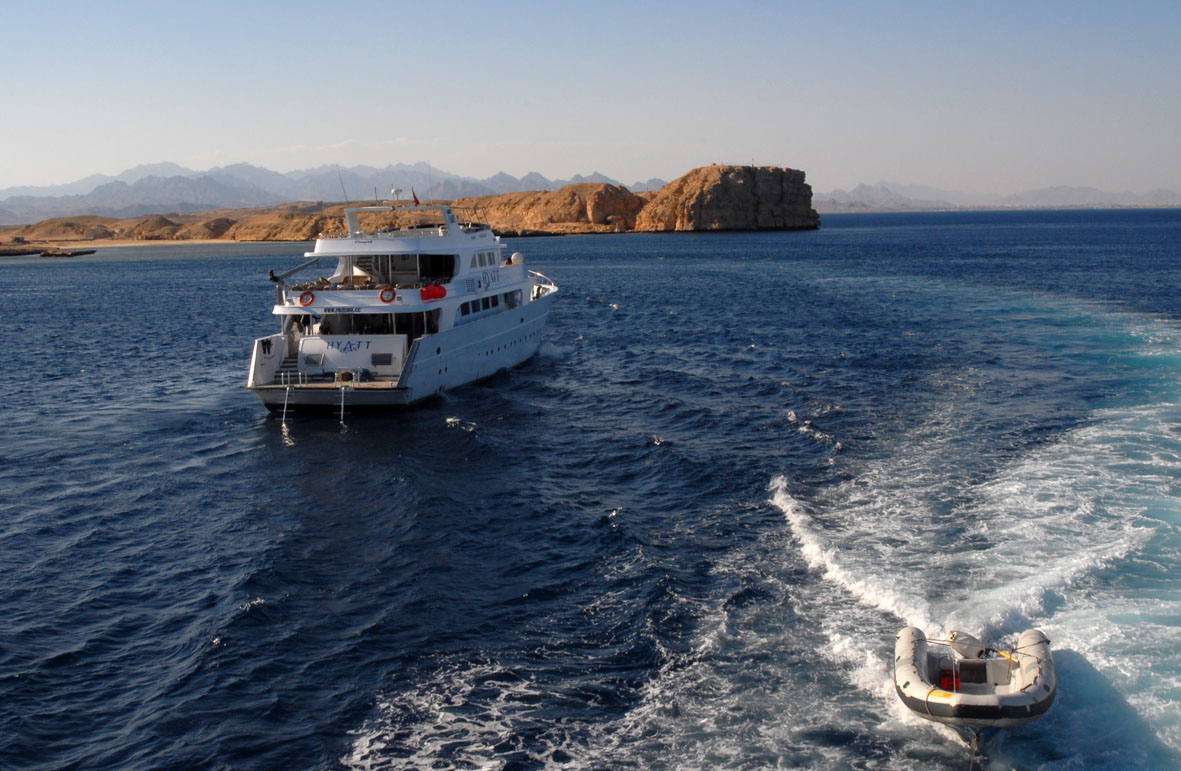
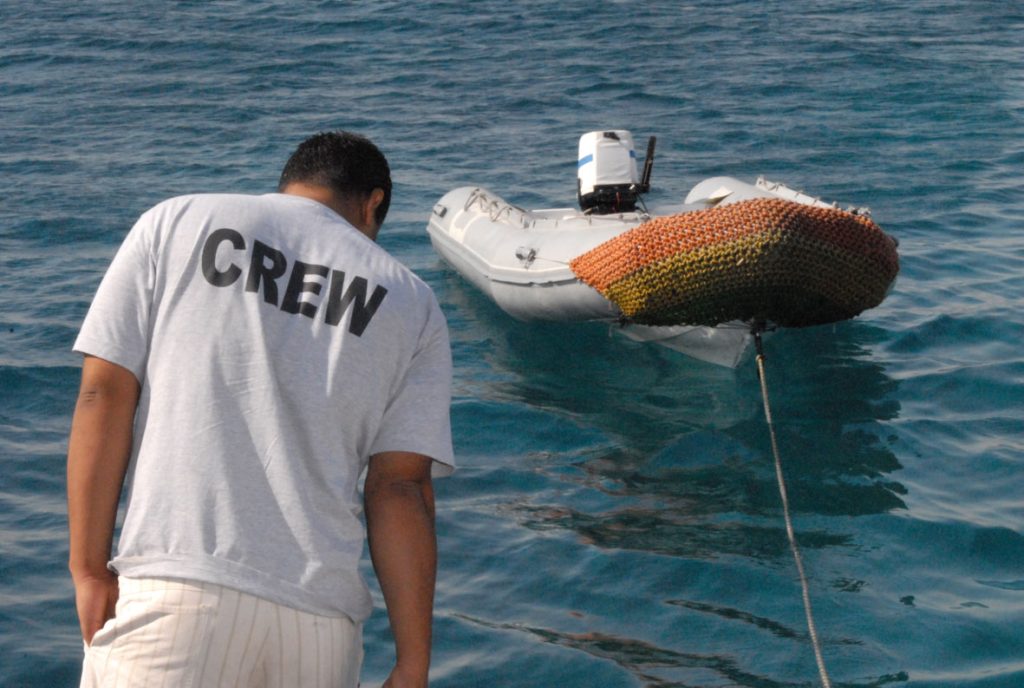
Depending on prevailing conditions and the location of safe moorings, some dive sites were accessed simply by giant striding off the dive deck, whereas for others, a couple of tenders were used for dropping and picking up divers.
North 2008
Typhoon
The Typhoon is a slightly larger vessel than the Sea Serpent although the overall experience was very comparable, with a friendly crew, good food and comprehensive dive briefs. Similarly, tenders were used for dropping and collecting divers, especially at the wrecks of Abu Nuhas.
After the dives, the crew would sometimes organise impromptu entertainment, which usually involved guests being dragged up for crash courses in Egyptian belly dancing and other amusing silliness amid lots of cheering and laughter.
THE OVERALL EXPERIENCE
South 2007
Overall, there were very few liveaboards or day boats sharing the dive sites during our visit, although the crew and some Red Sea dive veterans that we had onboard said that isn’t always the case. We even had Elphinstone to ourselves for a while until a couple of liveaboards arrived later in the day. We heard stories of fifteen boats all moored next to each other here so we considered ourselves very lucky.
As well as a good crew and the helping hand of good weather, a liveaboard experience can be enhanced or diminished by fellow divers. Although it isn’t always possible, it’s worth trying to book onto a liveaboard with like-minded divers. In our case, we shared the Sea Serpent with a group of underwater photographers, which was perfect for our requirements and style of diving.
North 2008
There’s considerable advantages to liveaboard diving from Sharm el Sheikh, even though most of the sites can be visited on day boats.
One morning that advantage became very clear; as the captain manoeuvred the Typhoon for an early morning dive at Ras Mohammed, we could see an “armada” of day boats heading down to the area from Sharm el Sheikh. Long before they reached us, we were already in the water and enjoying the dive, and thus avoided the worst of the boat traffic, and the endless processions of divers that can typify diving here.
Again, we shared the Typhoon with a group of underwater photographers, which was perfect for our requirements and style of diving. The shorter distances to travel also made for a very mellow and unhurried vibe to the week.