
An Underwater Photographers Guide
Text by Jeremy Cuff/www.ja-universe.com
Photography by Jeremy & Amanda Cuff/www.ja-universe.com
The “Big Island” of Hawaii is a fabulous place, with a great many attractions to captivate visitors. There’s the island culture, active volcanoes, endemic flora and fauna, superb trekking, a mountain top observatory, interesting local cuisine, spectacular scenery and unique diving experiences. To make the most of the diving that’s possible here, we joined the Kona Aggressor for a week that encompassed underwater volcanic topography, night encounters with manta rays and a sensational “pelagic magic” blackwater night dive….
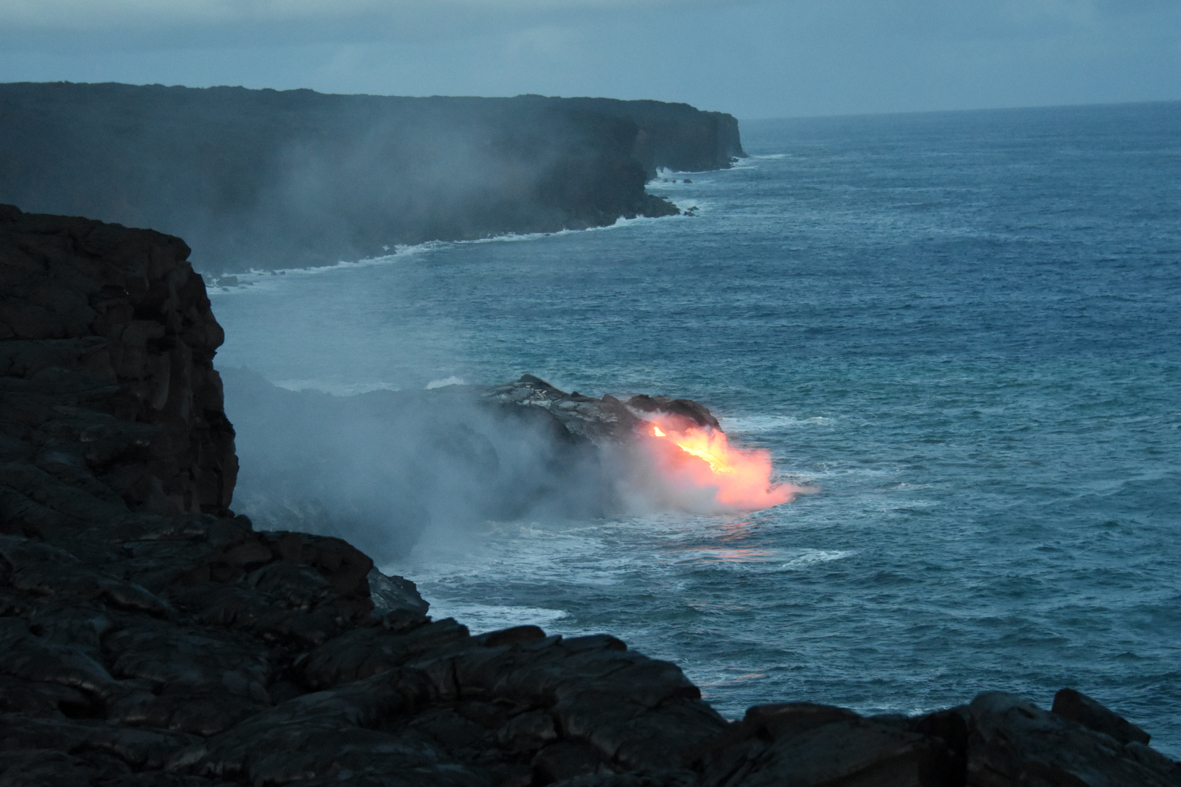
Hawaii’s “Big Island” is some of the world’s newest land. It’s geographically remote, very diverse in terms of habitat and one of most volcanically active areas in the world. In the Volcanoes National Park, Kilauea is still erupting as it has done for the last thirty or more years, and during our visit, lava flows had reached the sea again for the first time in several years downslope from the Pu’u O’o Crater.
It’s a big journey to get out there from the UK, but only two flights. We chose to get the journey over and done with in one go, changing in Los Angeles. Somewhat strangely given the entire journey time (including waiting time before and between flights), we arrived in Kona the same day we left. We planned the trip so that we had a few days in Kona before joining the liveaboard, using the time to get over any jet lag, scoot around on a hired moped, try a few of the cafes and restaurants, potter around the shops and art galleries and get in a couple of “warm up” dives prior to joining the Kona Aggressor.
Kona is pleasant town, located along a coastal strip on the western (and leeward) side of Hawaii. Occasionally, the area can experience storms and “wind reversals” but it’s relatively infrequent. For our trip, the weather was hot, clear and stable – it was a great outlook for our week ahead.
There are a number of dive centres in the main population centre of Kailua Kona offering day trips, manta night dives and “pelagic magic” trips (more of which later), but few (if any) boats regularly ply the waters of the entire Kona Coast. To get to the best and more remote areas, mostly in the south, the liveaboard is the only real option. With my wife Amanda, I had done this trip before back in 2006 as part of an underwater photography group, but this time I would be diving with our 13-year-old son Zac.
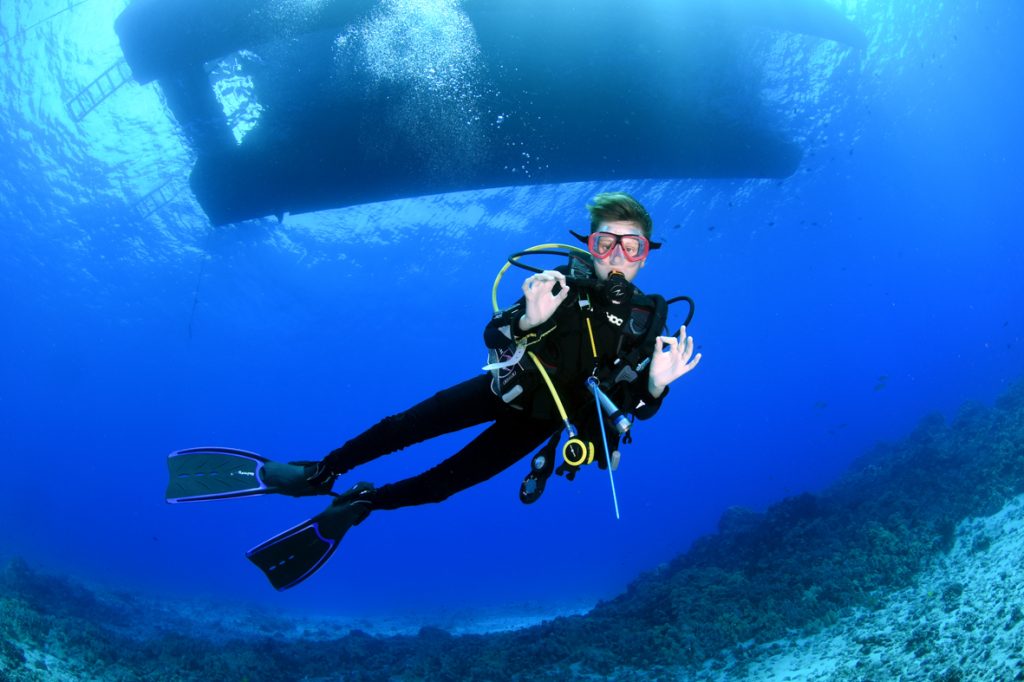
We have some great memories of times on other Aggressor Fleet boats with Zac, as previously we’ve taken him on their unique “Family Week” charters to the Cayman Islands, Belize and the Turks and Caicos Islands which he loved. This time though, as a fully qualified PADI Junior Advanced Diver, he would participate in the “grown up” version of the liveaboard experience.
As the days ticked down to boarding day, we re-packed and looked out for the boat returning from the previous weeks itinerary. Conveniently, the Aggressor bases itself from the main jetty in the central area of Kona, so once docked, we wandered along to say hello and introduce ourselves prior to boarding the following day. One of the crew (who at the time of writing has since become the captain), actually worked on the boat back in 2006, when we visited with the photographic group. Though he’d worked elsewhere between then and now, it seems that Hawaii has a way of calling you back.
The liveaboard was pretty much how I remembered it (which wasn’t a bad thing), and we were soon unpacked and setup, with our own space on the dive deck. Other than Zac and myself, the rest of the divers were from a mainland USA dive club. To get things going, the crew hosted a gathering whereby all crew and divers got a chance to introduce themselves, as well as learning about the boat’s safety procedures.
The general visibility along the Kona Coast is excellent and sometimes exceptional, though it might sometimes be affected by run off after prolonged periods of heavy rain. We had no such worries however, as the weather remained excellent throughout the duration of our trip.
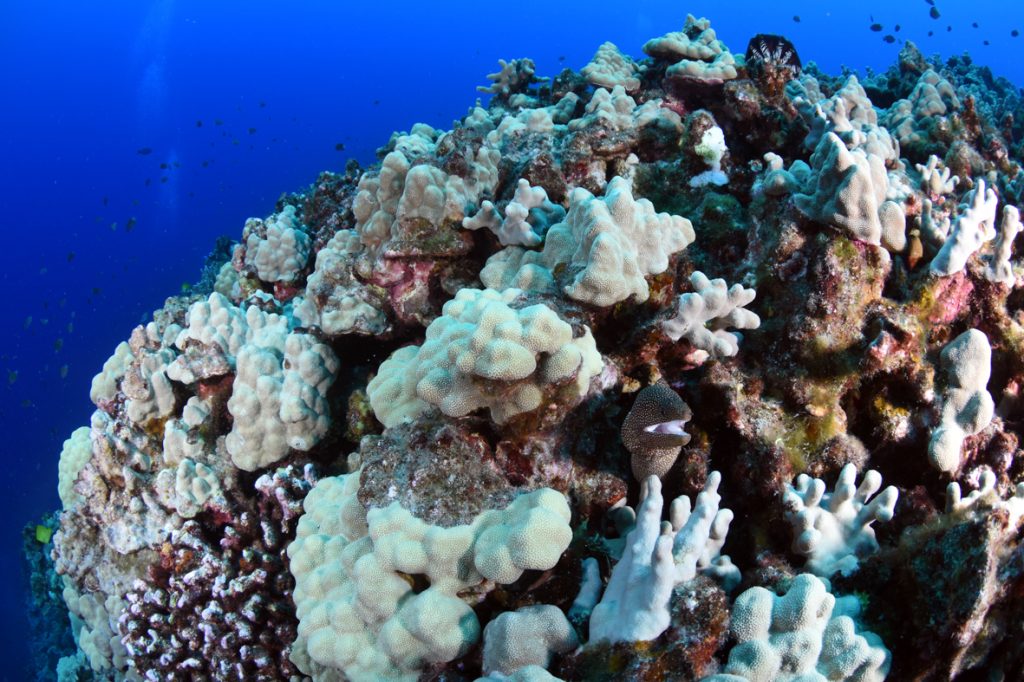
Along the Kona Coast, geologically recent lava flows are numerous, providing clues about the underwater topography we would be exploring. Instead of walls festooned with innumerable gorgonians and soft corals, we found hard coral patches, rubble slopes, dark volcanic sands, submerged craters, pinnacles, archways and lava tubes. We visited a good number of sites during the week, and travelled as far south as South Point, the southernmost point of Hawaii and the USA (that’s a lot of “souths” in one sentence!).
First up was Lion’s Den, which offered a good opportunity for spotting the Hawaiian species of Lionfish in easy conditions, making this site very conducive to a “check out” dive. Next was the excellent Rob’s Reef, where we were able to swim deep into a spectacular lava tube, which is only possible in good conditions. If there’s too much surge, which the crew will assess, it’s not a good idea to go in. We enjoyed two dives at “Rob’s”, revelling in the scenery, enhanced by the colourfully encrusted boulders in and around the lava tube, which offer great photographic potential.
“Dive day one” concluded with a visit to The Hive, a site I remembered from 2006 for its archway, a lava tube inhabited by the biggest white tip reef shark I’ve ever seen, a large frogfish and a great night dive. The archway was still intact, but when Zac and I checked out the lava tube, there was no one at home. The site must be a hotspot for frogfish, as this time we found a large pale yellow specimen. We also enjoyed our first night dive of the trip here, which though good, was trounced by the night dives that would follow.
With the trip now in full swing and our dive routines established, we ventured further south, taking in dives at The Land of Oz, Catacombs, Manuka Bay, Pohue Bay, Wall’s Wall and Black Coral Forest. Though the visibility was good for our entire trip, down south it really was crystal clear. During these dives, we enjoyed unique underwater topography, searched for endemic species, and generally enjoyed ourselves with impromptu underwater photo shoots on some of the open areas. In between dives, we would sometimes head up to the wheelhouse area and watch the brilliant aggregations of flying fish that were disturbed by the liveaboard.
On the fourth diving day, we were gradually moving north again. The chosen sites for the day were Stoney Mesa and Au Au Crater. Au Au Crater is as the name suggests, a submerged underwater crater and really is worth seeing. When all the other divers had moved off, I enjoyed getting down into the crater and shooting pictures of the “amphitheatre above”. This site is also a good area to check out strands of wire coral for the tiny gobies that make them their home. If you’re looking for something bigger, sites like this one can sometimes yield eagle rays, dolphins and perhaps even hammerheads, which are spotted from time to time.
The Aggressor Fleet has created the “Iron Diver” award for divers who participate in all available dives on a trip. Zac had decided early on that we wanted to achieve this accolade, but the repeated diving was starting to seriously mash his ears. After some discussion, we decided it best to “sit him out” for a day or two, to allow them to recover and give him a chance to do the manta night dive at the tail end of the itinerary. He was crestfallen, but accepted it was the right thing to do. And no sooner had he parked his diving, he got a gig as chef Kevin’s assistant!
After the spectacular vistas of Au Au Crater, it was time for a very different and special dive, the “pelagic magic” blackwater night dive. Ever since I’d read about and seen pictures from these dives, I wanted to do one (in fact, I had to do one) – for me, it was one of those “life list” type things. Put simply, it involves diving at night in very deep water (in this case more than 3,000 feet of water), drifting with the current. To make it safe, several weighted lines are dropped from the boat, which divers can hold or tether themselves to, though you can “free swim” provided your buoyancy is good, you don’t go too deep or stray away from the immediate area underneath the vessel.
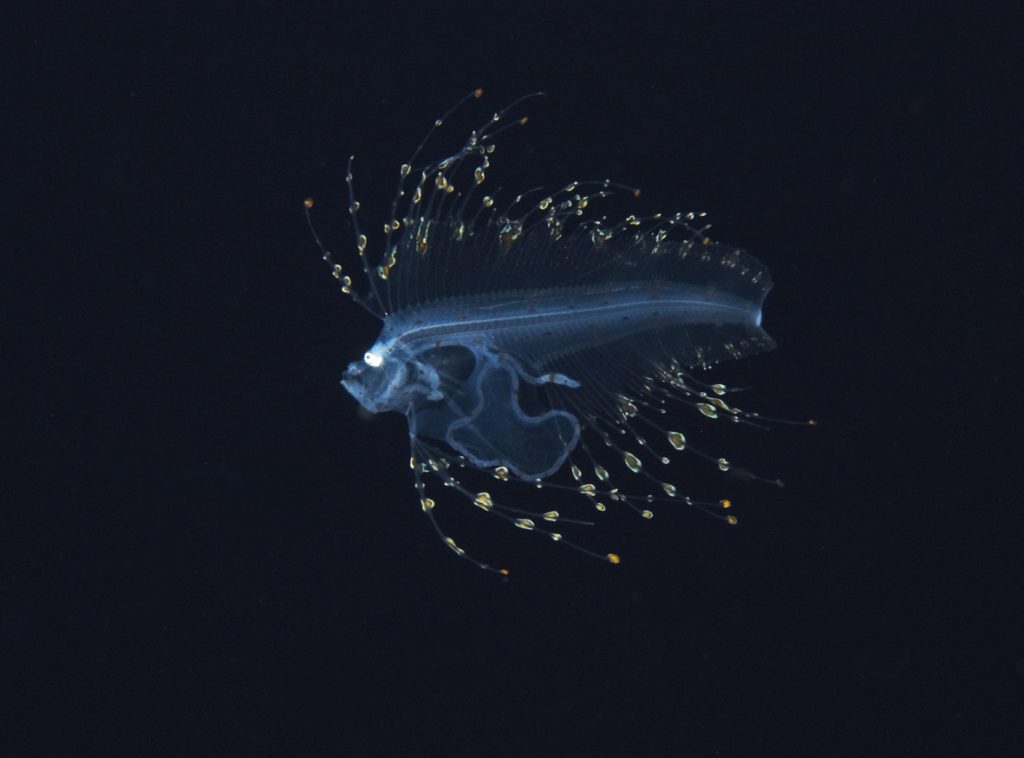
Why do this, some may ask? Well, at night, there’s a gigantic upward migration of “stuff” that lives in the deep during daylight hours, and this dive gives the opportunity to see and experience it. It’s a spectacular and somewhat edgy experience, and you’ll see some of the most weird, alien and perhaps disturbing looking life forms that it’s possible to see.
Every dive is different, and new creatures are still being seen regularly. Things that are possible include pelagic squid and octopus, pelagic seahorses (I saw one but fluffed the picture before it dropped away), larval fish and crustacea, jellyfish (including a kind of box jelly with long stinging tentacles), and a plethora of unidentified gelatinous “things” (some several feet long). You’re also briefed on the possibility of something big (and possibly unfriendly) turning up, such as an oceanic white tip shark. After the dive, we watched some dolphins hunting squid around the boat.
After the morning dives at a couple of sites including the enjoyable Paradise Pinnacle, we headed north past Kona to Garden Eel Cove, the site of Hawaii’s “signature” dive – the incredible manta ray night dive. The history of these encounters dates back to the Kona Surf Hotel (now the Sheraton) to the south of Kona where lights were installed to illuminate the water for the benefit of the guests. The lights attracted plankton, which attracted mantas, which attracted divers, who put in even more lights. This unique “symbiosis” has happened ever since, although most of the mantas “migrated” to the current site close to the airport.
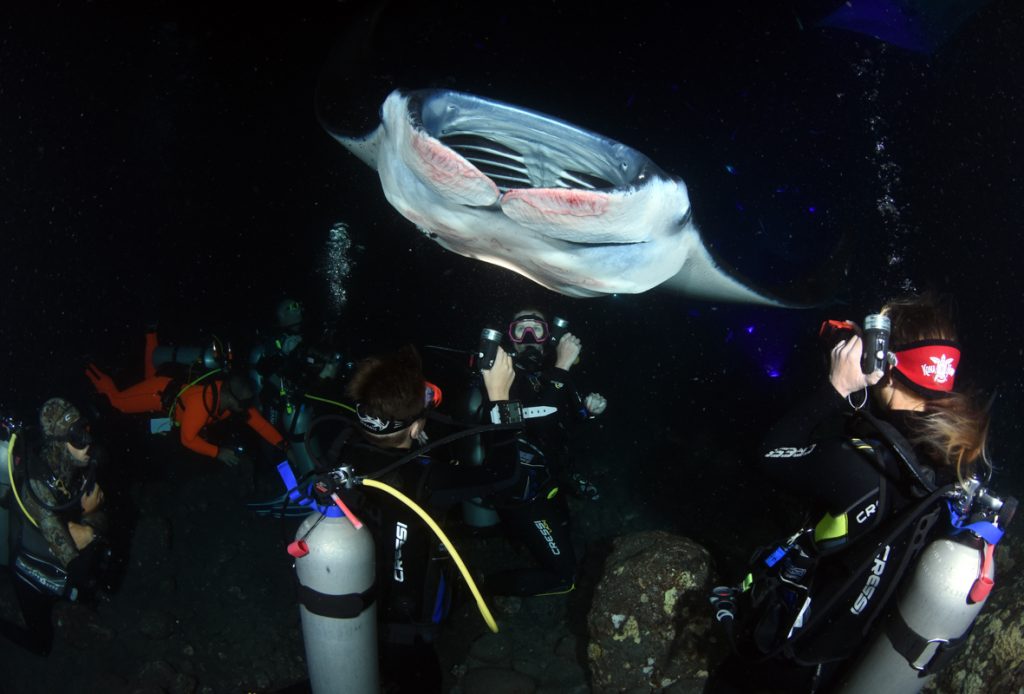
On our afternoon dive at Garden Eel Cove (aka Mantaville), we encountered a couple of gathering mantas and even had a brief buzz with a Hawaiian monk seal, one of world’s most endangered mammals. Later, as dusk descended, we surveyed the sea from the deck of the Aggressor, as a flotilla of other dive boats gathered around us. Occasionally, something would disturb the surface waters – it was the mantas. Pumped with anticipation, we were soon kitted up and in the water, finning excitedly towards the manta’s “arena” (known as the Campfire), a nondescript area of rubble and coral with submerged lights.
Usually, you’ll find mantas described as “graceful” and “peaceful” and so they are, but there’s an intensity, and perhaps even aggression about these encounters. Zac was back in the water, and we enjoyed a fantastic experience as around 20 mantas swirled in a “plankton feeding frenzy”, bumping and jostling for the best lit areas where the food was most concentrated. A truly stunning dive.
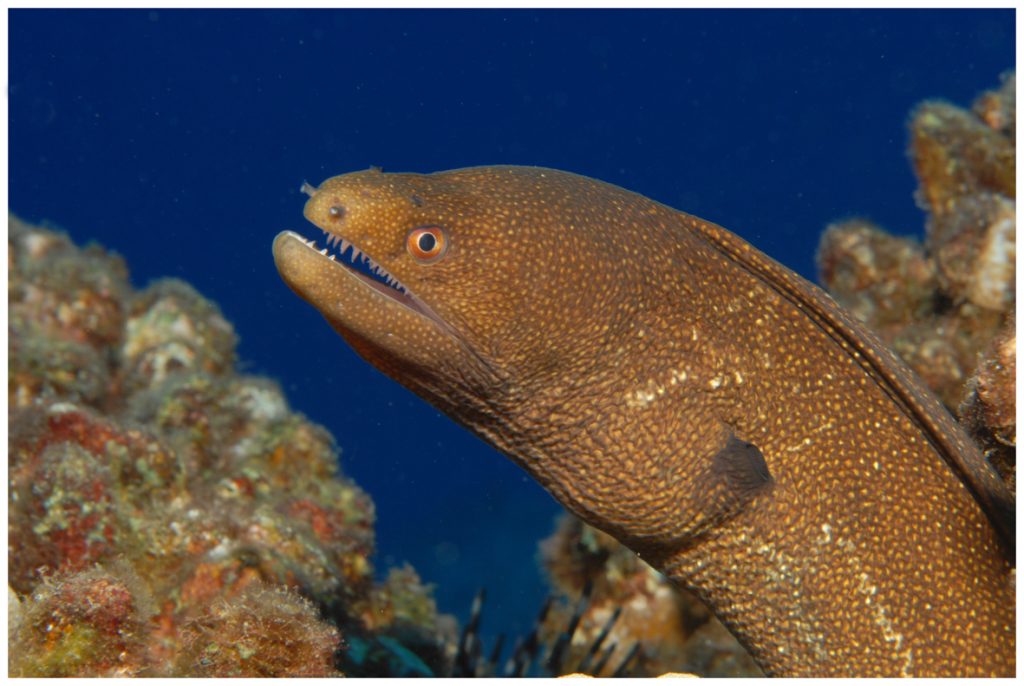
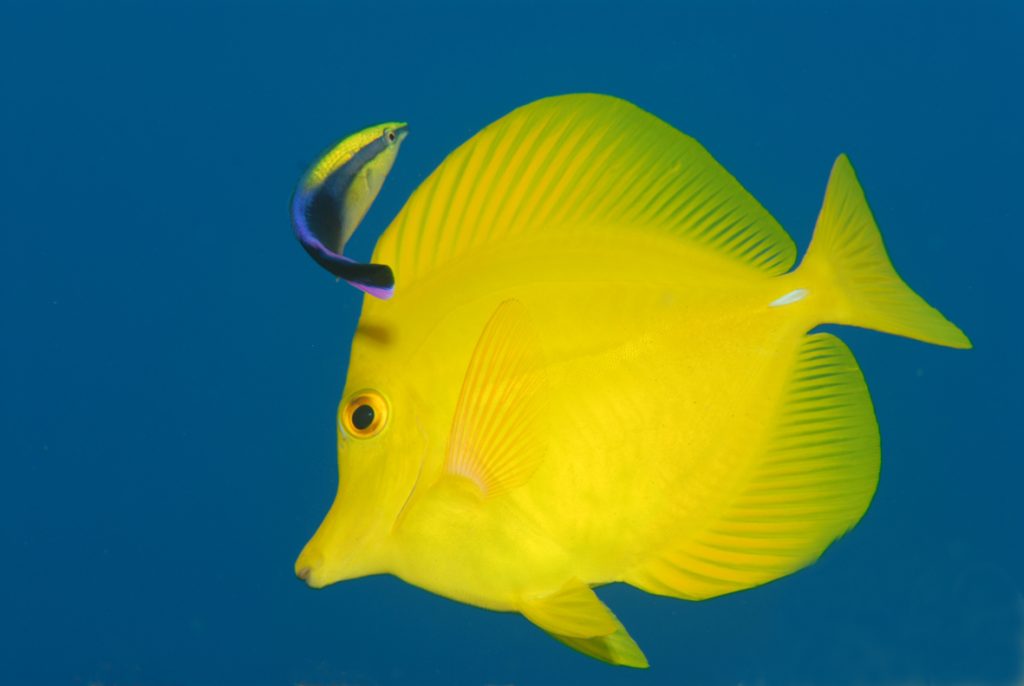
Compared with areas in the Far East, which is world’s epicentre of species diversity, the Hawaiian Islands are relatively “species poor” in terms of the sheer number of species present, but it does have a high proportion of endemics. On our Kona Coast dives, we noted turtles, wire coral gobies, frogfish, yellow tang, bluestripe snapper, arc eye hawkfish, stocky hawkfish, yellowfin goatfish, yellowmouth moray, red pencil sea urchin, guard crab, hairy yellow hermit crab, and the reef triggerfish, which is known locally as the tongue twisting humuhumunukunukuapuaa!
Other possibilities include lobsters, lionfish, lizardfish, leaf scorpionfish, day octopus, snake eel, barred wire coral shrimp, harlequin shrimp and much more. Despite best efforts, my ongoing quest for a dragon moray went unfulfilled, as this spectacular eel eluded me once more. The Hawaiian Islands known as a “hot spot” for this species, though sightings are sporadic and unreliable. One of crew, Ernie, showed us areas on sites where they’ve been spotted previously, but it wasn’t to be.
We’d had a great trip. Perhaps the lure of finding the Dragon Moray might tempt us to return one day.