
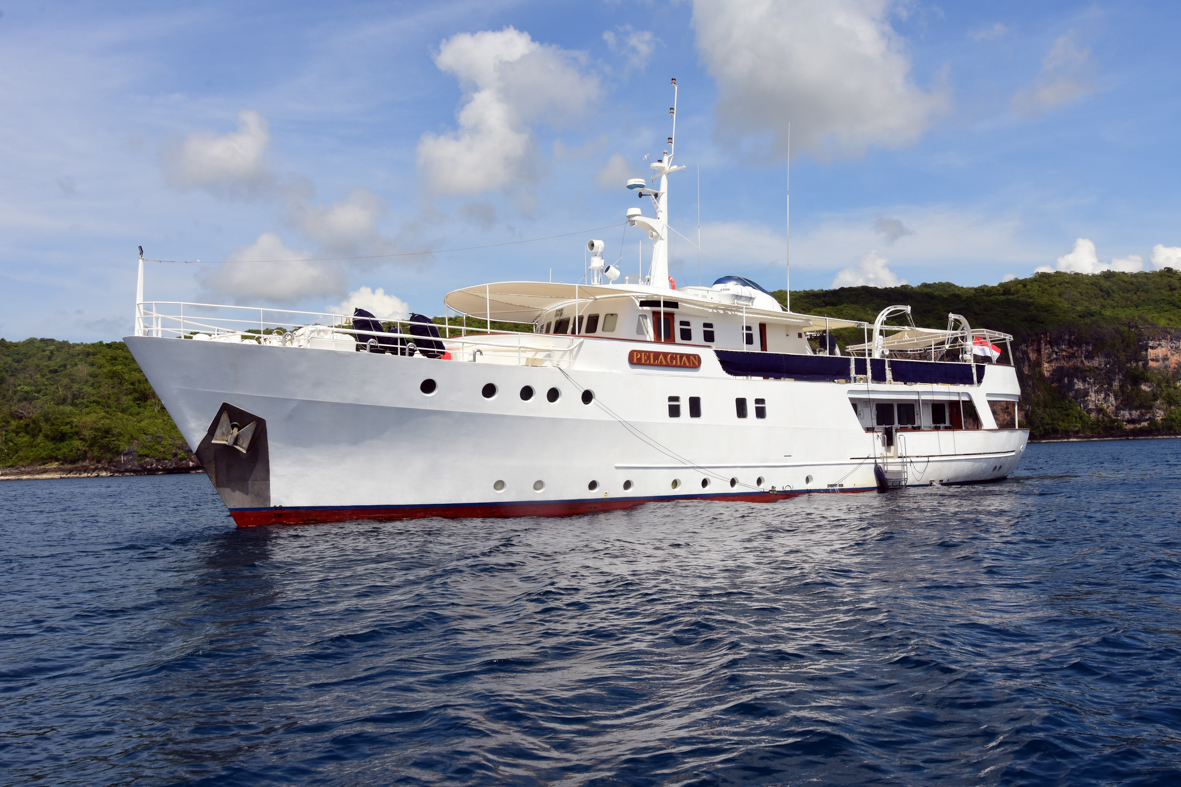
A Week Onboard The Pelagian…
Text by Jeremy Cuff/www.ja-universe.com
Photography by Jeremy & Amanda Cuff/www.ja-universe.com
The Lembeh Strait in North Sulawesi (Indonesia) is an iconic dive destination for very good reason. This narrow channel, swept by currents, Our long-awaited and much anticipated trip to Wakatobi was supposed to happen back in the period of time that became the nightmare of the Covid-19 pandemic, where lots of plans were either put on hold or cancelled. Once everything had settled down in the aftermath, we did the trip as we’d originally planned it; first, a week onboard the Pelagian Liveaboard followed by a week’s stay at the Wakatobi Dive Resort itself. Here’s an account of “Part 1” of our trip, onboard the Pelagian Liveaboard…
A visit to the remote Indonesian dive mecca of Wakatobi had been on our “must do list” for quite some time, and at some point, we just had to let it bubble up to the top of our list and make it happen. We’d had some good “intel” from some underwater photographer friends who’d visited the area pre-pandemic, and we’d also had an interesting chat with the Wakatobi representatives at one of the UK dive shows, with whom we made our initial enquiry. From there, one thing led to another and we made our booking…
As Wakatobi is a place you might only visit once (unless you’re incredibly fortunate!), we took the view that “if you’re going to do it, do it properly”. What that means in translation is that we would do both the Pelagian Liveaboard and the Wakatobi Dive Resort itself (in that order).
The logic of “liveaboard first, resort second” is a rule that we apply to any similar dive trip that we undertake, in that if one or both of us develops ear problems as a result of lots of diving, it’s better to have them on a resort later into a trip where there’s other things to do, rather than on a liveaboard. And why hammer your ears with a week or ten days of resort diving and then be unable to dive when you join a liveaboard afterwards? We met one such person in Wakatobi who’d done exactly that, having no option but to sit out all of the diving offered on the Pelagian. He must have been gutted, and let’s not forget, liveaboards aren’t exactly paid for out of small change.
For the journey out there, we flew direct from London to Singapore followed by an onward connection to Denpasar in Bali where we stayed a couple of nights at the airport hotel to rest up (it’s surprisingly good). To get to Wakatobi itself, one has no option but to travel to Bali, from where all guests join a charter flight direct to the island.
Though of course it’s possible to stay anywhere in Bali depending on available time, it’s highly convenient to stay at the airport hotel the evening before, as the Wakatobi charter flights also leave from Denpasar’s main airport immediately adjacent, so you can walk a short distance into the terminal from where the Wakatobi representatives will meet you and get you checked in. They even provide you with a dedicated lounge with a selection of snacks and drinks. It’s all very easy, pleasant and straightforward.
The flight from Bali to Wakatobi is about 2.5 hours, and if the weather is clear, passengers will get spectacular views enroute of volcanoes, islands of all shapes and sizes, and numerous reef systems. Upon arrival, you are transferred either to the resort or in our case, to the Pelagian liveaboard. As you’re travelling into a remote area with little significant infrastructure, you will also share the charter flight with some of the supplies needed to feed and look after the guests.
The Wakatobi Dive Resort (and place of embarkation for the Pelagian Liveaboard) is located within the Wakatobi National Park, which covers a large area to the Southeast of Sulawesi. The national park was designated in 2002 and includes a variety of marine habitats including coral reefs, mangroves, sandy expanses and sea grass “meadows”.
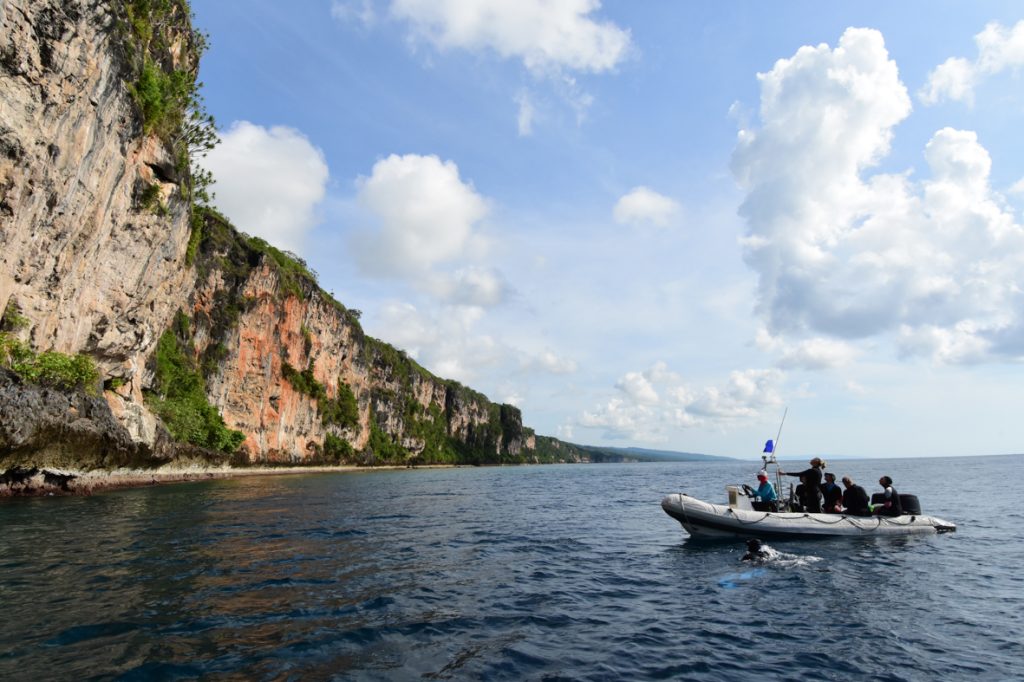
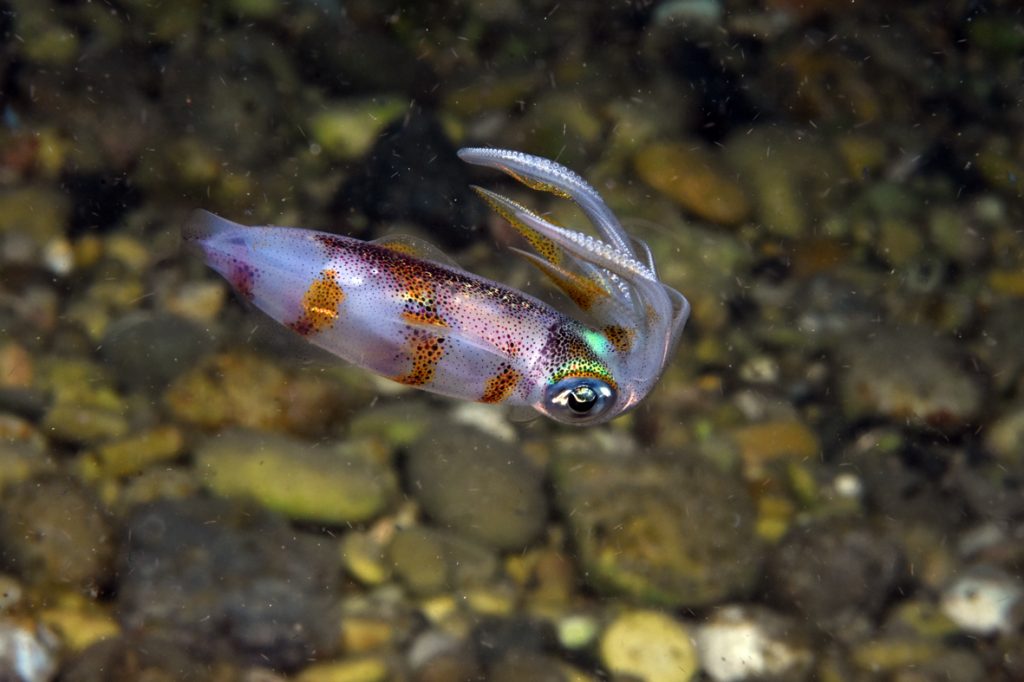
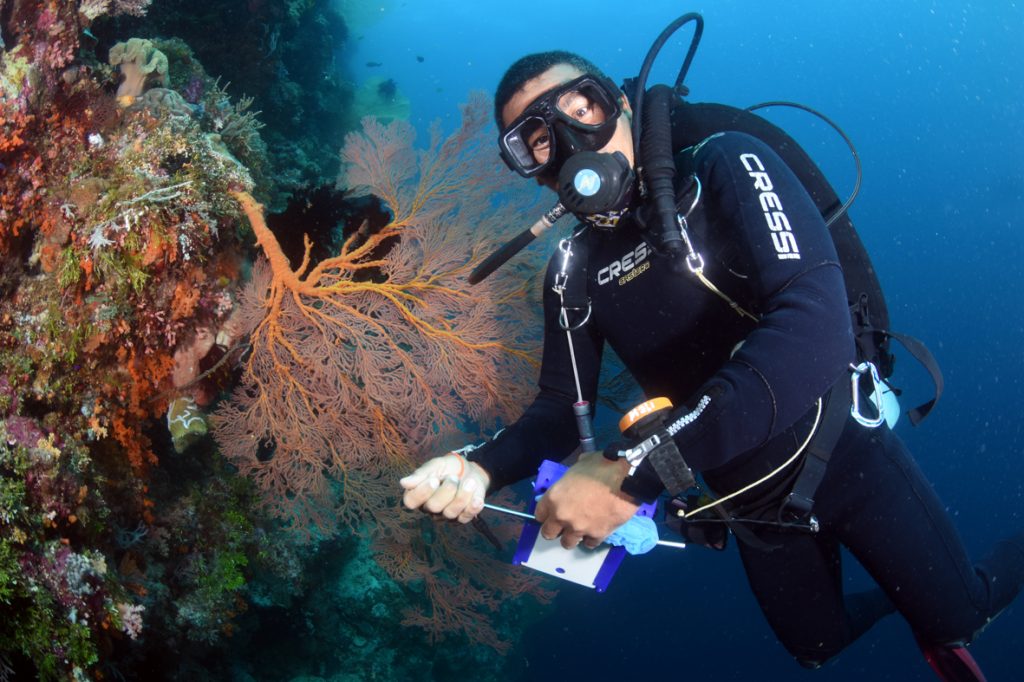
The story behind the entire Wakatobi dive operation is an interesting one as quoted from their website; “…built from scratch, we generate our own power and our own fresh water; we built our own airstrip to make us easily accessible (previously an overland and local ferry trek of several days was required to get here). An unseen logistics operation coordinates guests’ transfers to and from Bali, the bringing in of food and supplies, such that our guests often forget that they are totally ‘off the grid’. And we continue to develop our infrastructure to give added facilities and convenience to our guests.”
“A vital part of our ‘infrastructure’ is of course the coral reefs. We have set in place extensive conservation efforts including the creation of a unique reef-lease conservation program to protect and enhance the coral reefs for the long term benefit of the island and its communities.”
It’s quite an exclusive and (I would say) privileged experience to join the Pelagian Liveaboard in that it takes a maximum of 10 guests per sailing, and on our trip, it had only 8 guests due to one couple having to cancel for some unknown reason. It is the only liveaboard operating regularly in this remote area, so guests will have opportunity to dive areas that are seldom visited.
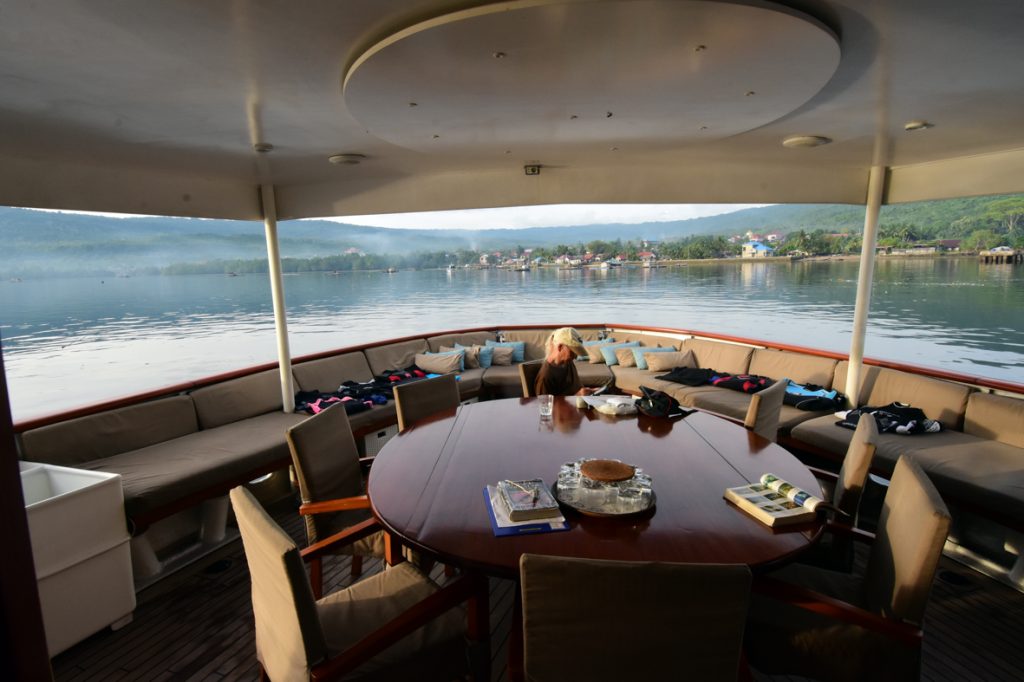
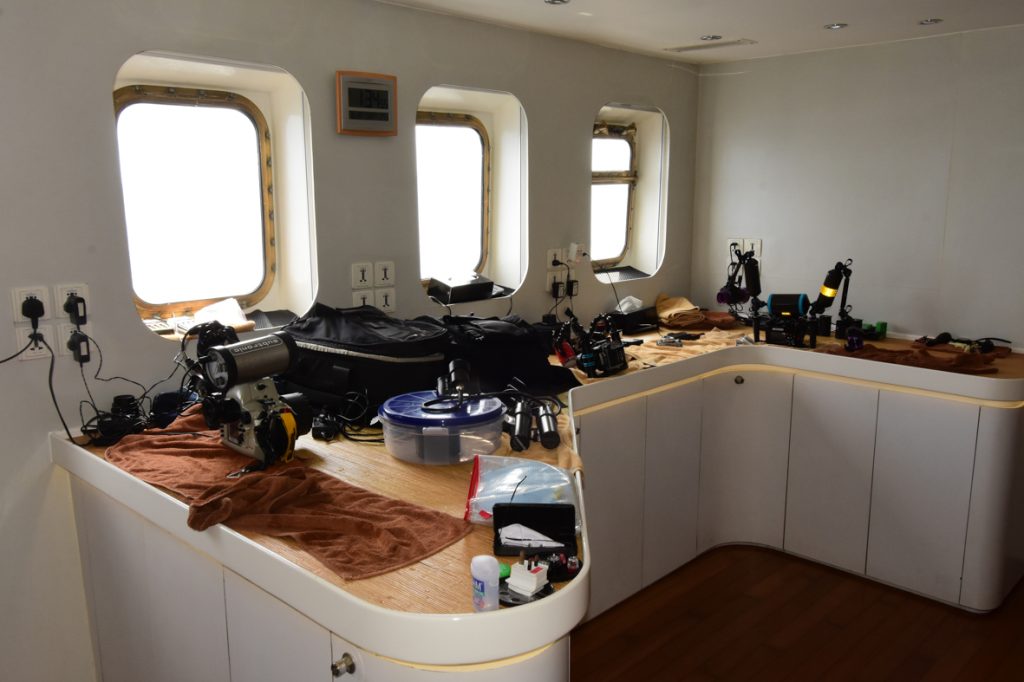
It was great to be finally joining the boat after our long Covid affected wait. Our first impressions were incredibly positive and things continued to be positive for the entire trip; the crew were friendly and welcoming, our room was excellent (spacious with lots of floor space and a great shower), there was a good camera room and comfortable, well-kept communal areas.
In advance of our trip, we were asked about any dietary requirements we needed, which we duly gave; Amanda is a vegetarian and I’m a pescatarian, so it was good to know we’d be fully catered for (which they did with aplomb). At all times, you could tell that the crew took a great pride in their vessel and were eager to provide a high-end dive experience for their fortunate guests.
For myself, an “alarm bell” had started to ring from when we were still in Bali in that I felt slightly bunged up, though the first check out dive and the first full day of diving went without any issues, until I joined the first night dive where I struggled to equalise. It turned out that I’d picked up a heavy cold and sinus infection, so I’d have to battle through the diving in a less-than-ideal circumstance during the entire trip. Somehow I managed to participate in most of the dives. And for sure the laid-back luxury offered by the boat and crew helped things a lot for me as the week unfolded.
Our Pelagian itinerary began with a dive close to the Wakatobi resort itself at Waiti’i Corner, giving everyone a chance to get settled in and understand the layout and “rhythms” of life onboard (all diving is conducted from a pair of tenders). I remember thinking it nice to see a few sea snakes as we drifted slowly along the reef wall on that initial immersion.
The main body of the itinerary visits further flung reef sites not frequented by the resort-based day boats, followed by a visit to sites around Buton Island. After Buton, the Pelagian heads to sites around other islands in the Wakatobi island group (sometimes known as the Tukangbesi) before returning to the resort. Jacques Cousteau is said have described the general area around Wakatobi as “underwater nirvana”.
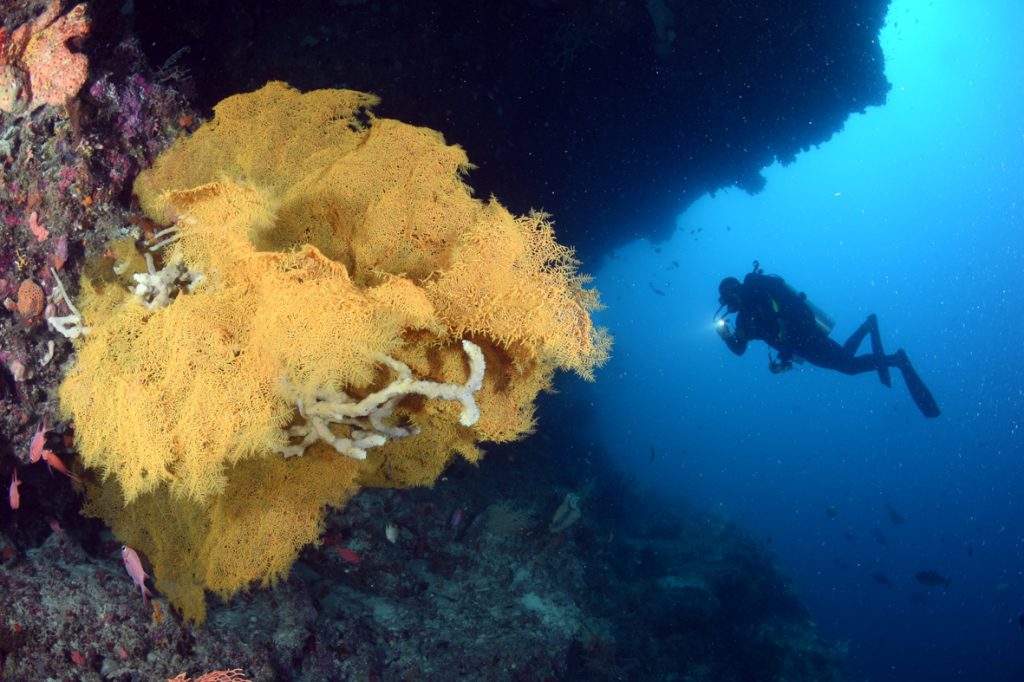
As a general statement, the diving around Wakatobi is predominantly reef and wall diving, where you’ll see a superabundance of corals, sponges and other assorted reef growth in massive profusion. That said, there’s a great deal of variety and difference from one site to the next, so it’s worth participating in as many dives as possible.
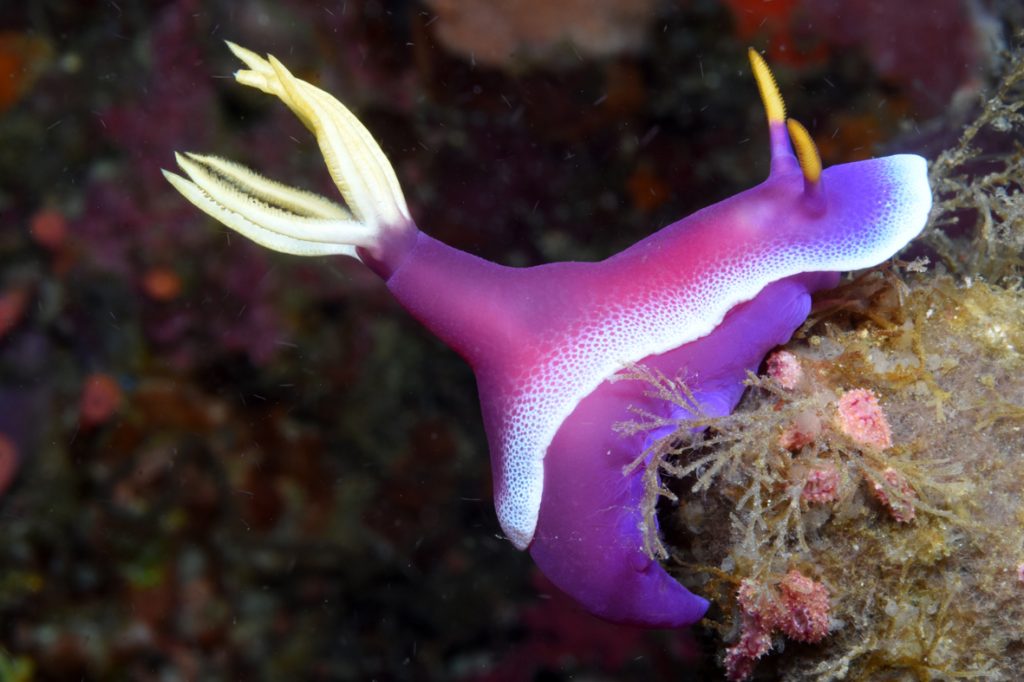
You’re also likely to experience some drift dives at some sites, as strong currents regularly sweep through the channels between the reefs and islands. On those types of dives, you can expect to see turtles and pelagics, and closer in (and if you’re not being swept past at speed!) there’s scorpionfish, lionfish, crocodilefish, sea snakes, crustacea, cephalopods, Pygmy Seahorses, Pontohi Pygmy Seahorses and many species of nudibranch to look out for. The excellent dive guides have great knowledge and spotting ability, so it’s good to ask them if there’s something specific you’re wanting to see or photograph.
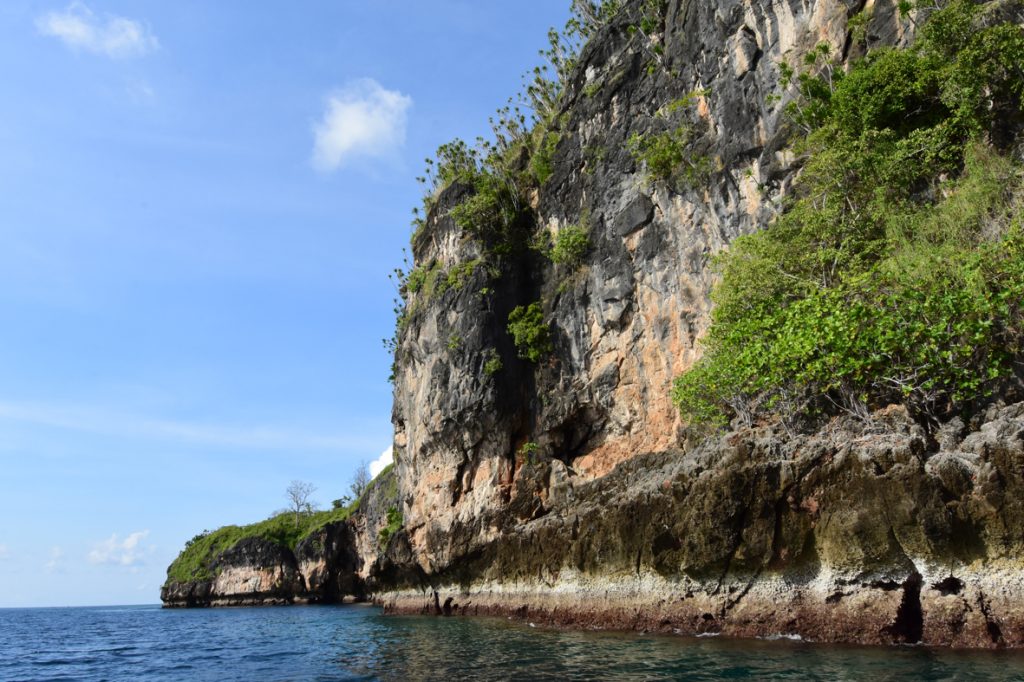
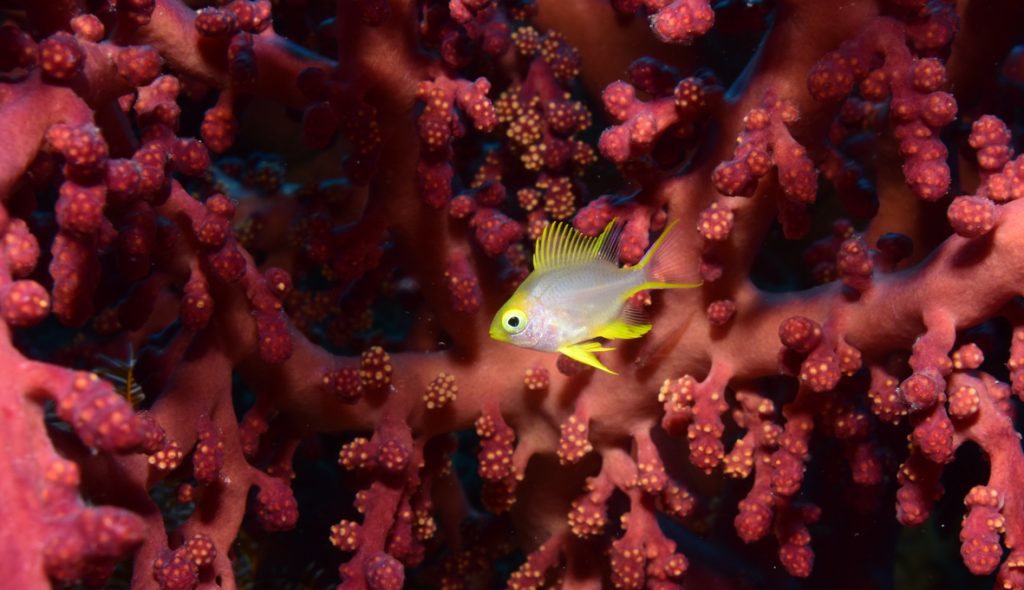
For us, the pinnacle of the trip were at locations around Buton Island, starting with a site beneath the cliffs on the Southeast that isn’t always possible to visit if there’s too much swell, which renders safe diving too difficult. We were lucky to get a chance to dive it; a coral slope followed by a drop off and large overhangs. The conditions were ideal for our visit.
After our visit to the undercliff site, we headed to Pasarwejo, an extensive bay with a variety of dive sites. It’s best known for the excellent “muck diving” at spots such as Cheeky Beach and In Between where all manner of encounters with the weird and wonderful are possible on the volcanic sand expanses.
During our muck dives we found species of cuttlefish, frogfish, ghost pipefish, Ambon scorpionfish, Coleman’s urchin shrimp, Mantis Shrimp and impressive seahorses, with our most amazing encounter being a mating pair of Wonderpus, an incredibly rare sighting. The night dives on these sites are also really worthwhile, when different critters such as hermit crabs, Long Armed Octopus and lionfish are more active. I can remember surfacing under a starry sky in flat calm waters to the sound of the call to prayer from the mosque in the nearby settlement. Evocative stuff!
Also within Pasarwejo Bay are some jetties, where fascinating encounters are possible, with the best of all being Magic Pier, which in reality is a sad looking stone jetty with lots of boulders beneath that have inadvertently created one of best sites on the planet for seeing Mandarin Fish, even though you have to be careful thanks to proliferations of sea urchins and other things that could cause you harm (hydroids, scorpionfish, stonefish etc). It’s also great site for large aggregations of razorfish (shrimpfish), and for spying octopus, cuttlefish, flounders and pipefish on the sands close by.
As the conditions were perfect in the bay, and given the abundance of sightings we were getting, the Cruise Director asked the guests whether we’d like to stay for an additional day rather than head back to the reef and wall dive sites. It was put to a vote, and with all divers in agreement, we enjoyed additional dives in this special area.
For the final days of the itinerary, we dived a selection of excellent reefs and drop offs among the Wakatobi island group, all within the marine national park. Sites we visited included Vatican (sometimes known as Roma Reef), Fishmarket Pinnacle, Kampenaune, Neptune Gardens and Kaledupa Wall, though there are many other spots that are possible to dive, and may be chosen by the Captain depending on the precise time of year and prevailing conditions. But it seems not to matter where you go, they’re all really worthwhile.
So how was it overall? To be honest, we really enjoyed it; the standards of accommodation and service onboard were top notch, the food was excellent, and the diving was interesting, varied and memorable. Trips like this aren’t cheap, so in order to feel value for money, it really has to be good. Which it was.
And so, after a week onboard the Pelagian and with very punished ears thanks to my cold and sinus infection, we returned to the Wakatobi Dive Resort where we’d booked a further week for some resort-based diving. I’ll talk about that in “Part 2” of our Wakatobi visit in the next edition…