
Text by Jeremy Cuff/www.ja-universe.com
Photography by Jeremy & Amanda Cuff/www.ja-universe.com
The remote Socorro Islands are also known as the tongue twisting Revillagigedo Islands and are sometimes referred to as “Mexico’s Galapagos”. They’re located on Mexico’s Pacific side, some 250 miles due south of the tip of the Baja California peninsula. You could describe the action packed diving as simply sensational…
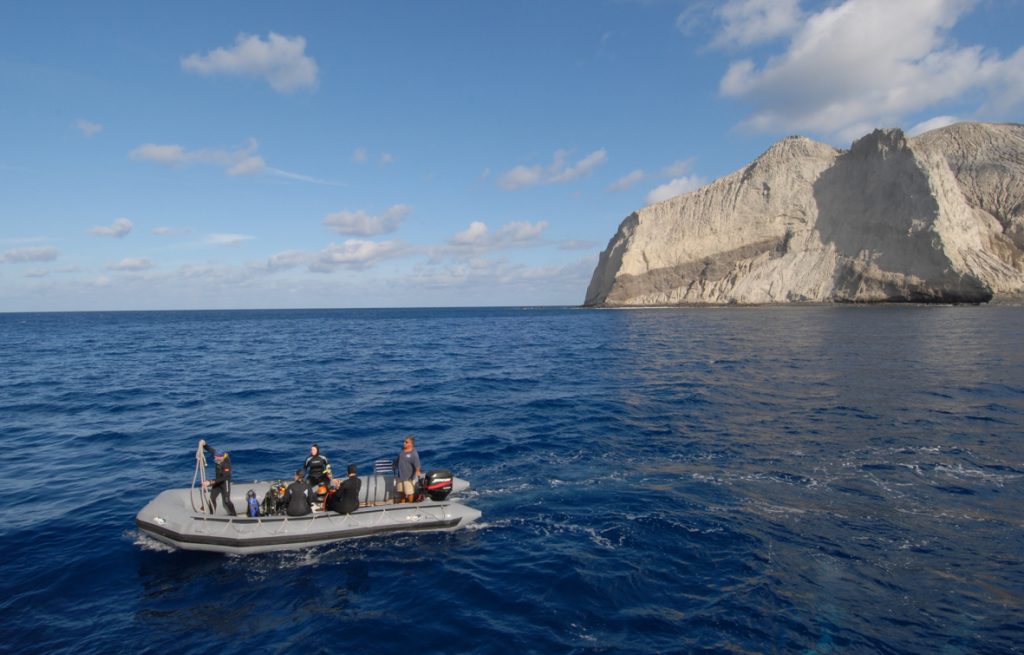
The Socorro Archipelago is made up of four islands; San Benedicto, Socorro, Roca Partida and Clarion, of which the first three are possible to visit. They’re volcanic in origin, with last recorded activity at San Benedicto dating back to the 1950’s, and on the larger Socorro Island, as recently as the early 90’s.
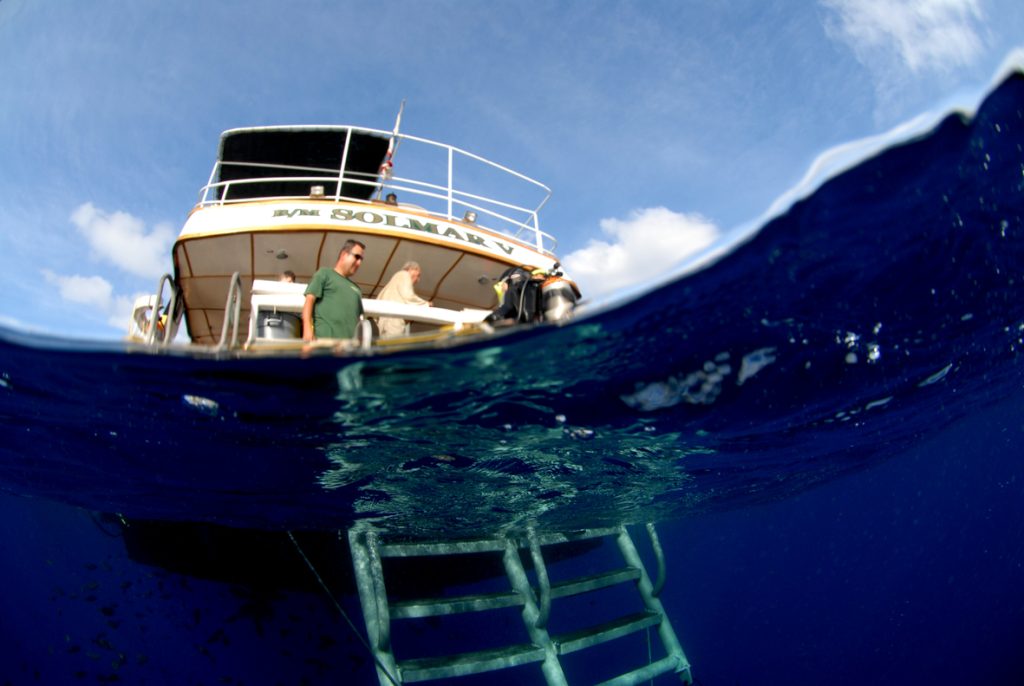
The area is very remote and it’s a full 24 hour voyage south to the nearest island of San Benedicto from the departure point of Cabo San Lucas at the tip of the Baja California peninsula. To get there, I travelled on the excellent Solmar V liveaboard, which visits the area during the “Socorro season” which lasts from the end of October through to the end of May.
The Solmar V has a long track record of visiting the area, with an established and experienced crew who know the area well. The exact dive sites to be visited cannot be known in advance, as the prevailing conditions dictate the itinerary. However, the general plan is something like this; to start at San Benedicto for a late afternoon “try dive” followed by a full day, then moving to Socorro Island for a day before moving off to the Roca Partida seamount for two days. After Roca Partida, it’s a return to San Benedicto for another full days diving before the long return journey north.
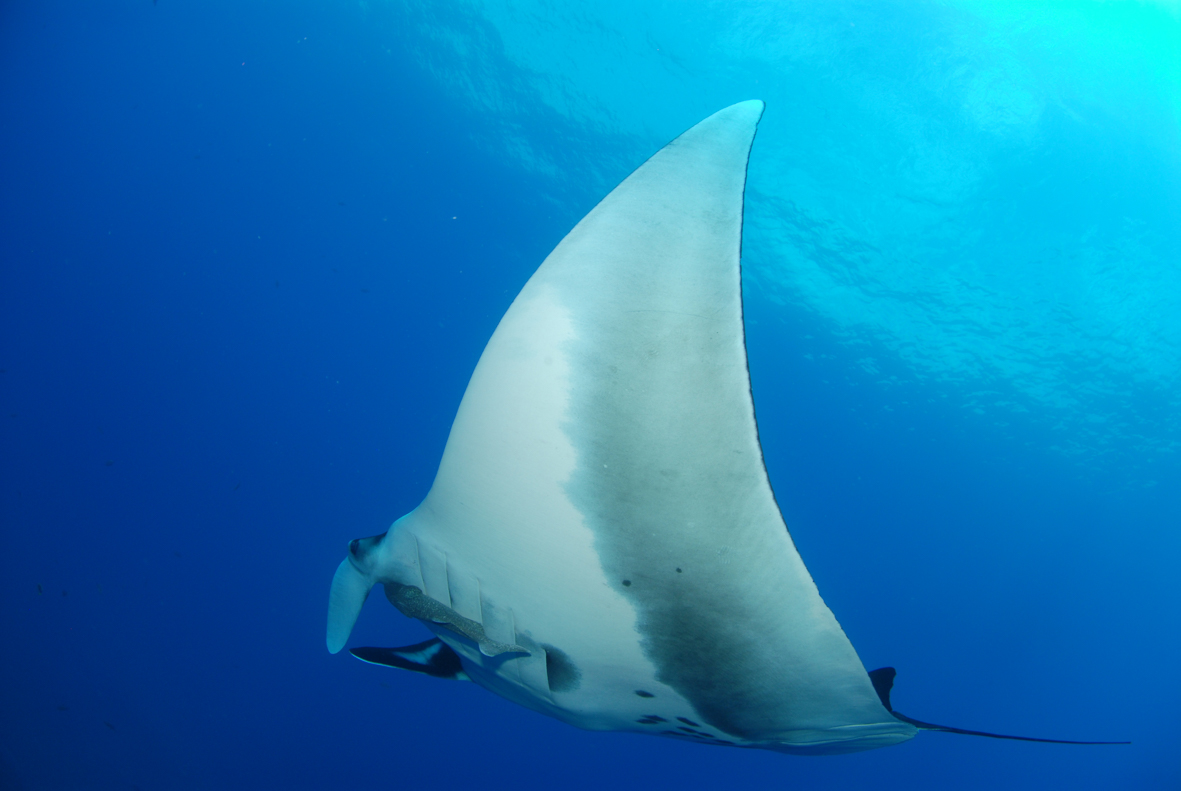
Although nothing can be “guaranteed” in diving, the trip itinerary talks of encounters with some “big stuff” such as Giant Pacific Mantas (familiar with divers) and a true “sharkfest” that includes Hammerheads, White Tips, Silver Tips, Silky Sharks, Galapagos Sharks, Duskies and the possibility of Tiger Sharks and even Whale Sharks.
The area is also known for Mobula Rays (related to Mantas, but smaller and with a different mouth), Bottlenose Dolphin, Wahoo, schools ofJacks and Tuna, Bonitos and even Marlin. Whales are represented by Humpbacks in season, and sporadic encounters are possible with other species, often in the open ocean crossings between islands or en route to and from Cabo San Lucas.
The journey out was quite bumpy, even though the Solmar V is quite stable in the water, but to everyone’s delight the weather improved as we headed further south and would remain good for the entire trip.
As we approached San Benedicto, dolphins joined us for the final push to the first dive site, riding the bow wave of the Solmar V as seabirds such as boobies and frigatebirds swooped past for a closer look. It’s an inhospitable place unless you’re a seabird; isolated and desolate and with little foliage, but we were glad to get there.
Our late afternoon arrival allowed time for a “check out dive” at the El Fondeadero site. It was a chance to get that all important “dive routine” in place, do buoyancy checks and get a taste of the diving to come. We were soon acquainting ourselves with the ubiquitous and unafraid Mexican Hogfish, Flag Cabrilla (a kind of grouper) and the endemic Clarion Angelfish, each of which we would see on most dives in the Socorros. Scorpionfish, moray eels and flounders were also spotted, and close to the anchor line, our first manta swept past before cruising back into the blue.
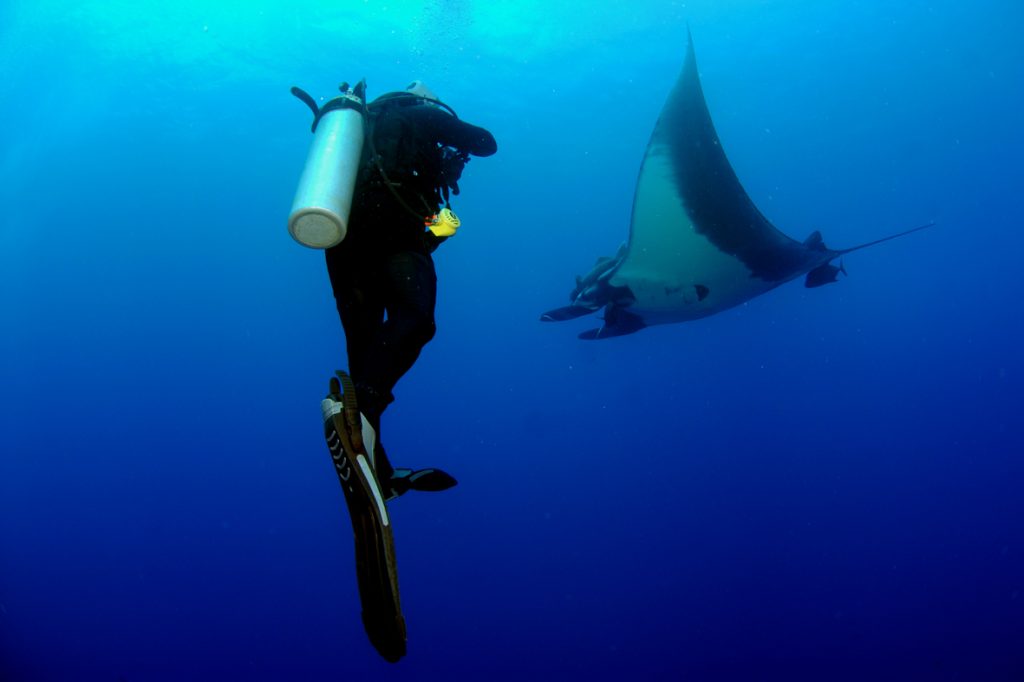
Next day, the captain had originally planned a visit to Boiler, a site known for mantas and other “big action”, but there was too much swell, so had to go for El Canyon on the south of the island instead, which was more sheltered. This site is also renowned for shark and manta encounters and so it proved, with the mantas being the stars of the show throughout the four dives that we did there. They seemed “interested” in the divers and granted us with several close “fly pasts”. It’s thought that they like the sensation of diver’s bubbles.
We also glimpsed a few Scalloped Hammerheads (my first!) lurking in the deep on the edge of visibility and also a Tiger Shark was also encountered by some divers, though it vanished at the prospect of its privacy being invaded, not to be seen again. Overall, a great first day.
After San Benedicto, it was off to the larger Socorro Island for the next day’s adventure, with two dives at Cabo Pearce and two dives at the Aquarium site.
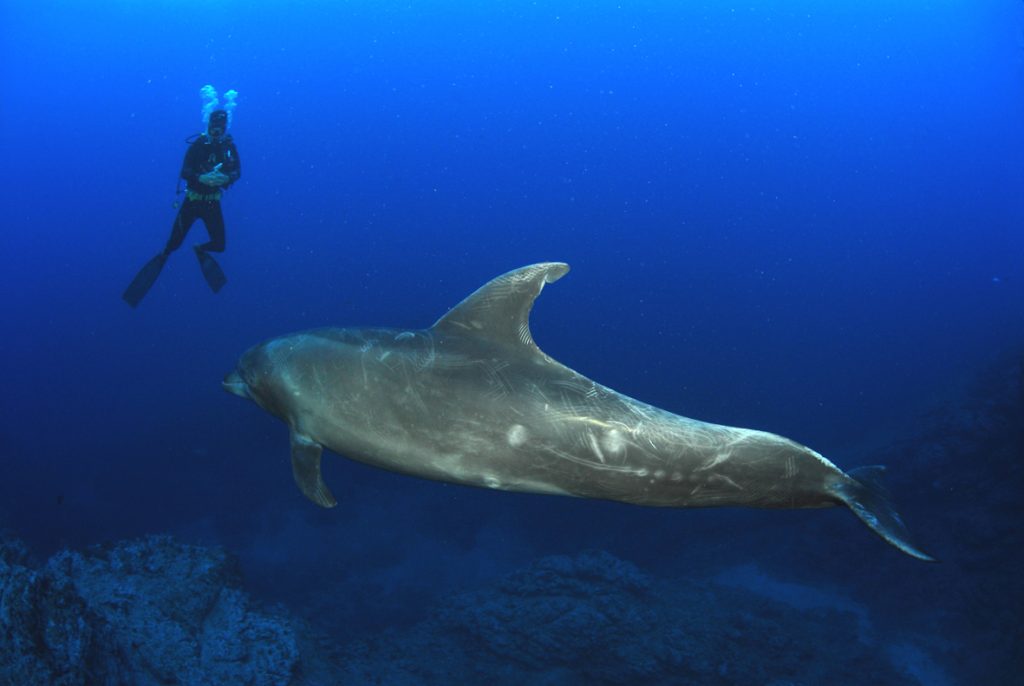
Cabo Pearce is another site known for encounters with the “big stuff”. It’s a rocky outcrop that protrudes from the island into the ocean and is often swept by currents. We had a brief encounter, perhaps lasting a minute or so with a dolphin before getting back to the excellent manta action we had already become accustomed to from our dives the previous day. Both dives here yielded more manta encounters including an impressive black specimen (mostly black with a few patches of white). Other sightings included a distant turtle, more Scalloped Hammerheads in the deep, plus some White Tip Reef Sharks.
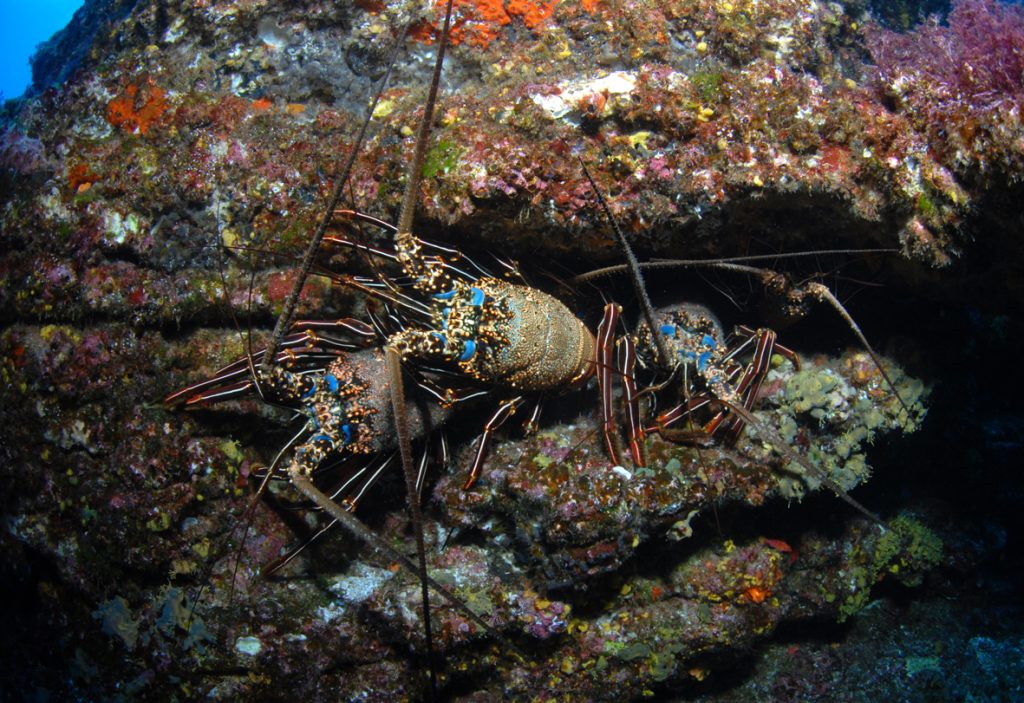
In the afternoon, after the mandatory passport checks by the Mexican military outpost, we were able to move to the Aquarium site where octopus, lobsters, Red-tailed Triggerfish, Giant Hawkfish and the ever present trio of Clarion Angelfish, Mexican Hogfish and Flag Cabrilla were abundant. The site can also deliver bigger things, with a lone Silvertip shark filling that category nicely.
Overnight, we headed to Roca Partida, a remote seamount with no other land for some 60 or 70 miles. You need good weather to go there, as there’s no shelter and it’s the kind of place where diving dreams can be fulfilled.
On the first dive at “the rock”, as I scrambled to get my camera from the boatman (or “Pangero”) after a backwards roll into the water, Rey blurted excitedly “Jeremy, quick get the camera, sharks!”
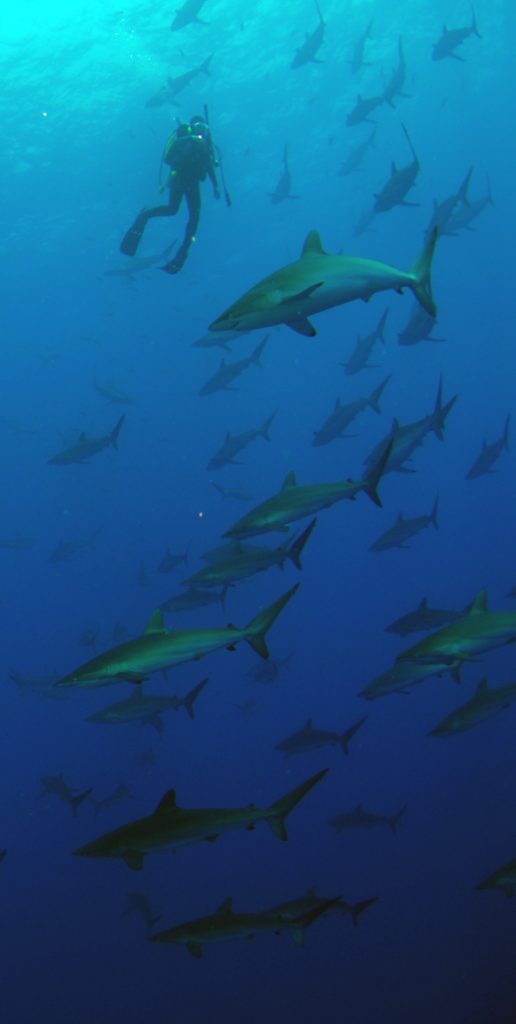
This dive was a real stroke of luck; we’d been dropped into the path of huge school of Silky Sharks, possibly numbering a thousand individuals. The school moved quickly, forming and reforming in a swirling vortex as divers kicked hard into the blue to get as close to the action as possible. We also noticed that a few dolphins joined the fray too. It was an incredible sight and is often referred to in the diving community as “shark wallpaper”. “You don’t see that everyday”, remarked one diver with more than a touch of understatement.
The crew of the Solmar V, including Rey (a veteran of 9 years experience of diving these remote volcanic isles) and marine biologist Eric couldn’t contain their enthusiasm for what we had witnessed. It was the most sharks that they’d ever seen in a single dive.
As alluded to, it’s an increasingly rare spectacle in today’s impoverished seas, with many species of sharks now scarce, threatened or even critically endangered thanks to massive overfishing on a global scale. The Socorros are a designated conservation area and offers hope that healthy marine ecosystems can remain viable (or recover viability) given the right protection.
But that isn’t it at Roca Partida; on other dives Scalloped Hammerheads and Galapagos Sharks swirled and roiled in the deep below us, well out of range of safe diving and photography, but possible to see. I was told that on some occasions, they can sometimes be seen at shallower depths.
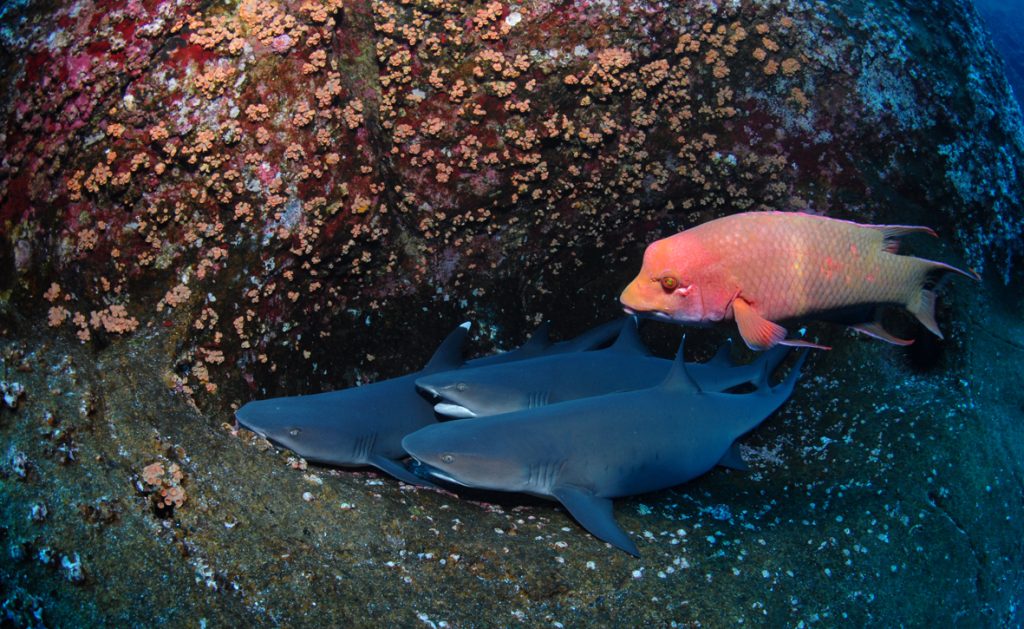
Roca Partida is also a “world’s best address” for White Tip Reef Sharks (or “great white tips” as they were amusingly renamed on the boat). It really is a fantastic place to observe and photograph these sharks, which can often be found snuggling together on the numerous ledges. I found that if I edged towards them slowly, they would sometimes tolerate a close approach. This was a real opportunity for me, as I’ve never managed to get good images of white tips until this trip – usually you can get “so near, but so far”. It was also thought that many of the females were heavily pregnant.
Other splendid sights out on “the rock” included schooling jacks, tuna and bonitos and a lone mobula ray out in the blue. Other wandering leviathans such as mantas and whale sharks are also encountered on occasions.
It’s possible to swim around the whole of Roca Partida in one dive, and if you spend time close to the wall, you’ll notice that it’s cut by many vertical cracks and crevices, each of which seems to be home to a large green moray eel and sometimes several. It’s also worth keeping a look out for lobsters and octopus, with several divers reporting an octopus attempting to devour an inflated pufferfish!
With two great days of diving at Roca Partida, it was time to head back to San Benedicto for the final day of diving before the long voyage back to civilization.
The Boiler site was diveable this time and is known as “the” site for mantas. We saw them on each dive sure enough, but they seemed less tolerant of us on the day we spent there compared with a few days earlier at El Canyon where they were more interested and curious. That said, if the mantas happen to be shy, there’s plenty of other attractions including sharks.
For me, the style of diving different on this trip made a refreshing change. Instead of staying close to the reef or wall like I often do, we spent a lot of time hanging out in the blue, watching and waiting for pelagic action. The visibility was generally good although it can vary tremendously, often from dive to dive, with currents changeable as well. None of the dive sites are what you would call “pretty” in a Red Sea kind of way as it’s mostly rubble strewn and rocky with scattered hard corals, similar in some respects to Hawaii. It’s what swims past that makes it so worthwhile.
In between dives, the crew organised trips on the inflatables (pangas) along the rugged shorelines of San Benedicto and Socorro Island which are worth doing. The cliffs, sea stacks, lava fields and archways don’t look especially high until you get underneath them but when you do, you finally get to true scale of nature’s “work in progress”.
On the return journey to Cabo San Lucas, the captain slowed the boat as he’d seen something – it was a whale. Although I won’t go on the record as confirming the identity of the mystery cetacean as we didn’t get close enough to be sure, the general view was that we’d seen a blue whale, the largest animal ever to live and now extremely rare. Someone amusing exclaimed, “Wow, I can’t believe it, now we’ve seen a (expletive deleted) blue whale!”
Our trip was considered to be one of the best of the season, where we were offered a glimpse into a bygone era, of seas teeming with life in all its brutal beauty. For divers looking for a different kind of experience, that of remoteness and distance from overcrowded and over dived resorts, this trip must surely be a major contender. It’s a truly great diving adventure.
Stopping Over: How About Mexico City?
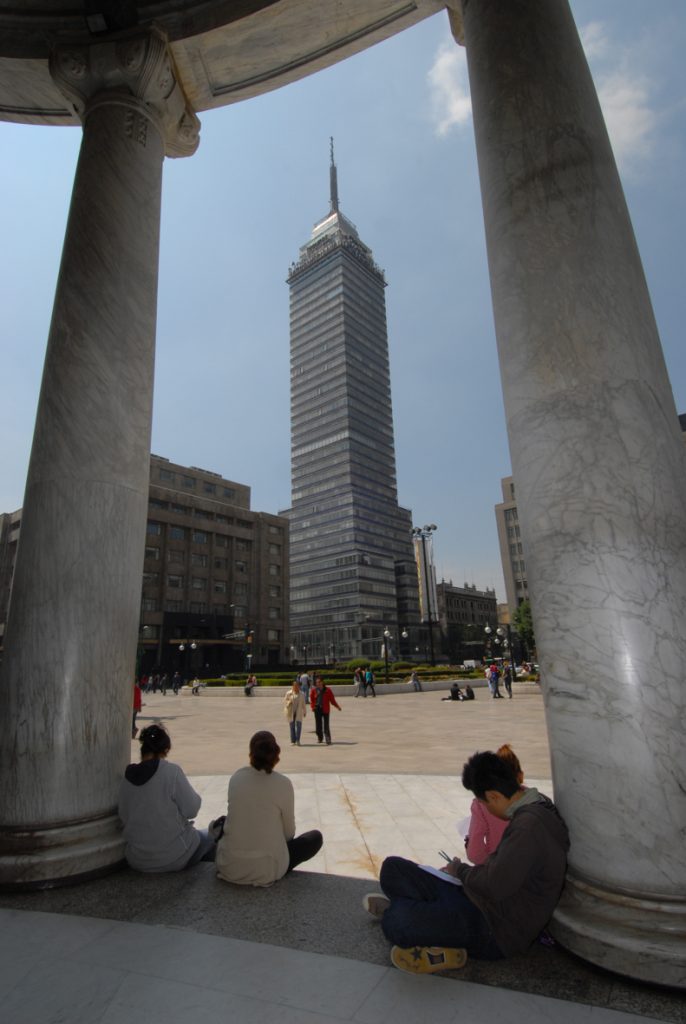
It’s a long journey from the UK to Cabo San Lucas at the southernmost tip of Baja California peninsula, departure point for the Solmar V. It’s a good idea to break up the journey, so I chose to stopover in Mexico City…
Mexico City ranks as one of the world’s largest cities, well inside the top 10 of most listings that I found by searching the internet for “worlds largest cities”. It’s widely thought that the official headcount of between 17-20 million is underestimated and I was told it could be as much as 25 million!
Sitting in a natural “bowl”, it’s quite a sight to behold as you fly in, with countless homes clinging to the slopes and hills on the outskirts, with the central area located within the flatter basin.
Though it might not be an obvious choice for some travellers, there’s certainly enough to keep visitors occupied and interested. In the two full days that I spent there, I was able to visit the Palace of Fine Arts, the House of Tiles, Zocalo (the main square with the Cathedral and Government Buildings), the ruins of Templo Mayor and the accompanying museum with displays of Aztec treasures and artefacts, the elevated Chapultepec Castle with good city views and nearby Chapultepec Park with its eccentric entertainers. In the evening, I visited the Coyoacan district, known for its restaurants, craft market and generally pleasant ambience.
Outside the city, I visited the impressive Teotihuacan Pyramid complex where it’s possible to climb to the top of the Sun Pyramid, and part way up the smaller Moon Pyramid.
The entire area is also geologically active with several volcanoes nearby and the possibility of tremors and earthquakes. It makes quite a contrast to spend time there when compared to the remoteness of the Socorro Islands.