
Text by Jeremy Cuff/www.ja-universe.com
Photography by Jeremy & Amanda Cuff/www.ja-universe.com
Dive liveaboards provide that perfect opportunity to get completely immersed into the diving lifestyle, if only for a week, where you literally dive, eat, relax and sleep. Previously, we’d enjoyed the Cayman and Belize Aggressor’s Family Weeks with our son Zac, as well as travelling on several other liveaboards including the Kona Aggressor in Hawaii. The success of our previous Caribbean trips was instrumental in attracting us to the Turks and Caicos Islands, again onboard an Aggressor Fleet vessel. It was our passport to another dive adventure…
It’s always been preferable not to go straight from a plane onto a liveaboard after a long journey (having tried it a couple of times), so we were glad of a couple of days to “rest up” after our trans-Atlantic flight. This gave us a chance to get onto “local time”, check out a few of the shops, bars and eateries of Providenciales, and have a couple of wanders along Grace Bay, dipping our toes in the calm turquoise shallows.
Like our aforementioned Cayman and Belize trips, this charter was also one of the Aggressor Fleet’s “family weeks”, unique in that children of six years or older are welcomed onboard. The family week itinerary is based on the normal “grown-ups” trip, but with a few subtle tweaks to make it more “child friendly” both onboard and in the water. The difference this time was that Zac (aged eleven at the time of the trip) had achieved his PADI Junior Open Water Diving certification, so he could do some of the dives with us as a “real” diver.
We arrived early at the Turtle Cove Marina to meet the boat and settled into the nearby Tiki Bar for conch fritters and fish sliders whilst we waited for the time to board. Having regularly checked out the Aggressor Fleet’s website on the lead up to the trip (the “Meet the Crew” and “Captain’s Log” sections), we were fairly certain that Lowel, one of the crew who looked after us on our 2009 Cayman trip and who Zac especially remembered would be onboard.
The excitement of seeing the Aggressor moored up, getting cleaned, stocked and ready for our week was too much for Zac, so we wandered over to see who was about and to his delight, Lowel was there. After all the divers he must have seen since our Cayman trip (when Zac was only six), it was nice that he remembered us, despite Zac having grown a lot in the several years that had passed. He would say to Zac later in the trip “we’re reunited and it feels good.”
Once onboard, we were able to meet the rest of the crew and get checked into our cabin. We found them to be a great bunch of enthusiastic dive professionals captained by Amanda Smith from the UK. During the week, Amanda and the crew would provide endless enthusiasm to the visiting divers – not that we needed the “enthusiasm bit” as we’d had plenty of that anyway, but it’s always good.
We found the boat very similar to the Cayman and Belize Aggressors, so the routines of liveaboard life soon came back to us. And as with all liveaboards, it has its own unique quirks and onboard highlights such as abundant crisps and a “promise fulfilled” of endless orio biscuits!
Somehow, despite many years of diving in all sorts of places, Amanda and I had managed to avoid doing a Nitrox course, but it was suggested that if there’s a good place to do it, it would be onboard the liveaboard here in the Turks and Caicos Islands.
The reason for the recommendation was the topography of many of the dive sites, where the reef tends to start deeper than in other locations, sometimes at a depth of 12 or even 15 meters. Repeated dives like this would make any air breathers very tight and marginal on bottom time (especially as the week progressed) unless we wanted to spend lots of time anxiously watching computers in the mid-water whilst others remained happily exploring the reefs. We decided to do the course whilst onboard, and found it very helpful for the diving we encountered.
With the safety briefings, introductions and diving overview done, we could start the trip in earnest. Captain Amanda confirmed that the weather outlook looked good for the week, and that we would be able to do the planned itinerary. So, with everyone onboard and eager to get started, she navigated carefully out of Turtle Cove (a very tight exit and entry for a vessel as large as the Aggressor) and into Grace Bay for the check-out dive at a site called Pinnacles.
Amanda and I set off on our own to explore the reef slopes and to get back into “diver and underwater photographer mode” while Zac would do his first dive of the trip with Lowel in the shallower parts of the reef. Later in the dive, we found them on the reef top following a turtle (they later said they had two with them at one point), all OK signs and underwater smiles. Zac looked very happy and comfortable on the dive – it was a nice start to the week.
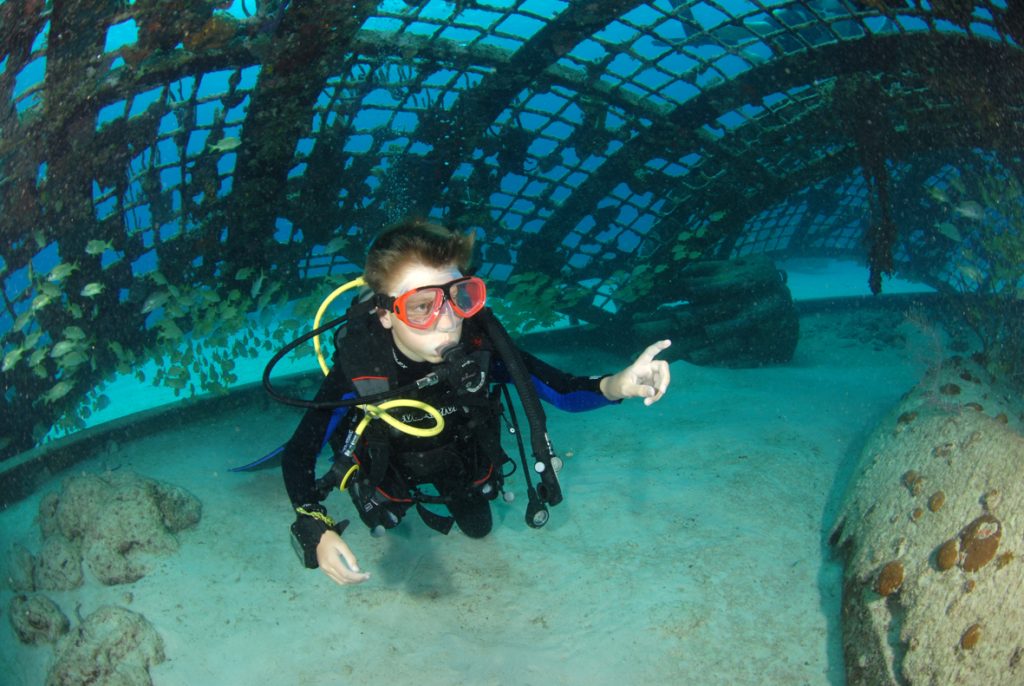
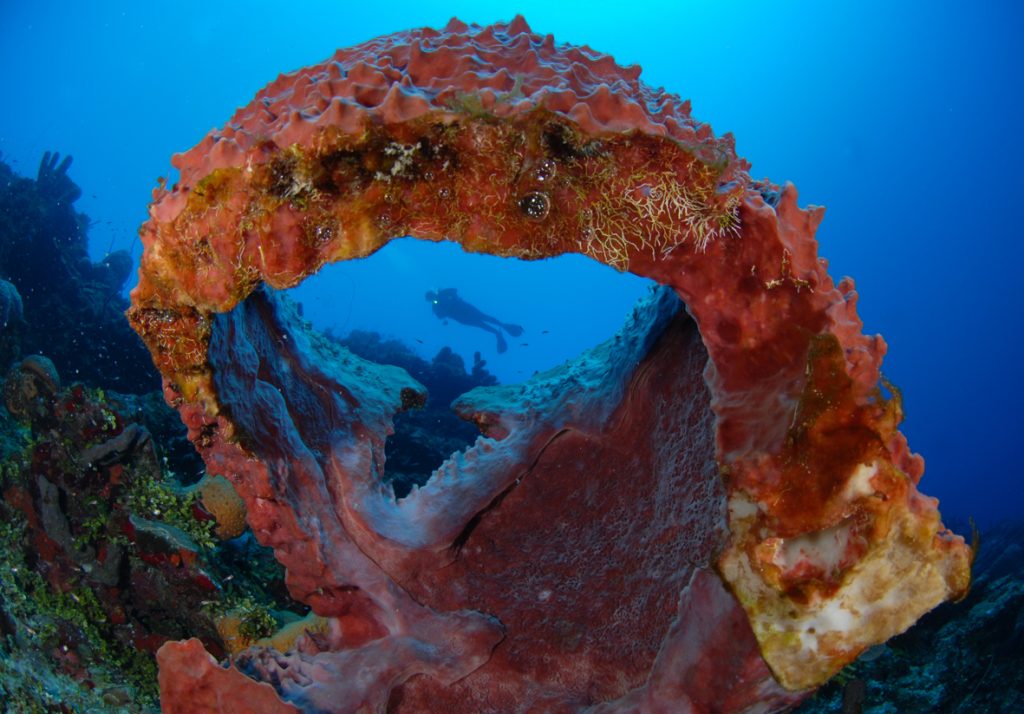
Next, we headed to Northwest Point, to dive the Thunderdome (often called just “the Dome” locally) and Chimney sites, which are popular with day boats though we thankfully had them all to ourselves.
Once the site of some daft French television quiz show (apparently called Escape from Pago Pago Island in case you wanted to know!), the remains of the Thunderdome provide an excellent “wreck” dive in easy conditions. It’s very photogenic to keep the photographers happy, it’s got plenty of life living on and around it, there’s little or no current and it’s great for “new divers” like Zac who really enjoyed going under the most intact part of the structure to see the resident school of snappers up close. After a later dive at Chimney, we returned to the “dome” for an excellent night dive, with Rob (crewmember and Captain Amanda’s husband) using a “black light” to show everyone that Lizardfish fluoresce under these conditions.
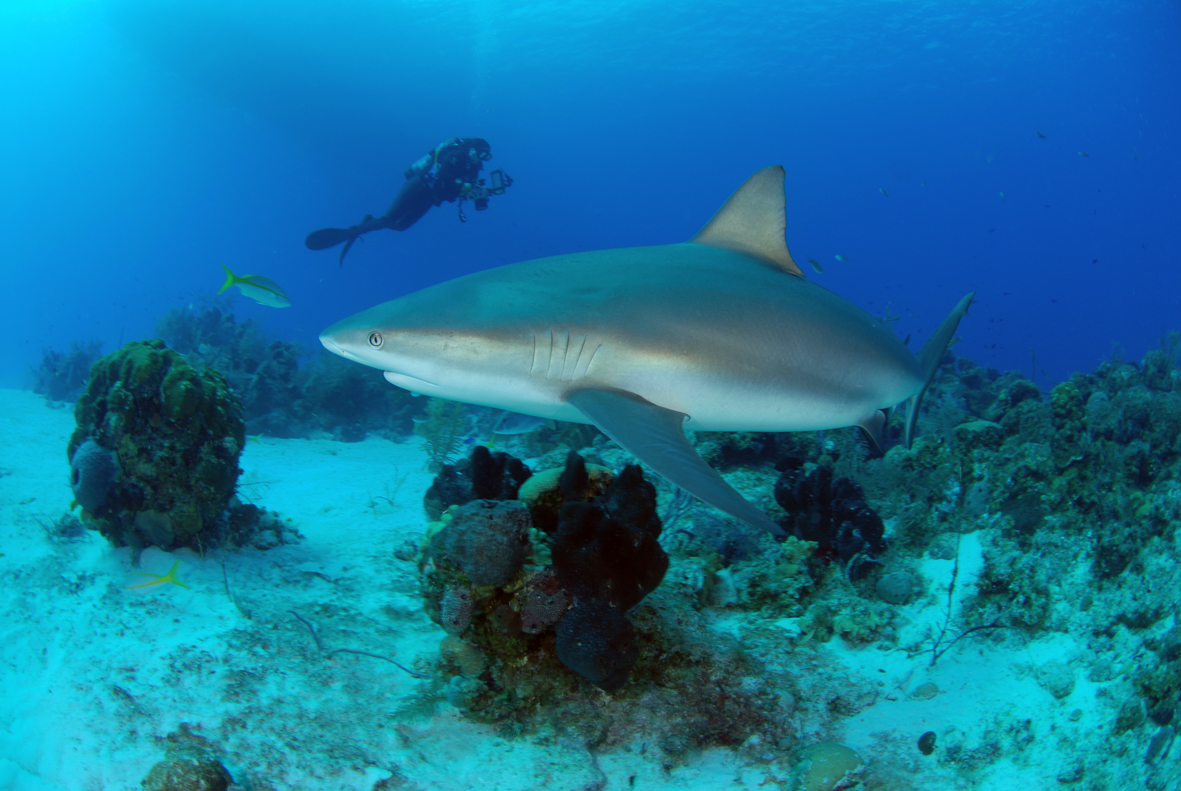
The Chimney is more typical of the sites we would visit during the week, with a flattish reef top, steep drop off and wall that are regularly patrolled by sharks of the Caribbean Reef variety. For macro fans, the crew pointed out numerous golden crinoids, which if observed very closely, are home to tiny shrimp.
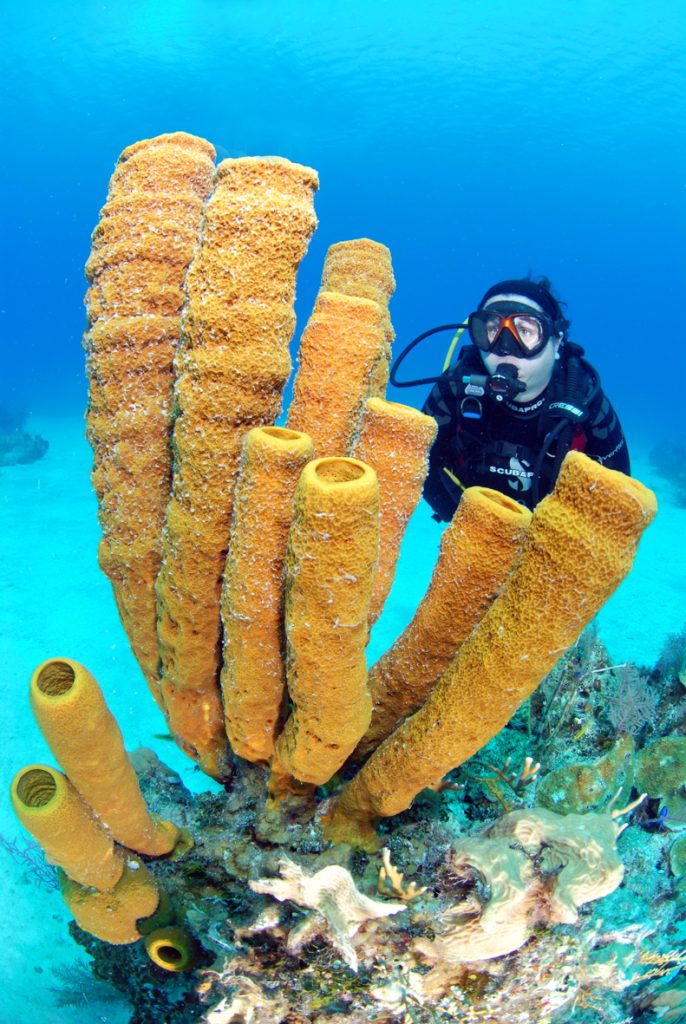
After getting into the groove at Grace Bay and Northwest Point, most of the week is spent at West Caicos and French Cay (pronounced “Key”). Here, most dive sites are combinations of spectacular walls, steep slopes and drop offs cut with swim throughs, fissures and overhangs that are adorned with sponges and corals, and other assorted reef growth. There are also reef flats and sandy expanses, sometimes with sea grass beds which provide a nice “balance” to the reef diving.
At West Caicos, Driveway and Magic Mushroom were active and enjoyable sites, where lobster, channel clinging crab, scorpionfish, peacock flounder and jawfish could be found by looking carefully up close, whilst down by the wall the local Caribbean reef sharks tirelessly cruised the reef edges, sometimes granting us with a close pass, along with the occasional Eagle Ray.
The Anchor site was next on the schedule, where we were able to view an old coral encrusted anchor that had snagged in a cut in the reef. It is thought to originate from the 17th century. Rob waited for each diver to pass through the gulley, recording an underwater “holiday snap” of everyone posing alongside the anchor. Many “little things could be found here, such as blennies and arrow crabs. Nearby, resident stingrays could be seen grubbing around on the sandy expanses looking shrimp and garden eels.
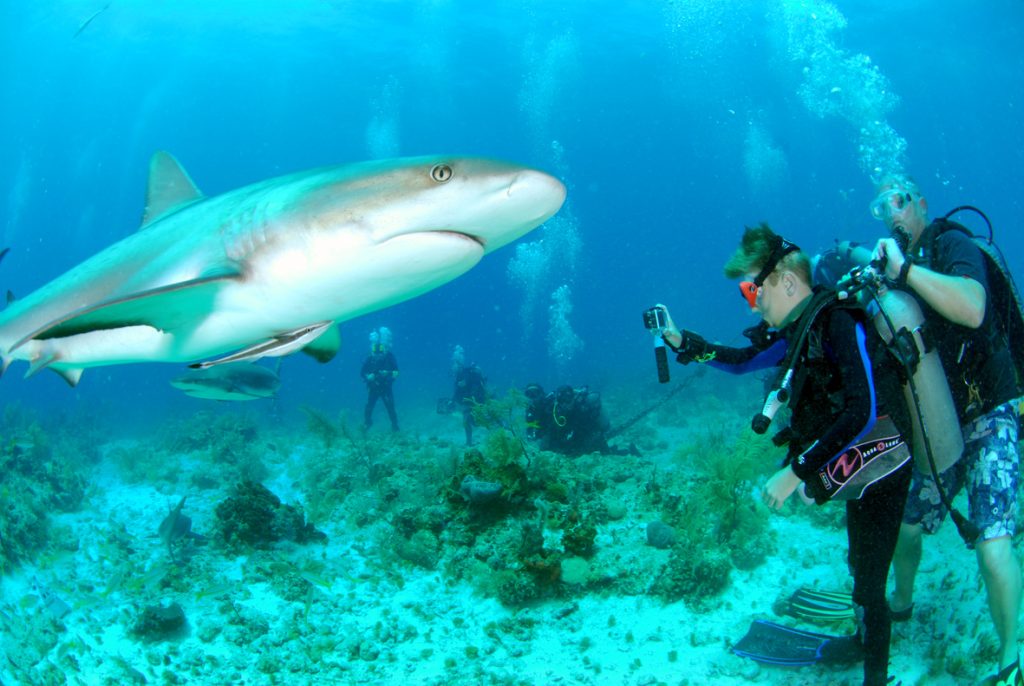
As already alluded to, the Turks and Caicos Islands are good place to visit for shark action, with some great encounters possible with the local Caribbean Reef and Nurse Shark populations at sites such as Half Mile, Rock and Roll and G-Spot. On occasions, other shark species can sometime be glimpsed or encountered such as hammerheads, though their appearances are random and unpredictable. On our trip, they stayed clear of us.
Zac’s underwater competence meant that he could participate in the shark dives, which he really enjoyed, taking his Go Pro to get some footage at the Rock and Roll site, as reef sharks cruised around him and a small nurse shark investigated the reef around the diver’s fins.
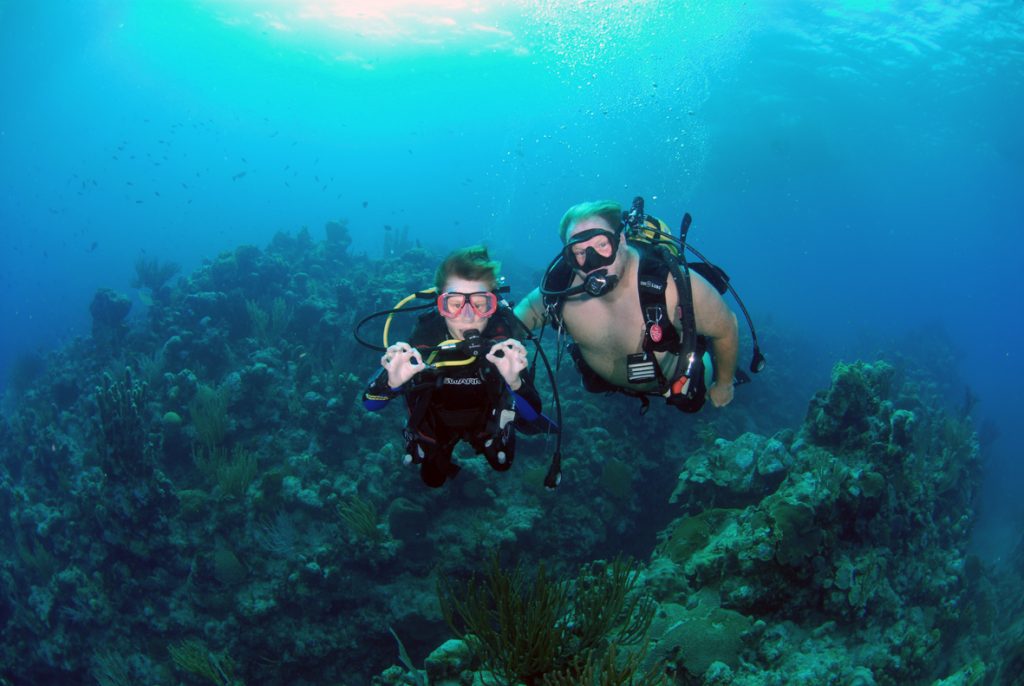
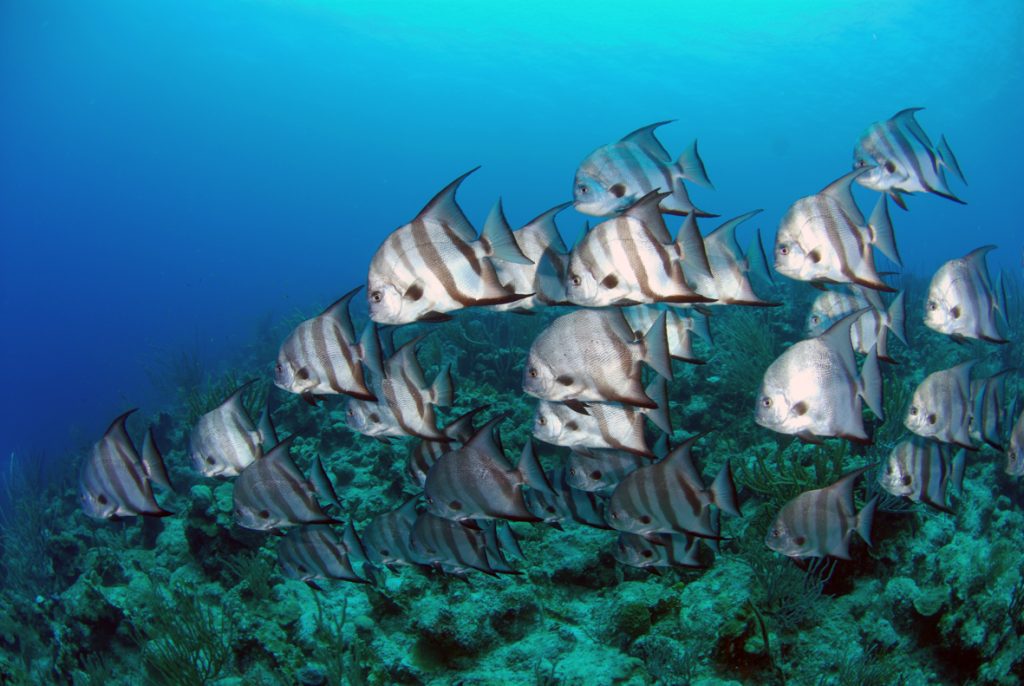
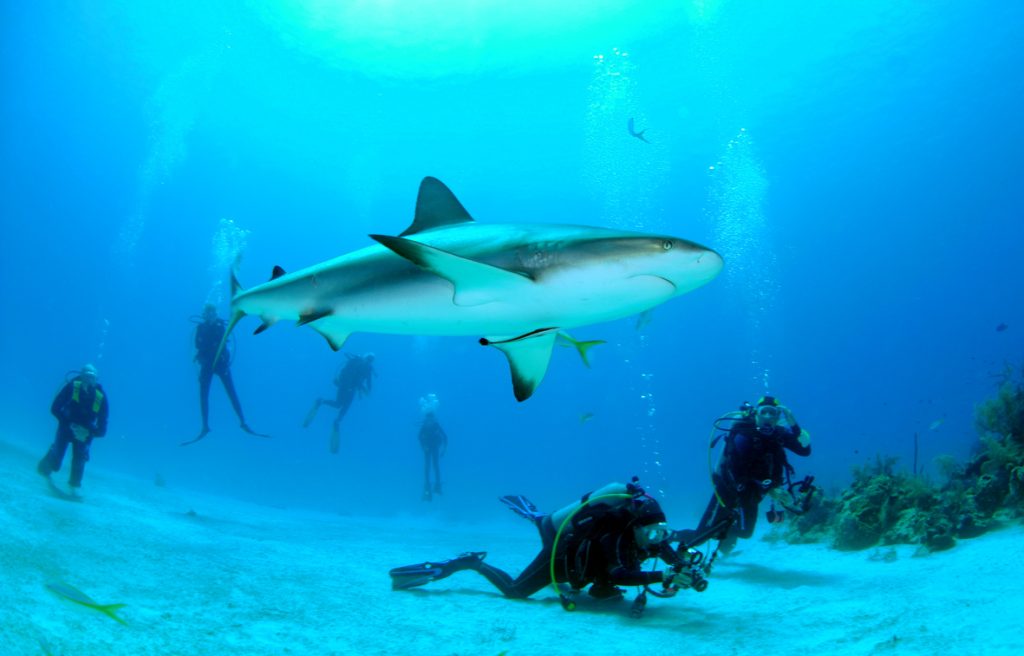
G-Spot is a great place to dive, night or day. We really enjoyed the night dive here, which “guarantees” (as much as it’s possible to guarantee in diving) encounters with nurse sharks. We weren’t disappointed, as these magical sharks hunted tirelessly for prey during the hour that we were underwater. Other life that caught our attention included a large channel cling crab and some lobsters out for a “night walk”.
Past the halfway point of the trip, we headed back to West Caicos with a visit to another “shark mecca” called Gullies. Here, we encountered a good number of Caribbean Reef sharks including a large female that frequented the site. At the end of the dive, I lingered below to get a few more images, as other divers began their ascent. Whilst “on my own” this shark came in very close and circled me a few times which was somewhat intimidating. I was told afterwards that this sometimes happens, especially if the diver is “alone” (even though I wasn’t really!).
Elephant Ear Canyon was a nice contrast to the reefs and hugely enjoyable. We opted to potter about amongst the sea grass looking for pipehorses, sea slugs, baby lionfish and other macro life, whilst the occasional stingray and shark cruised past. Try as we might, we couldn’t find the batfish (the bottom dwelling variety) that had been reported from the site during previous trips!
Rock Garden Interlude proved to be one of my favourite sites, with a nice wall and plenty of shark action to keep everyone happy and also yielded one of my favourite night dives (ever) with Caribbean Reef sharks coming in and out of the lamplight, hunting jacks, lobsters, a slipper lobster, scorpionfish and even a pair of flying gurnards among the sightings.
After a late night voyage back to Northwest Point, we would do our last dives in the morning at Stairway. As I failed to get up for the early morning dive, Amanda and Zac colluded with everyone to say that saw a hammerhead (which they later admitted that they didn’t) which I had no option but to believe until their guilt got the better of them! Later in the morning, we would do our final dive, watching the change of shifts as the “day fish” follow each other to their favourite parts of the reef as if commuting to work.
Were there any negatives, you may ask? Well, certainly not from our onboard or diving experiences, but you can’t help but be aware of the “invasion of the lionfish” which has happened at an incredible pace across the Caribbean, as this non-native species establishes itself in any suitable habitat. We spotted some big specimens during the week and where there are big ones there are small ones; Amanda spotting a tiny lionfish that confirmed their continued invasion. Efforts to eradicate them are almost certainly futile.
Our week onboard the Turks and Caicos Aggressor was a great liveaboard experience, hugely rewarding for us as individuals and as a family. The weather had been great, we’d been attentively looked after by the Aggressor crew, and we’d enjoyed great dives. We had indeed had “a Caribbean adventure” – Turks and Caicos style.
PLEASE NOTE: As this trip was taken prior to the recent and damaging hurricanes of Irma and Maria, some features of the dive sites described may have changed as a result.