
Text by Jeremy Cuff/www.ja-universe.com
Photography by Jeremy & Amanda Cuff/www.ja-universe.com
Many people visit Bournemouth’s beach and pier on the South Coast, but rarely for the purpose of diving. Dorset destined divers generally choose the more “traditional” dive spots such as Swanage and Portland further to the west, but there are other possibilities. So, how about Bournemouth Pier as a suggestion for something different? It takes a bit of planning, but can make for a different kind of diving day or weekend…
Dives under piers are often interesting. Having recently enjoyed some really good conditions under the “iconic” Swanage Pier (which I wrote about in the June edition of Scuba Diver), it got me thinking about other piers that I might be able to dive.
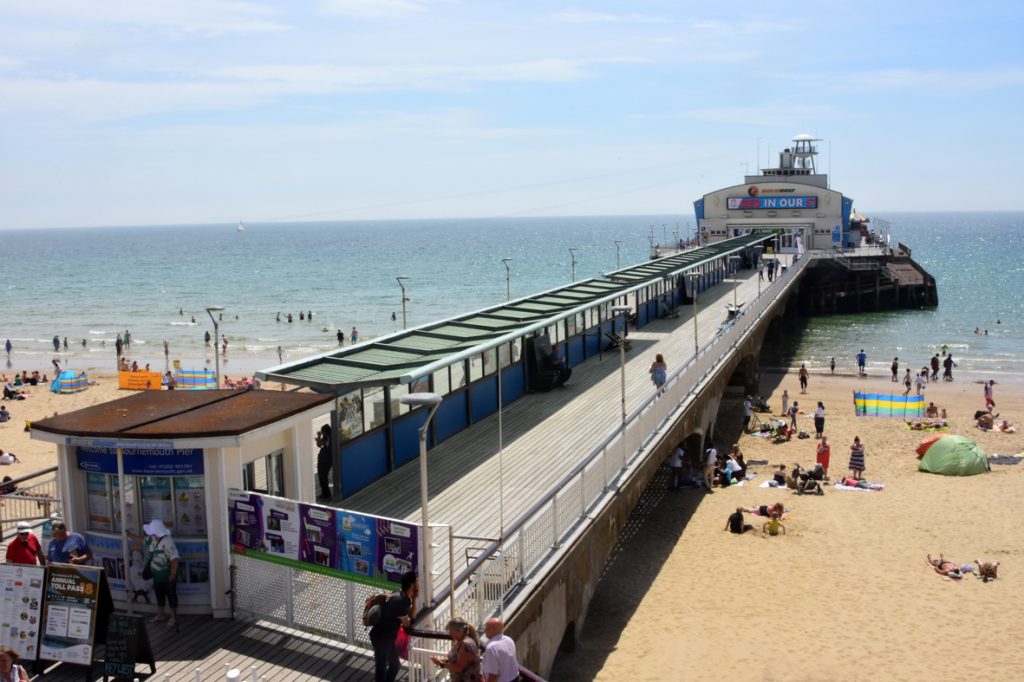
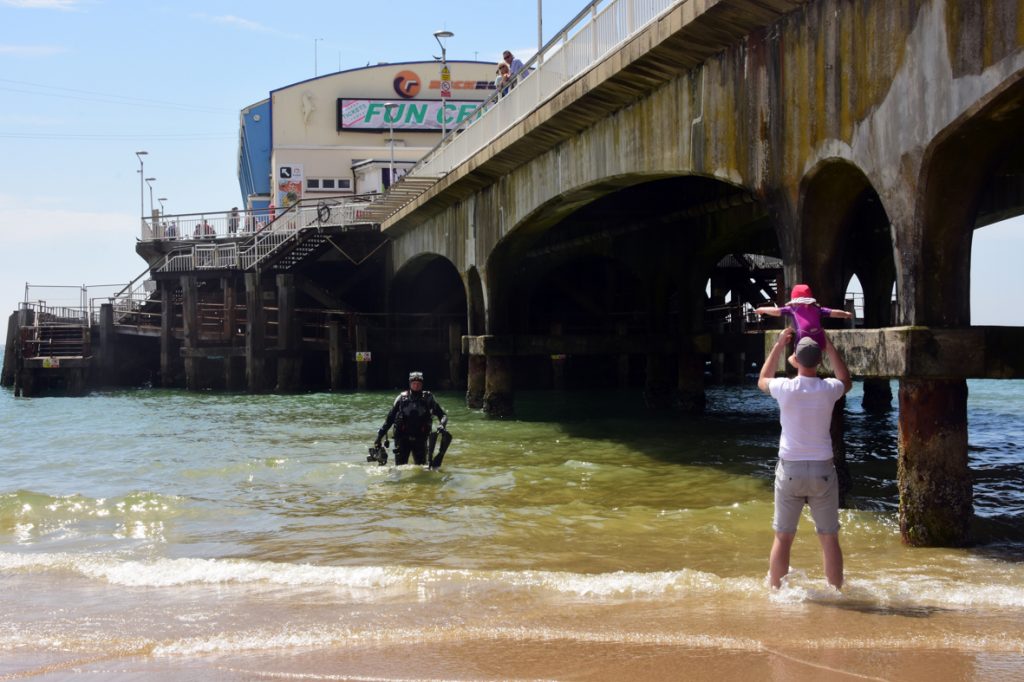
One pier that attracted me was Bournemouth Pier. It’s a large traditional style seaside pier with cafes, stalls, an amusement arcade and a more recently installed zip-wire connecting to a landing platform on the beach. It sits prominently in the wide arc of the bay, jutting out from the beach. I couldn’t find much information about people having dived it despite the convenience of Google, but that didn’t deter me. In fact, it aroused my curiosity further, so I vowed to give it a go.
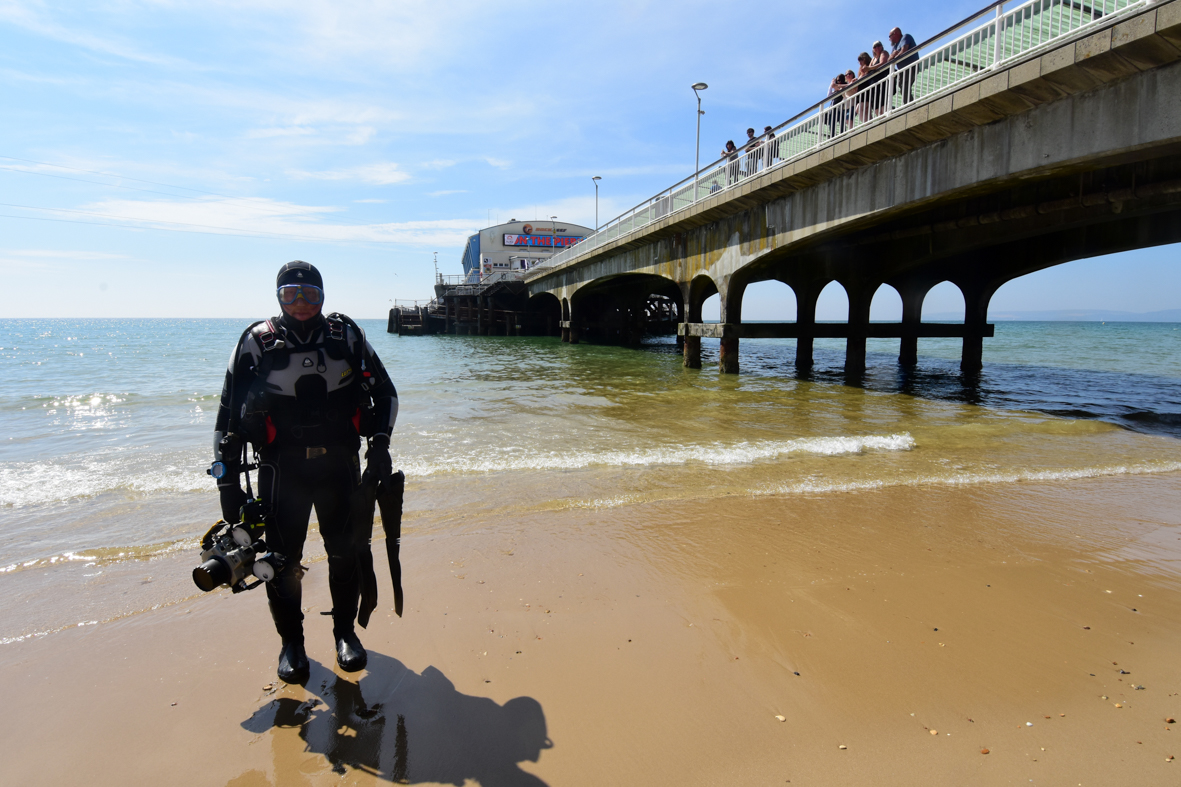
My visit coincided with the June heatwave, so I would be sharing the packed beach with throngs of assorted bathers. It’s a safe “swimmer-friendly” beach, so there’s little in the way of dangerous currents to get concerned about. As scuba diving is usually conducted “away from the mainstream” (so to speak), it was quite weird to dive around all this beach activity. I had some strange looks from some people, which amused me; as I emerged from the water after a dive, I appeared as some kind of sea monster.
Combined with local attractions, diving this pier can offer a good diving day or break, as well as providing plenty of things to do for non-divers. In fact, bringing along non-divers is very useful in that they can relax on the beach whilst looking after your seats, towels, car keys and so on.
ARRIVAL AT THE SITE
To make diving the pier a success, it takes a bit of planning and preparation. The biggest issue to solve is where to park, the method of how to get the gear to the beach and then back again, and the ability to store your stuff whilst you’re in the water, going for lunch and so on. Added to that, there’s no dive centre, so visiting divers must bring everything they need.
If trying this on a warm summer weekend, you’ll need to get there early-ish in order to park nearby. Because of this, I chose to treat myself to an overnight stay in Bournemouth which worked well. The best places are the two car parks just upslope from the pier area (admittedly not cheap for day), above the Harry Ramsdens Fish & Chip Restaurant and across the road by the Pavilion.
Some kind of hand pulled trolley/trailer to transport the gear and supplies, such as a garden trolley with soft wheels is almost essential here. I purchased one last year for this kind of dive trip and it proved to be invaluable again. Despite having this, it’s hard work dragging it across the dry sand. Another point worth mentioning is how you keep everything free of the sand. Considering that you’re on a beach, this isn’t easy; again, the trolley is useful in this respect, to store and drain wet gear. It’s also a good idea to take some towels or beach mats upon which to kit up. Helpfully, there are “beach showers” nearby if you need them.
DIVE BRIEFING
Once you’ve dealt with the logistics of getting set up on the beach next to the pier, it’s really just a case of going diving in whatever section of the pier you’ve decided upon. It’s a shore entry, and easy for even the most unsteady of divers, as there’s no incline or rocks.
The dive itself is very shallow, with the deepest depth you’d be likely to attain being 3 or 4 metres at the very end of the pier at high tide. “Overweighting” yourself is probably the way to go here, to ensure you’re able to stay down rather than accidently bobbing up (perhaps risking clunking your head on a beam in the process) or spending the whole dive kicking to stay down which isn’t much fun.
The tidal range isn’t huge in this area, so it’s possible to dive at any time, though it’s much easier (and better) when the tide is higher. I became a sunseeker between dives as I waited for the high tide to return, so it made the day quite relaxing and slow paced. During my visit, there was no appreciable current, though you may experience surge if any waves are blowing in.
The unhelpful weather to watch out for is any windy weather (especially an easterly wind and a southerly wind). I suspect that any significant wave action will destroy the visibility here due to the sandy bottom and also make entry/exit from the water difficult. Because of this, I would say that this is a “good weather, light winds only” dive site.
In terms of diver safety, the biggest hazard is probably jet-skis, even though they’re supposed to stay away from the immediate area of the pier. It’s quite dark under the pier (even on a bright sunny day), so a torch would be useful, especially when checking out the pier legs. Also, if visibility is poor, it’s essential that buddy pairs stick closely together to avoid getting separated.
Bournemouth beach is regularly patrolled by lifeguards (certainly at peak times) who may ask you what you’re doing, but they won’t stop you. One lifeguard approached us that happened to be a diver. He confirmed that it’s an interesting dive, having done it himself in the past.
THE DIVES
As soon as I entered the water and submerged, I immediately liked the look of it. I expected to see lots of rubble and rubbish beneath the pier, but it was surprisingly clear with clean sandy expanses. I would soon find out that the sandy expanses belied their “desert like” appearance by being very active with marine life.
The sightings started straight away and I realised I’d “discovered” an interesting place to dive. The sand was alive with activity, with flounders (including many tiny juveniles), hermit crabs, tube worms, assorted small fish and shrimp everywhere I looked, with occasional spider crabs desperately running for cover.
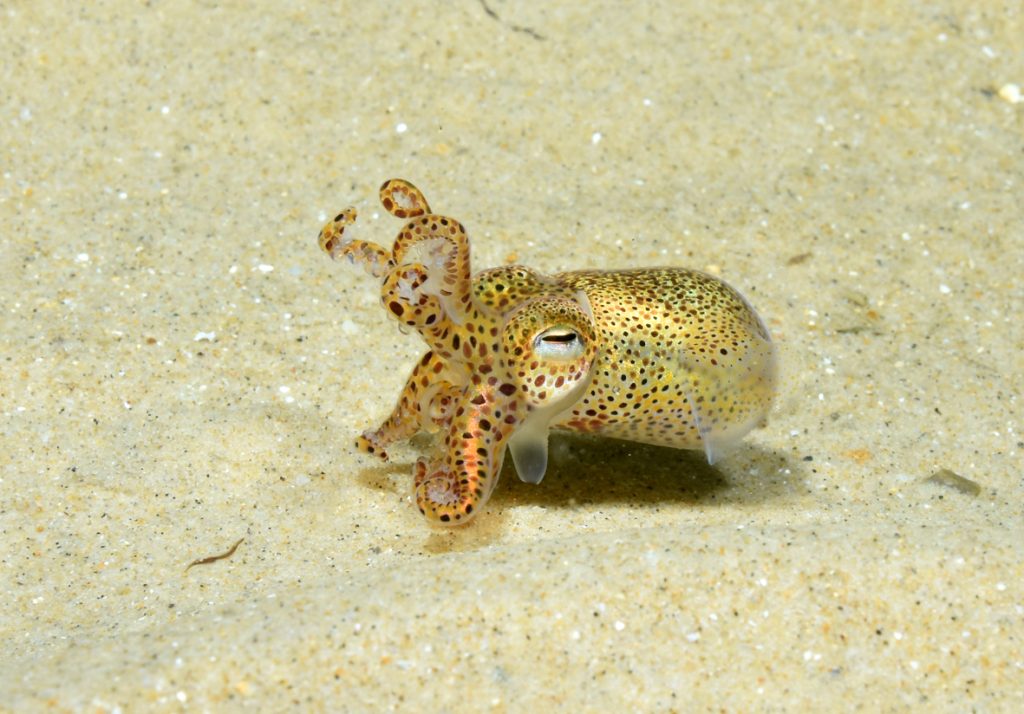
The highlight for me was encountering a small Bobtail Squid (Sepiola atlantica) which I managed to photograph. As this species is closely related to cuttlefish, it’s also known as the Little Cuttlefish which can be confusing for ID fanatics, Once I spotted it, I pursued it around the sand for a while as it changed colour in irritation (or mortal fear) of my persistent attentions. Eventually, it jetted away in a tiny squirt of ink.
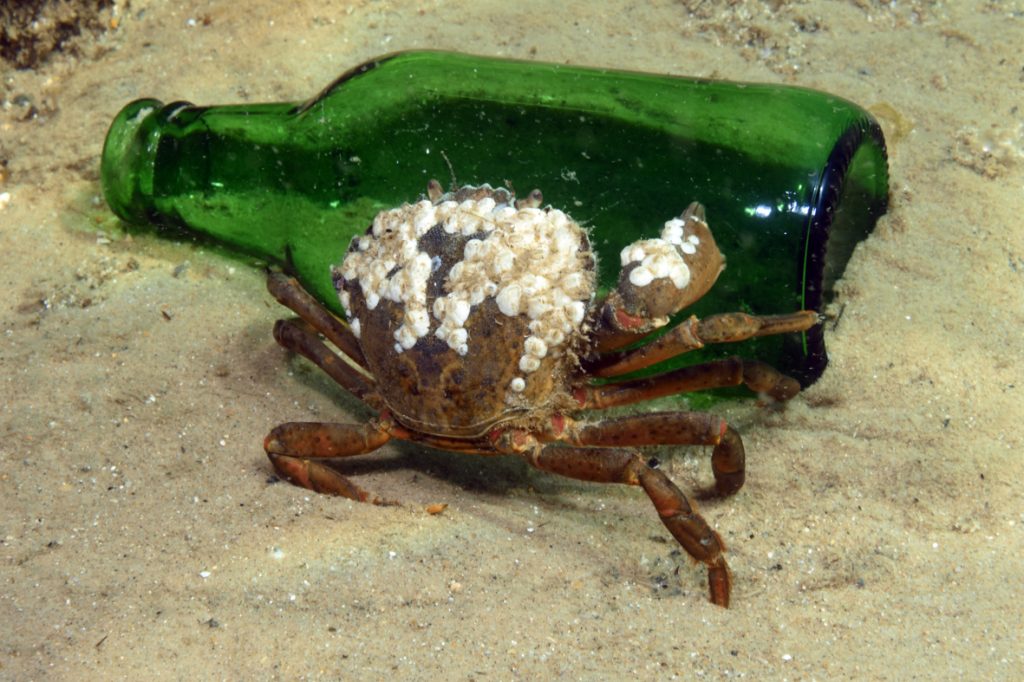
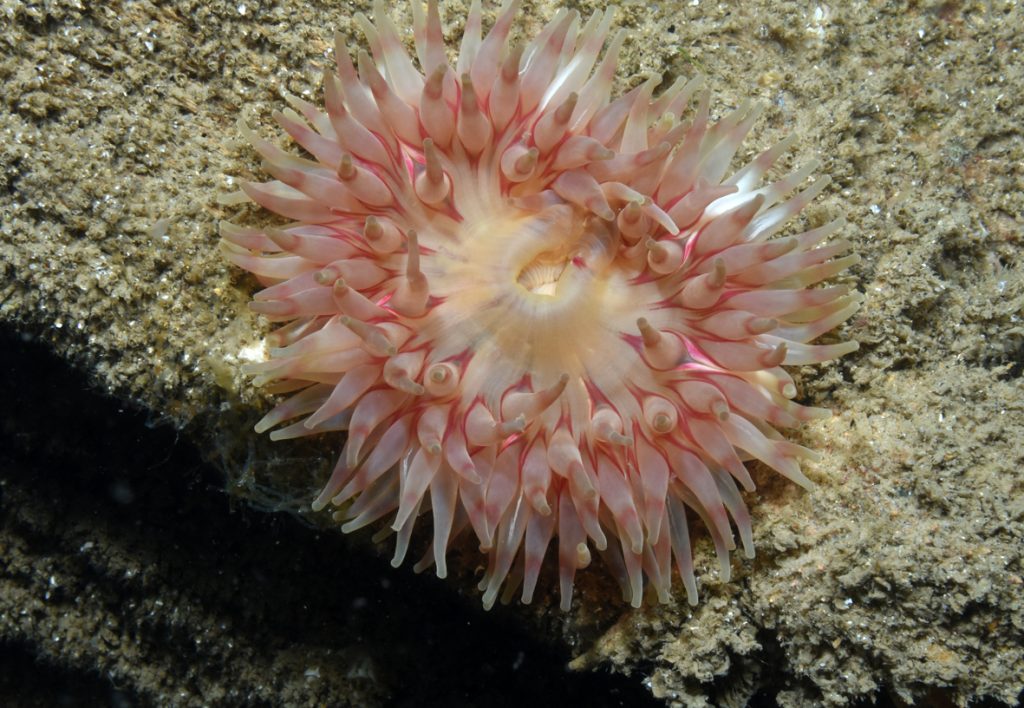
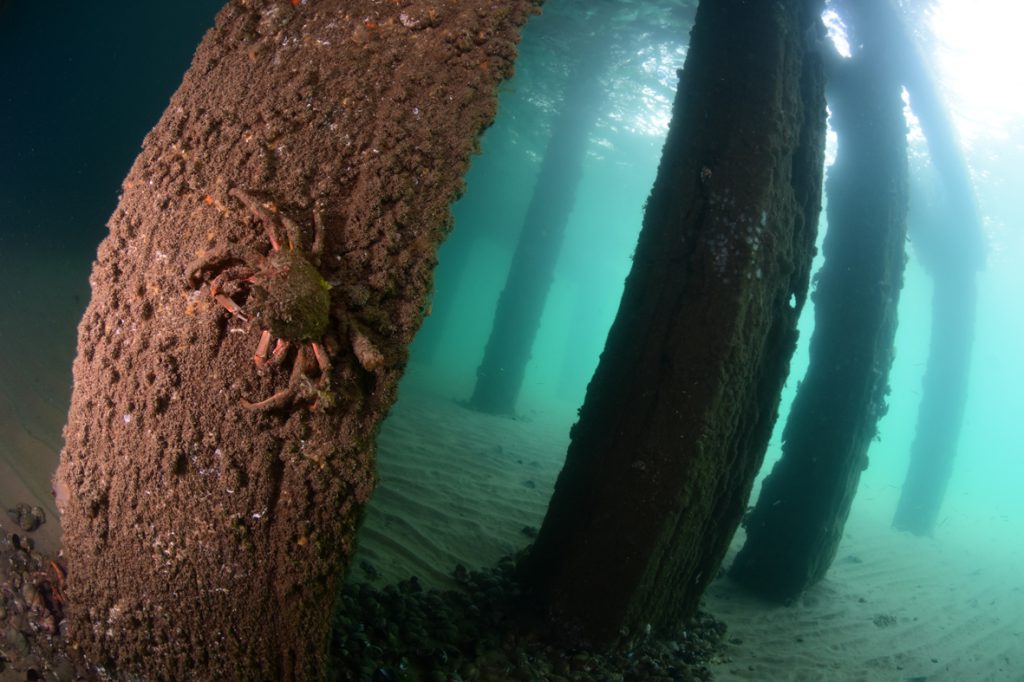
In terms of the pier structure itself, the legs and supporting beams are very active and sometimes colourful, at times reminding me of more tropical piers that I’d dived in the past. Close scrutiny revealed them to be alive with crabs, assorted growth, mussels, anemones, wrasse and even a tiny scorpionfish. I’m sure more dives would reveal many other species.
The shelter afforded by the pier also attracts plenty of fish, with bass being reported as frequent visitors by the lifeguard. Out on the sand, schools of silvery sand eels could be seen, but it was difficult to get close to them. I suspect that grey mullet, John Dory and perhaps even thornback rays might frequent the area at times.
In summary, this dive is very good for enthusiasts of marine life and also for underwater photographers who may find this site rewarding, either from a macro or wide-angle perspective. Overall, I found this to be very enjoyable dive site, and was glad that I made the effort to do it. You could say that it’s a good dive site that’s hiding in plain sight.
Dive Centres
To dive Bournemouth Pier, you need to be self-sufficient and bring everything you need.
Though there are a couple of dive centres/schools in the Bournemouth area, it would be impractical to head off during the day to procure fills or other dive related supplies.
Type of Dive
Very shallow shore dive (much easier and better at high tide).
Depth
Exact depth will vary depending on tides and where you choose to go, with the maximum being 3 or 4 metres. Due to this, you need to ensure you have sufficient weight to stay down.
Marine Life/What To Look Out For
Bournemouth Pier proved to be good for sightings; depending on the time of year, expect spider crabs, edible crabs, velvet swimming crabs, tompot blennies, pipefish, wrasse, bass, sand eels, flounder, prawns, anemones and jellyfish. You might also be lucky to see cuttlefish and even scorpionfish with my highlight being a bobtail squid. There could perhaps be seahorses somewhere in the area, as they’re known from nearby Studland Bay just down the coast, though there isn’t much seagrass in the immediate area of the pier.
Visibility
Variable depending on wind direction and other factors, but can be 6 to 8 metres if you’re lucky. On less ideal days, it can be very much reduced. An average is probably 2 to 4 metres.
Seabed
Flat sandy expanses, pier legs and beams.
Hazards
Stray jet ski traffic, low visibility, disorientation, discarded fishing line, surge.
Accommodation
Bournemouth and the surrounding area has a wealth of accommodation options to suit all budgets and tastes. Choose from hotels, b & b’s and self-catering apartments.
If staying, the most practical option is to pick accommodation close to the pier itself.