
Text by Jeremy Cuff/www.ja-universe.com
Photography by Jeremy & Amanda Cuff/www.ja-universe.com
The island of Sark in the Channel Islands is one of the most unspoilt and undeveloped of the island group, known for its lack of traffic (only tractors and horse & carts), tranquillity, and for the stargazing opportunities among other things. For divers, it offers an underwater environment as pristine as you’re likely to get anywhere in the southern half of the United Kingdom. When a chance to dive there came up, it was a chance not to be missed…
Back in 2010, I visited the excellent Bouley Bay on the north east of Jersey for two days of enjoyable and varied shore diving. During that visit (which became the subject of a subsequent Sport Diver feature in 2011), the local dive centre at Bouley Bay paired me up with local underwater photographer and dive enthusiast Kirk Truscott who kindly agreed to guide the dives. After those two days, we vowed that we would dive together again, but somewhere different in the Channel Islands. The question was “where would that diving be?”
After chatting about a few different ideas, our conclusion was that at some point we would dive at Sark, an undeveloped and unspoilt island reputedly great for diving and one that Kirk had never dived before, despite having logged hundreds of dives around Jersey.
What with one thing and another, it took until the August Bank Holiday weekend in 2013 for our idea to finally come together. After much discussion about the best way of doing it, our plan was this; I would travel over to Jersey on the Friday and stay overnight; on the Saturday morning I would meet Kirk and his group of diving friends, load all the gear into a pair of fast ribs and make the 20 mile journey over to Sark where we would do two or three dives. We would then stay overnight on Sark at a bed & breakfast; then, on the Sunday we would do another two or three dives before returning on the ribs back to Jersey late on that afternoon. It sounded like a good plan, which Kirk duly organised.
During last summer, the area had been enjoying a prolonged period of calm and stable weather, but as it often does, the UK’s fickle weather decided to mess with our plans when the time came. On my journey out to Jersey on the sea cat ferry service from Poole, the weather was perfect, but for the Saturday in particular (the first diving day), the forecast looked really quite dubious, though we carried on making our preparations.
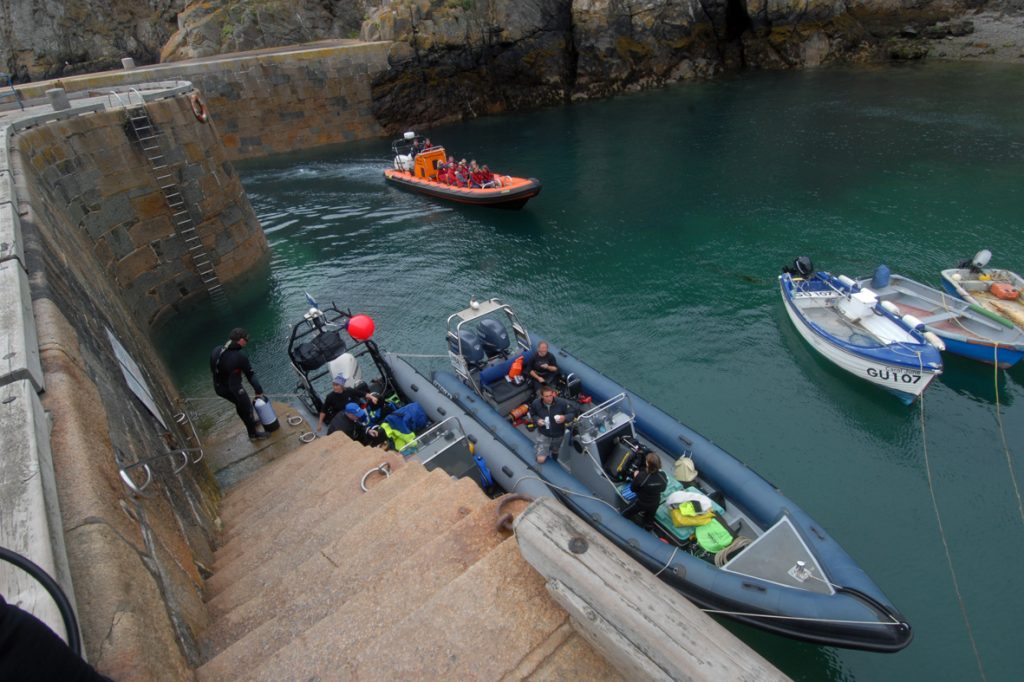
Come the Saturday morning, the weather had indeed changed very much for the worse, not only taking on a very autumnal vibe, but becoming very windy. From the shelter of St.Helier, we were unsure how difficult the conditions might be, so we decided to set out as planned, and see what the conditions were like and take a view on it.
The relative calm of St.Helier’s port proved deceptive, with conditions changing rapidly once we got out into the open water. We had a look at the conditions along the south coast of Jersey, but aborted it before reaching the notoriously rough La Corbiere Point. It was far too dangerous, and we collectively agreed with the decision recommended by our skipper Graham to turn it around. It was a real shame, though we would later discover that waves apparently reached 20ft in the open water, causing disruption to ferry services and other maritime dramas throughout the English Channel.
As a consolation, there was a possibility to rescue something from the day. Due to the direction of the prevailing winds, we were able travel around to a sheltered area on the east side of Jersey, where it was likely that we’d be able to do one dive. After picking our way through the hazardous coastline around this area of the island where local knowledge and experience is essential for safe passage, we were indeed able to get a dive under our belt alongside the breakwater at St.Catherines.
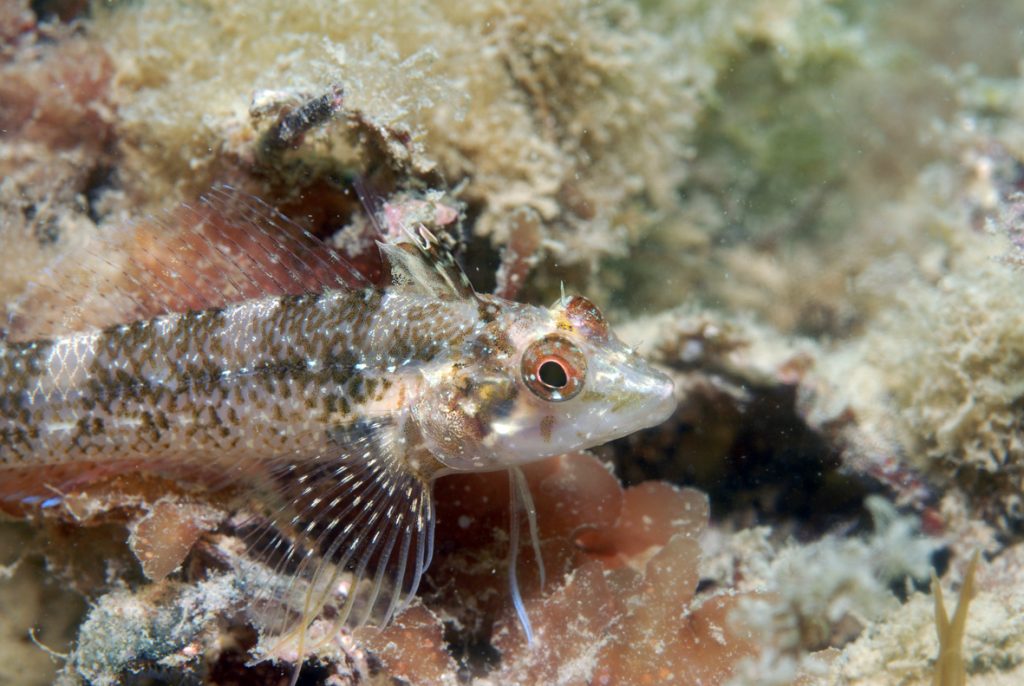
Once in the water, we discovered that the visibility had been adversely affected thanks to the weather, but it was better than nothing. On the dive, we discovered wrasse, crabs, tompot blennies and a rather timid lobster as we checked out the breakwater wall and nearby sea grass beds hoping for an elusive seahorse. After that, the journey back to St. Helier was exciting and rough, and one that only experienced skippers such as Graham should attempt. He did a great job navigating the difficult conditions.
As we weren’t in Sark, we had a bit of time in upon our return to St. Helier to visit the volunteer run re-compression chamber located in the port area, which was explained to me by Kirk’s diving friends, some of whom are active members of the volunteer team. It was a new experience for me to sit in a recompression chamber, though thankfully not for the wrong reasons.
On the Sunday (dive day number two), the forecast was for better weather with less wind, though still far from the ideal conditions we hoped for, and still with the distinct possibility that we might be unable to make the crossing to Sark. As with the Saturday, we opted to meet up early in the morning to set off as planned and assess the conditions once en route.
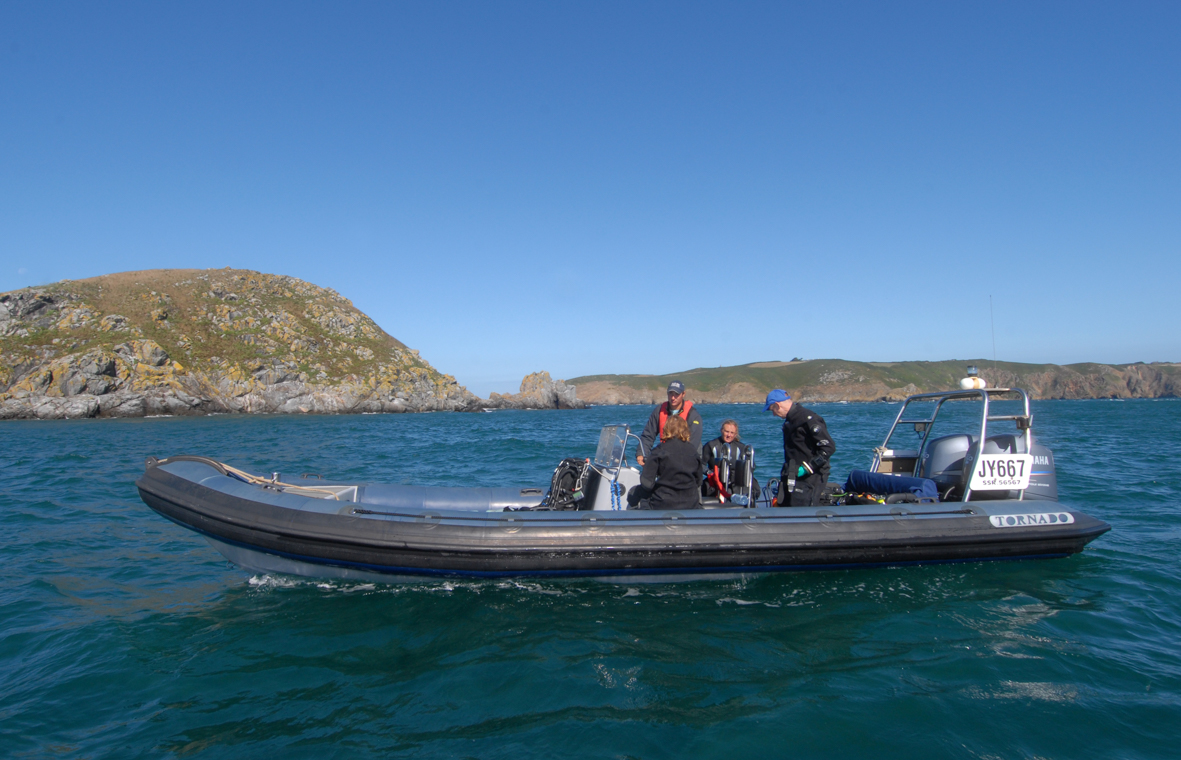
This time, we were able to go for it, again heading along the south west coast of Jersey and rounding La Corbiere Point without the huge seas of the previous day to head determinedly towards Sark, bouncing off the waves beneath a clearing morning sky. By the time we reached Sark it was sunny, with the cliffs looking vibrant and impressive in the morning light. The sun would prove to be rather temporary, lasting until about midday before returning us to grey and overcast skies.
Kirk had arranged for renowned Sark based underwater photographer and Channel Island expert Sue Daly to join us to help in choosing the dive sites, with her extensive local knowledge proving invaluable to the group. The Channel Islands experience huge tidal variations, and many weird (and dangerous) currents where local knowledge and experience of these waters are key to a safe and enjoyable diving experience. Sue was waiting at the harbour for our arrival, gear at the ready, so that we could get out to our first dive site quickly. We had a time window for two dives.
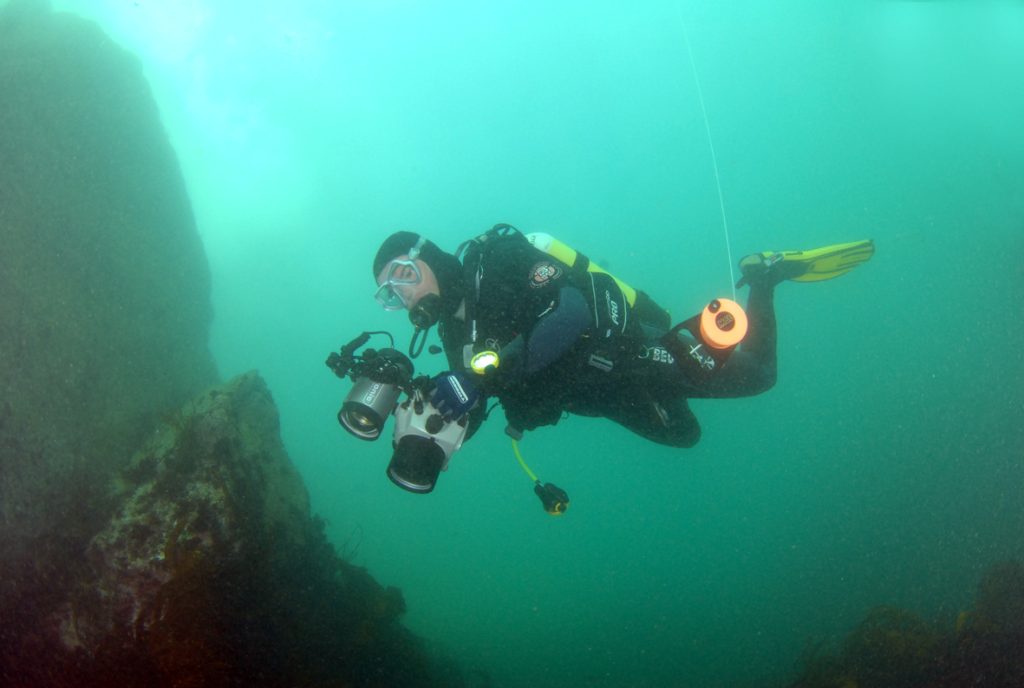
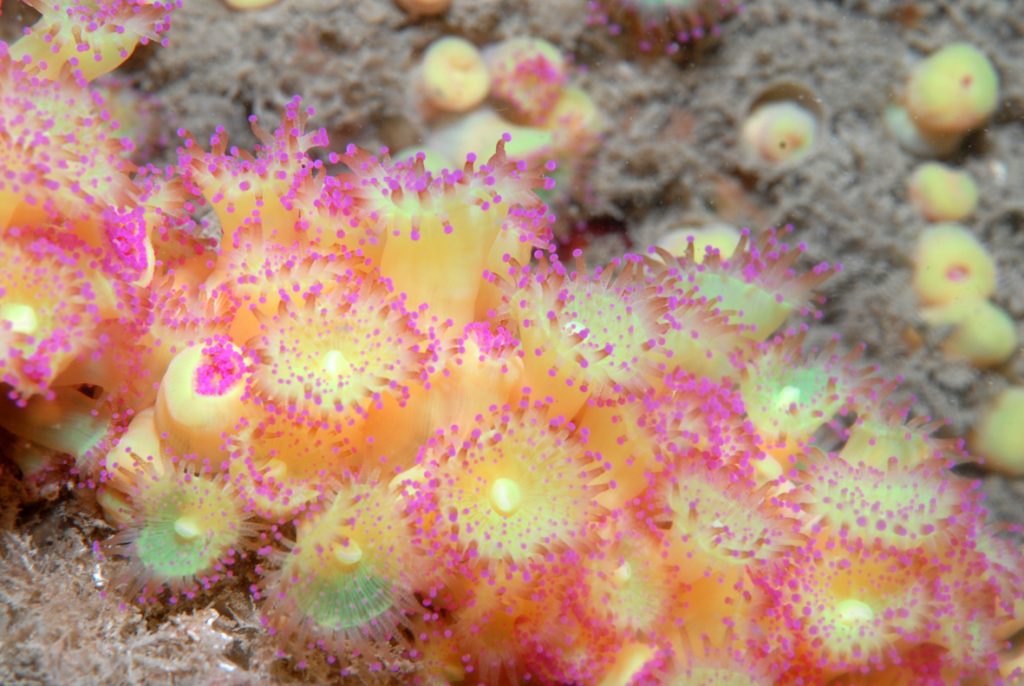
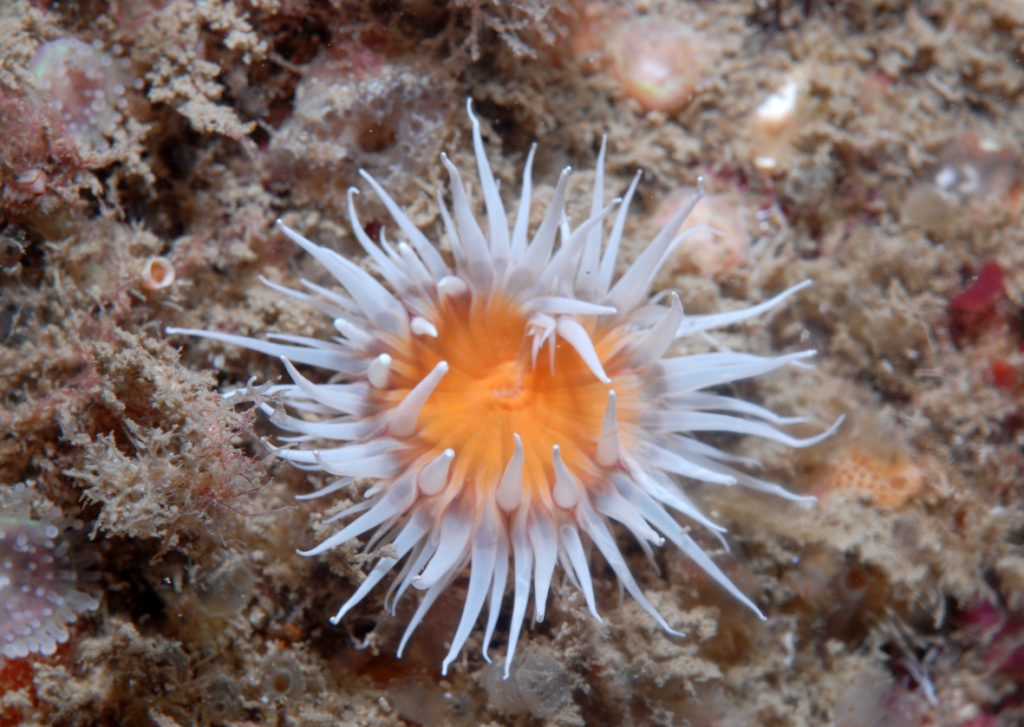
The first dive, at a site called L’Etac is in the lee of the islet after which it is named. We could see that the storm and winds of the previous day had stirred up the sea considerably, so the visibility wasn’t anywhere near what we’d hoped for, but it wasn’t awful either – we would make the best of it.
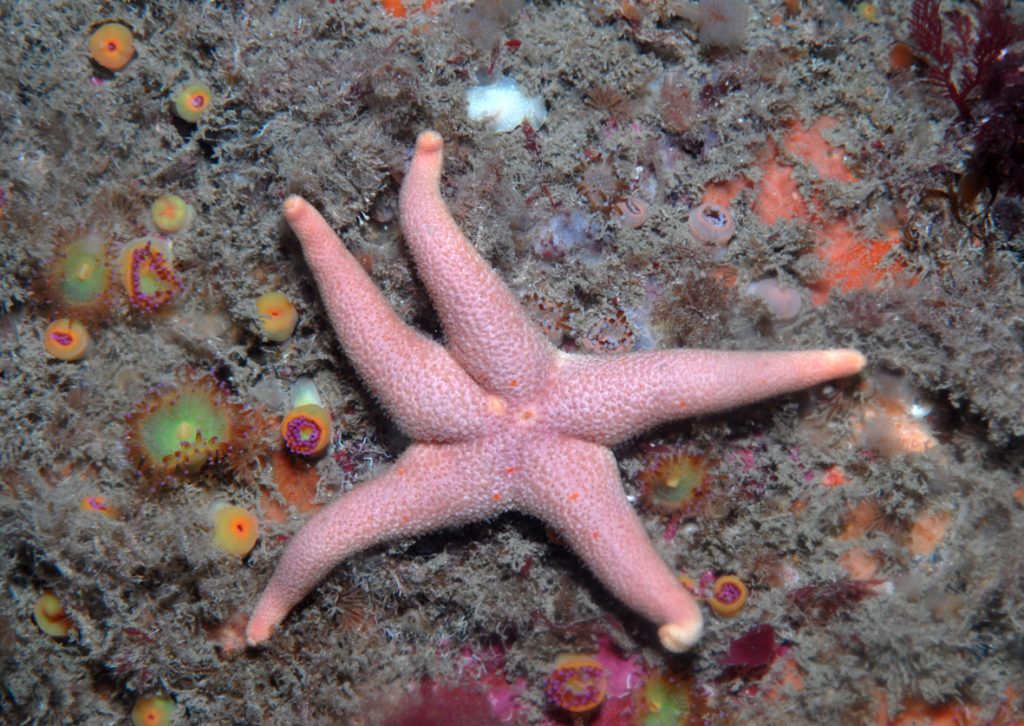
We dropped down, finding bare and exposed rocks immediately below the surface, quickly followed by extensive kelp beds. Beneath the kelp at depths of around 20 metres or more, we discovered some interesting ledges, overhangs, crevices and gulleys to explore that teem with life, though not in the overt and extravagant way that you might find in the tropics. Instead, life takes on a more cryptic and subtle hue in the gloom of the depths, though a flick of the switch of a dive lamp reveals some stunning colours, particularly when aimed at the numerous jewel anemone colonies for which Sark is renowned.
Later, whilst on the ascent, back up in the kelp beds, an excited Kirk grabbed my attention – he’d found something. Expecting perhaps a lobster, or a something like flatfish or a scorpionfish, I was taken aback. It was a dogfish of some kind, but what kind? It was huge, perhaps as long as a man. It wasn’t resting in the easiest of spots, but we edged closer, by moving the kelp out of the way. We expected this impressive member of the shark family to flee from our attentions, but to our delight, it remained defiantly in its spot. Kirk manoeuvred himself so that I could shoot images of him alongside it to provide a sense of scale. The consensus what that we’d found a Bull Huss (also known as a Nursehound).
The second dive didn’t produce anything as surprising as a Bull Huss, but it was nonetheless a good dive with more jewel anemones, plus wrasse and crabs in abundance. In the latter part of the dive, we explored the huge beds of swaying kelp, somewhat dizzying as the visual reference that you depend upon ripples and moves around and beneath you in the surge.
In only two dives, it was of course, difficult to capture and represent photographically what we saw and experienced, as ideally you need more dives (like the six that we had planned) in order to pull together a representative set of images, but sometimes when things don’t completely work out, that’s part of the photojournalist’s challenge! If you’re able to do multiple dives at Sark in good conditions, expect a long list of dive log entries. I wouldn’t be at all surprised, for example, if seahorses are present, like they are at sites around Jersey.
Thanks to the vagaries of the weather, I was only able to scratch the surface of what is undoubtedly a stunning and pristine UK dive destination. However, I believe that if you get the right conditions, and can stay a while, it would make a diving trip that could compare favourably with any dive experience you could do.
If this type of dive trip appeals to you, don’t just turn up in Jersey, Guernsey or even Sark itself and expect to be able to do it. Instead, contact a Channel Island dive centre well in advance and make a plan in order to avoid disappointment. Also, ensure that you take everything that you might need, that you’ve done your preparation and ticked everything off your packing list.
In summary, I enjoyed the Sark experience with Kirk and his friends, who I’d like to thank for making the trip possible, and for making me feel very welcome. It was a unique “mini-adventure”. Hopefully, we may organise another trip sometime down the road and get to see more of this excellent dive destination.