
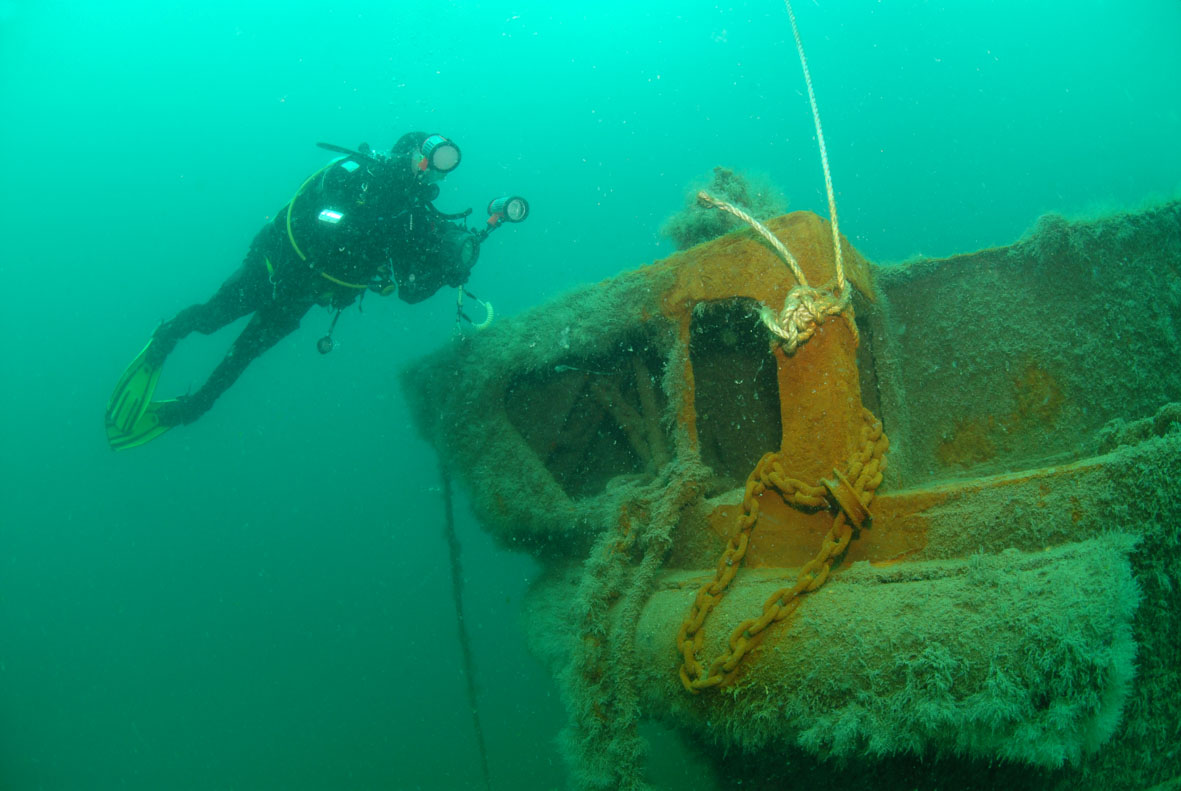
The Countess of Erne, the Landing Craft & Bombardon Unit
Text by Jeremy Cuff/www.ja-universe.com
Photography by Jeremy & Amanda Cuff/www.ja-universe.com
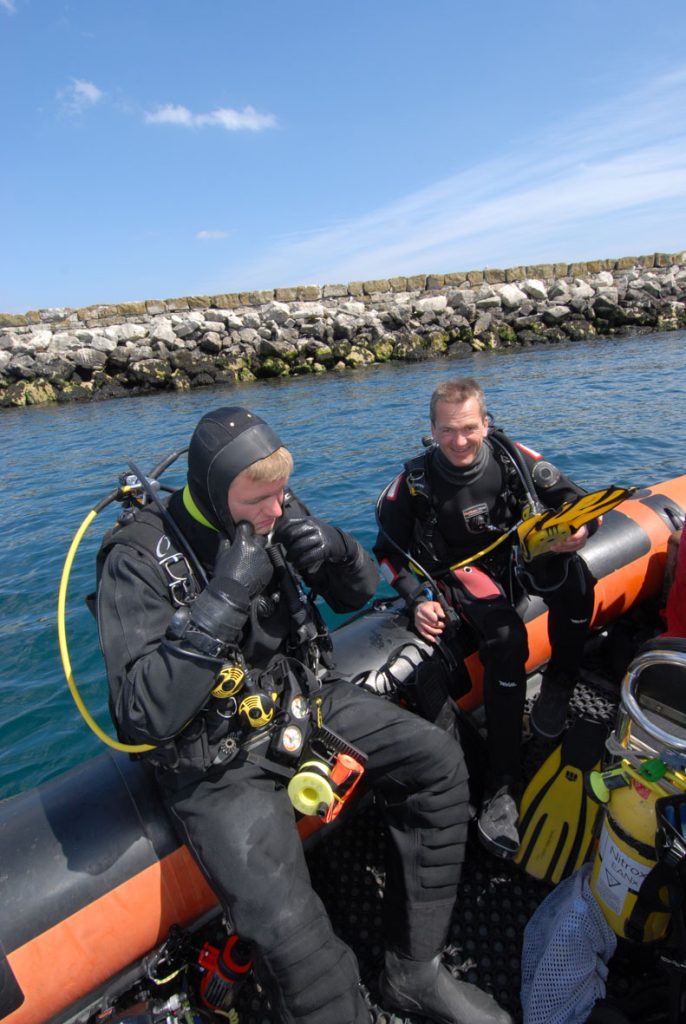
Type of dive: Boat, a short trip from locations within Portland Harbour.
Experience: Would suit inexperienced divers, but still interesting for experienced divers.
Depth: Up to approximately 18 metres depending on tides and where you go.
Marine life: Thewrecks are home to many fish and crustaceans.
Visibility: Expect between 2-10 metres.
Seabed: The wreck of the Countess of Erne and the Landing Craft & Bombardon Unit are located close to the wall on inside of Portland Harbour. The seabed is very silty – heavy finning and poor buoyancy control can reduce the visibility to near zero if the silt is disturbed.
Hazards: Mostly other dive boats, the occasional jet ski, silt if disturbed whilst penetrating wrecks, sharp edges, discarded fishing line, slippery steps and jetties.
The area around Weymouth and Portland is massively popular amongst the diving and watersports community. There’s a large variety of experiences to be had within a relatively small area, ranging from shore dives, drift dives and countless wrecks.
Portland Harbour itself is located on the eastern side of the Chesil Beach causeway which links Portland to the “mainland”. It’s part of the Jurassic Coast in Dorset, close to the popular seaside town of Weymouth.
It’s sheltered from the worst excesses of the weather thanks to the defensive walls and is largely free of current unless you dive near one of the entrances to the harbour. It’s a place that can appeal to a wide range of divers, including “wreckies”, underwater naturalists, all weather divers, divers with families and also inexperienced divers looking for straightforward conditions with which to sample UK diving.
Arrival At The Site
Portland is easy to reach, either from Weymouth, or by travelling in from towns such as Bridport or Lyme Regis, which are located to the west.
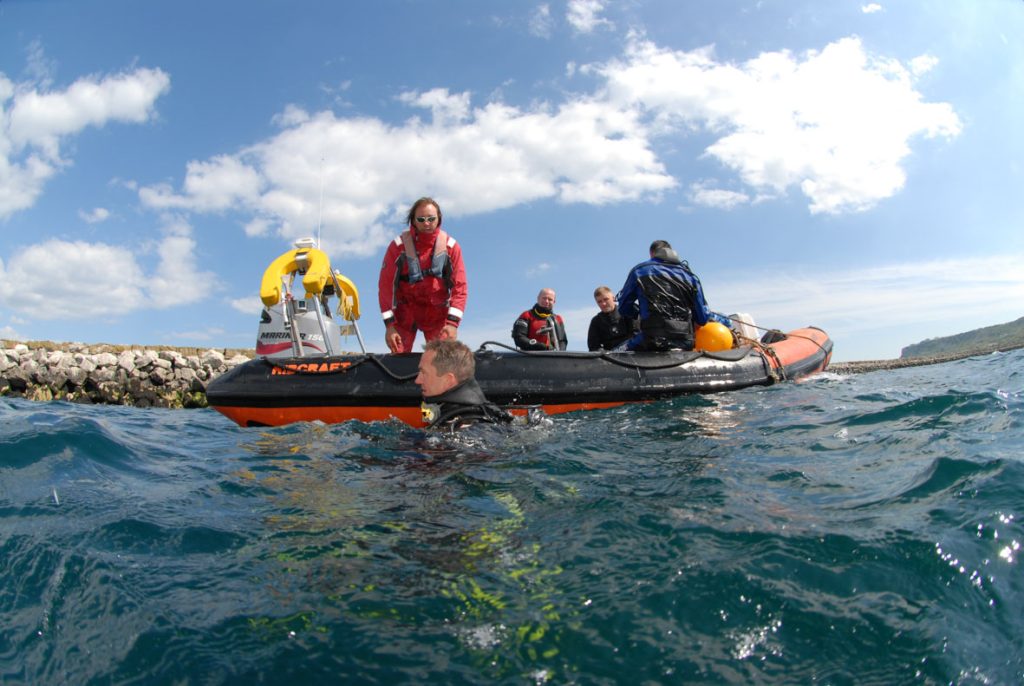
Visiting divers can easily park at or near the dive centre of their choice without having to lug gear great distances. I chose to dive with Fathom & Blues, who operate out of the Ferrybridge Inn on the “mainland” side of the Chesil Causeway which benefits from a nearby launching jetty. Other local dive centres are based on Portland itself and offer similar easy and convenient launches.
Pre-Dive Briefing
Although most divers will start and finish dives on the drop line, which is marked by a buoy, it’s a very good idea to take an SMB in case you have to surface elsewhere, as there’s quite a lot of boat activity, and divers are never far beneath the surface. It pays to be vigilant, especially if surfacing, where it’s essential to look around and listen for any oblivious boat craft.
During my most recent visit, we enjoyed reasonable visibility, but it’s easy for divers to lose their sense of direction (and their buddy) if the visibility is poor. It’s therefore important to listen carefully to the dive briefing, so that the geography of the wreck, including the location of drop lines is clearly understood.
The Diving
It’s only possible to visit the harbour wrecks by boat, usually from launches within the harbour itself which takes only a few minutes. The shelter offered by Chesil Beach to the west and the harbour wall to the east means that it’s seldom really rough unless the wind is howling, so it’s also good for divers prone to seasickness.
Once at the sites, the boat is secured at permanent drop lines marked by buoys. When the briefing is complete (which is important for getting the most out of the dives as well as safety), divers can backwards roll into the water and descend down the line.
The precise depths you can attain on each of these wrecks varies depending on tides (and which book or website you read!) but it’s unlikely that any diver would (or could) exceed 18m. I spent the majority of my dives within the 7 – 12 metre zone, and clocked up 16 metres as a maximum depth.
If there’s one thing that goes against Portland harbour, it’s the visibility, which can vary enormously. To make the best of it, it’s a good idea to check ahead to save a wasted journey and a disappointing day. I’ve dived the Countess of Erne several times during the last ten or so years and rated the most recent visit (in early June 2010) as being the best, with perhaps 5-8 metres visibility on the Countess, and a less consistent 2-8 metres on the Landing Craft and Bombardon. During May of 2010, an exceptional 10 metres of visibility was recorded. On another occasion, in the spring of 2009, Isuffered a meagre 1-2 metre visibility. On a couple of other occasions, it’s been more in the 3 – 5 metre zone.
If the visibility is good, it’s the job of the divers to keep it that way. Good buoyancy control and very gentle finning are essential here, as the harbour in general and the wrecks in particular are very silty.
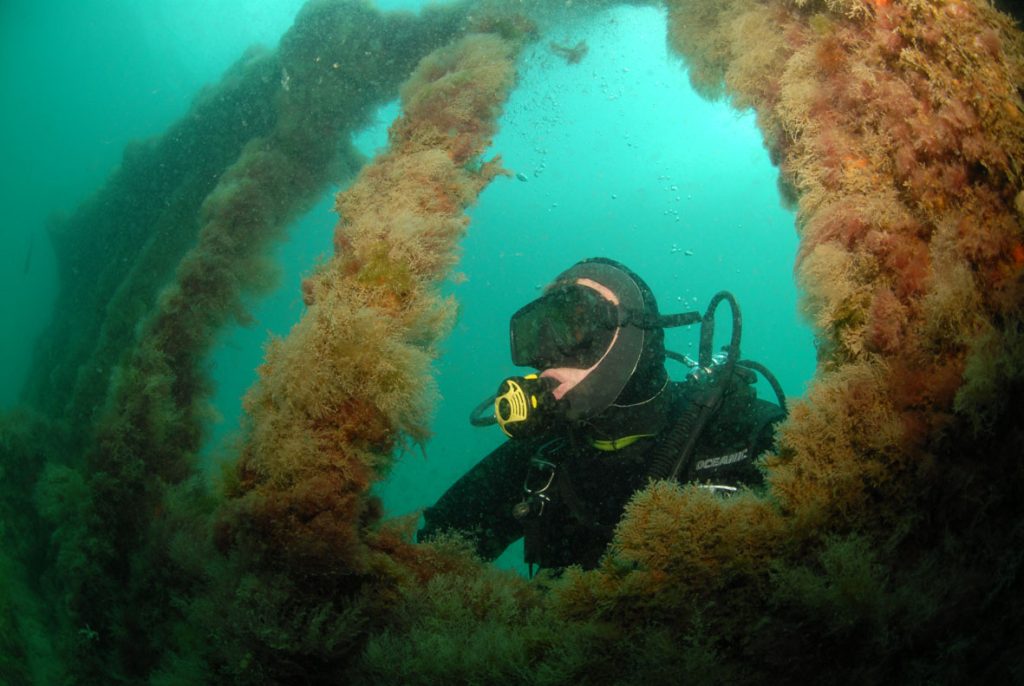
Novice or inexperienced divers will find these wrecks a good place for to hone their skills in a largely current free environment before graduating to deeper, and perhaps more challenging dive sites. Here, the use of a compass and an SMB, underwater diver communication and buddy pairing can be practised in ideal conditions.
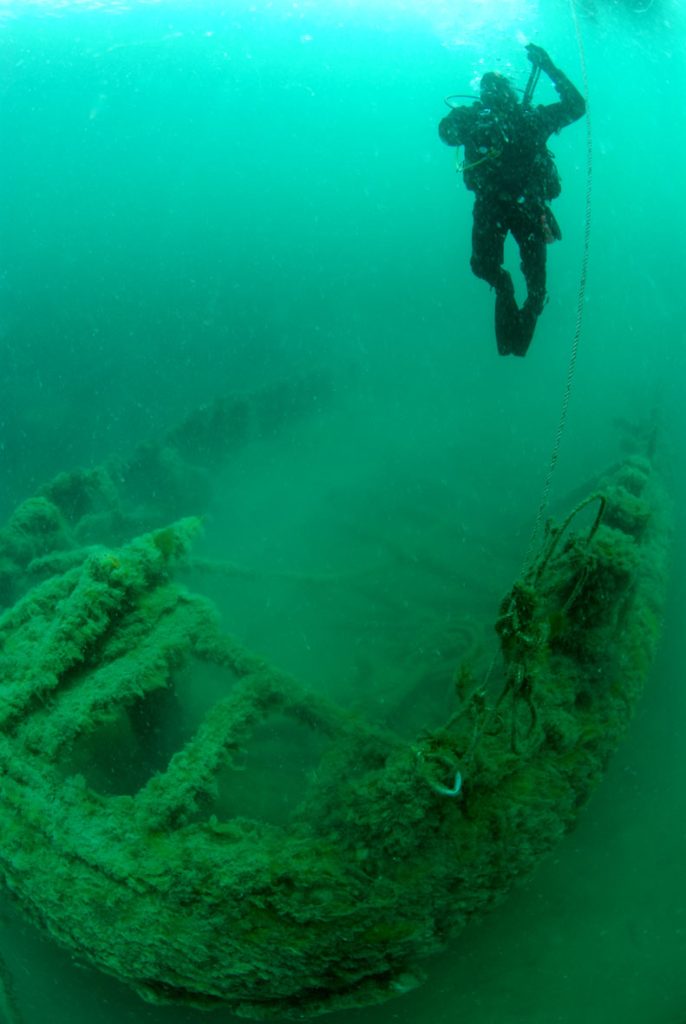
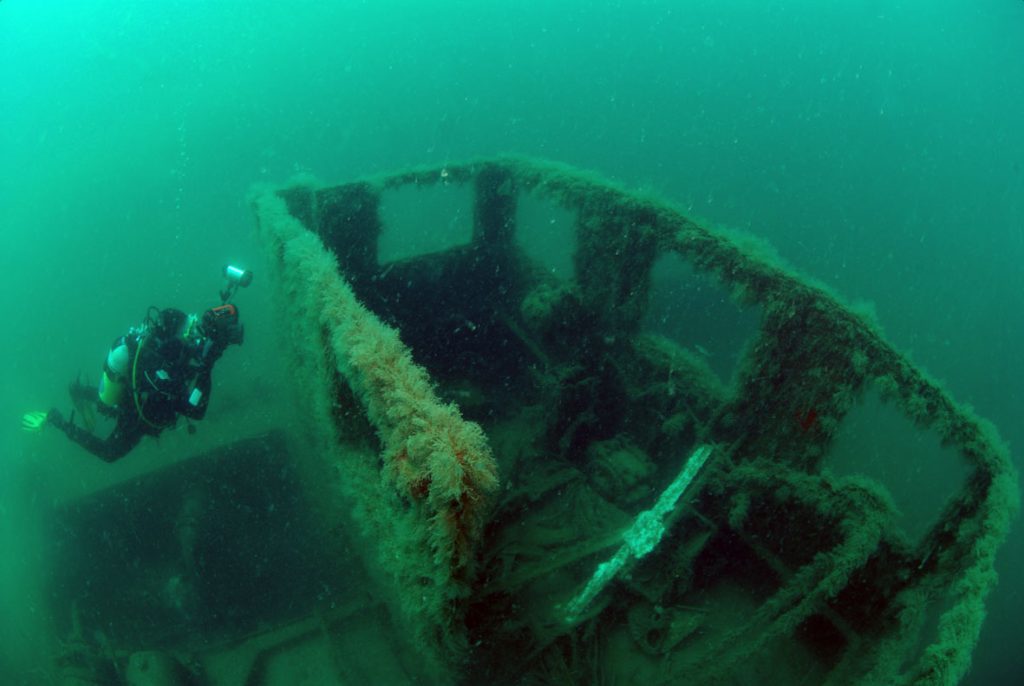
The Countess of Erne lies upright and intact, and parallel to the harbour wall, making navigation easier for divers to comprehend, though many of its features and structure have long since vanished. The boat started life as a paddle steamer, but was eventually demoted to transporting coal prior to sinking in 1935, after its moorings broke lose in a storm. Although it’s probably better to remain above or outside the wreck, it is possible to drop down and enter some areas in the holds if care is taken.
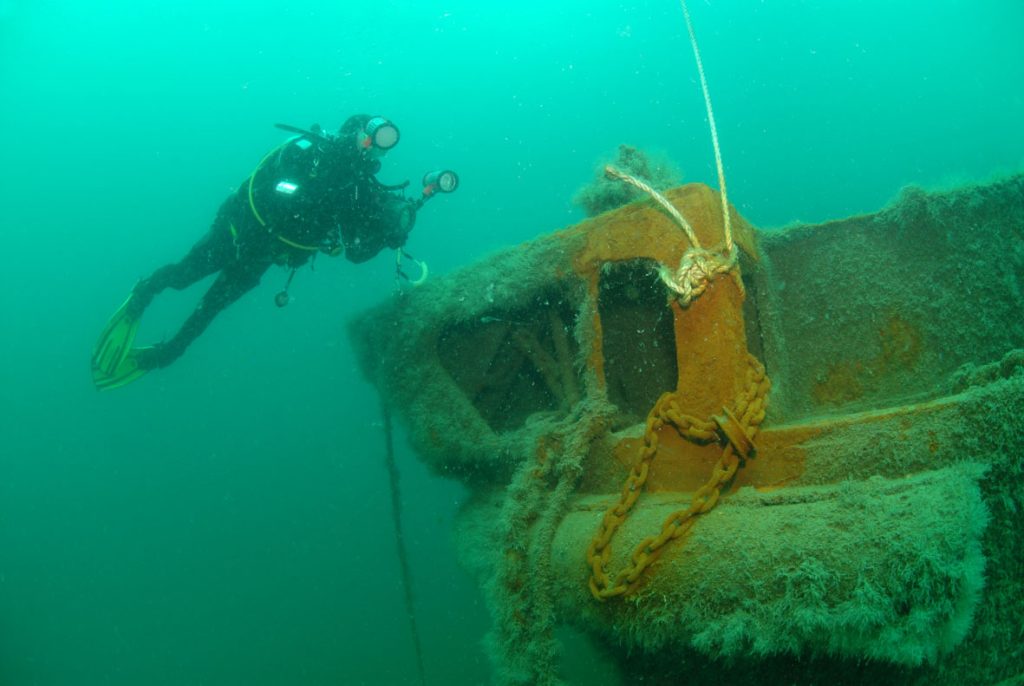
The Landing Craft and the Bombardon Unit can be dived individually, or in a single dive thanks to a useful orientation line linking the two sites. I visited the World War II Landing Craft first, and noted that it’s in quite good condition, with features such as the engines still easily recognized.
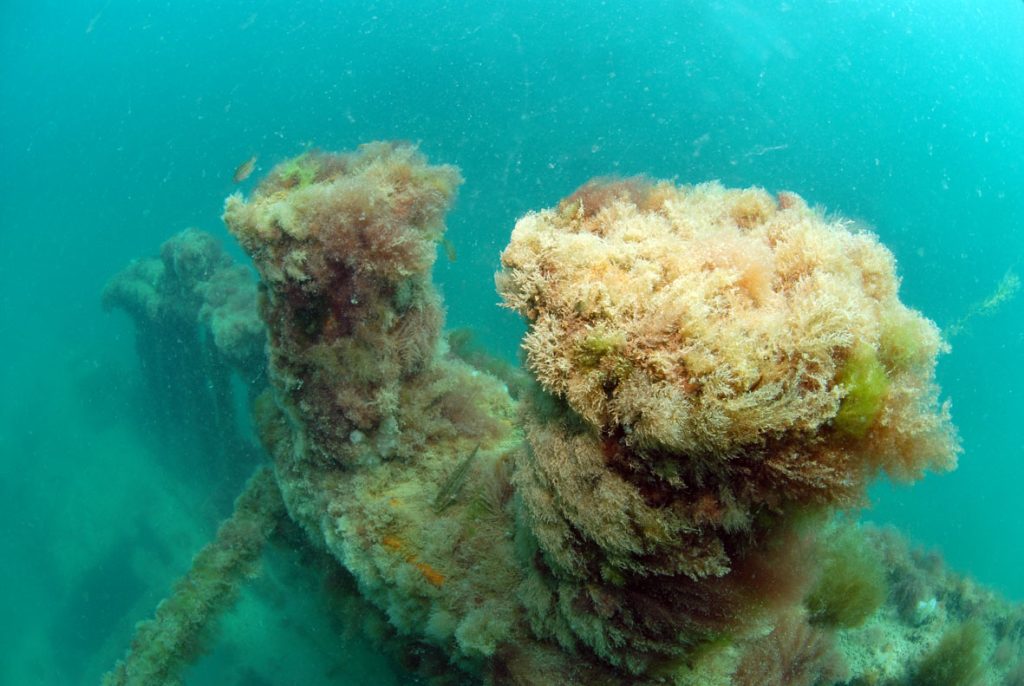
Also on the World War II theme is the Bombardon Unit, which was designed as an experimental wave-breaking unit for the D-Day landings. It’s a strange looking structure and difficult to “work out” underwater, especially as I only spent half of a single dive here.
It does have some interesting areas to poke around in, and if the visibility is reasonable, there’s even some wide angle photographic potential. Expect to see wrasse and pollack around these wrecks, and on the Bombardon Unit, I had a spider crab parachute to safety from the wreck into the silt below as my camera invaded its’ personal space!
What To Look Out For
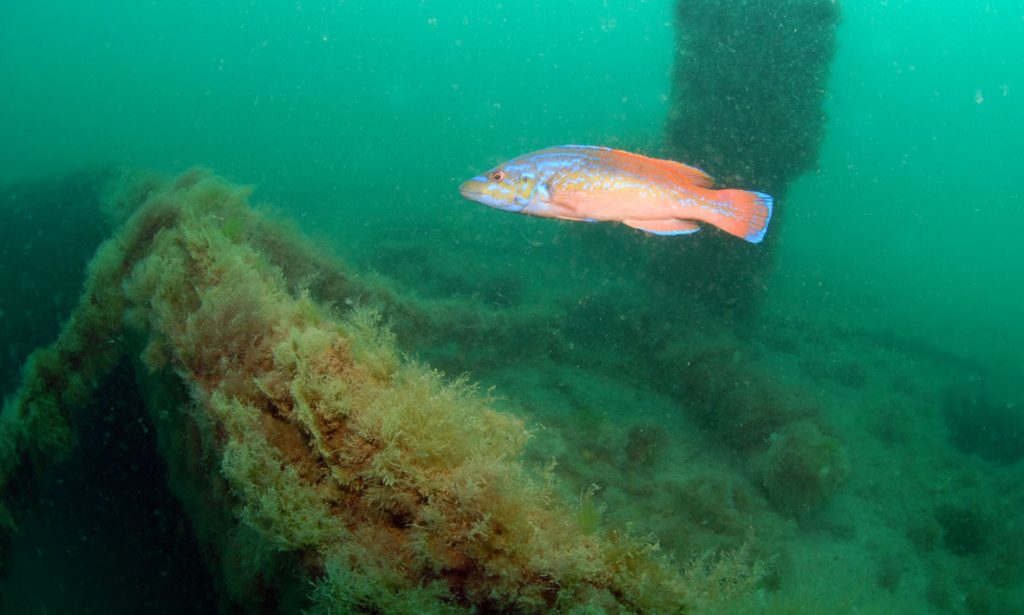
Portland Harbour is home to many species of fish and invertebrates which live on and around the wrecks, and of course, there’s the wrecks themselves. On each dive on my most recent visit, we were able to observe colourful cuckoo wrasse, schools of pollack and ubiquitous tompot bennies busying themselves around holes and crevices.
It’s also possible to observe surprises such as the lumpsucker fish, a portly and unafraid fish which I was once lucky enough to see on the Countess during my PADI Advanced Open Water course more than ten years ago. I’m unsure whether any specimens have been observed recently, but it’s certainly possible in the spring and early summer when they visit shallower water. Among the mollusc and crustacean community, look out for spider and shore crabs, and perhaps even a cuttlefish.
There’s also some interesting “small stuff” for macro fans to check out, although my wide angle photography set up that I used for the day meant that I tended to concentrate on the bigger creatures and the wider wreck vistas. If the visibility is reduced, photographers would be better advised to concentrate on photographing “macro” subjects, rather than wide angle.
Useful PADI Courses
Portland Harbour is a good place for inexperienced divers to hone their skills in a largely current free environment. It’s also good for gaining familiarity with low visibility diving, and for practicing the use of a compass and an SMB.
For courses, try;
Advanced Open Water (which includes underwater navigation)
Wreck Diver
Underwater Photographer
Underwater Naturalist
Underwater Navigator
Dive Centres
There’s several choices for diving at Portland, so divers can pick the most convenient for their own individual needs and timetable. I chose to dive with Fathom & Blues, who offer regular dives throughout the harbour and wider area most weekends, and also on weekdays if there’s enough participants.
Other dive centres include Scimitar Diving and Underwater Explorers. The area is also frequently visited by “landlocked” dive clubs, who often organise weekend trips, so it’s worth looking at those options too.
Wider Interest
The entire Jurassic Coast has been designated a UNESCO World Heritage Site. The area thus enjoys the same status as areas such as the Great Barrier Reef, the Taj Mahal and the Great Wall of China.
Portland, and especially Weymouth is a great place to combine a family day out, long weekend or holiday with some diving. In the summer months, there’s always plenty to do and see and there are several cafes, restaurants, kiosks and shops within reasonable proximity of the harbour, and there’s certainly enough to keep non divers and children entertained in the wider local area. There’s also a wide choice of accommodation, ranging from campsites and caravan parks, to bed & breakfast and hotels.
PORTLAND HARBOUR – WHAT YOU NEED TO KNOW
How To Get There
Portland Harbour is located to the east of the Chesil Beach Causeway and close to Weymouth, on the Jurassic Coast in Dorset.
The only realistic way of getting there is by road. Check out any online map for directions.
When To Go
Portland Harbour is sheltered and largely free of strong currents unless you dive close to any of the harbour entrances.
It’s a place that is likely to be diveable when other places won’t allow.
It’s also diveable all year round, though different times of year may yield significantly different sightings and conditions.
Dive Centres
I dived with Fathom & Blues, a long established dive centre in the area.
Fathom and Blues Ltd
262 Portland Road
Wyke Regis
Weymouth.
Dorset
DT4 9AF
www.fathomandblues.co.uk
There are several other dive centres in the area, in both Portland itself and also Weymouth.
Check out www.padi.com for full listings
Expect To Pay
Portland Harbour offers a decent value dive day out. Basically you need to budget for the diving (usually 2 dives a day) at around £16 per dive (assuming you’re bringing your gear), plus fills, parking (depending on which dive centre you use) and enough cash for food and drinks from the cafes and restaurants of your choice.
Quote
“The wrecks of Portland Harbour offer a good all round UK diving experience that’s suitable for divers of all abilities. It’s also likely to be diveable when other sites aren’t an option.”
Where To Eat & Drink
In the summer months, Portland and nearby Weymouth offers a great choice of kiosks, cafes, restaurants and pubs. Some of them close in the winter months, so expect less choice if visiting during that time.
For further information on Portland and the wider Jurassic Coast, try the following websites;
www.jurassiccoast.com
www.visit-dorset.com
Sport Diver Verdict
“Overall, the wrecks of Portland Harbour make a good dive day out. It has relatively easy diving conditions and is a good introduction to UK diving. Not too much for the novices, not too little for those with experience.”