
Text by Jeremy Cuff/www.ja-universe.com
Photography by Jeremy Cuff
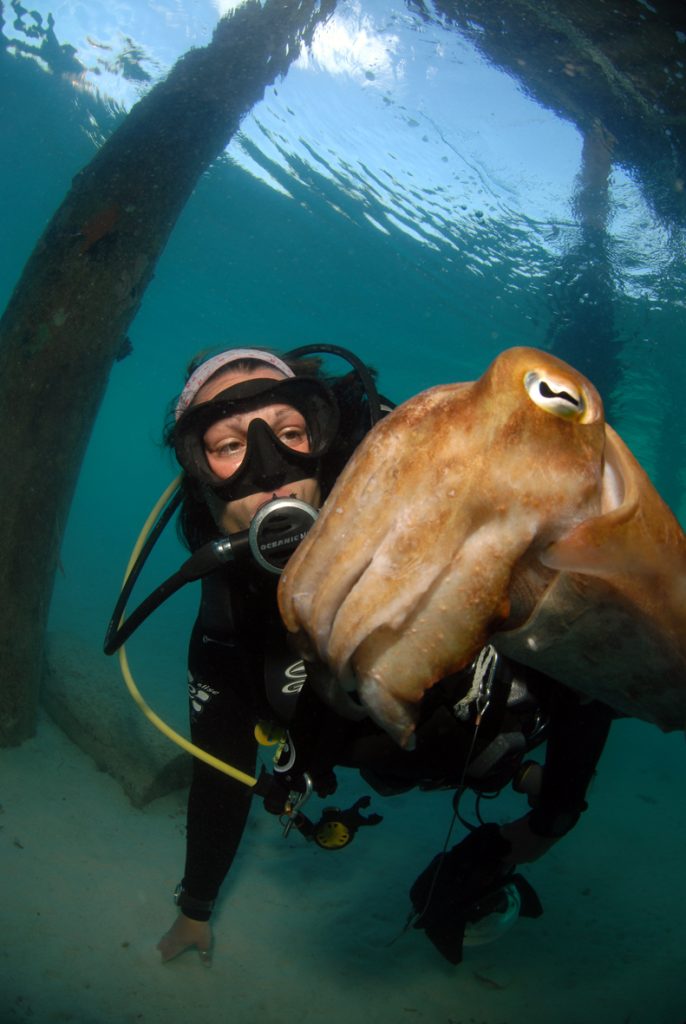
Lankayan Island is a tiny speck of land in the Sulu Sea, off the coast of Sabah in the Malaysian part of Borneo. It’s a lovely place, with a friendly and welcoming staff, superb beachside accommodation, excellent food and a great climate. There’s also some opportunities for great photography…
The Idea & Background
My visit to Lankayan was very enjoyable and productive in a photographic sense, even though the conditions for diving turned out to be less than ideal.
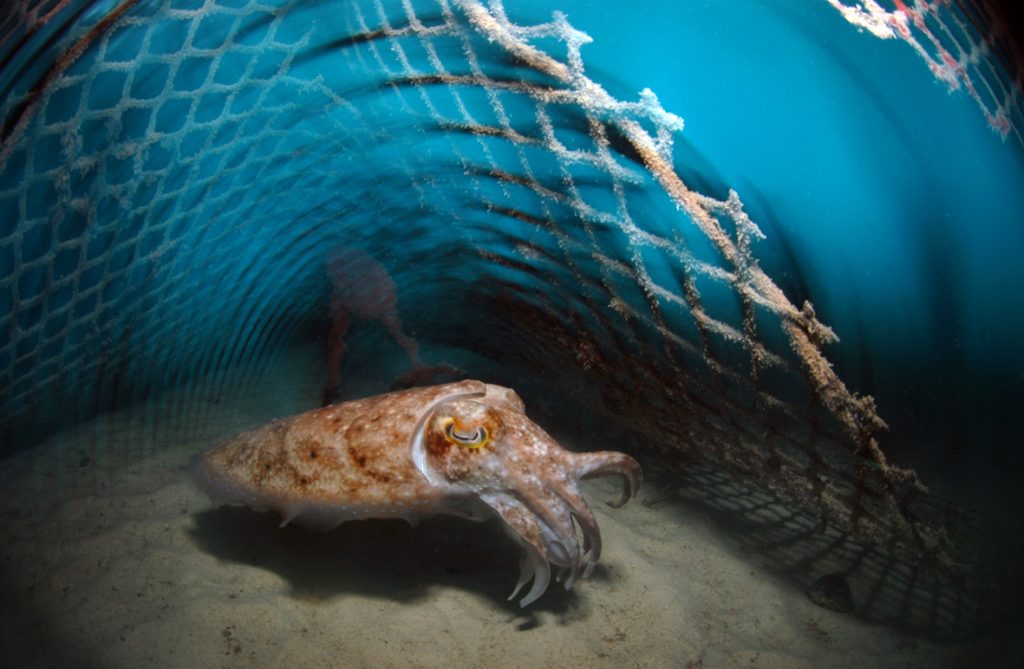
Unfortunately, my visit coincided with a period of very poor visibility, perhaps caused by stormy and turbulent weather, or perhaps it was river run off from the “mainland”. Whatever the reason, it had the effect of reducing the visibility to “UK levels” at times, which gave me no option but to work on my fish eye photography techniques in low/poor visibility.
But if the poor visibility was the “cloud”, the “silver lining” was mating and egg-laying cuttlefish. This was the highlight of the trip and a great photographic opportunity.
At the beginning of my stay, one photographer had an encounter lasting an hour or so with a cuttlefish underneath the jetty. Everyone assumed that it was a “one-off, not to be repeated” kind of event, but we soon discovered that there were several cuttlefish in the area, and that they were mating and laying eggs in the shallow and current free waters around the jetty. It was an opportunity not to be missed.
By spending time with the cuttlefish, which were tolerant of close approaches, I was able to photograph the mating, the egg laying and the colourful and contorted displays of these fascinating animals.
I can best summarise my approach by saying that there wasn’t any pre-conceived “idea” about what to capture other than aesthetically pleasing images featuring aspects of behaviour, plus a general awareness of the light levels, ensuring that the camera and strobe settings are thought out in advance, and having an alertness to any opportunities that may present themselves on the dives (which might be fleeting and “unrepeatable”).
The Shot
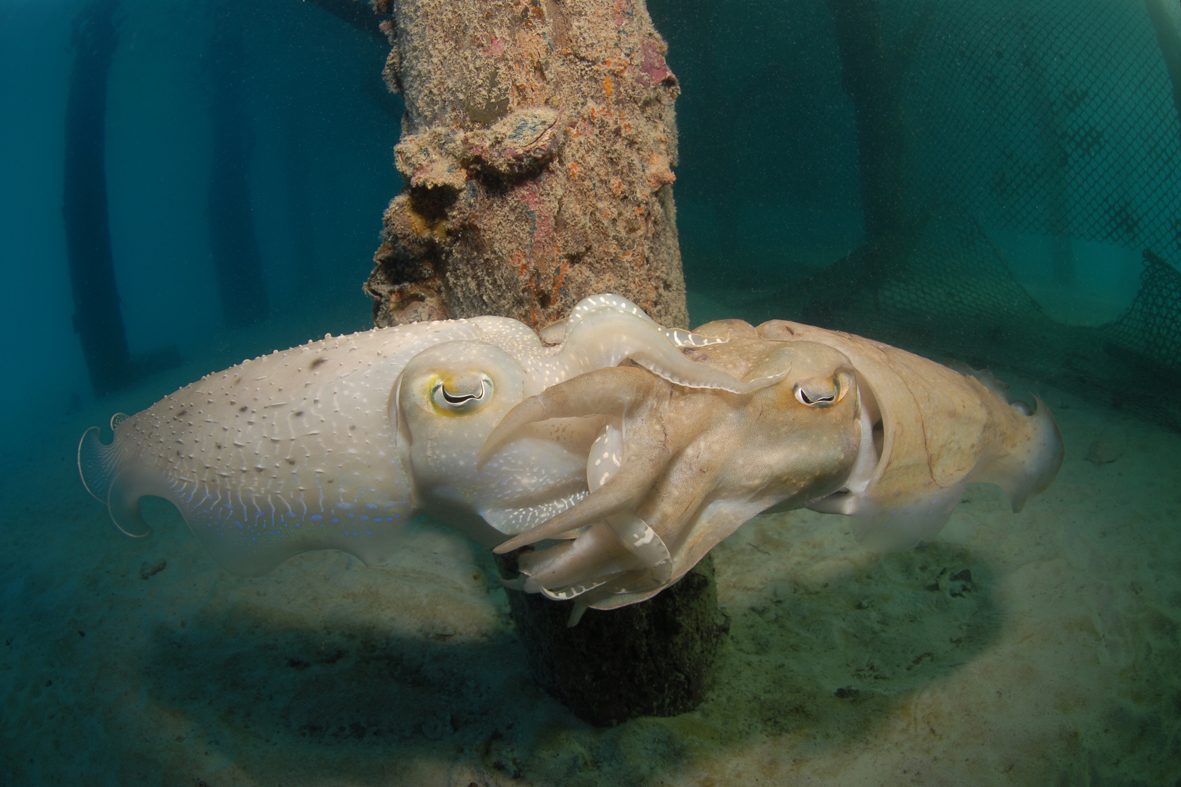
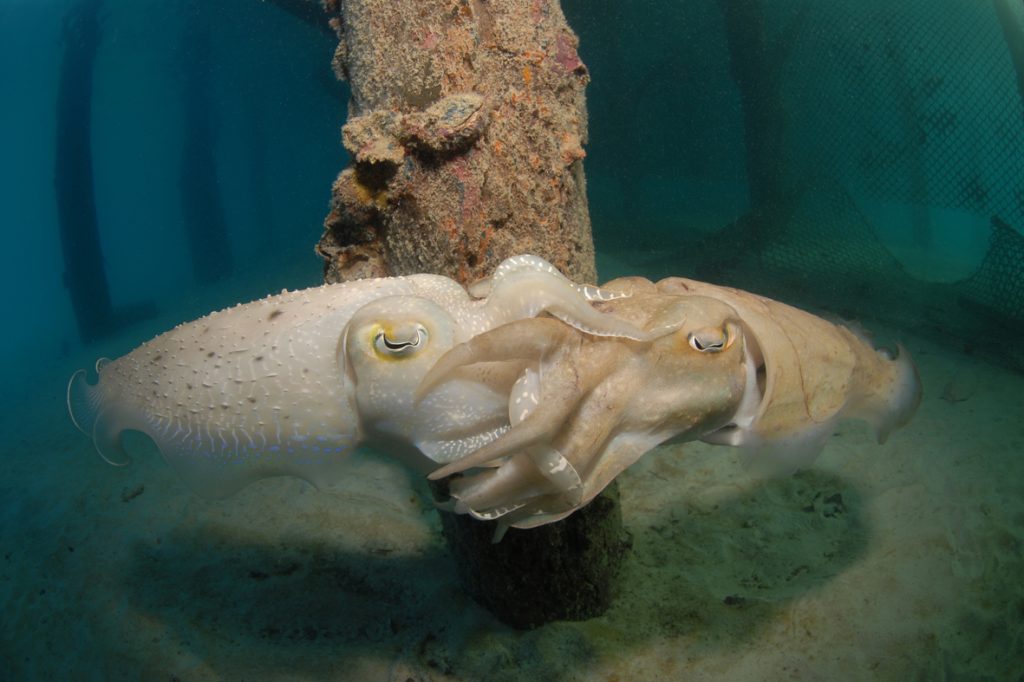
The resulting image of the mating cuttlefish is, I think, and example of adopting a “photographer’s” approach, rather than a “divers” approach in order to maximise the potential, and is a good example of the old adage “where preparation meets opportunity.”
In order to capitalise on the “mating obsessed” cuttlefish, I took the decision to opt out of several boat dives that were heading out to the reefs, and instead spend the time around the jetty trying capture some of what was happening.
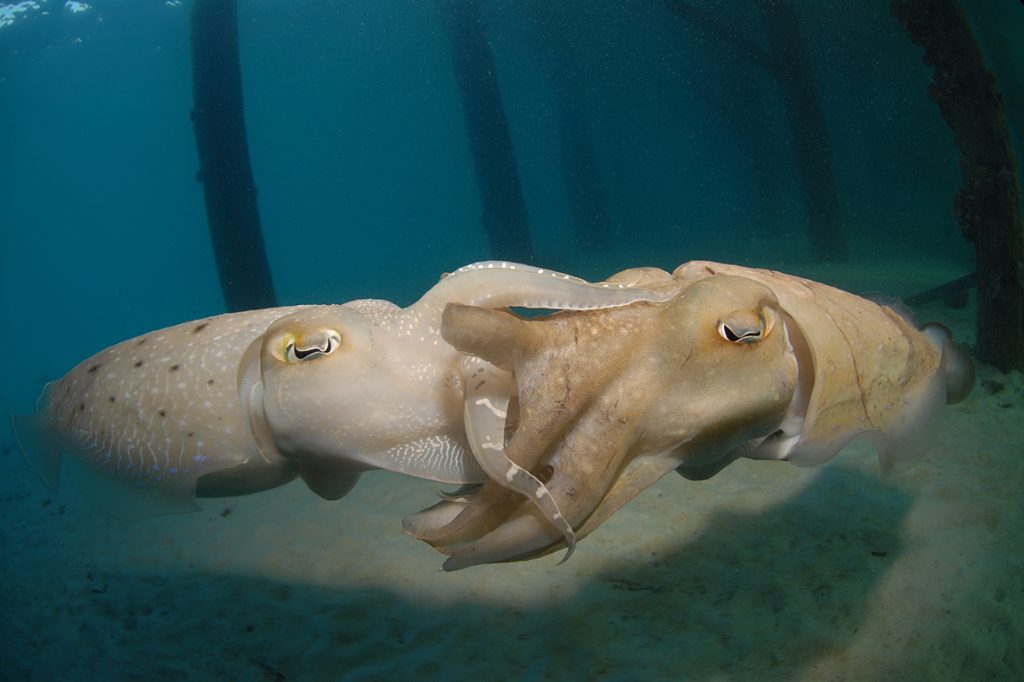
On one such dive under the jetty, I located one of the females and spent time “hanging out” with her, shooting images whenever she drifted into pleasing aspects. After more than an hour of this, we encountered another cuttlefish, a male. The pair began acknowledging each other by exchanging their mysterious colour change communication, and suddenly things got really interesting – they began to mate.
I’d already set the strobe power for close up fish eye work, and the camera with the optimum shutter speed for a well exposed background, which allowed me to concentrate on capturing and accurately framing the action.
The entire mating lasted no more than 10 or 15 seconds, with the last image taken before they separated being the best. I think the symmetry of the cuttlefish in front of the pier leg combined with the avenue of pier legs leading away from the main subject, and the fantastic eye contact with the mating pair makes this image special. For me, this “peak of the action” shot represented the kind of images that I’m striving to capture.
In fact, I was so pleased with it, I used it on the cover of our “Diving Dreams 2011” calendar!
Image taken on 30th January 2010 using Nikon D200, 10.5mm Fish eye lens and a Subtronic Strobe. Camera settings ISO 100, 1/50th second, f8. Strobe power was probably quarter power.