
Text by Jeremy Cuff/www.ja-universe.com
Photography by Jeremy Cuff/www.ja-universe.com
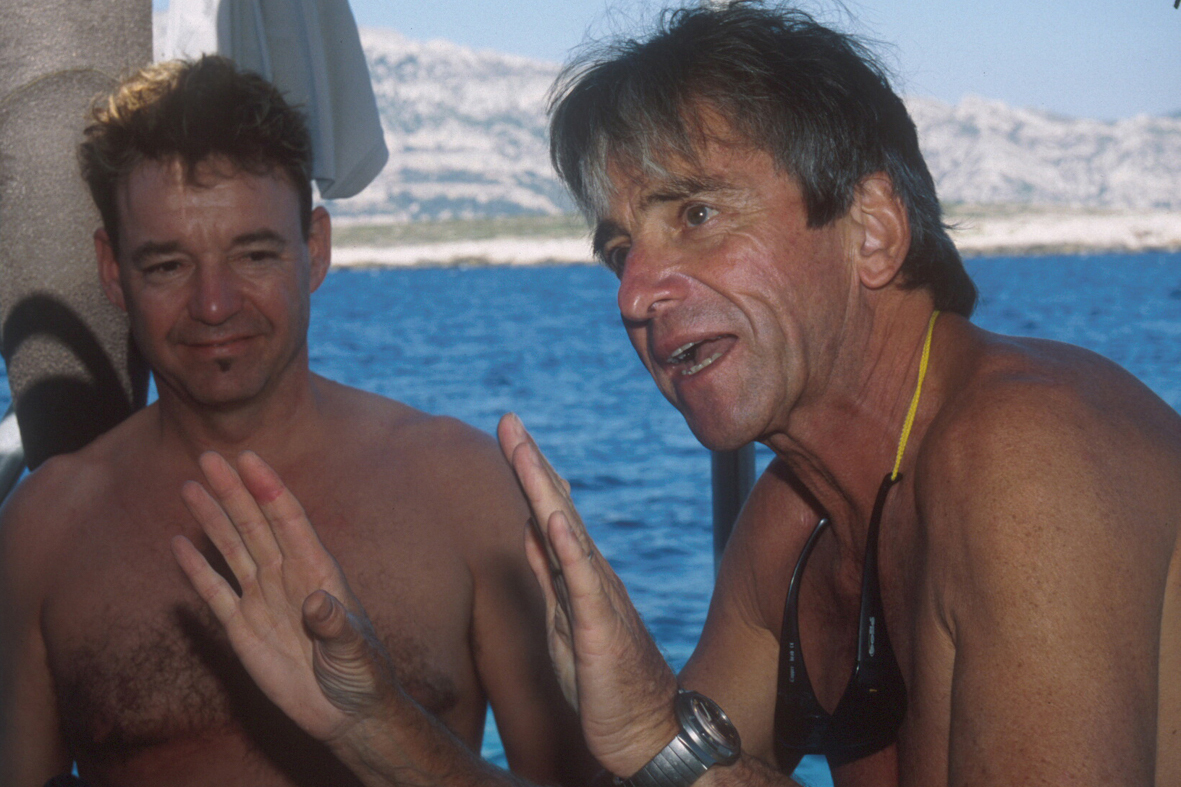
Kurt Amsler is a world-renowned and award winning underwater photographer based in the south of France. Last September, I attended his “Advanced” underwater photography course, and in June of this year I went back for the follow up, the “Advanced Plus”. His philosophy on underwater photography might best be described as “The Art of Preparation”…
Anyone who has seen Kurt Amsler speak, perhaps at Visions Of The Sea or at a British Society of Underwater Photographers (BSoUP) meeting will know that he’s a charismatic, committed and uncompromising man. You will know that introductions and small talk are not high on his agenda. Instead, he goes straight to the heart of the matter.
He is passionate about marine conservation and fascinated by animal behaviour. First and foremost, of course, he is an underwater photographer – a subject that he teaches in his own singular way from his base at Les Lecques in the south of France.
The “Advanced” is a six-day course with a combination of classroom sessions and five dives. It is aimed at developing a sound understanding of how to achieve competent underwater photographs. The “Advanced Plus” is also a six day course, and is designed as a natural follow up to the “Advanced” but includes seven dives and therefore slightly less classroom sessions. Both courses cover macro, fish and wide-angle photography techniques.
Each course starts with an introduction evening that encompasses Kurt’s philosophy of underwater photography, an overview of the week’s activities and objectives, plus a slide show about diver behaviour. So, although Kurt’s knowledge on specific underwater photography techniques is imparted throughout the week, the introduction evening sets the scene for what will follow.
His lessons are thorough and intensive and peppered with stories gathered from a lifetime of underwater photography and marine conservation. It makes for fascinating listening – from the octopus that stole a camera to observations (amusing and otherwise) regarding the endeavours of other divers and underwater photographers.
More technical information such as strobe positioning, mixlight techniques, colour temperatures and camera settings is also delivered in great detail and with the authority of a man who has tried and tested most techniques and equipment to the limit of their capability. Now a digital user, he can also provide extensive knowledge surrounding the pros and cons of the digital vs film debate in what is a transitional time for all photography.
So, what can be said about Kurt’s approach to teaching underwater photography? Well, much of it is aimed at instilling in the student a practical, organised and knowledge-based platform upon which he can develop the necessary skills. It might best be summed up as “the art of preparation”. Creative decisions such as composition are touched upon, but what matters here is how to capture as a picture what you see and imagine.
It’s pleasing and refreshing that environmental considerations are given a high priority on the courses. In the wider world of diving, some underwater photographers give the whole activity a bad name by going to any length to get the image. Kurt Amsler’s approach is to insist upon the highest standards of diver behaviour to ensure that the marine ecosystem is not irreparably damaged.
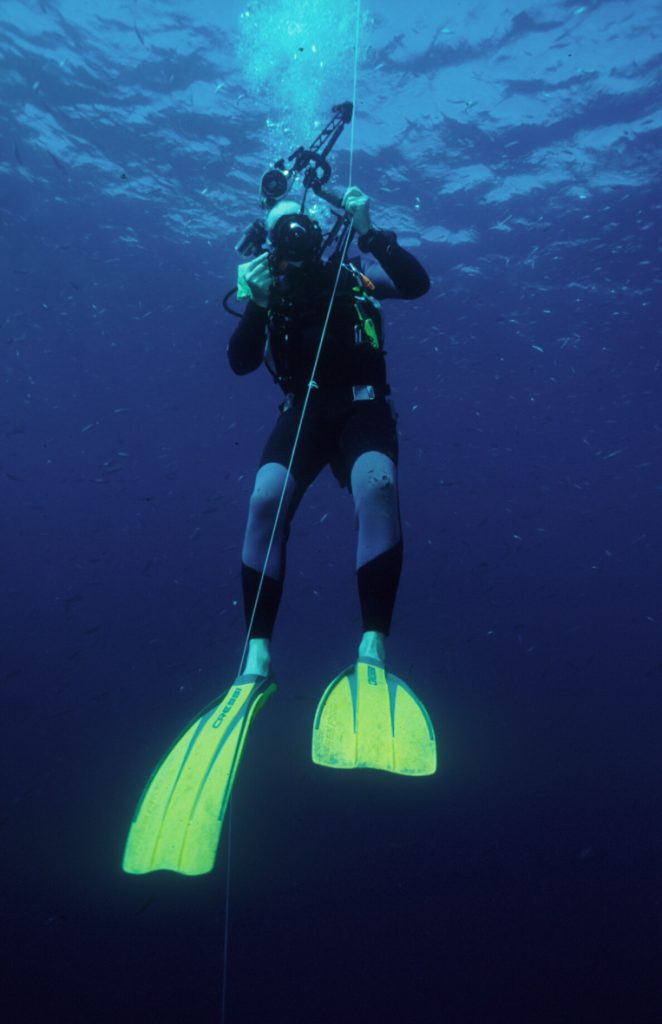
In order to minimise the environmental impact at a dive site, the importance of good buoyancy and correct weighting is discussed at some length. Excessive finning is also frowned upon, and is hardly conducive to good photography either. Additionally, a well balanced BCD and good tank position are important factors in that they affect diver comfort and posture in the water. Ideally, clutter such as ropes, strings and dangling hooks should be avoided unless necessary for the diving conditions.
Kurt is a jazz drummer in his spare time and he draws an interesting parallel with being a musician – how an instrument is set up or prepared has a direct effect on the quality of the performance – such as the height of the drum stool or the placement of the cymbals. And so it is with underwater photography too – a correctly weighted and balanced diver is not only likely to cause less harm to the marine environment, he is also creating a circumstance in which he can produce better photographic results.
Avoiding “mental clutter” and diver stress is also extremely important for successful underwater photography. As we have already seen, correct weighting and comfortable dive equipment can help tremendously as can the camera itself, which should ideally be balanced and “weightless”.
Successful underwater photography cannot be achieved by just being comfortable in the water and possessing knowledge of f-stops and shutter speeds. It’s really the overall approach to the activity that can make or break the success of a photographer’s work. Kurt will often repeat, “Getting the picture is the result of many things leading up to it.” And there are indeed many events leading up to getting an image – it is, he says, “the way to the picture”.
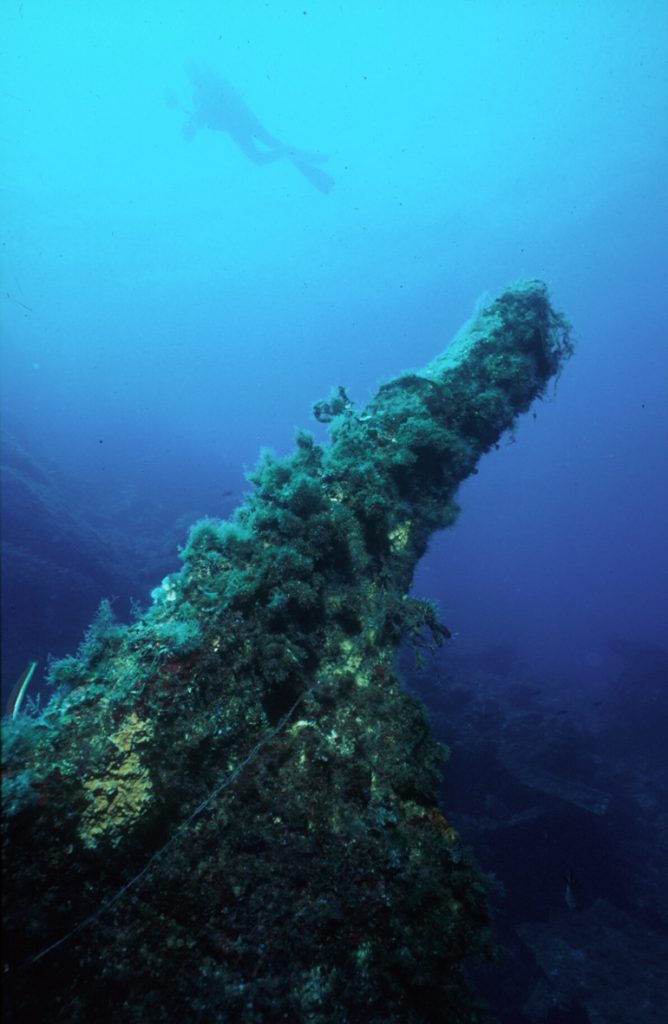
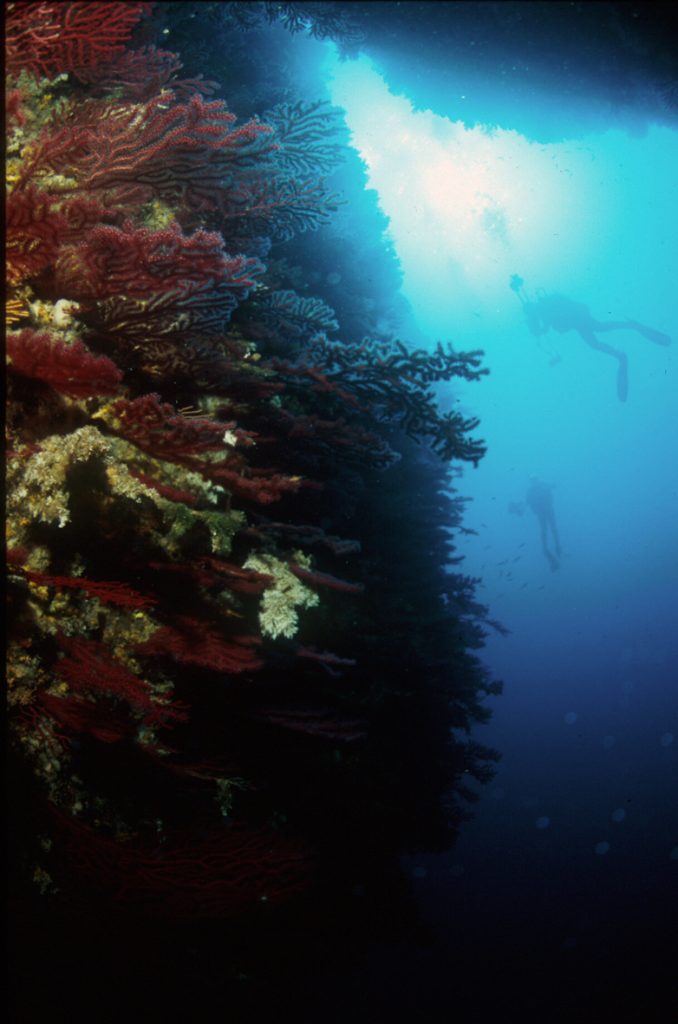
Kurt puts into perspective the huge amount of effort and expense required before a single underwater image can be taken. Simply put, it might involve researching a dive destination, a plane journey, a transfer, a boat trip to a special dive site, a once in a lifetime encounter only to find that you didn’t charge your strobe properly or you left the lens cap on the camera. Or perhaps you had the wrong type of lens for the subjects you encountered. It then becomes a very expensive waste of time. So, it’s easy to see the benefits of good organisation and preparation. But in practical terms, what kind of preparation is required?
Research into the dive sites to be visited is a useful addition to the all important dive briefing itself. Knowledge of what to expect will influence the set up that the photographer chooses and is pivotal to the end result. With the knowledge of where you will be diving and what may be encountered there, the photographer can prepare his camera equipment the night before and have time to solve any technical glitches he may come across.
“Have a plan before you get to 30m”, says Kurt. This is because the mental agility of even the most experienced diver is severely hampered at depth when it is too late to start thinking about what kind of subjects to look for.
Learning about the behaviour of a subject is also an important and often overlooked aspect of underwater photography. Why try to photograph lionfish at midday when they are more likely to be active during the late afternoon or dusk?
The importance of the dive briefings themselves should not be underestimated and is a crucial step in locating the required subjects. Following it will be much more likely to bring in good results. The diver who didn’t listen may miss some or all of the best spots – perhaps an overhang festooned with coral or gorgonians.
Kurt talks of the camera as “an extension of your body and personality rather than an item that costs 2000 Euros”. The task, he says, is to capture what you see and imagine using the camera as the tool or means of expression. Over time and with much practice, the photographer will intuitively take all the steps required to capture a good image when an opportunity presents itself.
Kurt will often challenge some of the assumptions made by photographers producing disappointing results. The salvation for poor images is not necessarily buying more and supposedly better equipment, it is understanding and organising the equipment that you already have. Introducing a new piece of equipment that you don’t fully understand to your existing equipment that you don’t fully understand is not likely to take your photography any further forward.
Sometimes a photographer can “luck into” good results without understanding why the images are good. If this is the case, it follows that the same photographer may be unable to repeat a successful image. Similarly, if he gets poor results he will not understand what steps to take to make them good. Knowledge is everything here.
A main objective of both courses is to “create understanding” of what is being done, so that it can be repeated when a comparable opportunity presents itself. Kurt recommends writing down what you did photographically at each dive site – creating a “photo log book”. It can be referred to again and again.
In the “Advanced Plus” course, Kurt introduces the technique of “re-shooting” a subject. It’s incredibly simple and very effective – a chance to dive on a site, take pictures, study the results in the classroom and then return to the same place to re-shoot the image again, but better. It’s a technique that Kurt himself uses wherever possible and is particularly suitable for macro, wreck and wide-angle “underwater scenery” photography. It is, of course, not possible to practice it with “one-off” encounters such as a passing manta ray or shark.
Composition is a subject personal to the photographer and is not central to the theme of the courses, though it is discussed. Kurt’s approach is to give pointers as to what can help to make an image work, such as separating or “releasing” a subject from the background so as to avoid clutter. He says, “Use the camera to do the same thing differently.”
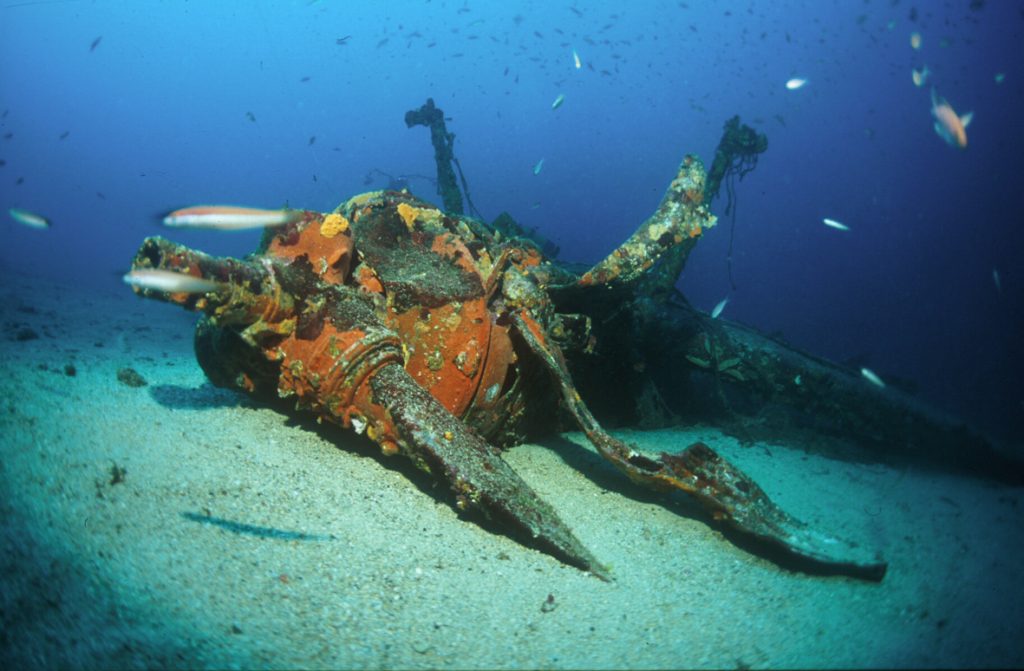
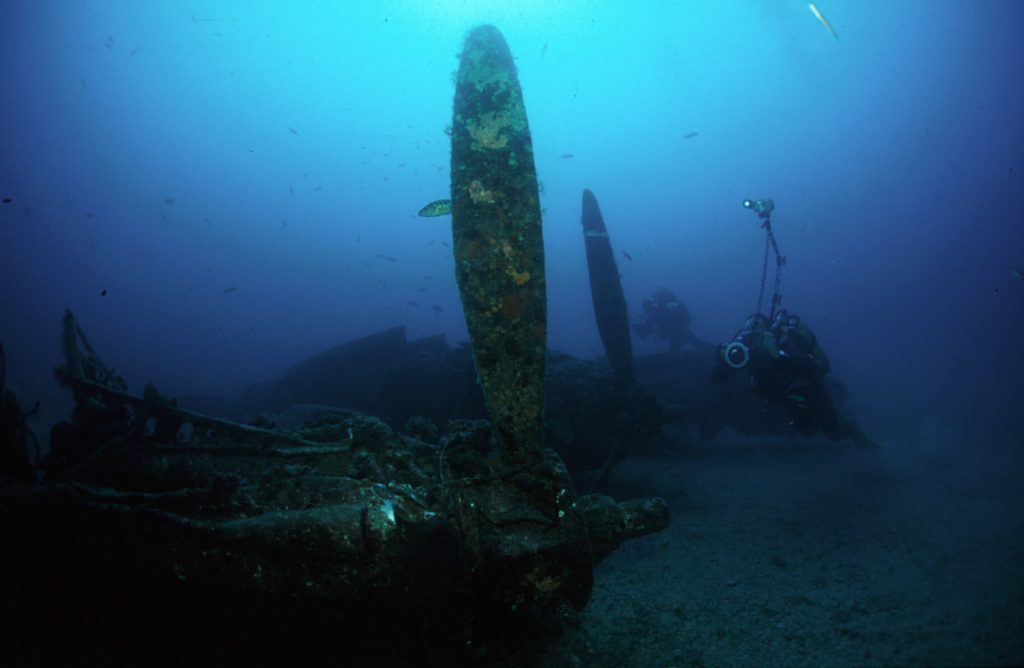
Subjects abound on the dive sites off Les Lecques and nearby La Ciotat, and also around the rugged uninhabited island of Ile de Riou between Cassis and Marseille. The diving is conducted in “real” rather than “perfect” conditions, which also adds an extra challenge for the students including an excellent 40-metre dive on the wreck of a P38 fighter plane.
To sum up, a week with Kurt Amsler is worth consideration for anybody who’s serious about improving his or her underwater photography. The courses are designed to fill gaps in a photographer’s knowledge thus creating the all important “understanding” that is required to produce consistently good work. He teaches the importance of the “art” and the “preparation” in equal balance which blends into an entire approach. Indeed, a few days in the company of Kurt Amsler virtually guarantees that his approach to underwater photography is successfully transferred to the student.