
Text by Jeremy Cuff/www.ja-universe.com
Photography by Jeremy & Amanda Cuff/www.ja-universe.com
The Dry Tortugas forms the end of the Florida Keys and is probably the remotest area of Florida, a long way from theme parks and mass tourism. To dive there, a liveaboard is the only real option. Those who make the journey will be rewarded by abundant marine life, countless seabirds and a strong sense of maritime history…
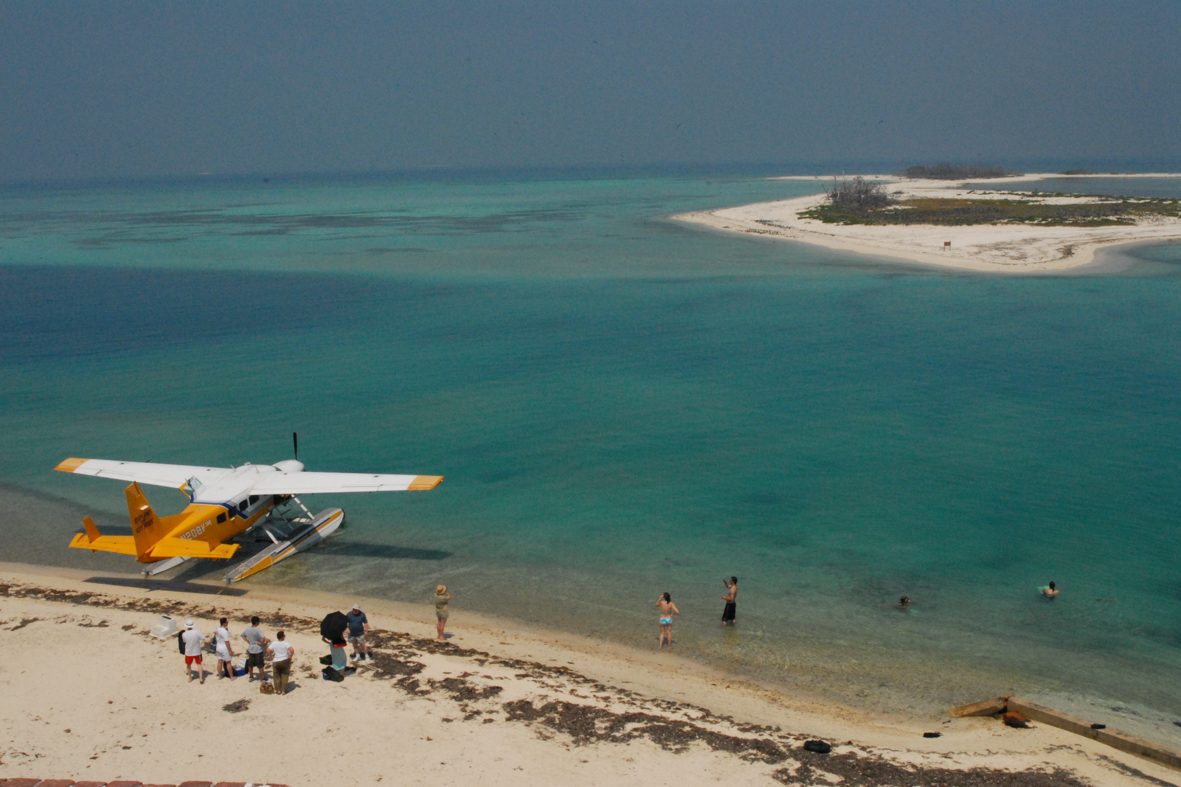
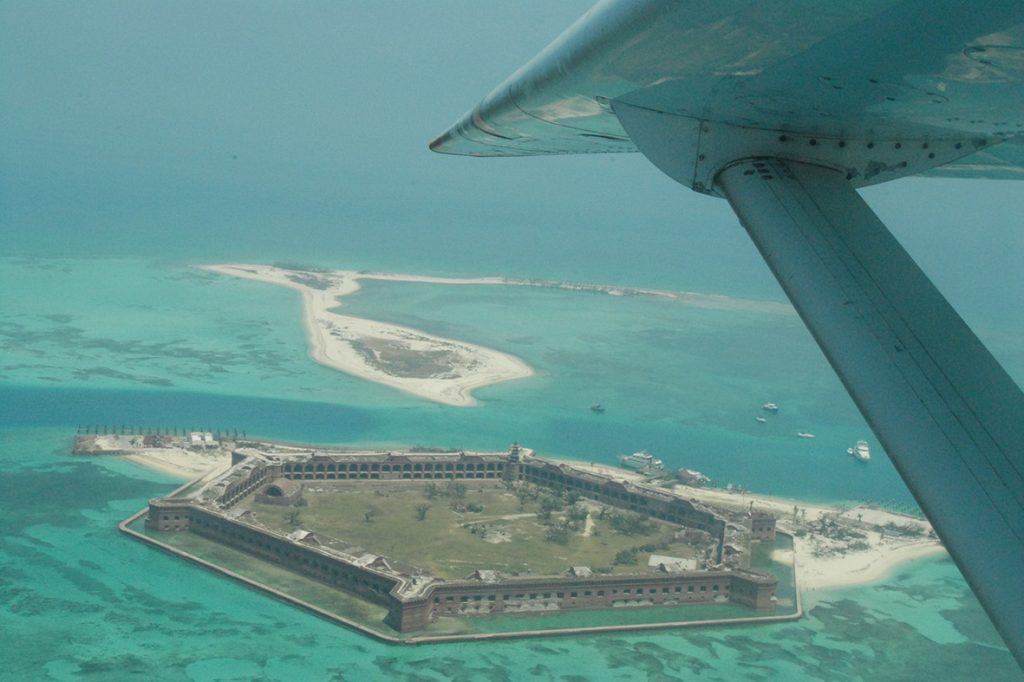
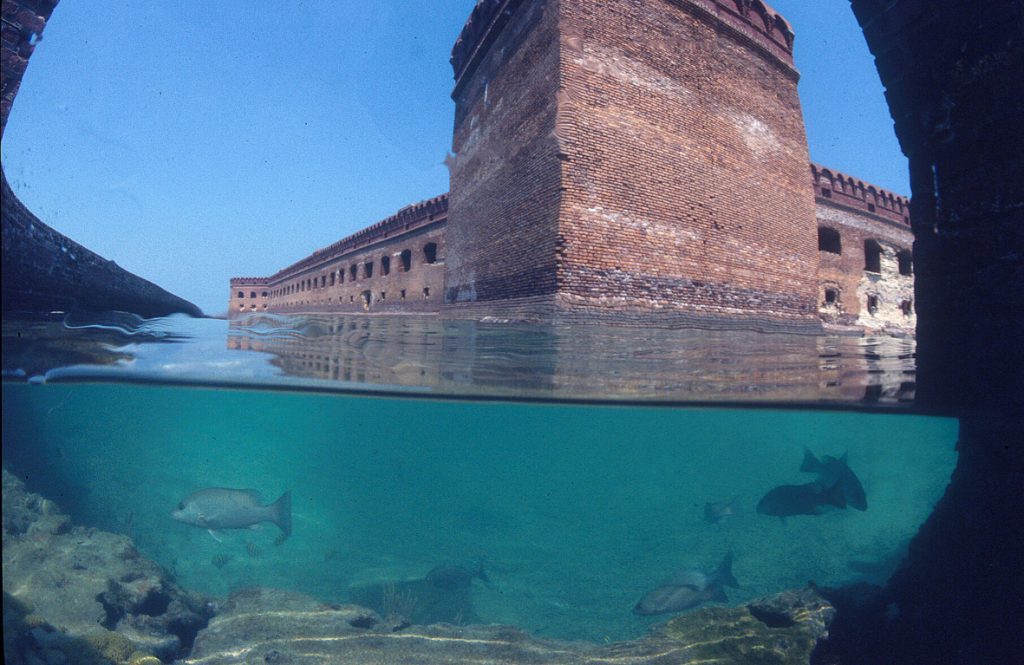
Ever since I first saw an aerial photograph of the remarkable Fort Jefferson in the Dry Tortugas, it struck me as a unique place, like nothing I’d ever seen.Whether arriving by seaplane or boat, the first impression of many a visitor on reaching this spectacular fortress must surely be “why did they build this out here?”
A quick delve into the history books provides a fascinating insight into the reasoning behind such an ambitious project and the remarkable effort required for its construction – involving no less than 16 million bricks. If you factor in the seasonal threat of hurricanes and tropical storms, the fort’s existence seems even more astonishing.
The Tortugas were first discovered by the Spanish explorer Ponce de Leon in 1513. He named the area after the abundance of sea turtles or “tortugas” which were conveniently culled for their meat to feed emaciated sailors. As the area became more widely known to mariners and explorers, the word “dry” was added to the name, to indicate the lack of fresh water on any of the seven the islands.
By the early 1800’s, the area was considered of strategic importance, mainly to protect the Florida Straits and access to the Gulf of Mexico. The construction of Fort Jefferson began in 1846, but it was never fully completed. “New” technology in the form of the rifled cannon and the shifting sands of politics made it obsolete before any weapon was fired in anger. The fort was then utilized as a penal colony before the army completely abandoned it in 1874.
After the military withdrawal, the area’s significance in terms of conservation increased. By 1908, the area became a wildlife refuge to protect the huge sooty tern rookery from egg collectors. Then, in 1935, President Franklin Roosevelt set aside Fort Jefferson and the surrounding waters as a national monument. More recently, the area was re-designated as the Dry Tortugas National Park in 1992 to protect both the historical and natural features, and encompasses many of the reef systems.
To dive there, it soon became apparent that the choices are fairly limited – not many boats go there, and it’s only accessible by liveaboard.The closest habitation is the eccentric and hedonistic “end of the road” island of Key West some 70 miles away to the east, where scheduled liveaboards and charters can be booked. From Key West, some of the Tortugas dive boats will also stop en route at the Marquesas Keys, another little known area to divers outside of the Florida Keys.
In the end, we chose the Ultimate Getaway, a liveaboard based out of Fort Myers Beach on the Gulf side of Florida’s mainland, some 90 miles northeast of the Tortugas. Our trip was a “three nights four days” affair, although seven and ten days charters are also available.
During many years of running trips into the park, Captain Rick Pitts has built up a formidable “database” of known dive sites, and a comprehensive knowledge of the area. Unless visits to certain dive sites are pre-agreed, the usual format is for Rick to decide upon the sites once out there.
Including “Captain Rick” himself, the boat has a crew of five who work hard to ensure that up to 20 divers enjoy a good experience. Tanks are promptly refilled, food is generously provided, the safety procedures are good, briefings are given for each site, help is always on hand for divers entering and exiting the water, there’s a camera rinse, mask defog and so on.
So, what was it like to dive there? Well, it didn’t start very well for most divers. We awoke to overcast skies threatening rain with a stiff breeze whipping up a swell and surface current. It wasn’t the clear blue skies and flat calm water that we’d hoped for but then, that’s diving.
The first dive site was the wreck of the Avanti (or Windjammer) and most of us missed it! The tricky surface conditions meant that the dive boat was moving around a lot and many of us lost our orientation as to where the wreck was located in relation to the boat – and yes, we should have taken a compass bearing. But we didn’t!
For the minority that did locate the wreck, it was enjoyable with lots to see. A resident Goliath Grouper had made the remnants of the ship its home, along with countless other fish and invertebrates.
The weather did improve during our time out there but it remained mostly overcast with occasional sunshine peeking through. So, whilst the conditions were perfectly acceptable for enjoyable diving, I don’t think that we saw the area at its very best. The swell also ensured plenty of leg bashing on the steps, although crewmember Big John was always there to say, “welcome back” and act as a gear and camera wrangler.
Anyone diving on the Ultimate Getaway is likely to do a lot of dives. Expect anything from 5 to 7 dives on each full day although the “boat record” is an incredible 10 dives. Many of the best sites are a long way from the islands, so don’t expect to be diving in the shadow of Fort Jefferson. Most dives sites benefit from moorings marked with bouys but drift dives are also possible, with significant currents running in some areas.
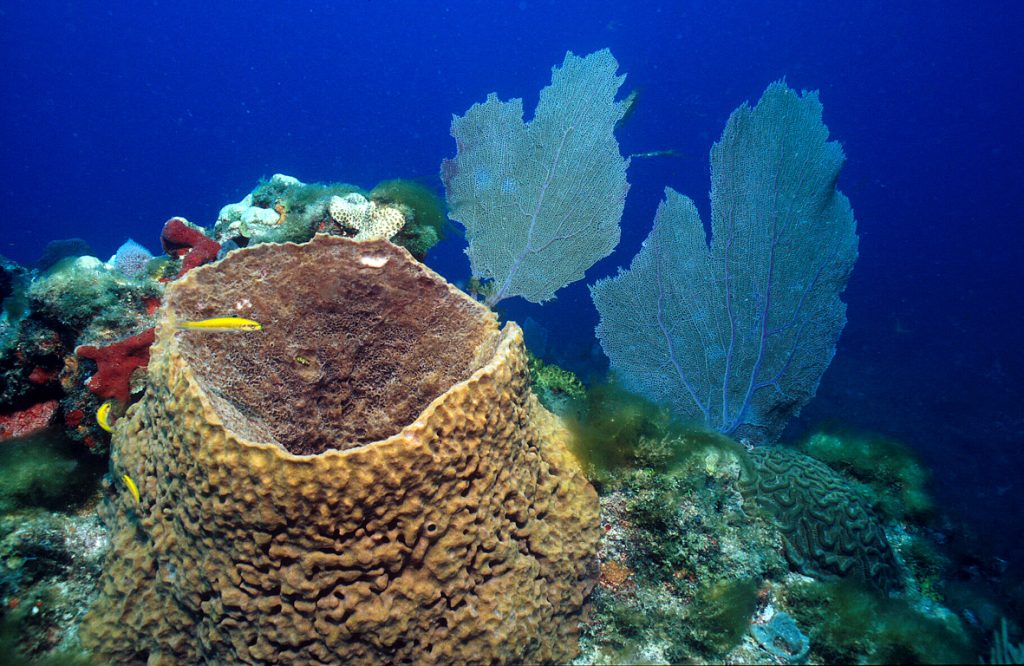
The reefs themselves are quite varied, shaped by the complex relationships between the islands, currents, prevailing winds and the annual battering of hurricanes – on a calm day it’s difficult to imagine the ferocity that must be unleashed here. A multitude of corals and sponges adorn the reefs and many of them, at sites such as Bat Cave and Oz are characterised by crevices and swim-throughs.
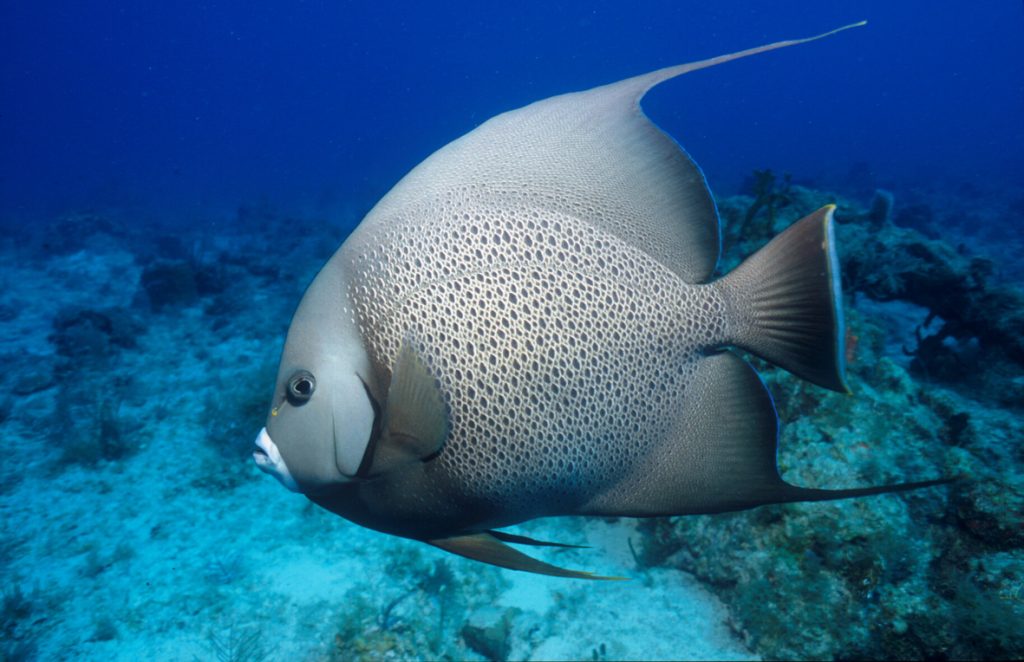
For fans of fish and macro-life, the Tortugas shouldn’t disappoint. Schooling fish such as French Grunt and various species of snapper are commonly encountered in open water. Closer to the reef, species such as Gray Angelfish, Honeycomb Cowfish, Cornetfish, Ocean Triggerfish, Stoplight Parrotfish and pugnacious little Damselfish are reef regulars.
On the reefs themselves, moray eels, soldierfish, blennies and gobies mix with ambush predators such as scorpionfish, lizardfish and even frogfish, a prize for the vigilant diver. Invertebrates are everywhere you care to look and include Christmas Tree Worms, lobsters, anemones and several species of crabs.
The entire area seemed to be in the grip of a plankton and algal bloom during our visit and nowhere was it more evident than at Ultimate Pinnacle. Here, the sea was full of suspended organic “soup”, an attractive proposition for plankton feeders. And, we might have sighted one of the biggest plankton feeders of all.
At the end of a dive at 4 Ball, a huge dorsal and tail fin broke the surface some distance from the boat. Some divers were still in the water, so it wasn’t possible to move the boat towards the mystery leviathan. It remained at the surface for a while but by the time all divers were back onboard, it had disappeared. It later resurfaced again, still some distance from the boat, and again disappeared.
Whatever it was, it was very big and definitely a shark, sparking an excited debate among crew and divers as Rick attempted to move the boat in the general direction of the last sighting. Although not positively identified, the consensus was that we’d seen a large whale shark – it would make sense, as there was plenty for it to eat. Either that or a huge great white! The Dry Tortugas is that kind of place; you’re never sure what might turn up.
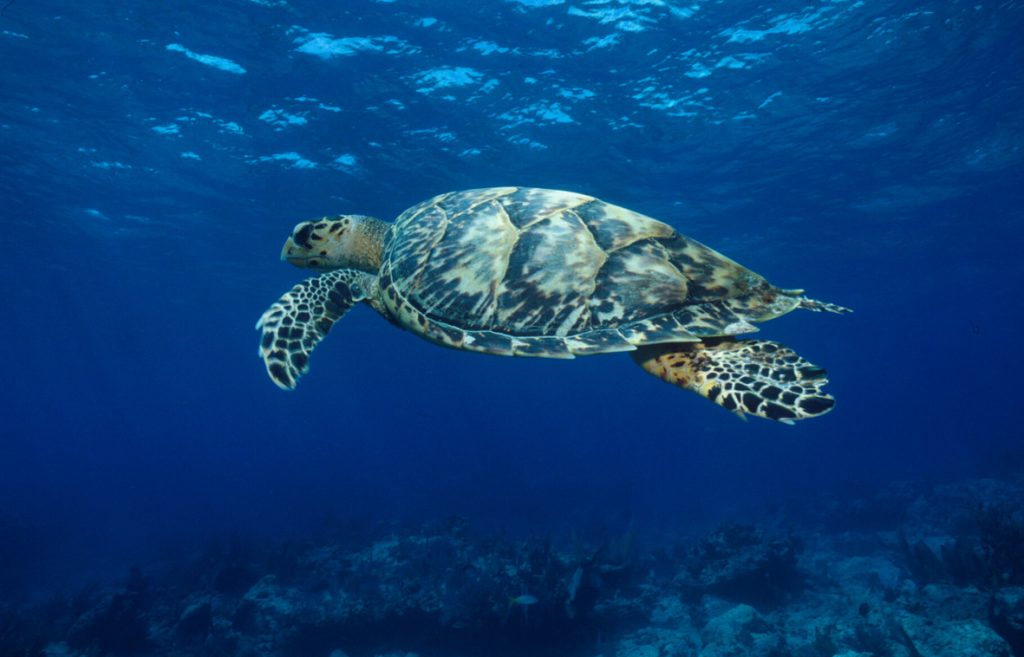
Other “big things” are also encountered with regularity: turtles, after which the area is named, are common and can be found almost anywhere as can stingrays and eagle rays – it just comes down to being in the right place at the right time. Nurse sharks are frequently sighted and aren’t overly concerned by the presence of divers unless directly approached. Reef sharks are also regulars but less often seen, tending to swim away once divers enter the water.
Large fish such as barracudas, jacks and Spanish Mackerel are often encountered, sometimes approaching divers as if to ascertain their identity before losing interest moving away: amberjacks in particular will check out divers with close passes whereas Spanish Mackerel tend to be more wary and watch from a distance. Other species of jack such as the Almaco Jack and the distinctive African Pompano can also be observed.
Night dives provide a chance to check out some of the Tortugas’ nocturnal inhabitants. At the K Marker site, we disturbed a large Goliath Grouper that looked distinctly irritated at our invasion of its privacy. Up close, many shrimp, arrow crabs, hermit crabs and reef crabs were venturing out. Lobsters, common in the Tortugas, are also active by night and are frequently sighted.
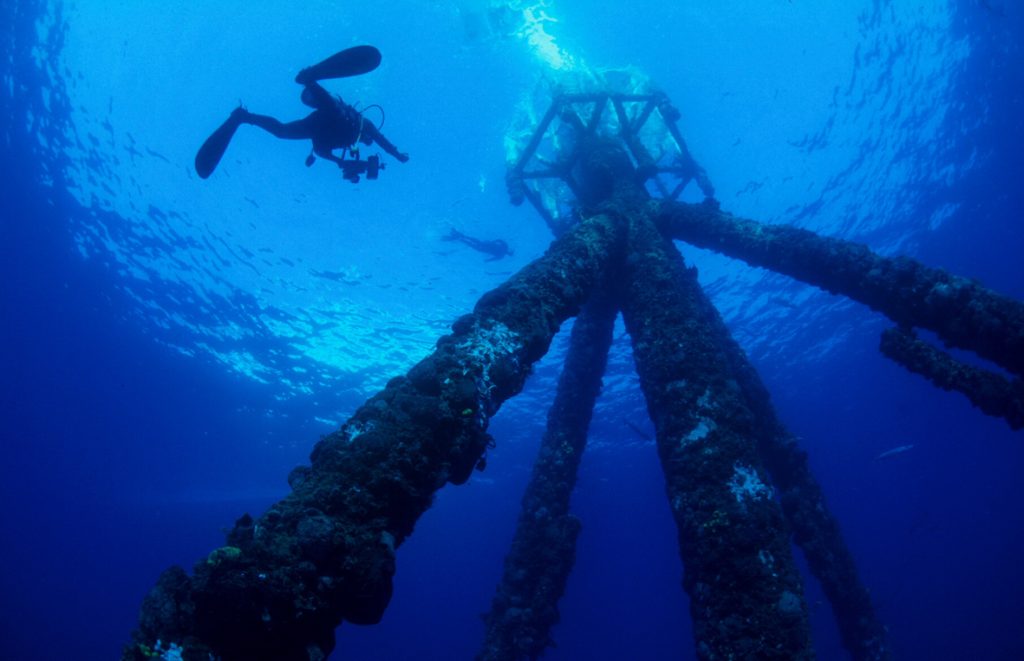
Unique to the Ultimate Getaway is a visit to the wreck of the Baja California and the nearby L Tower, en route back to Fort Myers Beach. The Baja is a WW II transport ship which was sunk by a U Boat in 1942: the L Tower is a communications structure built on legs which attracts profusions of big fish. These sites are well outside the national park boundaries, but are both excellent dives and provide a high point on which to finish the trip.
The Dry Tortugas is remote Florida, but it’s worth making the effort to get out there. Few UK divers make this journey, but perhaps more will do so in the future. It’s a good experience, and a world away from theme parks and mass tourism.